A brand creative director at a furniture company showed me two brown leather sofas from the same product line last month. Same SKU, same supplier, same production batch. One had developed a rich caramel patina that looked intentional and premium. The other had faded to an uneven, patchy tone that looked like sun damage. The difference? The first sat in a north-facing room with indirect light. The second sat three feet from a south-facing window. Both sofas were genuine leather. Both were “brown.” And both behaved completely differently under conditions that the spec sheet never addressed. The gap between patina and degradation in brown leather isn’t random — it’s governed by three color stability specifications that most buyers never think to check.
The Patina Question: Aging vs Degrading
Patina is the surface enrichment that develops on genuine leather through contact, handling, and oxidation. It’s the reason a well-used brown leather chair looks better at year ten than at year one. But here’s what most spec sheets don’t distinguish: patina is a surface phenomenon, while degradation is a structural one. When UV radiation oxidizes the pigments in brown leather, the darkening that results looks similar to patina — but it’s actually the first stage of coating breakdown.
The difference matters enormously for B2B buyers. Vegetable-tanned leather develops genuine patina because its tannin chemistry reacts with oils and light in a controlled way. Chrome-tanned leather — which accounts for the majority of global leather production — does not develop true patina. Its color changes are typically UV damage and plasticizer migration, not graceful aging. PU leather in brown tones doesn’t develop patina at all; it simply fades and cracks. The genuine leather upholstery guide explains how tanning method determines aging behavior.

Water resistance testing on brown leather — color stability under liquid exposure determines whether staining becomes permanent.
Spec 1: UV Color Fastness — Patina vs Fading
Brown leather sits in a unique position in the color spectrum. Unlike black, which absorbs maximum UV and degrades fastest, brown contains warm pigments (iron oxides, synthetic browns) that react differently to light exposure. Some brown dyes darken under UV — which can look like patina but is actually pigment oxidation. Others lighten as UV breaks down chromophores. The direction of the color shift depends entirely on the dye chemistry, and most spec sheets don’t disclose it.
The spec that matters is QUV color fastness testing (ASTM D4329 or ISO 105-B02). This measures color change after defined hours of accelerated UV exposure and reports it as a Grey Scale rating (1–5, where 5 means no change). Genuine brown leather typically rates 3–4 (moderate change). PU brown leather rates 2–3 (significant change). Silicone leather rates 4–5 (minimal to no change) after 1,000 hours because its pigments are locked into a UV-stable polymer matrix. For furniture placed near windows or automotive interiors, this spec determines whether your brown leather deepens with character or fades into patchiness. The color of leather sofa guide provides color selection criteria by lighting environment.

Layered color display shows the warm-tone range achievable in brown leather — but batch consistency determines whether production matches the sample.
Spec 2: Batch Color Consistency (Delta E Tolerance)
Brown is the hardest color to match consistently across production batches. It’s a composite color — built from multiple pigment layers — and small variations in dye concentration, coating thickness, or curing temperature produce visible differences. In genuine leather, every hide carries natural color variation. You accept it as “character.” In PU leather, batch variation comes from process inconsistency. In silicone leather, color matching is controlled by precise pigment formulation with measurable tolerance.
Texture and color variety overview demonstrates the range of brown tones and surface finishes achievable with silicone leather.
The spec is Delta E (ΔE) — a numerical measurement of color difference. A ΔE of 1.0 is the threshold of visible difference to the human eye. Industry standard for synthetic leather is ΔE ≤ 2.0. TOPSUN’s silicone leather achieves ΔE ≤ 1.0, meaning every roll in every batch matches the approved sample within the limits of human perception. For brands running multiple production cycles across months or years, this consistency eliminates the “color drift” problem that forces furniture manufacturers to scrap mismatched lots. The leather textures buyer guide details how surface finish affects perceived color.

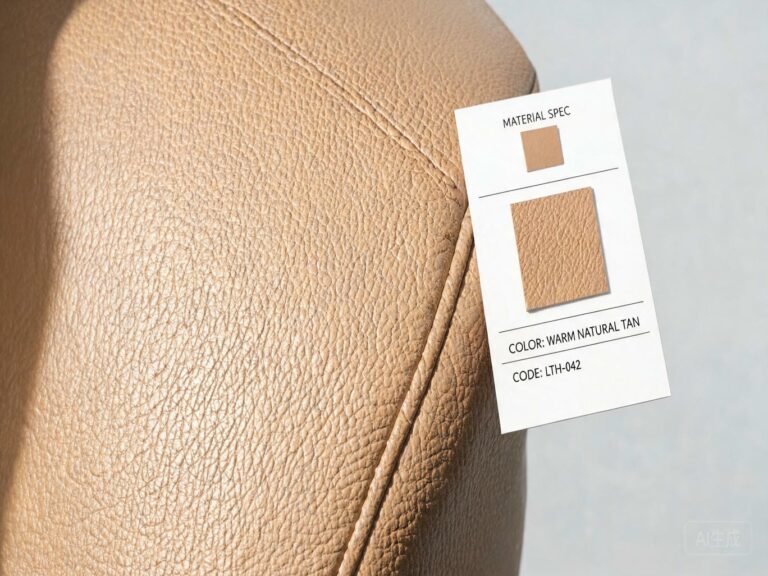
Color samples demonstrate the warm-tone versatility of brown leather — from caramel to chocolate — in a single material chemistry.
Spec 3: Maintenance Profile — Conditioning vs Cleaning
Brown leather’s maintenance requirements determine its real-world color trajectory. Genuine brown leather requires periodic conditioning to prevent the natural oils from drying out — a process that itself darkens the color over time. Skip conditioning, and the leather cracks and lightens at stress points. Over-condition, and the surface becomes unevenly dark. The maintenance protocol is part of the color specification, and it’s one that facilities teams rarely follow consistently across hundreds of units.
PU brown leather needs no conditioning but cannot be restored once fading begins — the color change is permanent and progressive. Silicone leather requires no conditioning at all. Its color is locked into the polymer matrix, not applied as a surface coating that can wear or migrate. Wipe it with soap and water, or disinfect with alcohol or bleach for commercial settings — the brown tone doesn’t shift, fade, or darken. For B2B buyers managing furniture across multiple locations, eliminating the conditioning variable means eliminating the most common cause of color inconsistency. The embossed leather pattern engineering guide shows how surface texture interacts with color perception and maintenance.
Brown Leather Comparison: How Each Material Ages
When you map the three color stability specs against the three most common brown leather material types, the aging trajectories diverge sharply:
| Color Property | Genuine Brown Leather | PU Brown Leather | Silicone Brown Leather |
|---|---|---|---|
| Aging Behavior | Patina (veg-tanned) / UV damage (chrome-tanned) | Fading and cracking (no patina) | No color shift (UV-stable polymer) |
| UV Color Fastness (Grey Scale) | 3–4 (moderate change) | 2–3 (significant change) | 4–5 (minimal change) |
| Batch Consistency (ΔE) | Variable (natural hide variation) | ≤ 2.0 (process-dependent) | ≤ 1.0 (pigment-formulated) |
| Maintenance Required | Conditioning every 6–12 months | None (but cannot restore faded color) | Wipe-clean only (no conditioning) |
| Color at Year 5 | Darker (patina or damage) | Faded, uneven, possibly cracked | Identical to day one |

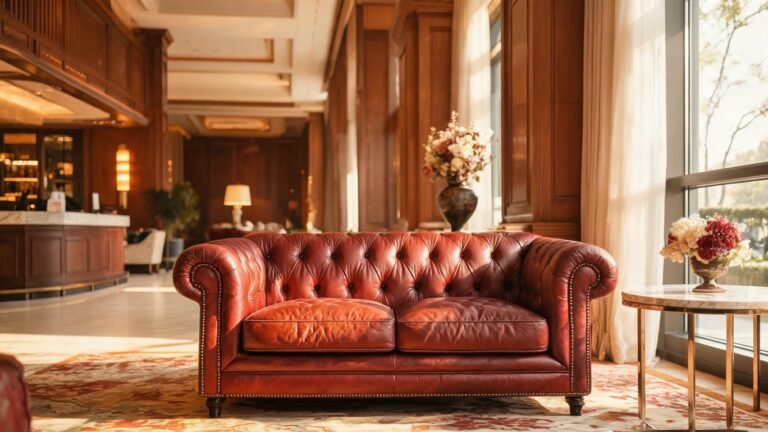
Genuine brown leather sofa — the aging trajectory depends on tanning method, UV exposure, and maintenance protocol.
About TOPSUN
TOPSUN manufactures silicone leather in warm brown tones for furniture brands, automotive interior suppliers, and hospitality specifiers who need brown leather that maintains its color from day one through year ten. Our brown silicone leather achieves ΔE ≤ 1.0 batch consistency through precision pigment formulation, rates 4–5 on the Grey Scale after 1,000 hours of QUV testing, and requires no conditioning or special maintenance. Every brown color is custom-matchable to Pantone, RAL, or physical sample, with full color stability documentation including UV fastness reports, batch consistency data, and maintenance protocol guides. We supply brown silicone leather rolls to manufacturers who want the warmth of brown leather without the unpredictability of natural hide variation, the fading of PU chemistry, or the maintenance burden of genuine leather conditioning.
Frequently Asked Questions
Does brown silicone leather develop patina like genuine leather?
No — and that’s by design. Silicone leather maintains its original brown tone throughout its service life rather than darkening or developing patina. Patina in genuine leather is the result of oxidation and oil absorption in the hide’s fiber structure. Silicone’s polymer matrix is chemically inert: it doesn’t oxidize, absorb oils, or react with UV. For applications where patina is a desired aesthetic (luxury goods, bespoke furniture), genuine vegetable-tanned leather remains the better choice. For commercial furniture, automotive interiors, and high-traffic applications where color consistency across hundreds of units matters more than individual character, silicone leather’s color stability is the superior specification.
How do you match brown leather color across different production batches?
Color matching uses Delta E (ΔE) measurement against an approved standard sample. TOPSUN achieves ΔE ≤ 1.0 — meaning the color difference between any two batches is imperceptible to the human eye. The process involves spectroscopic measurement of the approved sample, precision pigment formulation to match the spectral curve, and batch verification with a spectrophotometer before release. For genuine leather, consistent color matching across batches is impossible because each hide carries natural variation. For PU leather, batch consistency depends on process control and typically achieves ΔE ≤ 2.0. Silicone leather’s ΔE ≤ 1.0 standard eliminates the color drift that forces manufacturers to scrap mismatched production lots.
Brown leather that stays brown. Request our brown silicone leather swatches with UV fastness data, batch consistency reports, and color matching documentation. Get swatches →