Black leather cloth is the industry’s default color — chosen for aesthetics, not performance. The irony is that black is the worst-performing color for outdoor and automotive applications. Carbon black pigment gives black leather cloth its depth and uniformity, but it also absorbs 85–88% of incident solar infrared radiation, raising surface temperatures to 78°C under direct sun — hot enough to accelerate plasticizer migration in PVC, hydrolysis in PU, and coating delamination in both. For B2B buyers specifying black leather cloth for automotive interiors, outdoor furniture, or any sun-exposed application, color fastness is not the primary issue. Thermal stability is.
The Thermal Trap: Why Black Absorbs What Destroys It
Carbon black — the pigment used to color black leather cloth — is an exceptional absorber across the full solar spectrum. It absorbs visible light (which is why it appears black) and near-infrared radiation (which is why it gets hot). Under DIN 75201 solar load testing, black PVC leather reaches surface temperatures of 78°C, compared to 70°C for brown leather using iron oxide pigment [$TOPSUN](https://www.microsuedeleather.com/info/brown-vs-black-pvc-leather-which-color-suits-103092397.html). That 8°C difference is not marginal — it crosses thresholds where polymer degradation rates double or triple.
The Arrhenius equation governing polymer degradation predicts that reaction rates approximately double for every 10°C increase in temperature. At 78°C surface temperature, the plasticizer migration rate in PVC black leather cloth is roughly 4× faster than at 60°C. The hydrolysis rate of PU ester bonds at 78°C is similarly accelerated. The result: black leather cloth that looks perfect on the production line degrades 2–4× faster than the same material in a lighter color under identical sun exposure conditions.

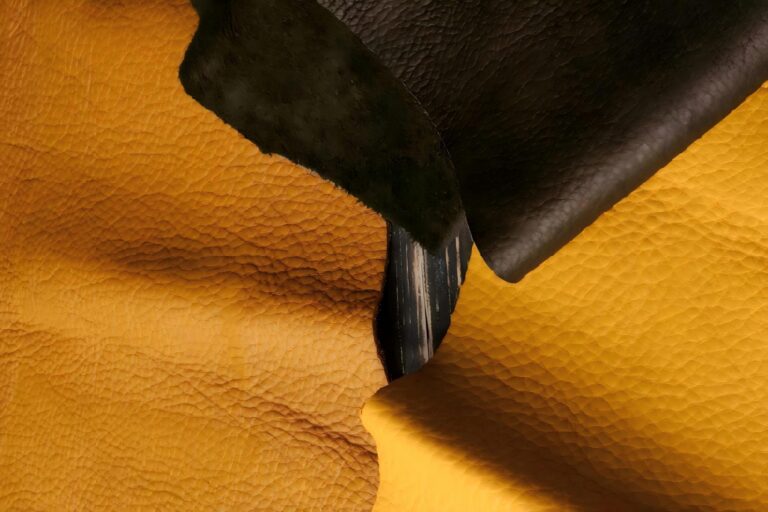
Black leather surface under macro inspection — carbon black pigment provides uniform color but absorbs solar IR, creating thermal stress that accelerates polymer degradation beneath the surface.
Black Leather Cloth Color Fastness: What the Tests Actually Measure
Color fastness testing for black leather cloth involves three standards that measure different failure modes — and buyers who specify only one are leaving gaps in their quality control:
ISO 105-B02 (color fastness to light): Measures fading under artificial daylight. Black leather cloth typically achieves Grade 6–7, which sounds excellent — but this test measures pigment stability, not polymer stability. The carbon black pigment itself does not fade significantly. What fails is the polymer binder holding the pigment: as UV breaks polymer chains, the surface develops micro-crazing that scatters light and makes the black appear gray or chalky, even though the pigment hasn’t faded.
ISO 17228 (accelerated aging): Exposes material to elevated temperature and humidity cycles that simulate years of service. This test catches the thermal degradation that ISO 105-B02 misses — coating embrittlement, plasticizer loss, and yellowing of clear topcoats applied over black substrates. For automotive interior applications, this test is critical because cabin temperatures regularly exceed 70°C in parked vehicles.
ISO 105-X12 (color fastness to rubbing): Measures color transfer under friction — Grade 5 dry, Grade 4 wet. Black leather cloth that fails this test transfers pigment to clothing and adjacent surfaces. While carbon black pigment itself has excellent rubbing fastness, the polymer binder can degrade under thermal stress, releasing pigment particles that then transfer to contact surfaces [$TOPSUN](https://www.eco-leather.com/black-leather-fabric/).
PU vs PVC vs Silicone: Black Leather Cloth Under Heat Stress
When all three chemistries are pigmented with carbon black and exposed to the same thermal load, the differences in degradation rate are dramatic. The silicone vs PU comparison explains the molecular basis — here is how it manifests in black leather cloth specifically:
| Property | Black PU | Black PVC | Black Silicone | Test Standard |
|---|---|---|---|---|
| Surface temp (solar load) | 76°C | 78°C | 78°C (same physics) | DIN 75201 |
| UV degradation (crazing onset) | 500–800 hrs | 800 hrs | 1,000+ hrs, no crazing | ASTM G154 |
| Thermal stability limit | 80°C | 60°C | 250°C | ISO 3376 |
| Plasticizer migration at 78°C | N/A (no plasticizer) | Accelerated | None — no plasticizer | DIN 75201 |
| Hydrolysis at elevated temp | Accelerated | Moderate | None — no ester bonds | ISO 11507 |
| Service life (sun-exposed) | 2–3 years | 2–3 years | 10+ years | Field data |
Note that the surface temperature is identical across all three chemistries — black absorbs heat regardless of the polymer. The difference is not in how hot the material gets, but in how the polymer chemistry responds to that heat. PVC loses plasticizers and stiffens. PU hydrolyzes at the ester bonds. Silicone maintains its molecular structure because the Si–O–Si backbone is thermally stable to 250°C — well above any temperature solar load can produce. For thermal performance verification, see the silicone leather temperature resistance test data.

Water cooling section of the coating line — dark-colored leather requires precise temperature control during production to prevent thermal degradation of the polymer before it even reaches the customer.
Specifying Black Leather Cloth: Thermal Performance Requirements
When specifying black leather cloth for sun-exposed applications, include these thermal performance requirements in your purchase order:
1. ASTM G154 UV resistance ≥ 1,000 hours with no surface crazing. The carbon black pigment provides some UV absorption, but the polymer binder still degrades. Require test documentation showing the surface condition after 1,000 hours — not just the color change value.
2. DIN 75201 fogging test. Black surfaces reach higher temperatures, which accelerates volatile emission. For automotive interiors, require fogging values below the OEM threshold — silicone leather scores near-zero; PVC emits plasticizers that condense on windshields.
3. ISO 17228 accelerated aging. Specify the test at 80°C / 95% RH for a minimum of 7 days. This simulates the thermal conditions black leather cloth actually experiences in sun-exposed service. If the material yellows, stiffens, or develops surface tackiness after this test, it will fail in the field.
4. Thermal cycling (−40°C to 120°C, 50 cycles). Black leather in automotive applications experiences extreme temperature swings — from winter cold to summer cabin heat. Require no cracking, no delamination, and no color change after 50 thermal cycles. The full technical data sheet documents TOPSUN’s performance across this range.

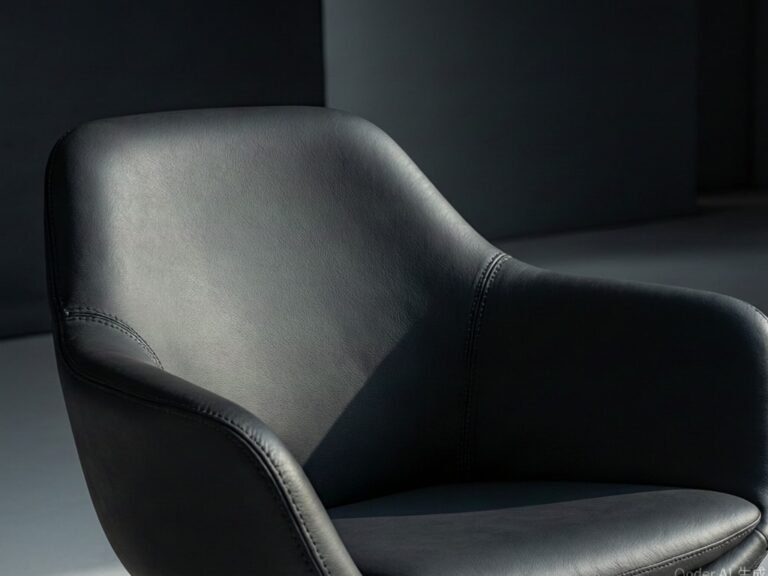
Color palette — black is the default choice across automotive, furniture, and fashion applications. The specification must account for the thermal performance penalty that comes with carbon black pigment.
FAQ
Why does black leather fade faster than other colors?
Black leather doesn’t fade in the traditional sense — carbon black pigment is inherently UV-stable. What appears as “fading” is actually polymer binder degradation: UV and thermal stress break the polymer chains that hold the pigment, causing the surface to develop micro-crazing that scatters light and makes the black appear gray or chalky. This effect is worse for black leather because carbon black absorbs more solar IR radiation, raising surface temperatures 8–10°C above lighter colors and accelerating the polymer degradation rate by 2–4×. Silicone-coated black leather avoids this failure because the Si–O–Si backbone is thermally stable to 250°C and has no ester bonds for UV to break — the surface stays smooth and the black stays black.
Black Leather Cloth: Color Is a Thermal Spec
Black leather cloth is the industry’s most-specified color and its worst-performing one for sun-exposed applications. The carbon black pigment that gives it depth and uniformity also absorbs the solar IR that accelerates polymer degradation. PU hydrolyzes. PVC loses plasticizers. Both develop the micro-crazing that turns black surfaces gray within 2–3 years of sun exposure. TOPSUN manufactures black silicone-coated leather cloth for automotive interiors and outdoor applications that maintains color stability at surface temperatures up to 250°C with zero UV-induced crazing after 1,000+ hours of accelerated exposure. When the spec calls for black, the chemistry behind the color determines whether it stays black.