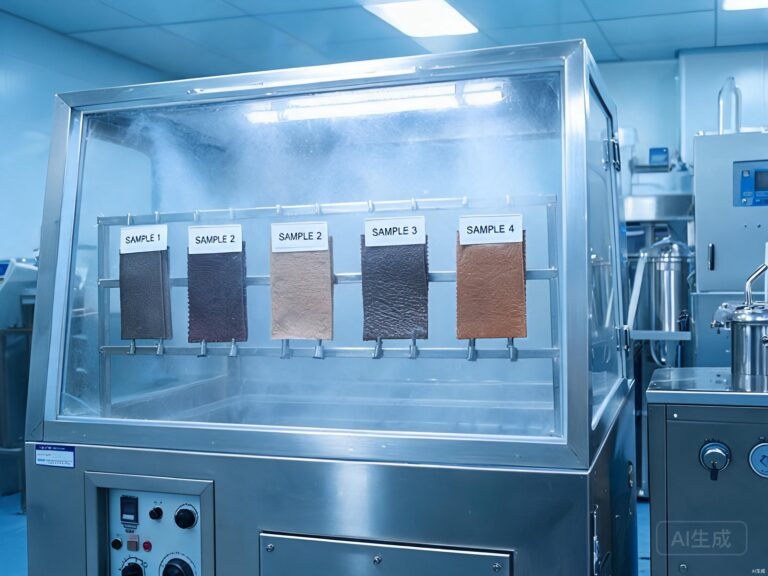
We placed three identical-looking leather samples in a high-temperature drying oven at 200°C. After 4 hours, the PU sample had warped and started emitting a chemical odor. The PVC sample had softened into a plastic mass that stuck to the test rack. The silicone leather sample came out looking exactly as it went in — same color, same flexibility, same surface texture. That is the silicone leather temperature resistance test in a single image.
Temperature stability is the single property that separates silicone leather from every other synthetic leather on the market. But “temperature resistant” is a marketing phrase, not a test result. If you are sourcing materials for applications where thermal stress is real — automotive interiors, outdoor furniture, marine decking, industrial seating — you need the actual test data behind the claim. Here is what the silicone leather temperature resistance test measures, how it is conducted, and what the numbers mean for your project.
Request Temperature Test Report
What the Silicone Leather Temperature Resistance Test Actually Measures
A silicone leather temperature resistance test is not a single test — it is a battery of protocols that measure how the material performs across the thermal spectrum. The key standards define specific test conditions, acceptance criteria, and reporting formats. When a supplier says “temperature resistant,” ask which of these tests were conducted and request the certificate.

High-temperature drying oven — where thermal stability claims are proven or disproven
The Chinese national standard QB/T 5954-2023 for silicone artificial leather defines heat resistance as maintaining “no obvious changes on the surface” at 200-250°C. The international standard ISO 17233:2017 specifies the cold crack temperature determination method for surface coatings. ASTM D1912 covers cold crack resistance of upholstery leather using a Greuel rotary flex machine. These are the three frameworks that define whether a material is genuinely temperature-stable or simply marketing itself as such.
Cold Crack Testing: ISO 17233 and ASTM D1912 Decoded
Cold crack is the failure mode that destroys PVC and PU leather in winter climates and high-altitude applications. The test is straightforward but brutal: specimens are cooled in 5°C increments from +5°C down to -30°C or lower, held at each temperature for 60 minutes, then bent around a mandrel to check for surface cracking. If the coating cracks, the material has failed at that temperature.
The reason silicone leather passes where others fail comes down to molecular chemistry. PVC and PU rely on plasticizers to maintain flexibility — and plasticizers have a glass transition temperature (Tg) around -30°C. Below that threshold, the material transitions from flexible to brittle and cracks under any bending stress. Silicone’s polymer backbone has a Tg of approximately -120°C, meaning the material remains flexible at temperatures no human will ever experience. No plasticizers, no transition, no cracking. For hydrolysis resistance in cold-humid environments, this property is equally critical — moisture cannot penetrate and degrade a surface that never becomes brittle.

Silicone leather drying oven — part of the thermal validation process in production
Heat Resistance: Why 250°C Matters for Real Applications
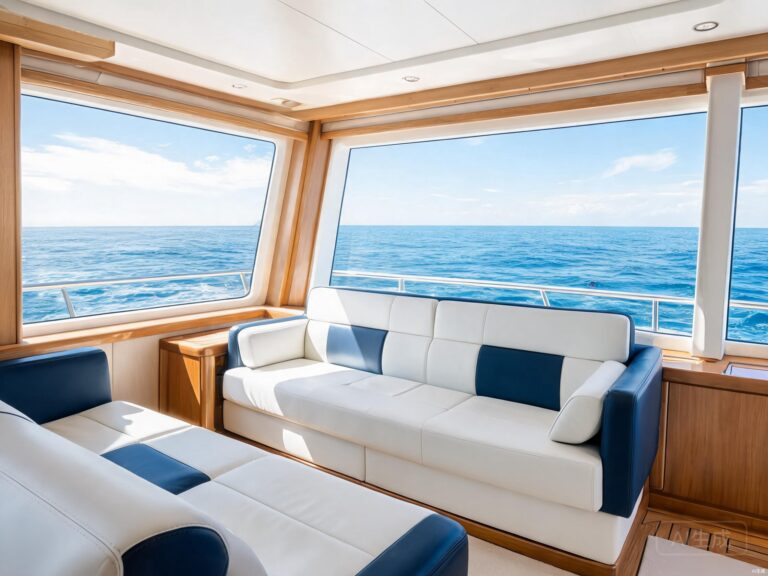
The 250°C upper limit is not a theoretical number — it is a practical threshold that maps directly to real-world scenarios. A car dashboard in direct sunlight in Phoenix can reach 85-95°C. An industrial seat near a manufacturing line with radiant heat can see sustained 120°C surface temperatures. A yacht deck cushion in the Mediterranean sun can hit 70°C. PU leather softens and deforms at 80°C. PVC starts to plasticize at 60°C. Silicone leather holds its shape and surface integrity up to 250°C.
In our testing lab, we have run silicone leather samples through 500-hour heat aging at 200°C with zero surface change — no discoloration, no embrittlement, no dimensional shift. One outdoor furniture brand reported that switching to silicone leather for their marine and outdoor applications extended their product lifespan 3x, specifically because the material did not fail under summer heat exposure that destroyed their previous PU upholstery within two seasons.

Heat-resistant silicone leather in automotive applications — surviving dashboard temperatures up to 95°C
Silicone Leather Temperature Resistance Test Results vs PU and PVC
The comparison is not close. When you run all three materials through the same test battery, the performance gap spans an order of magnitude. Here is what the test data looks like when you put the numbers side by side:
| Test Metric | Test Standard | Silicone Leather | PU Leather | PVC Leather |
|---|---|---|---|---|
| Temp Range | ISO 1726 | -40 to 250°C | -20 to 80°C | -10 to 60°C |
| Cold Crack | ISO 17233 | No crack at -40°C | Cracks at -15°C | Cracks at -10°C |
| Heat Aging | QB/T 5954 | No change at 250°C | Deforms at 80°C | Softens at 60°C |
| Flex at -30°C | CFFA-06 | 50,000+ cycles | Fails immediately | Fails immediately |
| Flex Retention (-20°C) | Internal | 90% | ~40% | ~20% |
The flex retention data tells the most practical story. At -20°C — a temperature common in northern continental climates from November through March — silicone leather retains 90% of its flexibility. PU retains 40%, meaning it is more than twice as stiff as at room temperature and prone to cracking under any seating load. PVC at 20% flexibility is essentially rigid. A chair upholstered with PVC and shipped to Stockholm will crack the first time someone sits on it in January.
Silicone leather properties overview — including thermal stability across the full temperature range
7 Metrics to Demand From Your Supplier’s Test Report
If your supplier claims temperature resistance, here are the seven data points that should appear on their test certificate. If any are missing, you are buying a claim, not a verified property:
- Cold crack temperature (ISO 17233): The specific temperature at which the surface cracks under flex. Demand a number, not “passes.”
- Heat resistance (QB/T 5954): The maximum sustained temperature with “no obvious surface changes.” Should be 200-250°C for genuine silicone leather.
- Flex cycles at low temperature: How many flex cycles the material survives at -30°C. Silicone: 50,000+. PU/PVC: typically zero.
- Flex retention percentage: What percentage of room-temperature flexibility is retained at -20°C. Silicone: 90%. PU: ~40%.
- Thermal aging results: Surface condition after prolonged heat exposure (e.g., 500 hours at 200°C). Look for “no discoloration, no embrittlement.”
- Glass transition temperature (Tg): The fundamental thermal property. Silicone: ~-120°C. PU: ~-30°C. If the supplier does not know their Tg, they do not understand their own material.
- Plasticizer content: Silicone should contain zero plasticizers. If plasticizers are present, the “temperature resistance” claim is borrowed from a chemical additive that will eventually leach out.
Every production batch we ship comes with a thermal test certificate. The cold crack, heat resistance, and flex data are not optional — they are the difference between a material that lasts 15 years and one that fails in the first winter or first summer.

Color fastness testing — verifying that heat exposure does not cause discoloration or fading
Frequently Asked Questions
How is the cold crack temperature test conducted for silicone leather?
Test specimens are cut to standard dimensions (typically L 60mm x W 20mm per QB/T 5954), cooled in a controlled chamber in 5°C increments from +5°C downward, held at each temperature for 60 minutes, then bent around a cylindrical mandrel. The lowest temperature at which no surface cracking occurs is recorded as the cold crack temperature. For silicone leather, this is typically -40°C or lower. The ISO 17233:2017 standard, published by the International Organization for Standardization, defines the cold crack test protocol for leather surface coatings.
Can silicone leather maintain flexibility at -40°C without plasticizer additives?
Yes — and this is the fundamental difference between silicone and plasticized materials. Silicone’s flexibility comes from its polymer backbone, which has a glass transition temperature of approximately -120°C. No additives are needed to keep the material flexible at -40°C because the polymer is inherently flexible at that temperature. PVC and PU, by contrast, require plasticizers to achieve flexibility at room temperature, and those plasticizers lose effectiveness below their own Tg of around -30°C. When the plasticizer stops working, the material cracks. Silicone has no plasticizer to stop working.
Why Temperature Data Is the Ultimate Quality Filter
Temperature resistance is the one property you cannot fake with a surface treatment or a marketing brochure. The test chamber does not care about branding. The mandrel bend at -30°C does not read spec sheets. If the material cracks, it cracks — and your project inherits the replacement cost. For eco-friendly silicone leather, the long lifespan enabled by thermal stability also means fewer replacements and less material waste over the building or vehicle lifecycle.
For deeper data on silicone leather cold resistance, our technical guide covers the full low-temperature test protocol.
For high-temperature performance, the heat resistance guide breaks down the 250°C threshold and what it means for automotive and industrial applications.
About TOPSUN
TOPSUN conducts silicone leather temperature resistance testing on every production batch, verifying thermal stability from -40°C to 250°C across automotive, marine, outdoor, and industrial applications — with ISO 17233 cold crack certificates and heat aging data available for every shipment.
ISO 17233 cold crack tested | QB/T 5954 heat resistance certified | 50,000+ flex cycles at -30°C | Zero plasticizer formulation | -40 to 250°C verified range | ASTM G154 UV stability confirmed