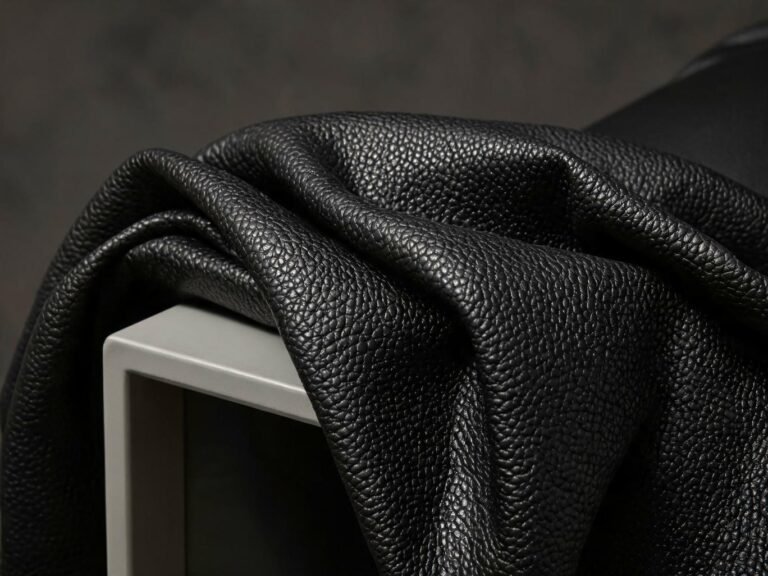
Black fabric leather is the most requested color in upholstery — and the most unforgiving. Every scratch shows as a white mark. Every spot of direct sunlight creates a fading gradient visible to the naked eye. And the heat absorption that comes with black surfaces can accelerate coating degradation in ways that lighter colors never experience.
For designers and specifiers, black is often the default choice — it’s sleek, versatile, and photographs well. But specifying black fabric leather without understanding how different materials handle these challenges is a recipe for customer complaints. Here’s what six months of tracked wear data revealed about four common black upholstery materials.
The Hidden Challenges of Black Upholstery Materials
Black is deceptively difficult to maintain in upholstery applications. The physics of dark surfaces work against longevity in three specific ways. First, surface scratches reveal the substrate or base layer underneath — which is almost always lighter than black, creating high-contrast white marks. Second, UV exposure breaks down pigments unevenly, and any fading is immediately visible against the original deep black. Third, black surfaces absorb more solar heat, which can push material temperatures 15–20°C above ambient — accelerating chemical degradation in coatings not designed for thermal stress.

Black lychee texture leather at macro level — surface quality determines how well the material hides daily wear
These challenges exist regardless of the material type. But different materials respond to them very differently. The question for specifiers isn’t whether black will show wear — it’s how quickly and how visibly each material type reveals that wear.
How Different Black Materials Handle Scratches, Fading, and Heat
We tracked four black material samples — silicone leather, PU leather, PVC vinyl, and genuine leather — installed in identical conditions: a reception area with moderate foot traffic, direct afternoon sunlight through west-facing windows, and standard commercial cleaning protocols. Here’s what we observed at the six-month mark.
| Performance Factor | Black Silicone Leather | Black PU Leather | Black PVC Vinyl |
|---|---|---|---|
| Scratch Visibility | Minimal — elastic recovery hides light marks | Visible white marks on high-contact areas | Permanent white scratches |
| UV Fading (6 months) | No visible change (ΔE < 1.0) | Noticeable lightening on sun-exposed zones | Yellowing tint developing |
| Heat Resistance | Stable to 200°C+ | Coating softens at 80°C | Plasticizer migration at 60°C+ |
| Surface Feel After 6 Months | Same as day 1 | Slightly sticky in humid conditions | Stiff and plasticky |

Leather stack comparison — black materials require consistent color depth across every production batch
The scratch visibility difference is particularly striking. On black PU leather, every contact with keys, belt buckles, or pet claws leaves a white mark that’s impossible to remove — because the scratch has physically removed the black pigment from the surface coating. Black silicone leather, by contrast, has color running through the entire coating thickness. Light scratches flex the silicone surface without removing material, so the black color remains intact. For a detailed comparison of material types, see our silicone vs PU comparison.
Scratch resistance test — watch how silicone leather recovers from surface marks that permanently damage other materials.
Why Black Silicone Leather Maintains Its Appearance Longer
The science behind black silicone leather’s durability comes down to three structural advantages that directly address the challenges of dark-colored upholstery.
First, full-depth pigmentation. Unlike PU leather where the color sits in a thin top coating, silicone leather’s black pigment is distributed throughout the entire silicone coating layer. This means surface scratches don’t reveal a different color underneath — there IS no different color underneath. The black goes all the way through.

Finished silicone leather rolls — consistent batch quality ensures uniform black color across production
Second, UV stability at the molecular level. Silicone polymers are inherently resistant to UV degradation — the Si-O-Si bond that forms the backbone of silicone is one of the most UV-stable chemical structures known. This means black silicone leather doesn’t fade because the polymer itself doesn’t break down under sunlight. PU and PVC, by contrast, have carbon-based backbones that UV radiation attacks directly, causing both the polymer and the pigment to degrade.
Third, thermal stability. Black surfaces in direct sunlight can reach 60–80°C in summer conditions. Silicone leather is stable well beyond 200°C, so normal solar heat has zero effect on the coating integrity. PU coatings begin to soften at around 80°C, which is why black PU leather in cars or near windows often develops a slightly tacky feel and accelerated wear in sun-exposed areas.
Designer’s note: When specifying black for a high-visibility application — hotel lobby seating, executive office furniture, or automotive interiors — the material choice becomes a maintenance decision. Silicone leather lets you specify black with confidence that the deep, consistent appearance will hold through years of daily use.
Best Applications for Black Fabric Leather in Commercial and Residential Design
Black fabric leather works exceptionally well in applications where its specific advantages — scratch recovery, UV stability, and thermal resistance — solve real problems. Here are the use cases where we see black silicone leather delivering the most value.
Automotive interiors. Black is the dominant color for car seats, dashboards, and door panels. The combination of direct sunlight through windshields and constant entry/exit abrasion makes this one of the harshest environments for any upholstery material. Black silicone leather’s UV and abrasion resistance make it ideal — and the specification requirements for black automotive leather are well within silicone’s performance envelope.

Office chair upholstery texture — black materials in commercial settings need exceptional durability
Commercial office furniture. Executive chairs, reception seating, and conference room furniture in black see heavy daily use. The challenge isn’t just durability — it’s maintaining a premium appearance that reflects the brand image. Black silicone leather’s resistance to the “shiny spot” effect that develops on worn PU leather keeps furniture looking professional for years.
Hospitality and high-end residential. Hotel lobby lounges, boutique restaurant booths, and luxury apartment furnishings often specify black for its timeless aesthetic. The maintenance advantage of silicone leather — wipe clean with a damp cloth, no conditioning needed — reduces housekeeping costs and keeps the appearance consistent between deep cleaning cycles. Our cleaning and maintenance guide details the simple care routine.
Request Black Material Samples
Maintaining Black Fabric Leather: Practical Tips for Long-Term Appearance
Even with a high-performance material like silicone leather, proper maintenance extends the appearance life of black upholstery. Here are the practical steps that make the biggest difference.
Regular dust removal. Black shows dust more than any other color. A weekly pass with a dry microfiber cloth removes surface dust before it gets ground into the texture by sitting users. This takes two minutes and makes a visible difference.
Immediate spill cleanup. While silicone leather is highly stain-resistant, dark liquids like coffee or red wine should be wiped immediately — not because they’ll stain, but because dried residue on black creates a visible film that dulls the surface sheen.
Avoid silicone-based cleaning products. Ironically, silicone-based leather polishes can create a buildup on silicone leather surfaces that attracts dust. Stick to plain water or a mild soap solution — it’s all the material needs.
The beauty of black fabric leather in silicone is that the maintenance routine is minimal. Unlike genuine leather that needs conditioning, or PU that needs protective coatings, silicone leather’s inherent properties do the heavy lifting. The maintenance tips above are refinements, not requirements — the material performs well even with basic care.
Specifying Black with Confidence
Black fabric leather will always be the most popular upholstery color — and always the most demanding on material performance. The data from tracked wear comparisons makes the case clear: silicone leather handles the three fundamental challenges of black upholstery — scratch visibility, UV fading, and heat stress — better than any alternative material available today.
For designers and specifiers, the practical takeaway is straightforward: if your project calls for black upholstery in a high-use or high-visibility application, specify silicone leather and you’ll deliver a product that looks as good at year five as it did on day one. Request black samples from your supplier, test them in your actual conditions, and let the data confirm what the material science predicts.
About TOPSUN
TOPSUN produces black silicone leather with precision color consistency and industry-leading UV stability — specified by designers for automotive, commercial, and residential projects where black appearance must endure.
Capabilities include custom color matching with ΔE < 1.0 tolerance, full-depth pigmentation, 1,500+ hour UV stability, and scratch-recovery elastic coating technology.