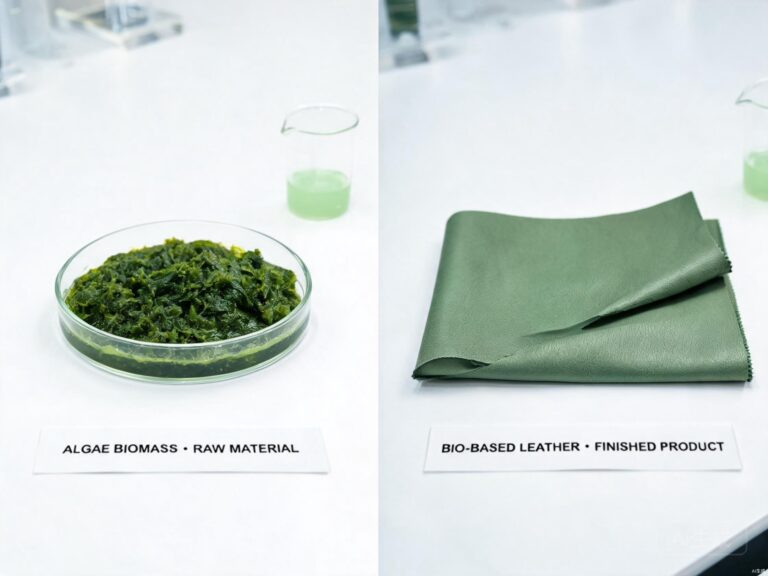
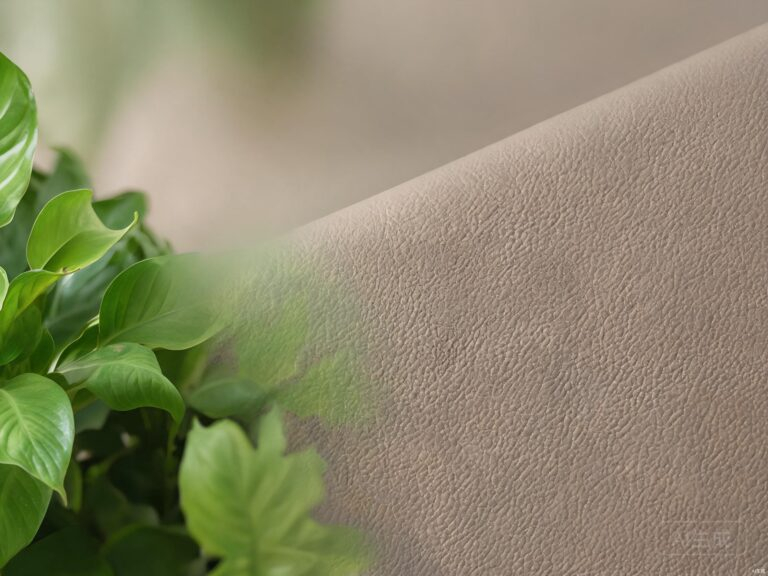
In 2024, a European fashion brand launched a capsule collection using mycelium-based leather. The press coverage was glowing. Six months later, the brand quietly reverted to conventional synthetic leather for its mainline products. The reason: the mycelium material could not pass the brand’s internal flexing test at -10°C, and batch-to-batch color consistency fell outside acceptable Delta E tolerances. This is not an isolated story. Biobased leather material generates enormous headlines and equally enormous procurement headaches. The materials are genuinely innovative — but innovation and commercial readiness are different things. This article examines the five categories of biobased leather, where they fail standardized testing, why scaling from lab to mass production remains the critical bottleneck, and how B2B buyers can build a realistic adoption strategy that separates marketing claims from material reality.
Request Material Lifecycle Assessment
The Biobased Leather Landscape: Five Material Categories
The term “biobased leather material” covers five distinct technologies, each with different feedstocks, manufacturing processes, and performance profiles. Understanding these differences is essential for procurement teams evaluating biobased leather material sustainability claims against actual product requirements.
- Mycelium leather — grown from mushroom root structures on agricultural waste substrate. Companies like MycoWorks and Bolt Threads produce lab-scale quantities with genuine leather-like grain. Current annual production capacity is measured in tens of thousands of square feet, not the millions required for automotive or furniture applications.
- Pineapple leaf fiber leather (Piñatex) — non-woven substrate from decorticated pineapple leaf fibers, coated with a bio-based resin. The coating is often PU-based, raising questions about the material’s true bio-based content percentage.
- Cactus leather (Desserto) — partially bio-based PU made from nopal cactus extract blended with polyurethane. Bio-based content ranges from 25% to 42% depending on formulation. The cactus cultivation is genuinely sustainable (rain-fed, low water), but the end material is still a polyurethane composite.
- Apple and grape waste leather — fruit pomace blended with polyurethane binder. Bio-based content is typically 20-30%. These materials excel in marketing narratives but offer no structural advantage over conventional PU in mechanical testing.
- Bio-based polyurethane (bio-PU) — polyurethane synthesized using bio-based polyols derived from soybean oil, castor oil, or corn starch. Bio-based content can reach 40-70%. This is the most scalable category because it uses existing PU production infrastructure with modified raw material inputs.

Coating machine rollers used in bio-PU leather production — compatible infrastructure enables scalability for bio-based polyurethane
The critical insight for procurement teams: four of the five categories still rely on polyurethane as a binder or coating. Only mycelium leather is entirely PU-free, and it is the least scalable of the group. The eco-friendly silicone leather alternative takes a fundamentally different approach — replacing the polymer chemistry entirely rather than substituting a percentage of the raw material inputs.
Where Biobased Materials Fail Standardized Testing
Biobased leather material durability data is conspicuously absent from most supplier technical data sheets. When the data does appear, it reveals significant performance gaps compared to both conventional PU and silicone leather. The testing gaps fall into four critical categories.
Abrasion resistance is the first failure point. Mycelium leather typically achieves Martindale 15,000 to 25,000 cycles — below the 30,000 cycle threshold for commercial furniture. Pineapple fiber leather reaches 20,000 to 40,000 cycles but degrades rapidly after surface coating wear begins. Cactus-based bio-PU performs similarly to conventional PU at 30,000 to 60,000 cycles, which makes sense given that it is fundamentally a PU material with partial bio-based content. None of these approach silicone leather’s 100,000 to 200,000+ cycle range.

Plant-based leather furniture application — aesthetic appeal must be validated against long-term abrasion and moisture performance
Water resistance is the second vulnerability. Mycelium and plant-fiber substrates are hydrophilic — they absorb moisture, swell, and lose dimensional stability. Piñatex absorbs 15-25% of its weight in water during 24-hour immersion testing. Cactus leather performs better due to its PU matrix but still shows water absorption 2-3x higher than silicone leather. For applications in humid environments, outdoor furniture, or marine upholstery, this moisture absorption is a disqualifying failure mode. The silicone leather introduction explains how the material’s inherent hydrophobicity delivers consistent water contact angles above 110° across its entire service life.

Fabric inspection area — quality control checkpoint for detecting batch-to-batch inconsistencies in material production
Color consistency and UV stability form the third failure category. Natural feedstocks — pineapple leaves, cactus pads, apple pomace — carry inherent color variations that no coating process can fully eliminate. Batch-to-batch Delta E values for plant-based leathers range from 3.0 to 7.0, compared to silicone leather’s consistent sub-1.0 performance. UV resistance is equally problematic: natural pigments in plant-based materials fade at 200-400 hours of xenon arc exposure, while silicone leather maintains color integrity past 1,500 hours.
The fourth gap is standardized testing itself. Most biobased leather suppliers cannot provide complete test data packages — Martindale, Taber abrasion, UV xenon arc, hydrolysis resistance, flame retardancy, and VOC emission — because their materials have not been tested across the full protocol suite. Procurement teams evaluating bio leather for commercial applications should require complete documentation before proceeding to sample evaluation.
The Scalability Gap Between Lab and Mass Production
Biobased leather material scalability is the barrier that determines whether a material moves from press releases to purchase orders. The challenge is not scientific — it is industrial. Producing 50 square feet of mycelium leather in a controlled lab environment is fundamentally different from producing 500,000 square feet per month with consistent quality, color, and mechanical properties.
Mycelium leather faces the steepest scaling curve. The growth cycle takes 2-3 weeks per batch, requires sterile cleanroom conditions, and yields are limited by bioreactor capacity. Current global production capacity for all mycelium leather combined is estimated at less than 100,000 square feet per year — enough for perhaps 5,000 handbags, but irrelevant for automotive or furniture programs requiring millions of square feet. The capital investment to scale mycelium production to industrial volumes would require hundreds of millions of dollars in bioreactor infrastructure.
Global mycelium leather production capacity: ~100,000 sq ft/year. A single mid-size automotive interior program requires 2-4 million sq ft/year. The gap is 20-40x.
Plant-based leathers (pineapple, cactus, apple) face agricultural supply chain constraints. Pineapple leaf fiber availability is limited by harvest cycles and geographic concentration in the Philippines. Cactus leather depends on nopal plantations in Mexico that require 3-4 years to reach productive yield. These biological constraints mean that even if demand tripled tomorrow, supply could not scale proportionally for 2-3 years. Bio-PU is the exception — because it uses existing petrochemical PU infrastructure with modified polyol inputs, it can scale immediately. But bio-PU’s bio-based content ceiling of 40-70% means it is a transitional material, not a paradigm shift.
Material comparison introduction — silicone leather versus biobased and conventional synthetic alternatives across key performance metrics
For B2B buyers, the scalability gap translates directly into supply risk. A material that cannot be sourced at volume is not a viable specification for production programs. The bio-polyurethane leather innovation reality is that most biobased materials remain in the pilot-scale phase, where minimum order quantities are measured in sample swatches rather than production rolls. Procurement teams that specify biobased leather for commercial programs without verifying supply capacity at scale risk production delays, cost overruns, and forced material substitutions at late project stages.
Biobased Leather Material vs Silicone Leather: Lifecycle Comparison
Biobased leather material vs silicone leather is not a simple sustainability comparison. Both materials offer environmental advantages over conventional PVC and solvent-based PU, but they take fundamentally different paths to get there. The table below compares the two across six lifecycle dimensions that matter for B2B procurement decisions.
| Lifecycle Dimension | Plant-Based Leather | Bio-PU | Silicone Leather |
|---|---|---|---|
| Bio-based Content | 60–90% | 40–70% | 0% (inorganic silica) |
| Martindale Abrasion | 15K–40K cycles | 30K–60K cycles | 100K–200K+ cycles |
| Water Absorption (24hr) | 15–25% weight gain | 5–10% weight gain | <1% (hydrophobic) |
| Production Scale | Pilot (sq ft/year) | Commercial (limited) | Industrial (millions sq m/year) |
| Cost per sqm | $25–60 | $8–15 | $12–18 |
| End-of-Life Pathway | Biodegradable (variable) | Landfill (PU matrix) | 100% recyclable |
The data reveals a nuanced sustainability picture. Plant-based leathers win on bio-based content but lose on every performance and scalability dimension. Bio-PU offers a pragmatic middle ground — it uses existing infrastructure and achieves reasonable bio-based content — but its end-of-life pathway is identical to conventional PU because the polymer matrix is the same. Silicone leather’s 0% bio-based content might seem like a disadvantage, but its inorganic silica backbone is derived from sand — one of Earth’s most abundant resources — and the material is 100% recyclable through thermal depolymerization. For carbon neutral leather strategies, the lifecycle calculation should weigh production emissions, product longevity, and end-of-life recoverability together — not just bio-based content percentage.

Industrial calender machine with green and white rollers — the scale of equipment required for millions of square meters of annual production
Building a Realistic Biobased Material Adoption Strategy
Biobased leather material procurement requires a staged approach that acknowledges both the potential and the current limitations of these materials. The following framework helps B2B buyers integrate biobased materials into their product strategy without exposing production programs to unacceptable supply and performance risk.
- Pilot with bio-PU first. Bio-PU uses existing production infrastructure, scales immediately, and delivers 40-70% bio-based content. It is the lowest-risk entry point for brands that want to make verifiable sustainability claims without compromising production schedules.
- Reserve plant-based leathers for limited editions. Mycelium and cactus leather work for capsule collections, premium accessories, and marketing activations where small volumes and premium pricing offset the material cost premium. Do not specify them for volume production programs.
- Require complete test data packages. Before evaluating any biobased leather sample, require Martindale, UV xenon arc, hydrolysis, water absorption, and flame retardancy test reports from accredited laboratories. Materials without complete data packages are not ready for commercial evaluation.
- Verify supply capacity in writing. Ask the supplier for their current annual production capacity and their 12-month expansion plan. If the answer is measured in square feet rather than square meters, the material is not ready for B2B volume procurement.
- Evaluate silicone leather as the performance benchmark. Silicone leather delivers the sustainability narrative (solvent-free, zero VOC, 100% recyclable) without compromising on durability, scalability, or cost. It should be the baseline against which biobased alternatives are measured.
The biobased leather category will mature — but the timeline is measured in years, not months. Mycelium production capacity needs to increase 20-40x to meet automotive-grade volume requirements. Plant-based supply chains need to expand beyond their current geographic concentrations. Standardized testing protocols need to be established and adopted industry-wide. Until these conditions are met, procurement teams should treat biobased leather as a strategic exploration, not a production specification. For materials that need to perform today — at scale, with verified durability, and with complete compliance documentation — the full range of application solutions from silicone leather provides the sustainability story without the adoption risk.
Schedule a Material Innovation Review
Frequently Asked Questions
Can biobased leather materials achieve the same Martindale abrasion rating as conventional synthetic leather?
Most cannot. Plant-based leathers (mycelium, pineapple fiber, apple) typically test at 15,000 to 40,000 Martindale cycles, compared to conventional PU’s 30,000 to 80,000 cycles and silicone leather’s 100,000 to 200,000+ cycles. Cactus-based bio-PU reaches 30,000 to 60,000 cycles because it is fundamentally a polyurethane matrix. The performance gap stems from the fiber structure: natural fibers lack the tensile uniformity of synthetic polymers, and bio-based binders generally have lower cross-link density than petrochemical alternatives. Some biobased leather suppliers do not publish Martindale data at all, which should be treated as a red flag during procurement evaluation.
What bio-based content percentage should B2B specifications require?
There is no industry-standard minimum for bio-based content claims, which is part of the problem. The USDA BioPreferred program sets category-specific minimums ranging from 7% to 89% depending on product type. For leather alternatives, a credible specification should require a minimum of 25% bio-based content verified through ASTM D6866 radiocarbon testing — this is the standard method for measuring bio-based carbon content. Be cautious of suppliers claiming “up to” percentages without specifying the tested formulation. Bio-PU materials typically deliver 40-70% verified bio-based content, making them the most transparent category for procurement specification.
The Innovation Reality Check
Biobased leather material represents genuine materials science innovation. Mycelium grown on agricultural waste, pineapple leaves transformed into fiber substrates, and cactus extracts replacing petrochemical polyols — these are real breakthroughs with real environmental potential. But B2B procurement operates on a different timeline than materials science. Production programs require materials that are available at scale today, with complete test data, consistent quality, and verified compliance documentation. Most biobased leathers are not there yet. Bio-PU offers a pragmatic bridge — it uses existing infrastructure and delivers measurable bio-based content without sacrificing scalability. Silicone leather offers a different path to sustainability — one based on material longevity, recyclability, and zero-emission production rather than bio-based feedstock substitution. For procurement teams navigating the sustainability landscape, the strategic move is to pilot biobased materials in limited applications while specifying silicone leather for volume production programs where performance, supply security, and compliance are non-negotiable. The biobased revolution will arrive — but procurement decisions made today should be based on material reality, not marketing narrative. Learn more about sustainable fabric material options for your procurement strategy.
About TOPSUN
TOPSUN helps B2B procurement teams evaluate sustainable material alternatives through side-by-side lifecycle comparison testing, providing complete technical data packages — Martindale abrasion, UV xenon arc, hydrolysis resistance, water absorption, and VOC emission reports — so buyers can make data-driven decisions about biobased, bio-PU, and silicone leather materials without funding independent lab testing.
100% recyclable · Solvent-free production · Zero VOC · Martindale 100K-200K+ cycles · UV 1,500+ hrs · Hydrolysis 1,000+ hrs · Complete test data packages · Side-by-side material comparison program