What Bio Polyurethane Leather Actually Means in Production
Bio polyurethane leather promises a cleaner future. It replaces petroleum-derived polyols with plant-based alternatives. Brands market it as carbon-neutral and guilt-free. But procurement teams need more than promise. They need performance data. They need supply chain stability. They need compliance documentation that stands up to third-party audit. This article separates bio PU marketing from manufacturing reality. The goal is clarity, not cynicism.
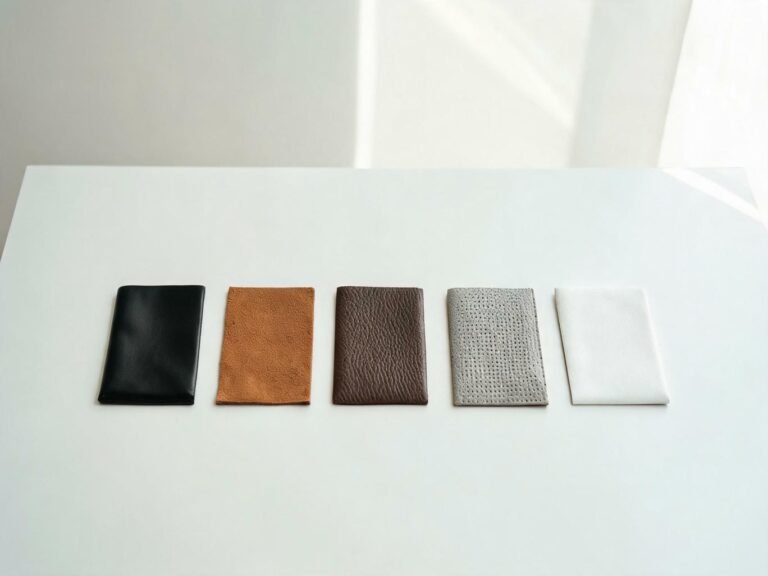
Request Sustainable Material Samples
“Bio-based” typically describes polyurethane where 20-70% of the polyol content comes from renewable feedstock. Common sources include castor oil, soybean oil, and corn-derived polyols. The remaining percentage still relies on petroleum-derived isocyanates. Additives are also petroleum-based. The chemistry is hybrid, not pure. Buyers reading marketing materials should ask for exact percentage certification. Without it, claims remain unverified. The word “plant-based” often overstates reality.
The USDA BioPreferred program certifies products with minimum biobased content. Some bio PU leathers achieve 30-40% renewable content. But this leaves 60-70% petroleum-based chemistry. The gap matters for ESG reporting. A material that is 40% bio-based still carries 60% fossil-derived content. Brands reporting Scope 3 emissions must account for this honestly. Marketing teams sometimes round up. Auditors do not.

TOPSUN raw material traceability system tracks every batch from silica sourcing through finished roll inspection.
Plant-based leather and sustainable materials covers the full spectrum of renewable upholstery options beyond polyurethane chemistry.
Lifecycle Trade-Offs: Carbon Footprint vs Performance
Bio PU leather reduces cradle-to-gate carbon emissions by 15-25% compared to conventional PU. This is meaningful. But the trade-off appears in performance metrics. Plant-based polyols create softer, less dense polymers. The molecular structure lacks the cross-link density that petroleum-based polyols provide. The material feels pleasant. It also wears faster. For commercial furniture, this gap matters.
Bio PU leather typically achieves 15,000-30,000 Martindale cycles. Conventional PU reaches 30,000-80,000. For commercial furniture, this gap determines replacement frequency. A hotel lobby sofa sees continuous use. Lower abrasion resistance translates to earlier replacement. The carbon savings from bio-content can vanish if the material requires replacement twice as often. Lifecycle assessment must include use-phase durability. Raw material origin is only half the story.
| Parameter | Bio PU Leather | Conventional PU | TOPSUN Silicone Leather |
|---|---|---|---|
| Renewable content | 20-40% | 0% | 0% (silica-based) |
| Martindale abrasion | 15,000-30,000 | 30,000-80,000 | 200,000+ |
| Service lifespan | 3-5 years | 3-5 years | 10-15 years |
| VOC emissions (μg C/g) | 80-150 | 100-200 | <50 |
| End-of-life recyclability | Limited | Limited | Material recoverable |
| Production solvent use | Reduced | Standard | None (solvent-free) |
| UV resistance (hours) | 300-500 | 300-500 | 1500+ |
Table: Lifecycle and performance comparison across bio PU, conventional PU, and TOPSUN silicone leather.
OEKO-TEX provides global standards for textile sustainability and chemical safety testing that buyers reference when evaluating bio-based claims.
Explore TOPSUN eco-friendly silicone leather for solvent-free production documentation and emissions data.
Bio Polyurethane Leather: B2B Adoption Barriers No One Talks About
Three barriers slow bio PU adoption in commercial manufacturing. First, supply inconsistency. Plant-based polyol availability fluctuates with agricultural yields. A soybean crop failure in Brazil ripples through polyurethane pricing six months later. Petroleum polyol markets stabilize through global refining capacity. Bio feedstocks lack this buffer. Procurement teams cannot risk production delays for a 20% renewable content gain.
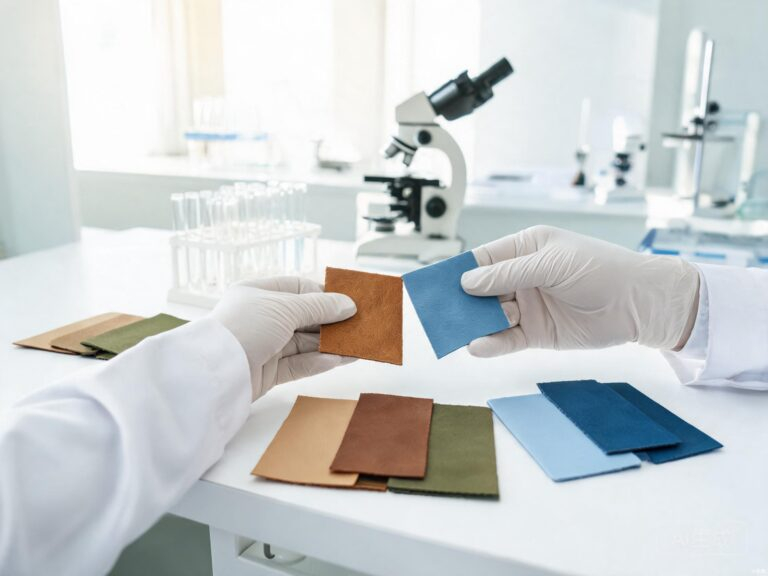
Second, color matching. During our 2024 supplier audit program, TOPSUN engineers tested bio PU samples from four commercial suppliers. Batch-to-batch color variance averaged Delta E 2.4. Martindale results ranged from 18,000 to 34,000 cycles across the same product code. Automotive and furniture clients demand Delta E ≤1.0. Bio PU suppliers often struggle to hold Delta E below 2.5 without heavy pigment loading. Extra pigment adds cost. It also affects hand feel.

Conventional PU production relies on solvent-based mixing systems that bio-based variants have not fully eliminated.
Third, certification gaps. Most bio PU leather lacks REACH SVHC screening for the full 247 substances. Brands reporting ESG metrics need batch-level traceability. Few bio PU producers provide this documentation. Without REACH compliance below 0.1% across all SVHCs, European market entry remains blocked. Without FDA 21 CFR 175.300, food-contact and medical applications fail qualification. The certifications that B2B buyers require are often missing.
View TOPSUN certificates including REACH, FDA, and aviation fire safety standards.
Biodegradable leather alternatives examines end-of-life performance across emerging material categories.
Silicone Leather: A Different Path to the Same Goal
TOPSUN takes a different approach to sustainable upholstery. Silicone leather contains no polyurethane. No plasticizers. No phthalates. The chemistry relies on silica and silicone polymers. It eliminates petroleum dependence entirely rather than partially. This is not a hybrid solution. It is a category shift. The environmental benefit comes from chemistry change, not content percentage. We do not reduce petroleum use. We remove it.
Our solvent-free coating process runs on 10+ automated lines across three facilities. VOC emissions measure below 50μg C/g. The material withstands 200,000 Martindale cycles. Tensile strength reaches ≥15N/mm. Tear strength exceeds ≥20N. Temperature range spans -40°C to 250°C. UV resistance exceeds 1,500 hours without surface degradation. These numbers exceed both conventional and bio PU performance. They also exceed most project specifications.

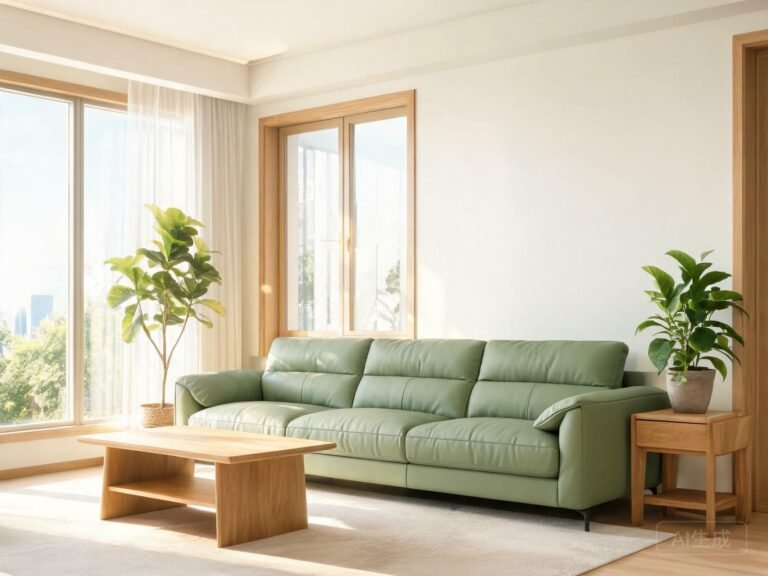
Silicone leather furniture achieves sustainable design goals without the performance compromises of bio-based polyurethane.
Watch how TOPSUN eliminates solvents and plasticizers from the production line while maintaining commercial-grade durability.
Because silicone leather lasts 10-15 years versus 3-5 for PU variants, lifetime material consumption drops by 60-70%. This is sustainability through durability. One meter of silicone leather replaces three meters of bio PU over a fifteen-year furniture lifecycle. The math favors long-lasting materials even when raw material renewability is lower. Durability is the most honest environmental metric. It reduces waste. It reduces shipping. It reduces replacement energy.
Conclusion: Choosing Sustainability That Survives Real-World Use
Bio polyurethane leather represents genuine material science innovation. But B2B buyers must weigh marketing claims against supply chain risk. They must check batch consistency. They must verify total lifecycle impact. A 30% renewable content figure impresses on a brochure. It matters less when the material fails Martindale testing. It matters less when color variance delays production. Real-world performance determines commercial value.
Silicone leather offers an alternative sustainability model. It eliminates solvents and petroleum derivatives. It extends service life by a factor of three. And it delivers the compliance documentation that ESG reporting requires. For procurement teams accountable to both finance and sustainability departments, durability is the most defensible environmental strategy. Longevity reduces carbon footprint more effectively than modest bio-content.
Download technical data sheets for full performance specifications and compliance documentation.
About TOPSUN
TOPSUN develops silicone leather as a solvent-free alternative to both conventional PU and emerging bio-based polyurethanes, eliminating plasticizers, phthalates, and VOC emissions from the production process. Our lifecycle assessment covers raw material sourcing through end-of-life recyclability, with REACH compliance across 247 SVHCs and batch-level traceability for brands reporting ESG metrics.
Operating from 60,000+ m² across Dongguan, Yichang, and Xiangyang, we produce 16,000 meters daily. Monthly capacity exceeds 500,000 meters. Our ISO 10993-5 testing shows 74.58% cell viability. FDA 21 CFR 175.300, EN 13773 Class 4, and FAR 25.853 certifications support medical, furniture, and aerospace applications. Standard lead time is 7-15 days. We deliver batch consistency that ESG programs can trust.