“Bio-based silicone leather” is the fastest-growing sustainability claim in the synthetic leather market — and the most misunderstood. Procurement teams see “bio-based” on a spec sheet and assume the material is derived from plants, fully renewable, and inherently superior to conventional silicone leather. None of those assumptions is automatically true.
Here’s what’s actually happening. Traditional silicone is made from silicon (derived from quartz, the second most abundant element in Earth’s crust) combined with methanol — historically a fossil-fuel derivative. Bio-based silicone replaces fossil methanol with plant-based biomethanol sourced from agricultural residues like straw, wheat, grass, and sugar beets. The final polymer is chemically identical, but a measurable percentage of its carbon comes from renewable sources instead of petroleum. That percentage — the bio-content — is the number that matters, and it varies dramatically by supplier and formulation.
We analyzed the bio-based silicone leather landscape, from WACKER’s BELSIL eco biomethanol technology to ASTM D6866 bio-content testing protocols. Here’s what the numbers actually tell you, how to separate genuine renewable content from greenwashing, and where bio-based silicone leather delivers real advantages over both conventional silicone and plant-based leather alternatives.
Request Bio-Based Material Samples

Silicone leather lifecycle — from quartz and plant-based methanol to finished material, showing the renewable carbon pathway
What “Bio-Based” Actually Means in Silicone Chemistry
To understand bio-based silicone leather, you need to understand the chemistry. Silicone polymers are built from siloxane (Si-O) backbones — silicon bonded to oxygen, with organic groups (methyl, phenyl) attached to the silicon atoms. The silicon comes from quartz (SiO2), which is reduced to metallurgical-grade silicon in a carbon arc furnace. So far, this is already a mineral-derived, non-petroleum process.
The organic component is where bio-based enters the picture. To turn silicon into silicone, you need methanol — and traditionally, methanol is produced from natural gas or coal. Bio-based silicone replaces this fossil methanol with plant-based biomethanol [$TRAE_REF](https://www3.brenntag.com/en-nam/co/wacker-belsil-eco-2026/linkedin-organic/) sourced from agricultural by-products. WACKER’s BELSIL eco line, for example, uses biomethanol from straw, wheat, grass, and sugar beet residues — maintaining identical performance characteristics while shifting the carbon source from fossil to renewable.
The key metric is bio-content — the percentage of total organic carbon in the material that comes from renewable sources rather than fossil fuels. This is measured using ASTM D6866 [$TRAE_REF](https://www.astm.org/d6866-22.html), a radiocarbon-based test that quantifies the ratio of biogenic to fossil carbon. A product labeled “bio-based silicone leather” might have 15% bio-content or 85% — the number makes all the difference.
The Bio-Content Spectrum: Where Most Suppliers Fall Short
Not all bio-based silicone leather is created equal. The bio-content percentage depends on three factors: (1) how much of the silicone formulation uses bio-based methanol, (2) whether other organic components in the leather (binders, pigments, backing treatments) also use renewable feedstocks, and (3) whether the supplier has invested in full supply-chain verification or is simply buying bio-based silicone intermediates for a fraction of the formulation.
In practice, the market breaks into three tiers:
| Tier | Bio-Content | What It Means | Verification |
|---|---|---|---|
| Marketing Bio-Based | 5–20% | Bio-based methanol used for one intermediate; rest is conventional. “Bio-based” label with minimal renewable content. | Supplier self-declaration only |
| Partial Bio-Based | 30–55% | Bio-based methanol for majority of silicone component; conventional binders and backing materials. | ASTM D6866 test available on request |
| High Bio-Based | 60–90%+ | Bio-based methanol across silicone chain plus renewable binders. Full supply-chain traceability. | ASTM D6866 + GRS certified |
The problem is that most products on the market sit in Tier 1 — they use the “bio-based” label with less than 20% renewable carbon content. Without an ASTM D6866 test report specifying the exact bio-content percentage, procurement teams have no way to distinguish a genuine high-bio-content material from a marketing exercise.

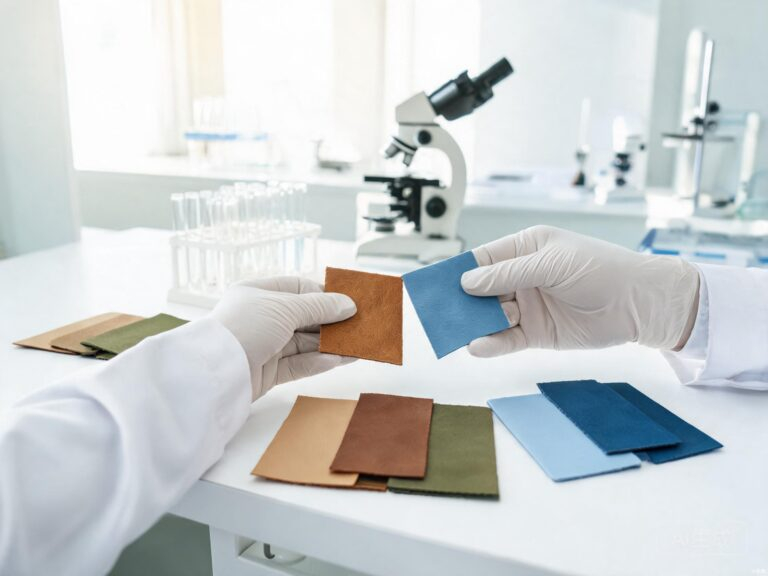
Plant-based leather alternatives — visually similar but fundamentally different chemistry from bio-based silicone leather
Bio-Based Silicone Leather vs Plant-Based Leather: 3 Critical Differences
B2B procurement teams often conflate “bio-based silicone leather” with “plant-based leather” — materials made from corn, cactus, apple, or mushroom. These are fundamentally different materials with dramatically different performance profiles. Understanding the distinction prevents costly specification mistakes.
1. Chemistry and Durability
Plant-based leathers use bio-polymers (PLA, PHA, plant protein resins) as the primary coating. These biopolymers have inherently poor UV stability, hydrolyze in humid environments, and lose 30–50% of tensile strength after 18–24 months of real-world use. Bio-based silicone leather uses the same Si-O backbone as conventional silicone — chemically stable across -40°C to 250°C, UV-stable for 1,000+ hours, and hydrolysis-proof. The renewable carbon source changes the sustainability profile, not the polymer performance.
2. Fire Safety
Plant-based leather is flammable — bio-polymers burn readily and require chemical flame retardant additives to meet fire safety standards. Bio-based silicone leather inherits the inherent flame retardancy of silicone polymers: self-extinguishing, EN 13773 Class 4 certified, low smoke, non-toxic. No chemical additives needed. For automotive, aviation, and contract furniture applications, this distinction is non-negotiable — plant-based leather cannot meet FAR 25.853 or BS 5852 Crib 5 without halogenated FR treatment.
3. Service Life and Circular Economy
Plant-based leather typically lasts 2–3 years before coating degradation forces replacement. Bio-based silicone leather delivers the same 10+ year service life as conventional silicone — and is 100% recyclable through the same silicone recycling streams. The longer service life means less material waste, fewer replacement cycles, and lower total environmental impact despite potentially lower bio-content percentages. Sustainability isn’t just about what the material is made from — it’s about how long it lasts and what happens at end of life.
| Property | Conventional Silicone | Bio-Based Silicone | Plant-Based Leather |
|---|---|---|---|
| Renewable carbon | 0% | 30–90%+ | 60–95% |
| Temperature range | -40°C to 250°C | -40°C to 250°C | -10°C to 80°C |
| UV resistance | 1,000+ hrs | 1,000+ hrs | 200–400 hrs |
| Flame retardancy | Inherent (Class 4) | Inherent (Class 4) | Flammable |
| Service life | 10+ years | 10+ years | 2–3 years |
| Recyclable | Yes | Yes | Limited |
| VOC emissions | Zero | Zero | Contains solvents |
| Hydrolysis resistance | Excellent | Excellent | Poor — degrades |

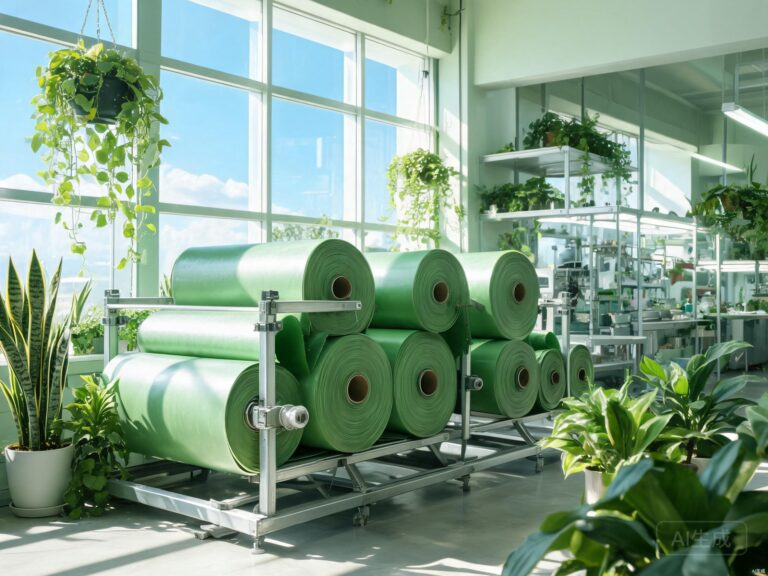
Raw material preparation — bio-based methanol and silicone intermediates are mixed and processed under controlled conditions
4 Steps to Verify Real Bio-Content (Not Greenwashing)
“Bio-based” without a number is marketing. Here’s how procurement teams can verify actual renewable carbon content and avoid greenwashed specifications:
- Request an ASTM D6866 test report. This radiocarbon analysis measures the exact percentage of biogenic carbon in the finished material. If the supplier can’t provide this, the bio-based claim is unverifiable. The report should come from an accredited lab (e.g., SGS, Intertek, Beta Analytic) and specify the sample tested and the date.
- Ask which components use bio-based feedstock. Is it just the methanol in the silicone polymer, or does it extend to binders, pigments, and backing treatments? A material with 40% bio-content in the silicone layer but conventional backing may have an overall bio-content of only 15%. Ask for the composite bio-content, not just one component.
- Check for GRS (Global Recycled Standard) or USDA BioPreferred certification. These third-party certifications provide independent verification of bio-based content claims and supply chain traceability. Materials carrying these certifications have undergone audit-level verification — not just a single lab test.
- Compare total environmental impact, not just bio-content. A plant-based leather with 90% bio-content but a 2-year service life has a larger lifetime environmental footprint than a bio-based silicone leather with 40% bio-content and a 10-year service life. Factor in replacement frequency, recyclability, and end-of-life pathway.
About TOPSUN: Sustainability Without Performance Compromise
TOPSUN manufactures eco-friendly silicone leather using a solvent-free dry coating process that eliminates VOC emissions entirely. The production facilities in Dongguan, Yichang, and Xiangyang operate with zero-solvent coating technology, producing silicone leather that is PVC-free, phthalate-free, BPA-free, formaldehyde-free, and 100% recyclable. TOPSUN is actively integrating bio-based methanol sources into the silicone supply chain to increase renewable carbon content while maintaining the 10+ year service life, inherent flame retardancy, and UV stability that make silicone leather the highest-performing synthetic material on the market. Free A4 swatches with sustainability documentation are available through the samples center.
Request Bio-Content Documentation
Bio-Based Silicone Leather: Frequently Asked Questions
Is bio-based silicone leather the same as plant-based leather?
No. Bio-based silicone leather uses plant-derived biomethanol as a feedstock for the silicone polymer — the final material is chemically identical to conventional silicone leather with the same durability, fire safety, and temperature resistance. Plant-based leather uses bio-polymers (corn, cactus, apple) as the primary material, which has fundamentally different — and generally inferior — performance characteristics including 2–3 year service life, poor UV resistance, and flammability.
How is bio-content measured in silicone leather?
Bio-content is measured using ASTM D6866, a radiocarbon-based test that quantifies the ratio of biogenic (renewable) carbon to fossil carbon in a material. The test measures the C-14 isotope content — biological materials contain a known amount of C-14 from atmospheric CO2, while fossil-derived materials have none (it has decayed over millions of years). The ratio gives a precise bio-content percentage that cannot be fabricated.
Does bio-based silicone leather perform differently from conventional silicone leather?
No. Because the bio-based methanol produces a chemically identical silicone polymer, the performance characteristics are identical: -40°C to 250°C temperature range, 1,000+ hour UV resistance, inherent EN 13773 Class 4 flame retardancy, 200,000+ Martindale abrasion cycles, and 10+ year service life. The renewable feedstock changes the carbon footprint, not the material properties.
What bio-content percentage should I look for when sourcing?
Look for materials with 30% or higher verified bio-content (ASTM D6866 tested). Below 30%, the renewable carbon contribution is marginal relative to the total material. Above 60%, the material represents a meaningful shift away from fossil carbon. Always request the actual test report — not a marketing claim — and verify that the percentage refers to the composite material, not just one component.
Eco-certifications overview — TOPSUN’s environmental compliance framework and sustainability verification
The Real Sustainability Question
Bio-based silicone leather represents a genuine step forward in reducing the fossil carbon footprint of synthetic leather — but only when the bio-content is verified, quantified, and accompanied by the same performance characteristics that make silicone leather the most durable synthetic material available. The procurement question isn’t “is it bio-based?” but “what percentage is bio-based, can you prove it, and does it still deliver 10+ years of service life, inherent fire safety, and full recyclability?”
Materials that answer all three questions affirmatively — verified bio-content, identical performance, circular end-of-life — are the ones worth specifying. Everything else is greenwashing with a spec sheet.
Request Free Sustainability Samples
Related: Eco-Friendly Silicone Leather | Leather Sustainability Report 2026 | Silicone Leather Circular Economy | Bio Leather | Carbon Neutral Leather