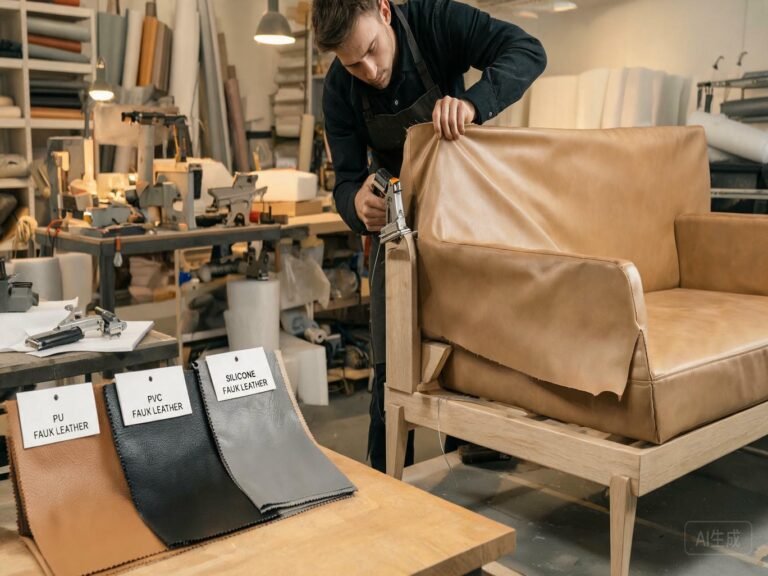
An upholstered bed frame is more than a support structure. It is a statement piece that anchors the bedroom, adds visual softness, and creates a cohesive design language between the headboard, side rails, and footboard. The bed frame upholstery material you choose affects not only aesthetics but also how the bed withstands daily contact with bare legs, bedding friction, and the occasional bump from a vacuum cleaner or moving furniture.
This guide examines what makes a bed frame upholstery material successful — from the side rails that brush against shins every morning to the footboard that takes the impact of kicked-off blankets.
Bed Frame Upholstery Material: The Hidden Wear Zones
Most buyers focus on the headboard when evaluating upholstered beds. But the side rails and footboard see their own unique wear patterns. Side rails contact bare legs and arms when people get in and out of bed. Footboards get kicked, bumped by luggage, and pressed against by bedding. The bottom edges drag against vacuum cleaners and mops during cleaning.
Fabric upholstery on bed frames looks beautiful in showrooms but deteriorates quickly in real bedrooms. The side rails develop shiny patches where skin oils rub against the fabric. The bottom edges pill from floor-level friction. And any liquid spill — a knocked-over water glass, a spilled cup of tea — soaks into the fabric and the foam beneath it.

PU leather offers better liquid resistance than fabric but struggles at the bottom edges where repeated floor contact causes surface wear. The corners and edges of upholstered bed frames are particularly vulnerable — these are the first areas to show degradation on PU-upholstered beds. For bedroom furniture manufacturers, this is a known warranty headache.
Why Side Rails and Footboards Need Different Considerations
Headboards lean against walls. Side rails and footboards stand exposed. They collect dust from foot traffic, get wiped by cleaning cloths, and endure physical impact. The material needs to resist abrasion from bedding movement — sheets and duvets slide against the side rails dozens of times per night as sleepers shift position.
The Martindale abrasion test (ASTM D4966) provides a useful benchmark [1]. Fabric bed frame upholstery at 15,000–25,000 cycles shows visible wear within 18 months from bedding friction alone. Silicone leather at 200,000+ cycles handles this continuous low-level abrasion without surface degradation.

Manufacturing insight: We recommend specifying the same material across headboard, side rails, and footboard. Mixed materials create color-matching challenges and inconsistent wear patterns. A unified silicone leather specification ensures the bed ages cohesively.
Bed Frame Upholstery Material and Cleaning Practicality
Bed frames are notoriously difficult to clean. The upholstery wraps around corners, tucks into seams, and sits close to the floor where dust accumulates. Fabric requires professional cleaning or removable covers — both add cost and complexity. PU leather wipes clean but scratches easily at the bottom edges where vacuum cleaners make contact.
Silicone leather simplifies maintenance significantly. The non-porous surface does not trap dust in fibers. A damp cloth handles routine cleaning. The surface resists scratching from vacuum contact better than PU. And for hospitality applications — hotels, serviced apartments, Airbnb properties — the ability to sanitize with diluted bleach between guests is a practical necessity.

For upholstered bedroom collections, material consistency across the full bed — headboard, rails, and footboard — creates a more premium perception and reduces after-sales issues.
See how silicone leather performs in luxury bedroom furniture applications
Bed Frame Material Comparison
| Material | Side Rail Wear | Footboard Impact | Cleaning Ease | Bottom Edge Durability |
|---|---|---|---|---|
| Fabric | Poor — oils, pilling | Poor — stains, tears | Difficult — absorbs spills | Poor — frays at floor contact |
| PU leather | Moderate — surface wear | Moderate — scratches | Moderate — wipes clean | Poor — peels at edges |
| PVC vinyl | Moderate — gets sticky | Good — impact resistant | Good — wipes clean | Moderate — cracks over time |
| Silicone leather | Excellent — oil-resistant | Excellent — scratch-resistant | Excellent — bleach-safe | Excellent — flexible edges |
Request Bed Frame Material Swatches
Frequently Asked Questions
Should the bed frame use the same material as the headboard?
Yes, whenever possible. Using different materials creates color-matching challenges and inconsistent aging. A silicone leather headboard paired with fabric side rails will look mismatched within a year as the materials age at different rates. For cohesive furniture design, unified material specification is always the better approach.
How thick should bed frame upholstery be?
Bed frame upholstery typically ranges from 0.8mm to 1.2mm. Thinner materials work better for tight corners and detailed stitching. Thicker materials provide a more cushioned feel on side rails but require more generous seam allowances. We recommend 1.0mm as a versatile standard for most bed frame applications.
Does silicone leather work on platform beds without a footboard?
Absolutely. Platform beds with upholstered side rails and headboards are one of our most common applications. The material wraps cleanly around the platform edges and maintains its appearance even at the low-profile rails that sit close to the floor — an area where fabric frays and PU peels.
Building Bed Frames That Stay Luxurious
An upholstered bed frame is a long-term investment for the end customer. Choosing a material that handles the unique wear patterns of side rails and footboards — skin oils, bedding friction, floor contact, and cleaning chemicals — ensures the bed looks as good in year five as it did on delivery day.
If you are developing an upholstered bed collection and want to evaluate materials across headboard, rails, and footboard applications, we can provide coordinated swatches and project-specific recommendations.
Talk to Our Bedroom Furniture Team
About TOPSUN
TOPSUN manufactures silicone leather for bedroom furniture, upholstered beds, and hospitality interior projects. Our materials offer 200,000+ Martindale cycles, custom color and texture matching, and batch consistency for large furniture collections.
Relevant standards: REACH compliant, RoHS compliant, OEKO-TEX Standard 100, FDA 21 CFR 177.2600.