Most buyers judge artificial leather by how it looks on a sample card. That is a mistake. Two rolls can look identical and behave nothing alike after six months on a sofa or a car seat. The difference is made upstream, in the artificial leather manufacturing process. Run the same seven steps with tight control and you get a material that lasts a decade. Run them loosely and you get peeling claims within a year. This guide walks each step and flags where defects are born.
What Artificial Leather Is Made Of
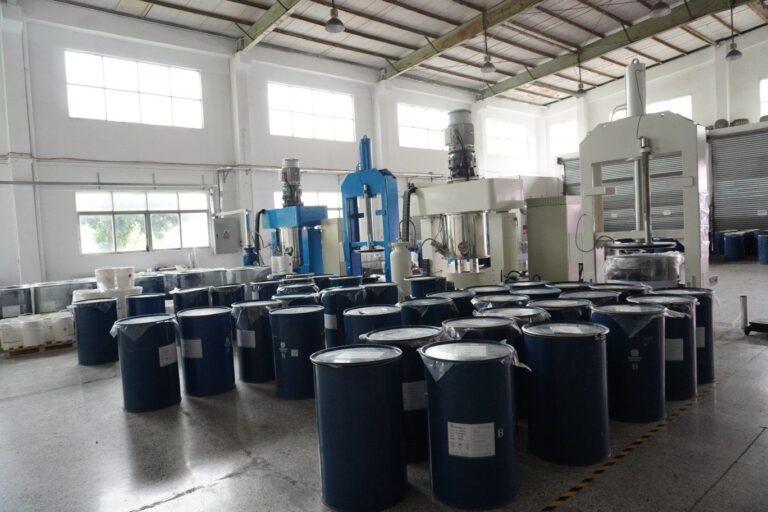
Every recipe starts with a base fabric, usually polyester, cotton, or microfiber. What goes on top decides everything else. PVC leather uses resin mixed with plasticizers such as DOP or DBP, plus stabilizers and fillers. PU leather relies on polyurethane made from polyols and isocyanates, often carried in DMF solvent. Silicone leather takes a different route entirely: a solvent-free silicone polymer cured directly onto the substrate.
The choice of chemistry explains most performance gaps later. Plasticizers give PVC its low cost but can migrate out over time. DMF gives PU its soft, leather-like hand but must be washed out or recovered. In our coating plant, we switched gradually to 100% solvent-free silicone systems precisely because there is nothing left to migrate, evaporate, or recover.

Water-based PU coating represents the industry’s shift away from DMF solvents.
Steps 1-3 of the Artificial Leather Manufacturing Process
Step 1 is base fabric preparation. The roll is unwound, inspected, and leveled so the coating has a clean, uniform surface to bond to. Any skipped defect here, a slub or a loose thread, telegraphs straight through the finished surface.
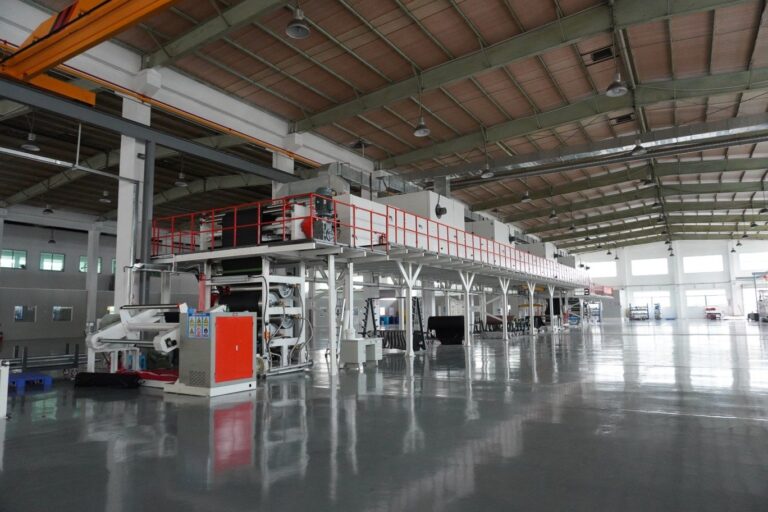
Step 2 is formulation. Resin, additives, and colorants are weighed and mixed under controlled viscosity. Step 3 is application, and this is where the two classic methods split. Calendering squeezes softened PVC into a film through heated multi-roller stacks before lamination. Coating spreads liquid PU or silicone paste across the web at a set thickness. You can see a full coating and calendering walkthrough on our factory production page, including the inline thickness monitoring we run at this stage.

Coating thickness at this stage determines flexibility, hand feel, and wear life.
Steps 4-5: Laminating, Gelling, and Embossing
Step 4 bonds the layers. In PVC calendered goods, the hot film meets the base fabric under pressure. In dry-process PU, the formulation is first cast onto release paper, dried, then laminated to the fabric and peeled away, leaving a fine surface. Wet-process PU takes a detour through a coagulation bath, where DMF exchanges with water and leaves behind a porous, breathable structure.
Step 5 is embossing and surface treatment. Heated engraved rollers press in the grain, lychee, cowhide, or custom patterns, while topcoats add matteness or gloss. Texture depth is a trade-off: deep grain hides substrate flaws but reduces flex life if overdone. For a closer look at surface options, see this introduction to what silicone leather is and how it is built.

Heated calender rollers set film thickness and, with engraved cylinders, the surface grain.
Steps 6-7: Cooling, Winding, and Quality Control
Step 6 cools the web so the surface sets before it touches anything. Step 7 winds the finished roll, but a disciplined line keeps testing long after winding. Standard quality control tests for artificial leather include abrasion cycles, flex endurance, color fastness, and dimensional checks across the width.
We treat step 7 as a gate, not a formality. Every order ships with SGS test reports, and spectrophotometer checks hold color difference to a tight Delta E window before any roll is released. Sampling pulls Martindale specimens straight from the production floor, not from a reserved perfect roll.

Abrasion, flex, and tensile benches sit beside the line so sampling stays honest.
See the full production line in motion, from unwinding to final roll inspection.
Where Most Defects Start
Defect patterns map almost perfectly onto the seven steps. Coating thickness drift causes stiff patches and early wear. Under-cured surfaces tack up in hot containers. Missed embossing depth shows as shiny flats after a few months of use. And the classic complaint, peeling, traces back to plasticizer migration in PVC or hydrolysis in polyester-based PU.
We have opened returned goods where a budget PVC cover hardened and cracked within two summers. The failure was not abuse. It was chemistry chosen three steps earlier, at formulation. That is why the manufacturing process deserves as much attention as the price list when you compare suppliers.
Is PU leather manufactured differently from PVC leather?
Yes. PVC is plasticized, calendered or pasted, then gelled with heat. PU is coated as a liquid polymer, either through a wet coagulation bath or a dry release-paper process, which is why it feels softer and drapes better than PVC.
Why does cheap artificial leather peel after a year or two?
Usually plasticizer loss. As DOP or DBP migrates out of PVC, the film shrinks and separates from the base fabric. Solvent-free silicone and well-formulated PU avoid this failure mode because they have no plasticizer to lose.
The Artificial Leather Manufacturing Process, Summed Up
The artificial leather manufacturing process rewards buyers who audit it. Before you sign with any supplier, work through this list:
- Ask which method applies to your product: calendered PVC, dry PU, wet PU, or silicone coating.
- Request coating thickness and curing records for the actual production run.
- Demand abrasion and flex data tied to a named test standard, not adjectives.
- Confirm whether plasticizers, DMF, or heavy metals appear anywhere in the recipe.
Suppliers who answer those four questions easily are the ones whose rolls will still look right in year five.
About TOPSUN
TOPSUN manufactures solvent-free silicone leather for furniture, automotive, marine, and healthcare programs across 30+ countries.
Inline coating-thickness monitoring, SGS reports with every order, Martindale 200,000+ cycles on high-performance grades, and third-party inspection welcome.
References
- https://www.winiwecoleather.com/comparison-of-p… — PVC/PU/TPU production process steps, raw materials including DOP/DBP plasticizers, and 2-3 year PVC service life
- https://jinzhihangmachinery.com/synthetic-leath… — 11-step synthetic leather production sequence from base material preparation through embossing