When a European customer sends an RFQ for simili leather, what are you supposed to quote? The word arrived in trade French as simili cuir, close to “imitation leather,” and it never settled on one material. On today’s marketplaces the same term lists vinyl-coated fabric and PU-coated fabric side by side. Quote the wrong construction and you either lose the order on price or win it at a margin you cannot deliver.
This guide treats the word as a procurement problem, not a vocabulary one. It shows the price band the term hides and the constructions it can point to. The four lines that turn an ambiguous simili RFQ into a quotable specification close the guide.
What Simili Leather Meant, and What It Means on a Modern RFQ
Historically, simili meant vinyl. Mid-century European upholstery trades used it for PVC-coated fabric: a woven or knitted base, a plasticized vinyl layer, an embossed grain. Regional trade names did the same work. In Germany, Skai became the generic word for vinyl upholstery. In Quebec’s official terminology, the English equivalent is simply leatherette.
The usage loosened as PU coatings took share from vinyl. French marketplace listings now apply simili cuir to PVC prints and PU-coated fabrics without distinction. One French fabric retailer currently sells “simili-cuir enduit,” or coated imitation leather, under the Spradling marine brand at €36.67 per meter for a PU-coated construction. A word that once meant budget vinyl now legitimately covers premium coated fabric.

The classic reading of simili: a plasticized coating on a textile base, embossed to read as hide.
One Word, Three Materials, a 10x Price Band
Put current numbers side by side and the ambiguity turns expensive. Factory-direct PVC upholstery leather from Chinese suppliers runs roughly US$0.85 to US$3.35 per meter on typical sofa-grade listings. The French retail sheet above sits at €36.67 per meter for a branded PU marine fabric, and that retail figure includes EU distribution, not just material. Two constructions, one word, and a span of more than ten times between the factory vinyl floor and the European retail ceiling.
The gap is not a scandal; it is three different products sharing a name. Vinyl simili is the budget workhorse. PU simili buys a softer hand and better drape at mid-range. Premium coated fabrics, including silicone-coated constructions, add hydrolysis resistance and low emissions for demanding interiors. A buyer who specifies only “simili” is inviting the supplier to pick whichever of those three maximizes the supplier’s margin.

A swatch rack is where an ambiguous word becomes a concrete grade: color, coating, backing, weight.
Talk to Our Sourcing Team
The Spec Lines That Separate PVC From PU Before You Pay
You do not need a chemistry degree to pin down what a supplier means. Four lines on the spec sheet settle it:
- Coating family in writing. “PVC” or “polyurethane” as a declared coating, not “synthetic,” “imitation,” or “simili” alone.
- Plasticizer statement for vinyl. PVC needs plasticizers to stay soft; ask which system and whether phthalate-free documentation exists.
- Hydrolysis expectation for PU. Polyurethane in humid service carries a known hydrolysis clock; ask for chamber hours or a stated service environment.
- Cold behavior. Standard vinyl stiffens and can crack in cold rooms and unheated vehicles; PU stays more flexible. If the product ships to Nordic or alpine markets, this line decides returns.
We answer simili RFQs weekly, and the first reply we send is never a price. It is a four-line spec question. Most buyers respond with the target construction within a day. The ones who do not usually wanted the cheapest vinyl all along, which is also useful to know early. For the broader vocabulary, our introduction to silicone leather maps how the coated-fabric families relate. The full PVC-versus-PU breakdown lives in our PU and PVC difference matrix.

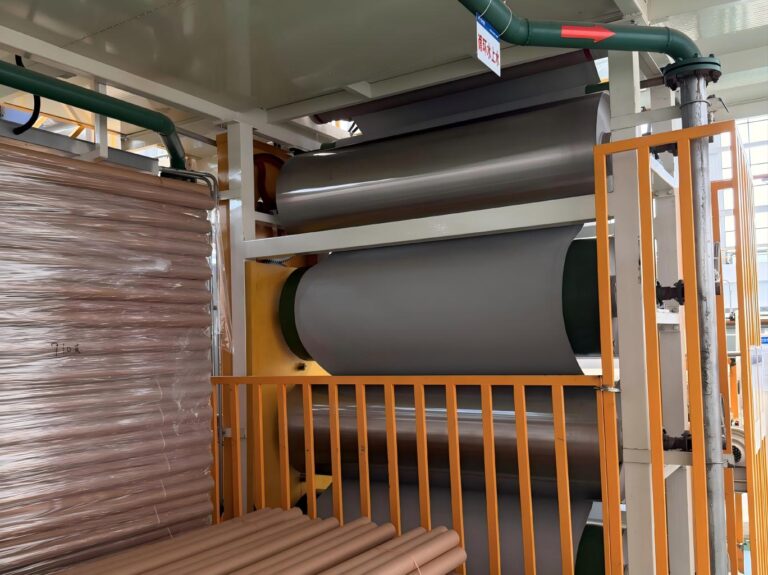
Calender lines like this one form the classic vinyl simili: rollers fuse the plasticized layer onto the textile base.
Which Material to Quote: A Buyer’s Judgment Table
Once the four lines come back, the decision writes itself:
| If the RFQ context reads… | Quote this construction | Say this back to the buyer |
|---|---|---|
| Budget seating, price-first, temperate climate | PVC-coated fabric | “Simili leather, vinyl construction, phthalate-free docs available.” |
| Soft hand, furniture or fashion, mid-range price | PU-coated fabric | “Simili leather, polyurethane coating, hydrolysis hours on request.” |
| Contract, marine, medical, or humid-climate service | Premium coated fabric (silicone-class) | “Coated fabric beyond simili grade: hydrolysis-proof, low-VOC, certified.” |
One habit keeps all three rows safe: repeat the construction back in your quotation. Our furniture-sector customers who adopted this rule stopped most spec disputes before sample stage, and the ones quoting into hotel projects also lean on the furniture and sofa application notes to match grade to traffic. The word simili leather will keep doing its blurry work in the market. The contract you sign does not have to be blurry with it.
References
1. https://www.tissu.com/93-spradling — French retail listing: “simili-cuir enduit” PU marine-grade coated fabric at €36.67/m
2. https://www.made-in-china.com/products-search/h… — factory-direct PVC upholstery leather price band, typical sofa grades roughly US$0.85–3.35/m