Have you heard the phrase on your shop floor yet? A customer squeezes a cushion edge, feels that smooth, cool, slightly plastic surface, and says: “So this one is the pretend leather, right?” Do you correct them, agree with them, or sell around them? And do you know which answer costs you a review, a return, or a repeat customer?
This guide is written from behind the counter, not from behind a lab bench. Pretend leather is not a material. It is shopper language, a verdict customers hand you before you get a word in. Here is what the phrase actually describes, why it has stuck, and how to answer it in a way that protects both the sale and the customer.

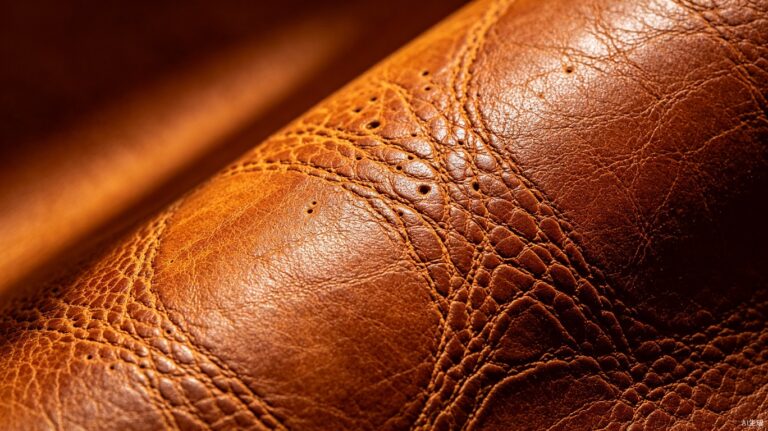
What shoppers call pretend leather starts here: a coating line, not a tannery.
Where the Phrase Comes From
Buying guides taught customers the word. Furniture advice pages routinely tell shoppers to avoid bonded leather and pretend leather because those options degrade quickly. The lesson stuck. When a surface feels too smooth, too uniform, or too cool to be hide, customers reach for the phrase they were warned about. The phrase is a defense mechanism with a purchase order behind it.
What Shoppers Are Actually Describing
Nine times out of ten, the customer is holding bonded leather or a low-grade coated fabric. Bonded leather is a composite: leather offcuts and dust ground into a pulp, bonded with polyurethane onto a fabric or paper backing, and topped with an embossed film. The leather content by surface area can be as low as 10 to 20 percent. The rest is binder, adhesive, and backing.
The feel gives it away. Genuine hide carries a random grain and a warmth that plastic never matches. Bonded surfaces read uniformly smooth, slightly plastic-like, and cool to the touch. Customers cannot name the chemistry. They can name the feeling, and pretend leather is the name they picked.
The failure confirms the verdict. The polyurethane topcoat on bonded leather does not bond permanently to the layers beneath. Heat, sweat, and flex break it down, and peeling typically begins within 2 to 5 years. Repair is not an option, because the failure is structural, not cosmetic. That timeline is why the phrase carries a threat: customers who say pretend leather are telling you they already distrust the category.

The tell customers feel before they can name: uniform emboss, no natural grain randomness.
The Materials Behind the Phrase
The honest answer starts with naming what the swatch actually is. The table below is the floor version.
| Label on the tag | What it actually is | What to say on the floor |
|---|---|---|
| Bonded leather | Leather fibers, as little as 10–20 percent, in a PU binder on backing | “Recycled leather content in a polyurethane matrix” |
| PU leather | Polyurethane coating on textile | “Polyurethane-coated fabric, no hide content” |
| PVC leather | Vinyl film on textile | “Vinyl-coated fabric, wipeable, stiffer hand” |
| Bicast leather | Split-hide backing sealed under a PU film | “Split hide under a polyurethane film” |
Sellers do not need chemistry fluency. They need three honest nouns: coating, backing, content. A customer who hears them stops using pretend leather and starts asking better questions.

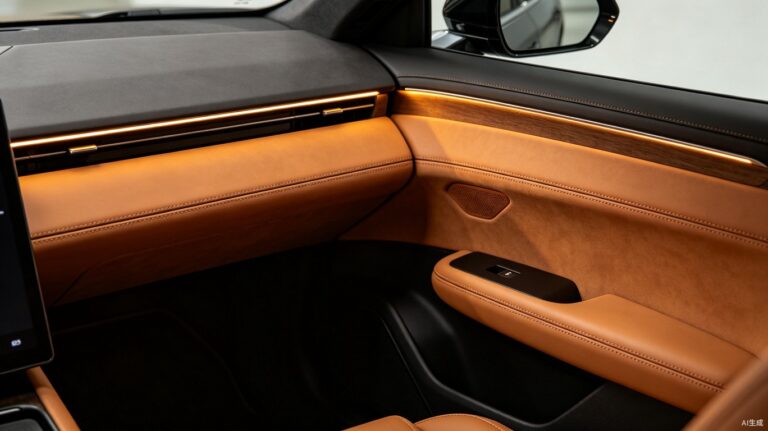
The verdict happens here: one squeeze of a cushion edge, before any spec sheet is read.
How to Answer the Phrase on the Floor
Answer the feeling first, then the facts. Agree that the surface is not hide, because the customer already knows. Name the coating and the content. Then set the expectations the tag omits: how the material ages, how it cleans, and what it costs to replace.
Honesty is cheaper than a return. For care rules, the notes on our cleaning and maintenance page are the version we hand retailers. For the purchase-order side of the same honesty, the simili leather notes in this series show how one word on an RFQ can span three materials unless it is pinned down.
We manufacture coated materials, so we have a stake in honest naming. Every swatch we ship states its coating chemistry, its backing, and its measured content. Our furniture-grade builds run the programs shown on the furniture and sofa applications page. Retailers who sell our materials get the care sheet and the aging data in the same envelope, so the floor conversation starts with facts.
Pretend leather is not a material; it is a verdict customers write before you speak. Name the material first, and the verdict writes itself honestly.
Talk to Our Materials Desk
Request Honestly-Labeled Samples
References
1. https://kukuusofa.co.uk/blogs/news/why-cheap-le… — Bonded leather composition (10–20 percent leather by surface area), the plastic-like feel cue, and the 2–5 year peeling window
2. https://www.primeleatherfix.com/post/bonded-lea… — Material-level analysis: fiber content, tensile-strength gap versus genuine hide, and the hydrolysis-driven delamination that makes bonded leather unrepairable