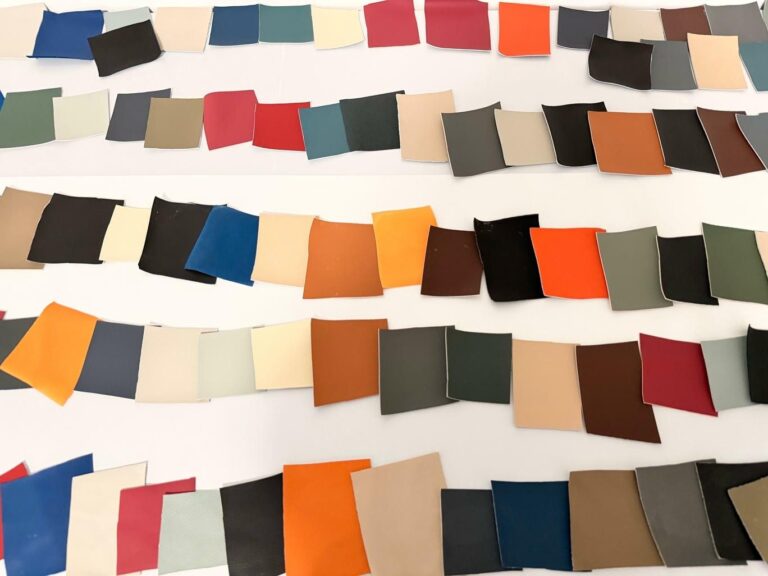
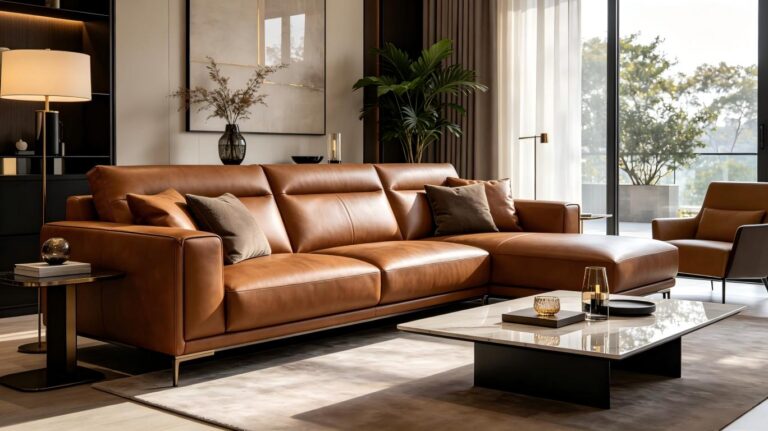
Faux leather products fill far more shelf space than most buyers realize. Footwear alone absorbs an estimated 35% of global artificial leather demand in 2026, and furnishing adds another 15%. Add bags, automotive interiors, clothing, and medical seating, and the category map touches nearly every consumer product shelf. The interesting question is not where faux leather gets used. It is which products earn money with it, and what each one demands from the material.
This guide walks the product categories where faux leather wins today, with the market data behind each one and the spec discipline it requires. The pattern is consistent from category to category. The product decides the test, and the test decides the supplier.
Where Faux Leather Products Actually Sell
Market research splits artificial leather demand into six application buckets, and three of them dominate. The rest are smaller but growing on sustainability tailwinds:
- Footwear — the largest bucket at an estimated 35% of 2026 demand, driven by uppers that need softness and repeatable color
- Furnishing — sofas, chairs, and commercial seating at roughly 15% of demand
- Automotive — interiors where odor, flame, and abrasion rules are strictest
- Bags and clothing — fashion-led volumes where texture and hand feel sell the product
- Others — medical, electronics, packaging, and sports goods
Furniture alone tells a growth story worth noting. Artificial leather for furniture was valued at $14.5 billion in 2025 and is projected to reach $23.06 billion by 2032, a 6.85% CAGR. Inside that figure, PU leather holds a 59.4% type share. Buyers reading those numbers should read the fine print too: volume is not the same as satisfaction, and each category below has its own failure history.

One substrate, many product categories; the spec changes faster than the color.
Furniture and Contract Seating
Furniture splits three ways: residential takes 55.7% of the market, commercial and office 29.62%, and hospitality 14.69%. Those splits predict the failure patterns. Residential sofas live gentle lives. Hospitality booths do not. A restaurant booth gets wiped with harsh chemicals dozens of times a day and sat on from breakfast to last call.
A hotel group we served last year learned this in a pilot. Their PU booths looked right on install and bubbled at the seams within a year under alcohol-based cleaner. The replacement program specified silicone-coated material instead, with abrasion rated past 200,000 Martindale cycles and stain resistance at Level 5, alcohol-safe. Two years in, the seating still passes daily disinfection. Contract buyers should treat EN 13773 flame class and cleanability data as entry tickets, not bonuses. Our furniture and sofa application page lists the exact spec lines for both residential and contract programs.

Residential volume is the majority; contract duty is where materials are proven.
Footwear, Bags, and Fashion Accessories
Footwear is the volume king, and it punishes the wrong material fast. Shoe uppers flex tens of thousands of times per month, so flex endurance and surface cracking decide returns more than abrasion does. Fashion accessories add a second constraint: color. A bag line lives or dies on whether the season’s shade matches across every unit and every production batch.
That is a spectrophotometer question, not a lighting-booth question. Our color control runs on Delta E measurement against Pantone and RAL references, with Grade 4-5 color fastness documented per batch. Thin-gauge lines matter here too. Ultra-thin material at 0.23-0.8 mm bends through 360 degrees for small-goods construction where thick upholstery stock would crack at the fold.

Fashion volume is a batch-consistency problem long before it is a design problem.
Automotive and Marine Interiors
Vehicle cabins and boat decks share one trait: the buyer cannot easily leave, and the material cannot hide. Automotive spec sheets demand FMVSS 302 flame performance and low-odor chemistry, because off-gassing in a hot cabin generates warranty claims and windshield fog. Marine adds salt. Salt-spray testing past 1,000 hours under ASTM B117 is our marine-grade bar, paired with UV stability past 1,500 hours for decks and open-cockpit seating.
An EV interior program we supported last year made the hierarchy clear. The brand’s tender scored chemistry first, abrasion second, price third, which is the reverse of a furniture tender. Buyers moving between these categories should rewrite the weighting before they reuse an old spec. The automotive interiors page shows how the same material family carries different test stacks per vehicle zone.
Healthcare, Kids, and Public-Contact Products
The most demanding faux leather products never appear in a fashion catalog. Medical chairs, baby products, and kindergarten furniture put coated textiles in skin contact, sometimes mouth contact, for years. Regulation follows. ISO 10993 biocompatibility governs medical contact. FDA 21 CFR applies to food-contact and juvenile goods. REACH and PAHs restrict what the coating may contain at all.
A children’s furniture client showed why the paperwork is a product feature. Their retail onboarding required batch-level compliance documents before the first container shipped. Silicone’s chemistry simplifies that file: no plasticizers, no phthalates, no BPA, and solvent-free production documented under ISO 16000-6. Buyers in this category should ask for the certificates with test dates, not the logo sheet. Our baby and kids applications page documents the full stack per product type.
Matching the Product to the Material: A Short Checklist
The category map rewards buyers who spec by service condition, not by catalog mood. Before the next faux leather products RFQ goes out, run this sequence:
- Write the service condition first: humidity, cleaning chemicals, sun, flex cycles, skin contact
- Pick the two or three tests that predict failure in that condition, and name the methods
- Match the construction class: thin-gauge for flex goods, contract-grade for public seating, certified chemistry for regulated contact
- Require batch-level compliance files with dates for anything regulated
- Sample against the real service condition before the price negotiation, not after
Do that, and the category data becomes leverage instead of noise. You will know which bucket your product sits in, which numbers guard it, and which suppliers can prove both. If a program spans several categories at once, start the conversation with samples matched to each service condition rather than one general swatch card.
Request Category-Matched Sample Sets
What products are made from faux leather?
The main groups are footwear, furniture and contract seating, automotive and marine interiors, bags and clothing, and a growing set of medical, electronics, and juvenile goods. Footwear and furnishing together account for roughly half of global artificial leather demand, with automotive close behind in value terms.
Is faux leather durable enough for sofas?
Grade decides that, not the category label. Contract-grade material with 200,000+ Martindale cycles and alcohol-safe cleanability handles hospitality duty for years. Mid-grade PU in the same frame may peel within three to five, especially in humid climates. Check the abrasion, hydrolysis, and cleaning data before judging the category.
Which faux leather products need certification?
Anything with skin, food, or child contact, plus anything sold into regulated flame markets. Medical seating wants ISO 10993, juvenile products want FDA food-contact documentation, and furniture for California or the UK wants CAL 117 or BS 5852 on file. Ask for certificates with test dates per batch.
About TOPSUN
TOPSUN supplies silicone leather across all major faux leather product categories, from footwear and fashion accessories to contract seating, automotive cabins, marine decks, and medical furniture.
Monthly capacity runs to 500,000 meters with MOQ from 500 meters and 7-15 day delivery, and every roll ships with batch test data attached.
References
1. https://www.globalmarketstatistics.com/market-r… — Application split: footwear an estimated 35% of 2026 artificial leather demand, furnishing about 15%; segments cover footwear, clothing, furnishing, automotive, bags (2026)
2. https://pmarketresearch.com/worldwide-artificia… — Furniture artificial leather $14.5B (2025) to $23.06B (2032), CAGR 6.85%; residential 55.7%, commercial/office 29.62%; PU type share 59.4%