Stand at the start of a coating line and you can watch the whole economics of textile production pass by on one roller. A base fabric enters at one end. Fifteen minutes later, a finished roll exits at the other, worth ten times more. What happens between those two points decides whether that roll serves for a decade or peels apart in two summers. Walk the line with us and see where quality is actually made.
Where Cheap Coated Textiles Come From
Every shortcut on the line starts upstream. A mill that skips incoming fabric inspection accepts rolls with tension inconsistency, weaving defects, or contamination. The coating then freezes those flaws in place. A recipe that thins the prime coat saves cents per meter and quietly removes years of service life.
The coated fabric manufacturing process rewards discipline the same way it punishes shortcuts. Substrate choice matters first: a dense, well-inspected base distributes stress evenly, which is why our PET-based silicone leather starts with engineered PET fabric rather than whatever is cheapest that week.

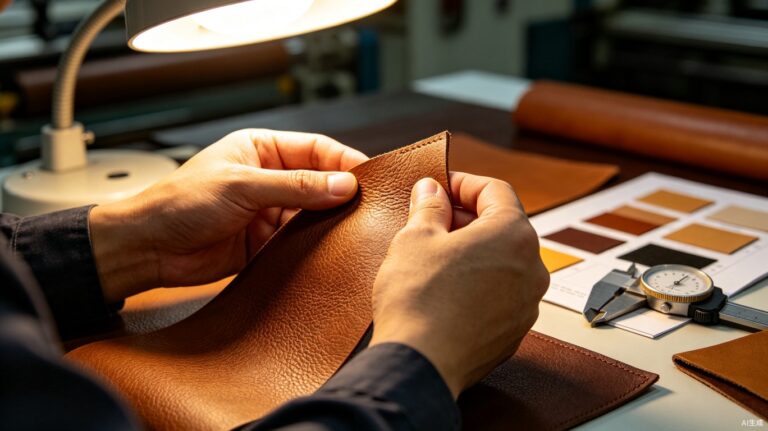
Every roll gets weighed and inspected before it earns a place on the line.
Textile Production Steps That Protect Your Specs
A disciplined line runs four stations, and each one has a checkpoint worth knowing as a buyer:
- Base fabric intake. Weights get verified against the spec sheet, and rolls with tension or weaving faults never reach coating.
- Prime coating. A thin bonding layer ties the polymer to the fabric. Coating thickness gets monitored in-line, because deviations here surface later as delamination.
- Calendering and lamination. Heated rollers press the compound into a uniform film, then bond it to the base under controlled pressure. This is the calendering process used across the textile industry. Roll temperature and speed decide adhesion quality.
- Curing and winding. Ovens hold a narrow temperature window so the coating cross-links fully before winding.
If you want the full walkthrough with equipment photos, our factory production page documents the line station by station.
See the coating line in motion, from unwinding to finished roll.

Coating thickness is watched in-line, not discovered in complaints.
What Textile Production Discipline Buys You
Process control shows up directly in test results. Batches that run through full intake inspection and monitored curing clear 200,000 Martindale cycles in our High Performance line, and climate-chamber testing at 85°C and 85% relative humidity confirms fourteen weeks without delamination. Rolls that skip those checkpoints cannot make the same claim at any price.
The market is rewarding that rigor. The global coated fabrics market is projected to reach USD 52.2 billion in 2026 and USD 83.5 billion by 2036, with transportation alone taking a 30% share. Industry analysts also note a shift in buying behavior, from low-cost purchasing toward specification fit and lifecycle performance. As a silicone leather manufacturer, we see that shift in every RFQ that arrives with test requirements attached.

Calender rollers: where temperature, pressure, and speed become adhesion.
The Line Decides the Roll
Textile production is where durability is manufactured, not where it is promised. A cheap base fabric fails downstream precisely because the checkpoints that catch its weaknesses were never run. Buyers who evaluate the line, not just the laminate, buy fewer surprises.
Request Production-Line Samples
About TOPSUN
TOPSUN runs a dedicated coating and calendering facility producing silicone-coated textiles for furniture, automotive, marine, and medical programs.
In-line coating monitoring, multi-stage QC with spectrophotometer color control, 500,000 m monthly capacity, and third-party inspection welcome through SGS, BV, and TÜV.
Frequently Asked Questions
What is the difference between calendering and direct coating?
Calendering first forms the compound into a film between heated rollers. It then laminates that film to the base fabric under heat and pressure. Direct coating applies the compound onto the moving fabric as a paste. Calendering gives denser, more uniform films for heavy-duty goods, while direct coating suits lighter, more flexible products.
Can buyers visit or audit the production line?
Yes. We welcome third-party inspection through SGS, BV, or TÜV, and buyer audits of our workshops are a normal part of large program onboarding. A supplier who hesitates at an audit request is telling you something the quotation did not.
References
1. https://www.prnewswire.com/news-releases/global… – Coated fabrics market of USD 52.2B in 2026 rising to USD 83.5B by 2036 at 4.8% CAGR; transportation holds 30% share (2026)