A roll of terracotta coated fabric sits on the incoming inspection bench. The purchase order beside it lists 500 meters, one color code, and a delivery week. The end use reads: upholstery for outdoor lounge furniture at a coastal resort. Nothing on the page mentions sunlight hours, humidity, or cleaning chemicals.
That single omission is how most textile uses go wrong. The fabric is rarely the villain. The failure starts earlier, when nobody translated the use into conditions and the conditions into tests. After years of logging incoming inspections, the pattern holds without exception. A use claim is a test order. If the claim never became one, the fabric ships blind.
The Roll on the Bench, and What the Order Didn’t Say
The bench check answers four questions fast. Thickness reads against the spec window, which for coated fabrics runs 0.23 to 3.0 mm. Color compares against the approved swatch under standard light. Surface grain and finish get a visual pass. Packaging and labeling close the list.
What the bench cannot see matters more. No visual check reveals UV life, hydrolysis resistance, or disinfectant compatibility. Those properties live in the test file, not in the roll. So the inspection question shifts from the fabric to the paperwork. Three words decide the file: where, what agents, how often.

Incoming inspection reads the roll; only the test file can read the use.
The terracotta order named a place but no conditions. That gap is the whole story of the three cases below. Each one came through this bench. Each one carried a confident use claim. Each one was missing the test stack that the claim implied.
Case 1: “Outdoor Furniture” and the Hydrolysis Clock
A coastal resort patio runs two failure clocks at once. The first is light. Standard xenon arc weathering, specified in ISO 105-B04, evaluates color under the combined effect of light and water, which is exactly what a patio delivers every afternoon. For textiles that stay outside permanently, ISO points buyers toward the more demanding B10 weathering protocols. The question to ask is simple: how many hours, and at what grade. A serious outdoor file shows 1,500 hours or more with color fastness at grade 4 to 5.
The second clock is hydrolysis, and it is the quieter killer. Heat and humidity attack coating polymers over months, not days. The accelerated version compresses that into a chamber: 85 degrees Celsius, 85 percent relative humidity, 14 weeks. A coating that cracks or peels in the chamber will crack on a patio frame. PVC and low-grade PU lose plasticizers and go brittle. Silicone carries no plasticizers, which removes that failure path entirely. Our hydrolysis-resistant silicone leather page lists the protocol in full.
The terracotta file held a generic colorfastness sheet and nothing else. No weathering hours, no hydrolysis result. The verdict took one line: conditionally rejected until the two tests arrive. They did, six weeks later, and the program ran. The claim had been right. It just had never been proven.
Case 2: “Airport Seating” and the 40,000-Cycle Floor
Terminal chairs are the hardest public contract in upholstery. They work 18-hour days. Belt buckles drag across the seat. Trolley corners cut the edges. Night crews wipe everything down with whatever is in the bucket. The purchase order said “high durability”. That word needed a number.
The contract textile tiers give it one. ACT places 20,000 Martindale cycles or 15,000 Wyzenbeek double rubs at the low-traffic commercial line. High-traffic public spaces start at 40,000 Martindale or 30,000 Wyzenbeek. Coated fabrics carry their own bar: 50,000 Wyzenbeek double rubs. Classification guides for upholstery read the same ladder. General domestic sits at 15,000 to 25,000. Heavy domestic and light contract run 25,000 to 40,000.

Terminal seating: flat abrasion is only half the test; edges and chemistry finish the job.
ACT adds a warning that buyers should tape to the spec. The same fabric can vary by 60 percent or more between abrasion runs. Wyzenbeek and Martindale results do not correlate, so they cannot trade places. A fabric with twice the cycles does not last twice as long. The right response is to name the method, state the floor, and accept a range instead of a magic number.
One more gap hides in the method itself. Martindale and Wyzenbeek measure flat abrasion. Terminal seating fails at seams and edges first. So the file for this case also needed flex and fold data, not just a rub count.
Watch a performance test run against a use-driven specification.
Case 3: “Healthcare Waiting Rooms” and the Disinfectant Clause
The third roll arrived with a swatch card stamped “antimicrobial”. That stamp answers the wrong question. In a waiting room, the daily enemy is the wipe: quaternary ammonium cleaners, bleach near 1,000 ppm, alcohol gels. A surface can suppress bacteria on paper and still fail in year two because the disinfectant ate the color and the coating.
ACT names the missing property directly. Its selection checklist lists a material’s ability to withstand cleaning products and disinfectants beside lightfastness and colorfastness. Its own survey found field failures come mostly from inappropriate cleaning, poor maintenance, physical abuse, and inappropriate application, not from abrasion scores. Translation: the spec must name the actual chemicals and the wipe frequency.
For this case the file asked for three things. Chemical resistance against the facility’s posted disinfectant list. Color fastness at grade 4 to 5 after repeated wipe cycles. Stain removal performance at grade 5 on the standard soil set. Plasticizer-free silicone construction matters here too, because nothing migrates to the surface under alcohol. See our medical and healthcare applications for the full stack.
Send Your Use Claim for a Test Review
What the Three Textile Uses Had in Common
Three environments, three chemistries, one root cause. In every case the use claim was real, but it was never broken into conditions and tests. “Outdoor” never became hours and humidity. “High durability” never became a cycle count with a named method. “Antimicrobial” never became a disinfectant list.
That translation step is the difference between a catalog page and a specification. The fabric industry produces excellent test methods. They only work when someone maps the use onto them before the order is cut.
The Use-to-Test Map Buyers Should Demand
The table below compresses the three cases into a working map. Take it to your next supplier meeting and fill in the last column together.
| Use Claim | Conditions That Decide | Test That Answers | Pass Floor |
|---|---|---|---|
| Outdoor / coastal furniture | Sunlight, water, heat, salt air | Xenon arc weathering (ISO 105-B04); hydrolysis at 85°C / 85% RH | 1,500+ UV hours, grade 4-5; 14 weeks no crack or peel |
| Airport / transit seating | Flat and edge abrasion, disinfectant wipes, 18-hour days | Martindale or Wyzenbeek with method named; flex and fold test | 40,000+ Martindale or 50,000 double rubs for coated fabrics |
| Healthcare waiting rooms | Quats, bleach to 1,000 ppm, alcohol gels, daily wipes | Chemical resistance vs posted disinfectants; color fastness; stain removal | Grade 4-5 fastness after cycles; grade 5 stain removal |
How to Write a Use Clause a Lab Can Test
The fix costs four fields, not a consultant. Name the place. Name the agents. Name the frequency. Name the floor. Then attach the test stack and let the lab answer.
Here is the rewrite in practice. Before: “suitable for outdoor use”. After: “outdoor lounge seating, coastal site, daily direct sun, weekly salt-water wipe, five-year appearance target”. The second sentence orders its own test file: weathering hours, hydrolysis weeks, fastness grades. Any lab can quote it. Any supplier can be held to it.
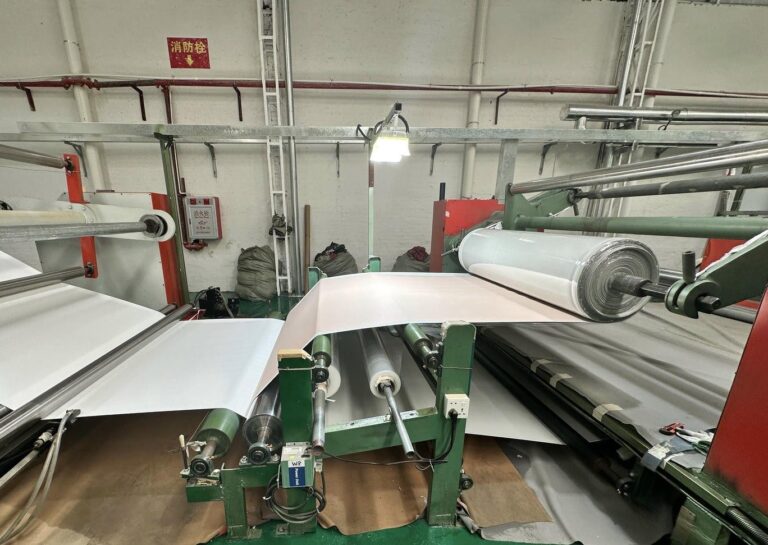
On our own coating and calendering production line, that mapping happens before release, not after. Hydrolysis chambers, salt spray, UV cabinets, and Martindale rigs run against the declared use for every program. In-line monitoring tracks viscosity, temperature, and peel angle on every shift. The line decides the roll, and the use decides the line settings.

Use-driven quality: the test stack runs before the roll ships, not after it fails.
About TOPSUN
TOPSUN manufactures silicone-coated fabrics for furniture, transit, healthcare, marine, and outdoor programs. Monthly capacity runs at 500,000 meters, and the minimum order starts at 500 meters. Every shipment carries batch-level SGS reports, and the in-house lab runs hydrolysis, salt spray, UV, and abrasion against your declared use. Send the use clause; the test file comes back with it.
Request Use-Matched Samples with Test Reports
Frequently Asked Questions
What turns a textile use into a testable specification?
Four fields: the environment, the agents it applies, the frequency of exposure, and the pass floor. Each field maps to a named test method. “Coastal patio, daily sun, weekly salt wipe, five-year target” is a spec. “Outdoor use” is a hope.
Do higher Martindale counts guarantee longer service life?
No. ACT reports at least 60 percent variance between runs on the same fabric and states that doubled cycles do not double service life. Martindale and Wyzenbeek also do not correlate. Demand the method, the floor, and edge or flex data rather than the biggest number on the sheet.
Which tests matter most for outdoor textile uses?
Three lead the file. Xenon arc weathering covers the combined effect of light and water. Hydrolysis at 85°C and 85 percent relative humidity covers the heat-and-humidity clock. Color fastness at grade 4 to 5 covers appearance over the years between.
Close the log the way it opened. A use claim is a test order, and inspection is where the order gets read aloud. Three rolls, three claims, three test stacks: weathering and hydrolysis for the coast, abrasion with a named method for the terminal, chemical resistance for the clinic. Write the use as conditions, and the fabric always answers.
References
1. https://contracttextiles.org/performance-guidel… – ACT abrasion guidelines: field failures trace mainly to cleaning, maintenance, abuse, and application; test variance reaches 60 percent; coated fabrics carry a 50,000 double-rub high-traffic guideline.
2. https://www.kothea.com/2026/04/05/martindale-ru… – Martindale rub test guide: rub-count classifications from domestic to contract use, what the test does not measure, and how to specify correctly.
3. https://www.iso.org/standard/80087.html – ISO 105-B04:2024: xenon arc artificial weathering for textile colour fastness, covering the combined effect of light and water.