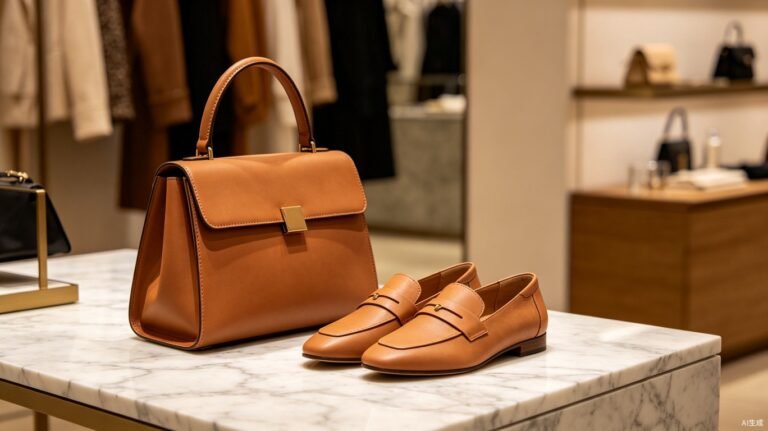
Roughly 90% of vegan leather alternatives on the market today contain plastic — a statistic that catches most sourcing teams off guard. The word “vegan” sounds clean, but it reveals nothing about fossil fuel content, chemical emissions, or how long the material actually survives in commercial use. The vegan leather market is valued at $4.07 billion in 2026, growing at 7.8% CAGR through 2035. Yet the fundamental question — vegan leather is what, exactly? — still stumps many B2B buyers. Most can’t name the specific polymer behind their product. The answer matters: it determines whether your upholstery lasts 3 years or 10+, whether it passes tightening PFAS regulations, and whether it’s genuinely eco-friendly or just marketed that way.
This guide breaks down what vegan leather is made of, how it’s manufactured, which materials outlast the rest, and what the market looks like heading into 2026.
1. What Is Vegan Leather Made Of? 4 Core Materials Breakdown
Vegan leather is any material designed to replicate the look and feel of animal leather without using animal hides or animal-derived components. Unlike traditional leather, which is made through tanning animal skins, vegan leather is an engineered material — created by coating or laminating a fabric substrate with a polymer or bio-based layer. When sourcing teams ask “leather — what is it made of?” the answer varies dramatically by material category. Here are the four core types on the market today:
- Polyurethane (PU) Leather: The most common type. A petroleum-derived polymer coated onto a fabric backing. PU offers decent breathability and a leather-like touch, but traditional production uses chemical solvents, and the material typically cracks within 3–5 years.
- PVC Leather: Polyvinyl chloride layered with plasticizers and stabilizers. Durable and weather-resistant, but production can release toxic dioxins, and the material is nearly impossible to recycle.
- Silicone Leather: A newer category using silicone polymer coated onto fabric. Made from silica (sand), it contains no PVC, phthalates, or plasticizers. Silicone textiles are inherently stain-resistant, UV-stable, and survive 10+ years of commercial use.
- Plant-Based Leather: Materials like Piñatex (pineapple leaves), Desserto (cactus), and mycelium. These use agricultural waste and sound eco-friendly, but most are composites mixed with PU binders — meaning they’re not fully biodegradable.
Vegan leather made from different polymers delivers vastly different lifespans. Understanding what vegan leather is made of is the first step toward specifying a material that actually performs.

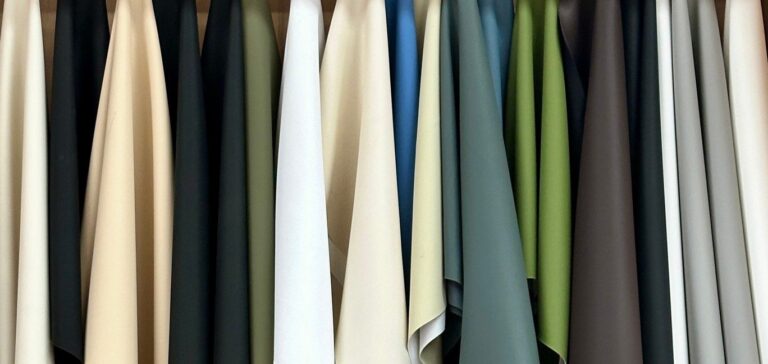
Four material categories, hundreds of color and texture options — but only one polymer lasts 10+ years.
2. How Vegan Leather Is Made: From Polymer to Finished Roll
Regardless of the polymer type, most vegan leather is made through a coating or lamination process. For anyone asking “vegan leather — how is it made?” the answer reveals a multi-stage production line that directly affects final material quality.
The base fabric — typically polyester, cotton, or microfiber — is unwound from large rolls and fed into a coating machine. The polymer (PU, PVC, or silicone) is applied as a liquid or paste across the fabric surface using knife-over-roll or dip-coating methods. For multi-layer constructions, a release paper with an embossed grain pattern may be laminated on top, creating the leather-like texture. The coated material then passes through high-temperature drying ovens to cure the polymer and bond it to the substrate. After curing, the release paper is peeled away, leaving a textured surface. The finished leather is inspected, rewound, and slit to specification width.
When comparing leather to leather, the backing matters as much as the surface coating — a weak substrate delaminates under stress, regardless of how durable the top layer claims to be. The way leather is made — solvent-based versus solvent-free coating — also determines VOC emissions and environmental compliance.

Knife-over-roll coating applies polymer to base fabric — the process step that determines consistency and adhesion.
3. PU Leather vs Silicone: Why Durability Differs by 5×
Vegan leather polyurethane remains the default choice for budget-conscious buyers, but its durability ceiling is well-documented. PU leather typically lasts 3–5 years before cracking, peeling, or delaminating — especially in high-traffic or UV-exposed environments. The reason is chemical: PU polymers hydrolyze over time, breaking down when exposed to moisture and heat.
In our Martindale abrasion testing, standard PU leather samples show roughly 15,000 double rubs before surface degradation. That’s adequate for light residential use but falls short of commercial or automotive requirements. Is PU leather durable enough for your application? Only if the product lifecycle is under 5 years and the environment is climate-controlled.
Silicone leather takes a fundamentally different approach. The silicone polymer doesn’t hydrolyze, doesn’t embrittle under UV exposure, and maintains flexibility from -40°C to 250°C. Our test data shows 200,000+ Martindale cycles — over 13× the vegan leather durability of standard PU. For applications demanding stain resistant fabrics, silicone’s non-porous surface repels liquids without chemical treatments.
The silicone vs PU comparison comes down to one number: 10+ years of service life versus 3–5. Over a 10-year period, replacing PU leather twice costs more — in material, labor, and warranty claims — than specifying silicone once.
| Material | Service Life | Martindale Cycles | Recyclable |
|---|---|---|---|
| PU Leather | 3–5 years | ~15,000 | Limited |
| PVC Leather | 2–3 years | Varies | No |
| Silicone Leather | 10+ years | 200,000+ | Yes |
| Plant-Based | 2–4 years | Varies | Limited |

Martindale abrasion testing: silicone leather exceeds 200,000 cycles — 13× standard PU.
Watch how silicone leather outperforms PU and PVC in head-to-head material testing.
4. Is Environmentally Friendly Vegan Leather a Contradiction?
Here’s the uncomfortable truth: roughly 90% of vegan leather alternatives contain plastics. The term “environmentally friendly vegan leather” is often more marketing than material science — PU and PVC both require fossil fuel derivatives, release VOCs during production, and shed microplastics that take centuries to degrade.
Is there such a thing as truly friendly leather? The answer depends less on the “vegan” label and more on the chemistry behind it. Traditional leather, as a by-product of the meat industry, at least uses a resource that already exists — but that argument collapses when you factor in chrome tanning, heavy metal runoff, and massive water consumption. Neither extreme offers a clean answer.
Silicone leather occupies a different position. Made from silica — the second most abundant element in Earth’s crust — it requires no toxic solvents, releases zero VOCs during production, and is 100% recyclable. For applications requiring food-contact safety, including leather food packaging and restaurant surfaces, silicone carries FDA 21 CFR 177.2600 compliance that PU and PVC simply cannot match.
From our production floor: We’ve seen firsthand how PU leather degrades in hospital and restaurant environments — the surface becomes porous within 2–3 years of repeated cleaning with alcohol disinfectants. Silicone leather shows zero surface degradation after the same cleaning protocol, verified across 1,000+ cleaning cycles in our testing lab.

Surface texture comparison: silicone leather maintains its non-porous finish after years of cleaning — PU does not.
5. Synthetic Leather Market: $4B Industry Reshaping Sectors
The vegan leather market is valued at $4.07 billion in 2026, projected to reach $8.14 billion by 2035 at 7.8% CAGR. What was once a niche cruelty-free alternative has become a strategic materials category across automotive interiors, furniture, medical devices, consumer electronics, and marine applications.
The vegan leather industry is shifting in two directions simultaneously. On one end, budget PU leather continues to dominate volume-driven segments like fast fashion and entry-level furniture. On the other end, demand for luxury performance fabrics — materials that combine aesthetics with real-world durability — is pushing silicone leather into premium automotive cabins, yacht interiors, and healthcare settings where cleaning chemicals would destroy PU within months.
For B2B sourcing teams evaluating applications across industries, the vegan leather landscape now spans multiple material chemistries, each with distinct cost, compliance, and performance profiles. The question isn’t whether to adopt vegan leather — it’s which polymer will survive your application’s full lifecycle.
FAQ: Vegan Leather Materials
Is all vegan leather the same material?
No. Vegan leather is a category, not a single material. It includes PU, PVC, silicone, and plant-based polymers — each with vastly different durability, environmental, and safety profiles. Two products labeled “vegan leather” can have nothing in common chemically.
Which vegan leather lasts the longest?
Silicone leather. Our testing shows 200,000+ Martindale abrasion cycles and 10+ years of service life — compared to 3–5 years for PU and 2–4 years for plant-based composites. Silicone also resists UV, hydrolysis, and extreme temperatures without degrading.
Is vegan leather food-safe?
Only silicone leather carries FDA 21 CFR 177.2600 food-contact compliance. PU and PVC can leach plasticizers and are not rated for direct food contact.
Before You Specify: 5-Point Sourcing Checklist
Before you sign off on a vegan leather specification, verify these five items:
- Request Martindale abrasion data — anything below 50,000 cycles won’t survive commercial use
- Ask for VOC test reports (VDA 277 or ISO 16000-6) — if the supplier can’t provide them, walk away
- Confirm PFAS compliance for your target market — California’s AB 1817 threshold drops to 50 ppm in 2027
- Check food-contact certification if applicable — only FDA 21 CFR 177.2600 qualifies
- Compare 5-year TCO, not unit price — silicone costs more upfront but lasts 2–3× longer than PU
The “vegan leather” label tells you what the material isn’t. The polymer tells you what it actually is — and how long it will last in your product.
About TOPSUN
TOPSUN manufactures silicone vegan leather for automotive interiors, furniture, medical healthcare, and consumer electronics, with a 60,000+ m² production base and 500,000+ m monthly capacity across three facilities in China.
Our capabilities include solvent-free dry coating, 200,000+ Martindale abrasion verified, FDA/ISO 10993/REACH certified, 100+ custom textures with Pantone color matching, and free A4 swatches shipped worldwide via DHL/FedEx.