A hide is not leather — it becomes leather only through tanning, and the tanning process determines 80% of the final material’s performance characteristics, from durability and water resistance to color stability and environmental compliance. Yet most B2B buyers specify hide grade — “full-grain cowhide” or “top-grain goatskin” — without specifying the tanning method, chemical treatment, or beamhouse protocol. The result: two suppliers offering “full-grain cowhide leather” can deliver materials with 40% differences in tensile strength, 3x differences in color fastness, and completely different compliance profiles — because one used chrome tanning with hexavalent chromium reduction and the other used a formaldehyde-based synthetic tanning agent. For B2B procurement, understanding the hide-to-leather pipeline is the difference between specifying a material and hoping for one.
Request Hide-Free Material Samples
Hide vs Leather: The Critical Difference Most Buyers Miss
The leather industry uses precise terminology that B2B buyers often conflate. A “hide” refers to the raw skin of a large animal (cow, buffalo, horse) before tanning. A “skin” refers to the raw pelt of a smaller animal (sheep, goat, pig). Neither hides nor skins are leather — they are perishable organic materials that decompose within days if untreated. Leather is the product of applying tanning chemicals to a hide or skin, which stabilizes the collagen structure thermally, mechanically, chemically, and microbiologically. The equation is simple: Hide + Tanning = Leather.
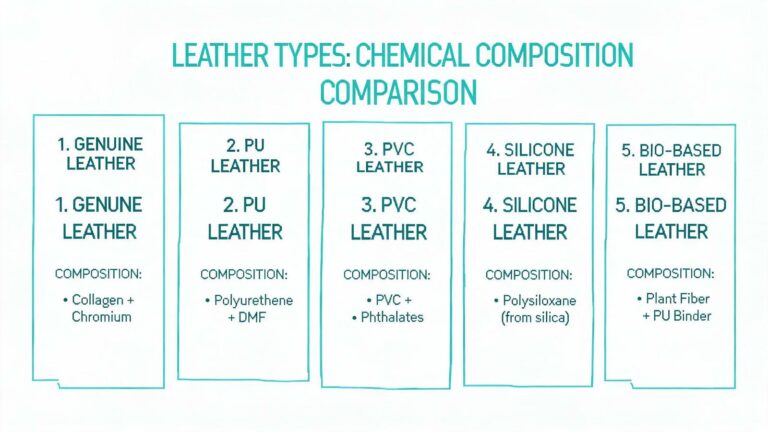
The implication for B2B sourcing is significant: when you specify “genuine leather,” you’re specifying a category that includes everything from chrome-tanned full-grain cowhide to formaldehyde-tanned split leather coated with polyurethane. The tanning method, hide source, and finishing protocol — not the word “leather” — determine whether the material lasts 3 years or 10, whether it’s REACH-compliant or restricted, and whether it develops a patina or cracks. For more on genuine leather definitions, see our synthetic leather vs genuine leather guide.
Hide Sources: Cowhide vs Goatskin vs Sheepskin Performance Data
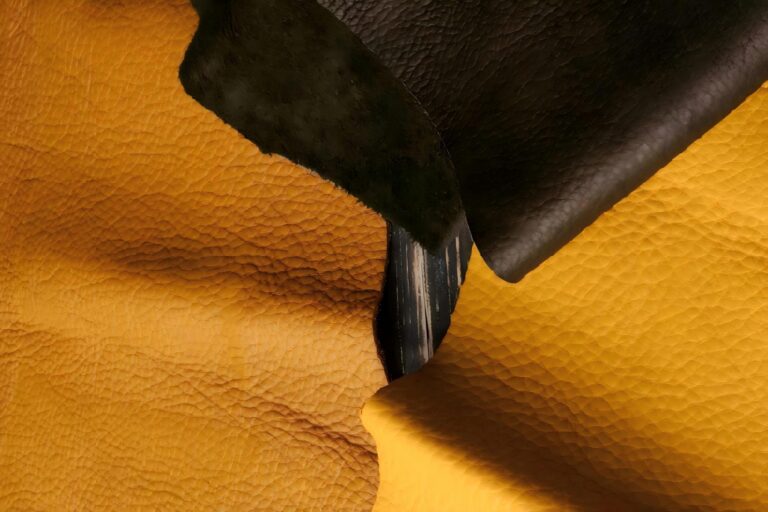
The animal source of the hide determines the base thickness, fiber density, and natural texture of the leather — before tanning even begins. Each hide source has distinct performance characteristics that make it suitable for different applications. B2B buyers who source leather without specifying the hide source are leaving 20–30% of the performance specification to the supplier’s cost optimization.
| Hide Source | Thickness | Fiber Density | Key Properties | Typical Application | Silicone Leather Equivalent |
|---|---|---|---|---|---|
| Cowhide | 1.4–2.0 mm | High — dense, tight grain | Strong, durable, uniform | Furniture, automotive, belts | 0.8–2.0mm, all applications |
| Goatskin | 0.8–1.2 mm | Medium — pebbly texture | Supple, lightweight, abrasion-resistant | Gloves, jackets, wallets | 0.5–1.2mm, fashion goods |
| Sheepskin | 0.7–1.0 mm | Low — soft, loose fibers | Very soft, elastic, insulating | Garments, linings, luxury covers | 0.4–0.8mm, ultra-thin |
| Pigskin | 0.9–1.4 mm | Medium — porous grain | Breathable, economical | Lining, work gloves, budget goods | Pigskin texture available |
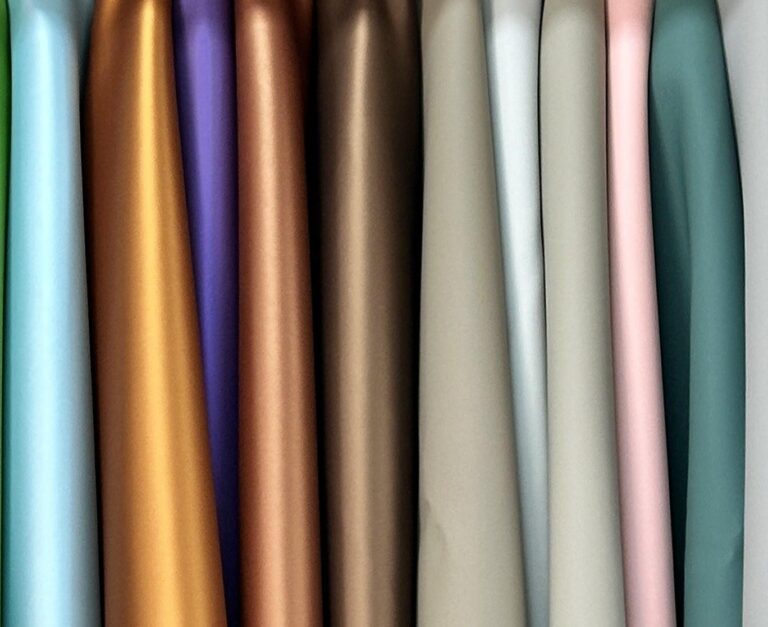
Silicone leather can replicate the texture and hand-feel of any hide source — cowhide grain, goatskin pebble, sheepskin softness — without the inherent variability of animal hides. Each production batch uses the same silicone polymer formula on a controlled fabric substrate, eliminating the hide-to-hide collagen density variation that causes 20–30% performance variation in genuine leather. For more on leather texture options, see our genuine leather material texture guide.
Tanning Methods: Chrome vs Vegetable vs How They Change Everything
Tanning is the process that transforms a perishable hide into a stable material — and the tanning method chosen determines the leather’s chemical properties, compliance profile, color behavior, and environmental impact. The three primary tanning methods each have fundamentally different outcomes:
| Tanning Method | Process Duration | Key Chemical | Durability | Compliance Risk | Environmental Impact |
|---|---|---|---|---|---|
| Chrome Tanning | 1–2 days | Chromium(III) salts | High — soft, heat-stable | Cr(VI) formation risk | High — heavy metal effluent |
| Vegetable Tanning | 30–60 days | Tree bark tannins | Moderate — firm, patina-rich | Low — natural compounds | Moderate — water-intensive |
| Synthetic Tanning | 1–3 days | Formaldehyde, glutaraldehyde | Moderate — varies by agent | High — formaldehyde residues | High — chemical effluent |
| Silicone (No Tanning) | Continuous process | Platinum-cured silicone | Very high — 10+ years | None — zero harmful chemicals | Very low — solvent-free |
Chrome tanning dominates the industry (85–90% of global leather production) because it’s fast, produces soft leather, and is cost-effective. But it carries two compliance risks: chromium(VI) formation when Cr(III) oxidizes under certain conditions (restricted under REACH Annex XVII), and heavy metal effluent that faces increasingly strict discharge limits. Vegetable tanning is the “natural” alternative but requires 30–60 days and produces leather that’s less water-resistant and less dimensionally stable. For more on sustainability gaps, see our natural leather sustainability gaps guide.
The Hide Supply Chain: Traceability and Compliance Risks
The hide supply chain is one of the most opaque in the materials industry. Hides originate as byproducts of the meat industry — they pass from slaughterhouses to hide merchants to beamhouses to tanneries, often crossing 3–4 national borders before becoming “leather.” Each step introduces compliance risks: unregulated chemical treatment at beamhouses, deforestation-linked cattle sourcing in South America, and chromium discharge violations at tanneries in South Asia. For B2B buyers, the hide supply chain creates three specific risks:
| Supply Chain Risk | What Happens | Compliance Impact | B2B Consequence |
|---|---|---|---|
| Deforestation-linked sourcing | Cattle from deforested Amazon land | EU Deforestation Regulation 2024 | Import ban, brand reputation damage |
| Chromium(VI) formation | Cr(III) oxidizes to Cr(VI) during storage | REACH Annex XVII — 3 mg/kg limit | Product recall, testing failure |
| Tannery effluent violations | Unregulated heavy metal discharge | ZDHC, Greenpeace audits | ESG reporting failure, brand boycotts |
| Formaldehyde residues | Synthetic tanning leaves residuals | EN 717-1, EU E1 limits | Indoor air quality failure, product restriction |
Silicone leather eliminates the entire hide supply chain and its associated risks. The material is produced from silicone polymers on fabric substrates — no animal sourcing, no tanning chemicals, no beamhouse operations, no heavy metal effluent. The supply chain is transparent from raw material to finished roll, with every batch traceable to a specific production line and date. For more on cost and lifespan comparison, see our leather vs silicone leather cost lifespan guide.
Beyond Hide: Why Silicone Leather Eliminates the Source Dependency
The fundamental limitation of genuine leather is that it depends on a biological substrate — an animal hide — that is inherently variable. No two cowhides have identical collagen density, thickness profiles, or fiber orientation. Even within a single hide, the belly area has different properties than the backbone area. This variability propagates through every subsequent processing step, creating a final material that is, by nature, non-uniform. B2B buyers who need material consistency — for automotive interiors with zero-defect visual standards, for medical devices with biocompatibility requirements, for furniture with 10-year warranties — are fighting a losing battle against biological variability.
| Property | Genuine Leather (Chrome-Tanned) | Genuine Leather (Vegetable-Tanned) | Silicone Leather |
|---|---|---|---|
| Batch consistency | Variable — hide-dependent | Variable — hide + process | Consistent — formula-controlled |
| Tensile strength | 10–25 N/mm (variable) | 8–20 N/mm (variable) | ≥ 10–15 N/mm (consistent) |
| Compliance profile | Cr(VI), formaldehyde risk | Lower risk, still variable | Zero VOC, REACH, RoHS |
| Traceability | Opaque — multi-border chain | Partially traceable | Full — batch-level tracking |
| Service life | 5–7 years | 3–5 years | 10+ years |
| Animal source dependency | Required — hide sourcing | Required — hide sourcing | None — synthetic substrate |
The comparison reveals a structural advantage: silicone leather delivers consistent, compliance-guaranteed performance by eliminating the variable biological substrate entirely. For B2B applications where material consistency, traceability, and regulatory compliance are non-negotiable — automotive OEM, medical devices, aviation interiors — the question isn’t whether silicone leather matches genuine leather’s aesthetic. It’s whether genuine leather can match silicone leather’s consistency. For more on top-grain applications, see our top-grain leather furniture sofa guide.
Leather and Hide FAQ
Q: What is the difference between a hide and leather?
A hide is the raw, untreated skin of a large animal (like a cow) before any chemical processing. It is a perishable biological material that decomposes within days if untreated. Leather is the product of applying tanning chemicals to a hide or skin, which stabilizes the collagen structure and makes it durable, water-resistant, and non-perishable. The equation is: Hide + Tanning = Leather. The tanning method (chrome, vegetable, or synthetic) determines 80% of the final leather’s performance, compliance, and environmental characteristics.
Q: Which animal hide makes the best leather?
It depends on the application. Cowhide (1.4–2.0mm thick, dense fibers) is best for furniture, automotive interiors, and heavy-duty goods where durability is primary. Goatskin (0.8–1.2mm, pebbly texture) is ideal for gloves, jackets, and wallets where suppleness and abrasion resistance matter. Sheepskin (0.7–1.0mm, very soft) suits luxury garments and linings. No single hide is “best” — the right choice depends on the performance requirements of the end product. Silicone leather can replicate the texture and properties of any hide source with consistent, controlled formulation.
Q: Can silicone leather replace genuine hide leather?
Yes, for most B2B applications. Silicone leather replicates the texture, hand-feel, and visual appearance of cowhide, goatskin, and sheepskin leather using controlled embossing patterns on a silicone-coated fabric substrate. It eliminates the biological variability, tanning chemical risks, and supply chain opacity of genuine leather while delivering superior durability (10+ year service life vs 5–7 for chrome-tanned leather), zero VOC emissions, and full regulatory compliance. For applications where the “patina” of genuine leather is a selling point (luxury goods, heritage brands), genuine leather retains a market position — but for B2B applications where consistency, compliance, and traceability matter, silicone leather is the superior choice.
About TOPSUN
TOPSUN manufactures silicone leather that eliminates hide-source variability and tanning-process contamination, delivering consistent performance without animal hide dependency for B2B buyers. Our platinum-cured silicone polymer system produces leather that replicates the texture and hand-feel of cowhide, goatskin, and sheepskin — with 200,000+ Martindale cycles, 1,000+ hours UV resistance, and zero VOC emissions. With 60,000+ m² of production facilities and full batch-level traceability from raw material to finished roll, we serve 100+ B2B brands worldwide with REACH-compliant, RoHS-certified silicone leather that delivers the consistency genuine leather cannot.
Request Hide-Free Material Samples


Substrate selection guide — how the base fabric choice drives the finished material’s behavior.