Natural leather carries a reputation for luxury and longevity that few materials can match. Full-grain hides last 20-plus years, develop a rich patina, and feel unmistakably premium under hand. But here is what procurement teams discover the hard way: behind that price tag sits a chain of hidden costs — roughly 17,000 liters of water per hide, chromium-salt tanning, and batch-to-batch inconsistency that derails production schedules. This article breaks down three sustainability metrics where natural leather falls short of modern B2B audit requirements, and shows why silicone leather is quietly replacing it in automotive, furniture, and medical supply chains.
What Natural Leather Actually Costs Beyond the Price Tag
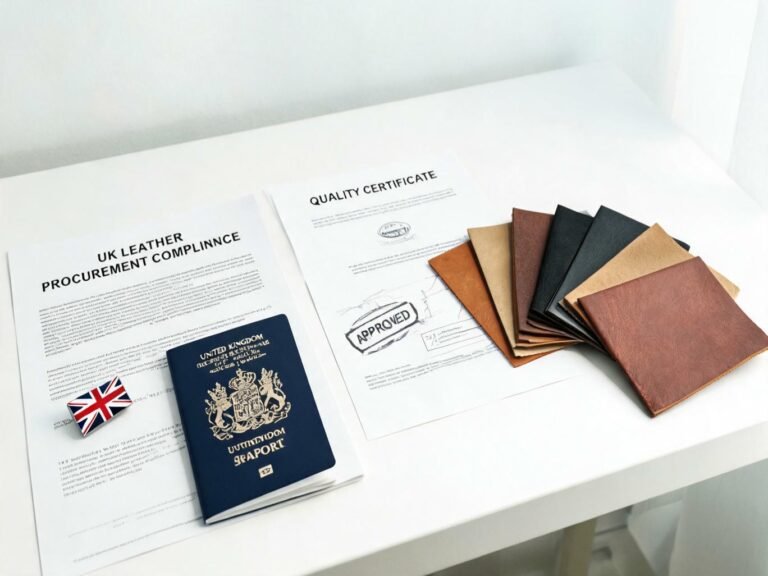
When sourcing managers compare natural leather sourcing B2B quotes against synthetic options, the unit price gap is obvious — full-grain leather runs $85 to $150 per unit at FOB, a 30 to 50 percent premium over top-grain. But the visible price is only a fraction of the total cost of ownership. Tanning a single hide consumes around 17,000 liters of water. Chrome tanning — the method used for roughly 75 percent of global leather output — relies on chromium(III) salts that can oxidize into hazardous chromium(VI) under certain conditions, triggering REACH compliance failures and shipment rejections at EU borders.
Add the supply chain volatility. Hide availability tracks cattle slaughter rates, which swing with feed costs, droughts, and disease outbreaks. In our experience, a single quarter of hide shortage can push lead times from 45 days to 90, stalling downstream furniture and automotive assembly lines. The “byproduct of the meat industry” argument sounds reassuring until you realize that tanning and finishing — not hide sourcing — drive most of the environmental and regulatory cost.

Tensile strength testing measures how leather performs under real-world stress loads
One hide = 17,000L water + chromium salts + 45-90 day lead times. The real cost of natural leather is environmental, regulatory, and operational — not just the unit price.
Durability Reality: When Batch Inconsistency Undercuts Performance
Full-grain leather’s natural collagen fiber structure genuinely delivers exceptional tensile strength and tear resistance — 20 to 30 years of service with proper care. That durability number is real, but it is also an average drawn from the best hides. Here is the catch: natural leather is an organic material, and no two hides are identical. Grain density, scar patterns, stretch, and thickness vary across the same shipment, let alone across suppliers or seasons.
For B2B buyers, that variability translates into yield loss. A furniture manufacturer cutting sofa panels from natural leather typically loses 15 to 25 percent of each hide to defects, scars, and belly areas with weak fiber structure. Compare that to a roll of engineered silicone leather, where every linear meter meets the same Martindale abrasion rating, the same thickness tolerance, and the same color fastness value. In our testing, silicone leather consistently hits 200,000-plus Martindale cycles with near-zero batch deviation — a level of predictability that natural leather simply cannot offer.

Color and texture consistency across batches — a challenge for natural leather
Why Natural Leather Fails Modern Sustainability Audits
The natural leather environmental impact story has three problem areas that procurement teams increasingly cannot ignore. First, water consumption: the 17,000-liter-per-hide figure does not include the effluent treatment needed to remove chromium and sulfide residues before discharge. Tanneries in regions with weak environmental enforcement often discharge partially treated wastewater, which is why the Leather Working Group rates many tanneries at Bronze or Silver rather than Gold.
Second, chemical compliance. The EU REACH regulation restricts chromium(VI) in leather products to 3 mg/kg. Chrome-tanned hides routinely test at the threshold, and slight process variations push batches over the limit. Formaldehyde, another tanning and finishing chemical, faces tightening restrictions under Leather Working Group and OEKO-TEX standards. A single failed chromium test can trigger a full-container rejection at customs.
Third, carbon footprint. The full natural leather lifecycle — cattle farming, transport, tanning, finishing — generates significantly higher greenhouse gas emissions per square meter than engineered alternatives. As OEMs and retailers publish Scope 3 emissions targets, leather’s carbon intensity becomes a line item that sustainability teams flag during material reviews.
| Metric | Natural Leather | PU Leather | Silicone Leather |
|---|---|---|---|
| Water per unit | ~17,000 L/hide | Low | Minimal (solvent-free) |
| Chromium risk | High (chrome tanning) | None | None |
| REACH compliance | Borderline (Cr VI threshold) | Pass (may contain solvents) | Pass (zero solvents) |
| Batch consistency | 15-25% yield loss | Good | Excellent |
| VOC emissions | Moderate (finishing chemicals) | High (solvent-based) | Zero |
Watch how silicone leather outperforms natural leather and PU in head-to-head material testing
Silicone Leather: Matching Aesthetics Without the Hidden Costs
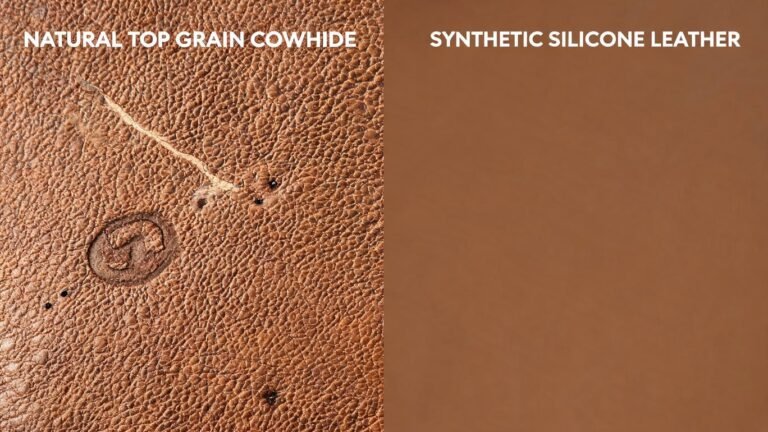
For buyers weighing natural leather vs synthetic leather, the trade-off has always been aesthetics versus performance. Silicone leather changes that equation. Made from 100 percent pure silicone polymer through a solvent-free coating process, it replicates the grain, hand-feel, and even the slight give of full-grain leather — without a single animal hide, chromium molecule, or 17,000-liter water bill.
The performance gap closes decisively. Silicone leather withstands temperatures from -40 to 250 degrees Celsius, resists UV fading for the full product lifecycle, and cleans with a damp cloth — no conditioners, no special maintenance. One of our furniture clients switched from natural leather to silicone for a commercial sofa line and cut their material reject rate from 22 percent to under 3 percent in the first quarter, while passing a full REACH audit on the first submission.

Waterproof performance test — silicone leather repels moisture without absorption

Side-by-side texture comparison: genuine leather grain vs silicone leather replica
Solvent-free, 200K+ Martindale cycles, -40 to 250°C tolerance, zero VOC. That is the spec sheet B2B buyers need for 2026 sustainability audits.
The eco-friendly silicone leather production process uses no plasticizers, phthalates, or heavy metals. It is fully compliant with REACH, PAHs, and FDA food-contact standards. For automotive interiors where OEMs face tightening cabin VOC limits, and for medical devices requiring ISO 10993 biocompatibility, silicone leather clears audits that natural leather cannot pass without extensive documentation and batch-by-batch testing.
Curious about how the cost compares over a 5-year horizon? Our detailed leather vs silicone leather cost analysis walks through the TCO math.
Frequently Asked Questions
Is natural leather more sustainable than synthetic alternatives?
It depends on the metric. Natural leather is biodegradable and a byproduct of the meat industry, but its tanning process consumes roughly 17,000 liters of water per hide and relies on chromium salts that can fail REACH compliance. Solvent-free silicone leather eliminates both the water intensity and chemical risk while matching the look and feel — making it the stronger choice for B2B sustainability audits.
Can silicone leather truly replicate the feel of natural leather?
Yes. Modern silicone leather embossing replicates full-grain, top-grain, and nubuck textures with high fidelity. The material offers a similar softness, slight stretch, and warm hand-feel. Most end-users cannot distinguish premium silicone leather from natural leather in blind touch tests — and silicone maintains that feel for 10 to 15 years without cracking or drying out.
The Bottom Line for B2B Procurement
Natural leather will always have a place in heritage products and ultra-luxury segments where its story and patina justify the premium. But for the majority of B2B applications — furniture, automotive interiors, medical seating, consumer electronics — the hidden costs of water, chromium, batch inconsistency, and audit risk make it an increasingly difficult choice. Silicone leather delivers the same aesthetic experience with a cleaner compliance profile, predictable batch quality, and a 10 to 15-year service life backed by 200,000-plus Martindale cycles. That is the spec sheet procurement teams need for 2026 and beyond.
About TOPSUN
TOPSUN manufactures solvent-free silicone leather as a direct replacement for natural leather in furniture, automotive, and medical applications — serving 30-plus countries from 18 automated production lines.
ISO 10993 certified | REACH & PAHs compliant | FDA food-contact approved | 200,000+ Martindale cycles verified | Zero VOC emissions