Imagine a hotel lobby furnished with patent leather hide accent panels. On installation day, the mirror-like surface reflects lobby lighting beautifully. Eighteen months later, hairline cracks spider across every panel where UV from floor-to-ceiling windows concentrated daily thermal cycling. The lacquer that created the gloss has become the failure point. Patent leather hide delivers one of the most striking visual finishes in the leather world — and one of the shortest lifespans in performance applications.
What Patent Leather Hide Actually Is
Patent leather hide starts as genuine leather — typically cowhide or calfskin — that undergoes a specialized finishing process. After tanning, multiple layers of polyurethane or acrylic lacquer are applied to the surface, each layer cured in a heated tunnel. The result is a sealed, non-porous surface with a mirror-like gloss that resists moisture and stains on day one.

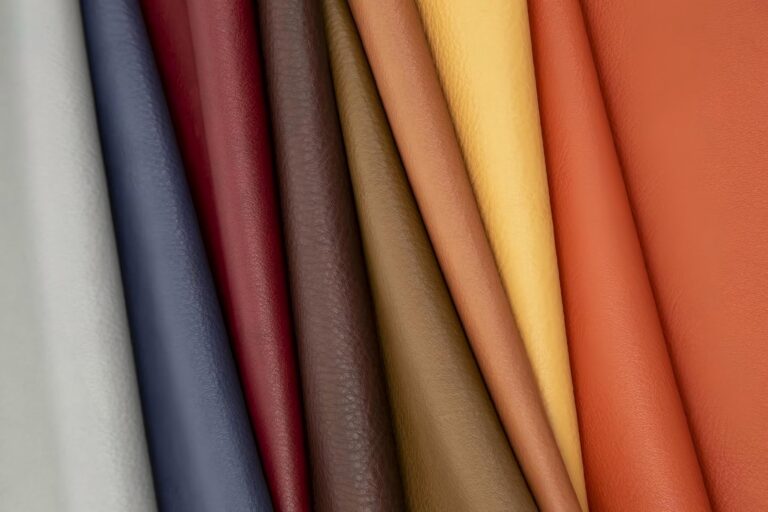
Full-color leather swatch rack — the glossy finish that makes patent leather hide distinctive is also its structural weakness.
The problem isn’t the leather underneath. It’s the coating. That polyurethane or acrylic lacquer is a polymer film bonded to an organic substrate. The two materials have different coefficients of thermal expansion, different UV absorption profiles, and different flex tolerances. When the substrate flexes, the coating doesn’t. When UV degrades the coating, the substrate underneath is exposed. The fundamental mismatch between coating and substrate is what drives patent leather hide failure.
3 Failure Modes of Patent Leather Hide Coatings
In our testing of patent leather hide samples across automotive and furniture applications, three failure modes account for over 90% of premature degradation.
- UV-driven lacquer degradation — The polyurethane lacquer absorbs UV radiation, causing polymer chain scission. The coating loses adhesion to the substrate, developing micro-bubbles that eventually rupture. In accelerated weathering tests per ISO 105-B06, patent leather hide coatings show visible degradation at 300 to 500 hours — compared to 1,000+ hours for silicone leather.
- Flex cracking at stress points — Seat edges, armrest curves, and stitched seams concentrate mechanical stress. The rigid lacquer can’t follow substrate deformation, creating stress fractures that propagate across the surface. Patent leather hide typically develops flex cracks within 50,000 cycles of flex testing — one quarter of the 200,000+ cycles silicone leather withstands.
- Thermal cycling delamination — Daily temperature swings (cabin heat in parked cars, seasonal changes in interiors) cause the coating and substrate to expand and contract at different rates. Over 2 to 3 years, this cyclic stress delaminates the lacquer from the hide, producing the characteristic peeling pattern that makes patent leather hide look damaged beyond repair.
Patent Leather Hide vs Silicone Leather: Gloss Without Compromise
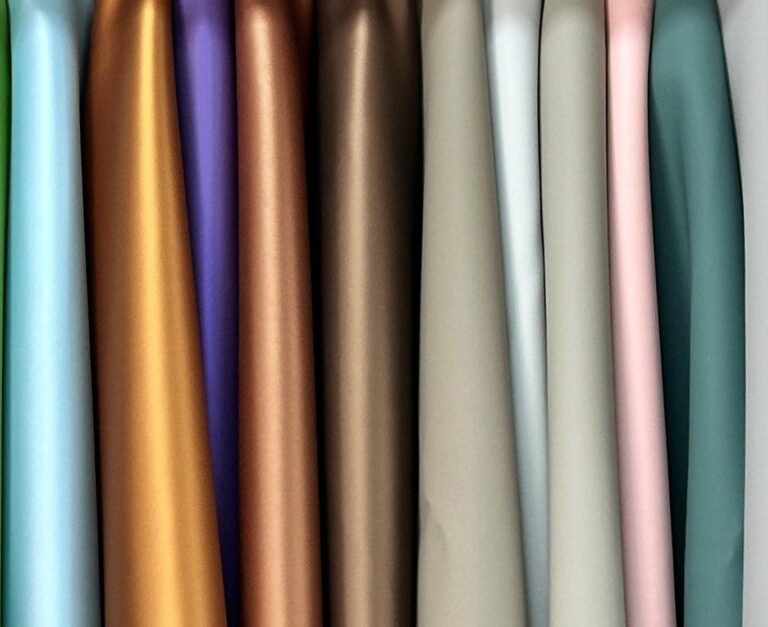
The visual appeal of patent leather hide — the mirror shine, the depth of reflection, the premium feel — doesn’t require a failing coating to achieve. Silicone leather can be formulated with metallic and pearlescent finishes that replicate the high-gloss aesthetic without the polymer-substrate mismatch that drives coating failure.

Performance testing — silicone leather’s intrinsic material properties eliminate the coating-substrate mismatch that causes patent leather hide to fail.
| Property | Patent Leather Hide | Silicone Leather |
|---|---|---|
| Surface finish | PU/acrylic lacquer coating | Intrinsic silicone surface |
| UV stability (ISO 105-B06) | 300–500 hrs to degradation | 1,000+ hrs, no change |
| Flex resistance | ~50K cycles to cracking | 50K–100K+ cycles |
| Coating failure mode | Cracking, peeling, delamination | None (no coating to fail) |
| Service life | 2–3 yrs (coating-dependent) | 10+ years |
Why the Gloss Outlasts the Coating
The critical difference between patent leather hide and silicone leather isn’t the finish — it’s how the finish is achieved. Patent leather applies a coating on top of the substrate. Silicone leather’s surface is the material. The silicone elastomer itself provides the non-porous, glossy surface. There’s no interface between coating and substrate because they’re the same chemistry. UV stability is intrinsic to the silicone polymer backbone, not dependent on a UV-absorbing lacquer additive that depletes over time.
This is why specifiers moving away from patent leather hide for automotive interiors, luxury furniture, and fashion accessories are choosing silicone leather. The visual result is indistinguishable on day one — and ten years later, the silicone surface still looks the same while patent leather has been reupholstered twice.

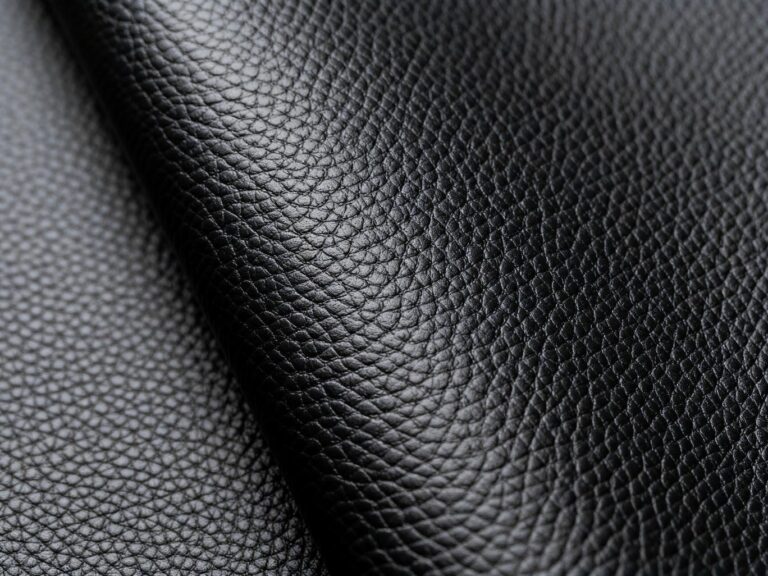
Material texture closeup — the visible quality of genuine leather can be replicated in silicone without the coating failure modes of patent leather hide.
For projects where the patent leather hide aesthetic is essential — high-gloss, mirror-finish, premium-looking surfaces — silicone leather’s metallic and pearlescent finish options deliver the same visual impact. The difference is what happens in year three: patent leather’s lacquer is cracking, and silicone leather’s surface hasn’t changed. Certification standards verify these performance claims — ask for ISO 105-B06 test reports before specifying either material.
About TOPSUN
TOPSUN manufactures silicone leather with metallic and pearlescent finishes that replace patent leather hide in automotive, fashion, and luxury furniture applications.
100+ textures including metallic finishes · UV 1,000+ hrs per ISO 105-B06 · 200K+ Martindale · -40°C to 250°C · Delta E ≤1.0 · FDA/REACH compliant · Free A4 swatches worldwide