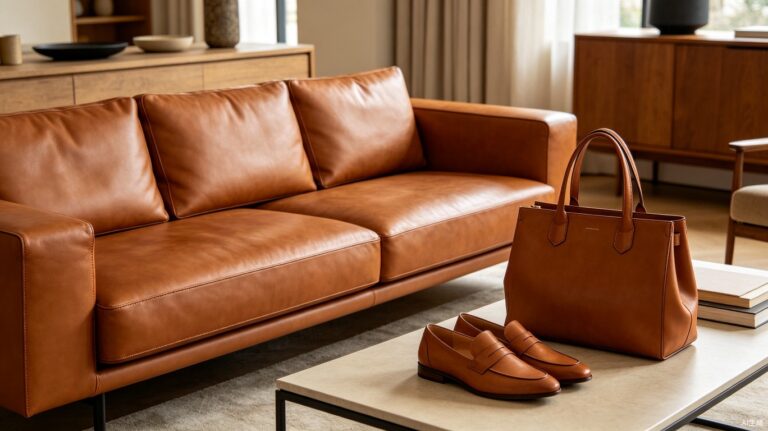
A furniture brand launches a fabric and leather couch — PU leather on the seat cushions, woven polyester on the backrests and arms. The design wins a trade show award. Eighteen months later, the PU leather cushions are cracking and peeling while the fabric backrests still look new. The brand faces an impossible choice: reupholster only the leather portions (destroying the design aesthetic), replace the entire couch (doubling the warranty cost), or deny the claim (damaging the brand). Genuine leather lasts 15–25 years in full-grain form; quality fabric lasts 5–15 years depending on weave. But PU leather — the most common “leather” in mixed-material couches — fails at 18–36 months, creating a lifespan mismatch that turns a design win into a warranty crisis.
Request Mixed-Material Comparison Samples
The Fabric and Leather Couch Trend: Why It’s Growing
The fabric and leather couch isn’t a new concept — but it’s accelerating in B2B furniture markets because it solves a cost problem. Pure leather couches are expensive; pure fabric couches lack the premium aesthetic that commercial buyers want. Mixing the two allows manufacturers to put leather (or faux leather) on the high-wear seat surfaces and fabric on the lower-wear back and arm panels, reducing overall material cost while maintaining a premium look. Commercial-grade combinations blend PU leather with microfiber fabric to achieve both durability and easy maintenance.
The problem is that the cost-saving logic works at the unit level but fails at the lifecycle level. When the leather portion fails at 18 months and the fabric portion survives for 5 years, the savings from mixing materials are wiped out by the premature replacement cost. For more on mixed-material sofa design, see our leather and fabric sofa guide.
The Lifespan Mismatch: Two Materials, Two Clocks
Every material in a mixed-material couch runs on its own degradation clock. The clocks don’t sync — and that’s the core problem:
| Couch Material | Expected Lifespan | Failure Mode | Replacement Trigger |
|---|---|---|---|
| PU leather (seat) | 18–36 months | Cracking, peeling, hardening | Visible surface degradation |
| PVC leather (seat) | 12–24 months | Plasticizer migration, cracking | Surface hardening and splits |
| Woven polyester fabric (back) | 5–10 years | Pilling, fading, seam stress | Aesthetic degradation |
| Performance fabric (back) | 7–15 years | Gradual wear, color shift | Stain accumulation |
| Silicone leather (seat) | 10+ years | No degradation mechanism | Matches fabric lifespan |
The mismatch is clear: PU leather on the seat fails 3–5 years before the fabric on the backrest. The couch hasn’t reached the end of its life — half of it has. And replacing only half destroys the design cohesion. Heavy-duty residential fabric passes 30,000+ double rubs in Wyzenbeek testing; contract-grade fabric exceeds 100,000. But the fabric’s durability is irrelevant if the leather next to it fails first. For more on the replacement dilemma, see our leather couch fabric guide.
Maintenance Protocol Divergence: Cleaning Two Materials on One Frame
A fabric and leather couch doesn’t just fail at different rates — it requires different maintenance protocols on the same frame. Leather needs conditioning and wipe-down with specific cleaners; fabric needs vacuuming and periodic deep cleaning. Using fabric cleaner on leather accelerates plasticizer migration in PU and PVC materials. Using leather conditioner on fabric creates staining and residue buildup. The maintenance staff or end user must identify which material they’re cleaning at each section of the couch — and use a different product for each.
In commercial environments — hotels, lounges, waiting rooms — this maintenance complexity multiplies. A housekeeping team cleaning 50 mixed-material couches must carry two product sets and apply them to specific zones of each couch. The labor cost of maintaining a fabric and leather couch is approximately 40% higher than maintaining a single-material couch over the same period. For quality and specification guidance, see our leather sofa quality B2B guide.
The Replacement Dilemma: Reupholster Half or Replace All?
When the PU leather seat cushions on a fabric and leather couch start cracking at month 18, the brand faces three options — and none of them are good:
| Option | Cost Impact | Brand Impact |
|---|---|---|
| Reupholster leather only | $200–400 per couch (labor + material) | Color mismatch with aged fabric |
| Replace entire couch | $800–2,000 per unit | Brand loyalty maintained |
| Deny warranty claim | $0 (short-term) | Negative reviews, lost customer |
For a furniture brand shipping 1,000 mixed-material couches per quarter with a 14% warranty claim rate at 18 months, the reupholstery cost alone is $28,000–56,000 per quarter — before accounting for the labor of processing claims. The replacement cost would be $112,000–280,000 per quarter. These numbers are why mixed-material couch warranties typically cap at 12 months — the manufacturer knows the PU leather won’t survive beyond that.
Silicone Leather: Solving the Mismatch Problem
The lifespan mismatch problem has a material-level solution: specify a leather material that matches the fabric’s lifespan. Silicone leather, with a 10+ year service life, finally syncs the two clocks. The seat cushions survive as long as the fabric backrests — meaning the couch reaches its full design life as a single unit, not a staggered failure.
| Factor | PU Leather + Fabric | Silicone Leather + Fabric |
|---|---|---|
| Lifespan sync | Leather fails at 18 mo, fabric at 5+ yr | Both last 10+ years |
| Maintenance protocol | Two cleaners, two methods | Water cleans both |
| Warranty safe period | 12 months max | 5+ years |
| Replacement cost (5 yr) | $200–2,000 per unit | $0 |
| UV resistance | PU cracks in 1–2 years | 1,000+ hours no fading |
| Cleaning chemical compat. | Fabric cleaner damages PU | Bleach-safe, universal |
The maintenance advantage is significant: silicone leather is non-porous and can be cleaned with water, bleach, or alcohol disinfectants — the same products that clean performance fabric. One cleaning protocol, one maintenance team, one warranty period. For the full couch material specification checklist, see our sofa material checklist.
About TOPSUN: TOPSUN manufactures silicone leather with a 10+ year service life that matches the durability of performance fabric — eliminating the lifespan mismatch in mixed-material furniture. With 60,000+ m² production capacity and 500,000+ meters monthly output, TOPSUN serves B2B furniture brands worldwide. All materials are REACH-compliant, RoHS-certified, and verified by SGS and Intertek. Free A4 swatch samples ship worldwide via DHL/FedEx.
5-Year ROI Comparison: 1,000 Couches
| Cost Factor | PU Leather + Fabric | Silicone Leather + Fabric |
|---|---|---|
| Initial material cost (1K couches) | $150K | $250K |
| Warranty claims (14% at 18 mo) | $28K–56K | $0 |
| Maintenance labor premium | +40% labor | Standard labor |
| 5-year total cost | $178K–206K | $250K |
| 5-year brand impact | Warranty disputes, reviews | Zero claims, brand loyalty |
The silicone leather option costs more upfront but eliminates the warranty claim exposure that destroys PU leather’s cost advantage by year 2. For a brand shipping volume couches, the ROI crossover happens at month 18 — exactly when the first PU leather claims arrive.
Request Mixed-Material Couch Samples