The Association for Contract Textiles (ACT) defines performance fabric standards for commercial interiors, requiring minimum 15,000 Martindale cycles for general domestic use and 40,000–100,000 for heavy-duty contract applications. Yet most B2B buyers can’t interpret what these numbers mean for real-world product lifespan. A 15,000-cycle fabric lasts 3–5 years in residential use. A 50,000-cycle fabric lasts 7–10 years in contract. A 200,000-cycle silicone leather lasts 10+ years even in the harshest environments. The 13× gap between commodity and premium isn’t just a spec sheet number — it’s the difference between a product that generates warranty claims and one that builds brand equity.
The Martindale test (EN ISO 12947) is the European industry standard for assessing abrasion resistance in commercial upholstery fabric. The fabric is rubbed against standard wool textile under a specified weight load until thread breakdown occurs. But Martindale alone doesn’t tell the full story. True performance fabric must pass five additional tests — and most materials marketed as “performance” fail at least two of them.
Request Performance Fabric Samples

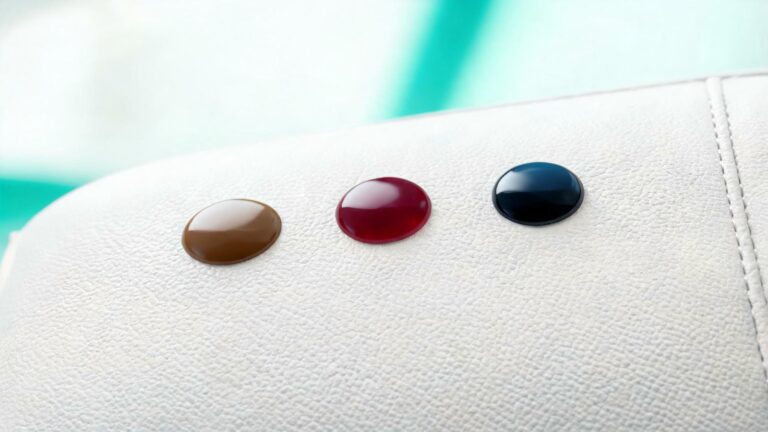
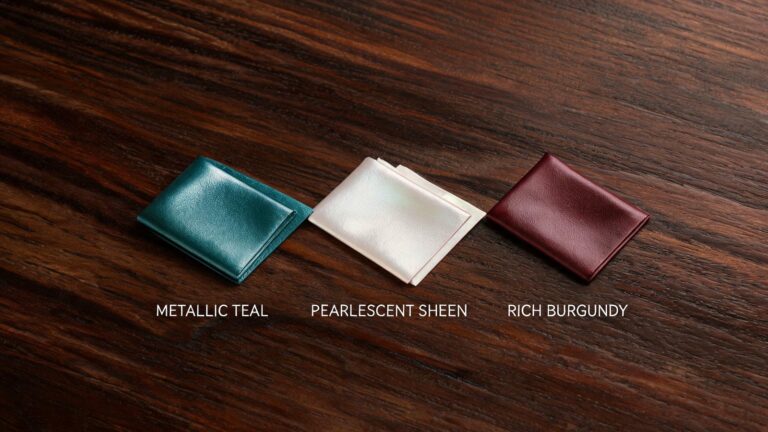
Performance fabric grades — the visual similarity between 15,000-cycle and 200,000-cycle material is misleading without test data
Martindale Ratings Decoded: What Each Threshold Means
The Martindale scale isn’t linear in real-world meaning. Each threshold represents a specific application tier with predictable lifespan outcomes:
| Martindale Cycles | Grade | Applications | Expected Lifespan | Typical Material |
|---|---|---|---|---|
| 15,000–30,000 | General Domestic | Residential sofas, dining chairs | 3–5 years | PVC, low-grade PU |
| 30,000–50,000 | Heavy Duty | Hotel lounges, office chairs | 5–7 years | Standard PU |
| 50,000–100,000 | Contract / Commercial | Public transit, hospital beds | 7–10 years | Microfiber PU |
| 100,000–200,000 | Extreme Contract / Pro | Premium contract, marine | 10–15 years | High-spec PU, silicone |
| 200,000+ | Ultra Performance | All environments | 10+ years | Silicone leather |
The data reveals a critical insight: the gap between 50,000 and 200,000 cycles represents the difference between “contract grade” and “ultra performance.” For upholstery furniture TCO, this gap determines whether you reupholster every 7 years or every 15. At scale — a 500-chair conference center, a 200-room hotel, a 50-vehicle fleet — that 2× lifespan difference saves six figures in replacement and labor costs over a decade.

Martindale testing machine — the standard that separates residential, contract, and ultra-performance fabric grades
5 Performance Fabric Tests Beyond Martindale
Martindale abrasion is necessary but not sufficient. The ACT voluntary performance guidelines require five additional tests that predict different failure modes:
| Test | Standard | Residential Min | Contract Min | What It Predicts |
|---|---|---|---|---|
| Pilling resistance | EN ISO 12945-2 | Grade 3–4 | Grade 4 | Surface fuzz formation from rubbing |
| Colorfastness to light | ISO 105-B02 | Grade 4 | Grade 5 | Fading under UV/artificial light |
| Colorfastness to rubbing | ISO 105-X12 | Grade 4 | Grade 4–5 | Color transfer to clothing |
| Tear strength | ISO 13937 | 15N | 25N | Resistance to puncture/tearing |
| Seam strength | ISO 13935 | 120N | 180N | Stitched seam failure resistance |
A material that passes Martindale at 100,000 cycles but fails pilling at Grade 2 will look worn and fuzzy within a year — even though the fabric hasn’t technically worn through. Performance fabric means passing all six tests, not just abrasion. Always request the complete ACT compliance report, not just the Martindale number.
Performance Fabric Materials: Woven vs Coated vs Silicone
Performance fabric spans three material categories, each with different performance ceilings and application suitability:
| Property | Woven Textile | Coated Synthetic | Silicone Leather |
|---|---|---|---|
| Martindale | 20,000–60,000 | 30,000–100,000 | 200,000+ |
| Stain Resistance | Treatment-dependent | Moderate (surface seal) | Inherent (non-porous) |
| Cleanability | Vacuum, spot clean | Wipe, mild detergent | Bleach-safe, alcohol |
| Hydrolysis | N/A (no coating) | Fails 3–7 years | Immune |
| VOC Emission | Low | Moderate (solvent-based) | Zero |
| Flame Retardancy | Treatment-dependent | Additive-dependent | Inherent (Class 4) |

Physical testing laboratory — all six ACT performance tests require certified laboratory equipment and standardized procedures
Performance Fabric Selection Guide by Application
Different applications demand different performance tiers. Use this guide to match material to your use case:
| Application | Min. Martindale | Additional Requirements | Recommended Material |
|---|---|---|---|
| Residential furniture | 15,000 | Stain treatment, color choice | Microfiber PU |
| Hospitality (hotel/restaurant) | 50,000 | Flame retardant, cleanability | Silicone leather |
| Healthcare | 50,000 | ISO 10993, bleach-safe, antimicrobial | Silicone leather |
| Automotive interior | 50,000 | UV, VDA 277, heat resistance | Silicone leather |
| Public transit | 100,000 | Vandal resistance, FR, cleanability | Silicone leather |
| Marine/outdoor | 50,000 | Salt spray, UV, hydrolysis-proof | Silicone leather |
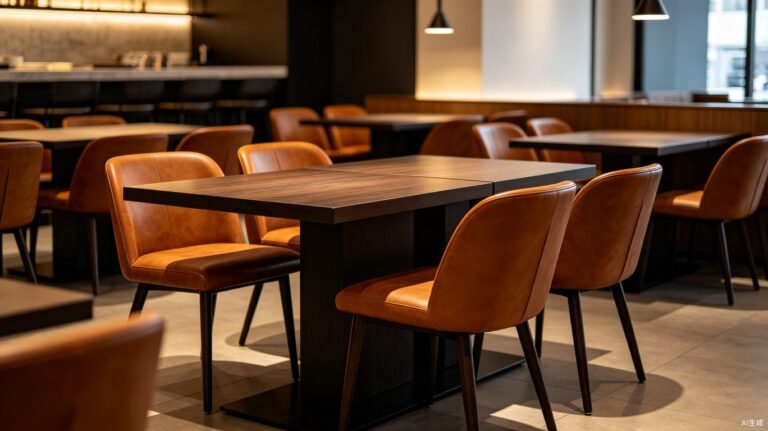
The pattern is clear: for any application beyond residential use, silicone leather is the only material that simultaneously meets Martindale, cleanability, flame retardancy, and environmental stability requirements without trade-offs. Woven textiles can’t achieve the Martindale ratings or cleanability. Coated synthetics fail on hydrolysis and VOC. Only silicone delivers silicone leather furniture performance across all categories.
About TOPSUN: TOPSUN manufactures ultra-performance silicone leather that exceeds ACT contract specifications by 4×. Our material achieves 200,000+ Martindale abrasion cycles, 100,000+ flex cycles, inherent flame retardancy (EN 13773 Class 4), bleach-safe cleanability, zero VOC emissions, and 10+ year service life. With certifications including ISO 10993-5, REACH, FDA 21 CFR 177.2600, and FMVSS 302, we serve contract furniture, hospitality, healthcare, automotive, marine, and public transit manufacturers. Thicknesses from 0.23–2.0 mm, 100+ textures, unlimited Pantone colors. MOQ: 500 meters. Lead time: 7–15 days.
Engineering project durability — how silicone leather exceeds ACT performance standards for contract applications
Request Performance Samples
Get ACT Test Reports
Download Spec Sheet
Frequently Asked Questions
What is a performance fabric?
Performance fabric is any upholstery material that meets or exceeds the ACT (Association for Contract Textiles) voluntary performance guidelines, which require minimum thresholds for Martindale abrasion (15,000+ cycles), pilling resistance (Grade 3+), colorfastness to light and rubbing (Grade 4+), tear strength, and seam strength. Materials marketed as “performance” that don’t provide test data for all five categories aren’t genuinely performance-rated.
What Martindale rating do I need for commercial use?
For heavy-duty commercial use (hotels, restaurants, offices), specify minimum 30,000–50,000 Martindale cycles. For extreme contract use (public transit, hospitals, gym equipment), demand 50,000–100,000+. For ultra-performance applications where replacement is costly or impossible, silicone leather at 200,000+ cycles provides the highest available rating with 10+ year service life.
Is silicone leather a performance fabric?
Yes — silicone leather is an ultra-performance fabric that exceeds ACT contract specifications by 4× on Martindale abrasion (200,000+ vs 50,000 minimum). It also passes all five additional ACT tests: pilling (Grade 4–5), colorfastness (Grade 4–5), tear strength (≥ 25N), and seam strength (≥ 180N). Unlike other performance fabrics, its properties are inherent to the silicone polymer — not dependent on surface treatments that wear off.
How long does performance fabric last?
Lifespan depends on the Martindale rating and application environment. General domestic grade (15,000–30,000 cycles): 3–5 years. Heavy duty (30,000–50,000): 5–7 years. Contract (50,000–100,000): 7–10 years. Ultra performance/silicone (200,000+): 10+ years. Environmental factors like humidity, UV exposure, and chemical cleaning can reduce lifespan by 30–50% for non-silicone materials.