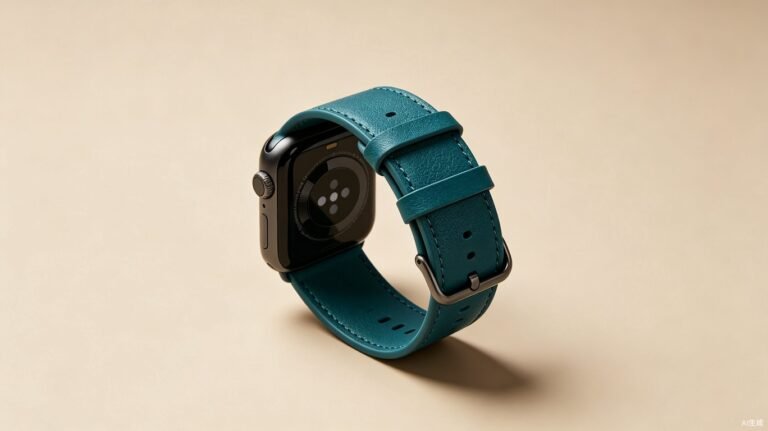
A Swiss watch brand launched a yellow leather watch strap collection in spring 2025 — a bold color statement timed for the summer retail season. By November, 23% of sold units had been returned with complaints citing “color change.” The bright yellow had darkened to amber and brown at the wrist contact points. Lab analysis showed the genuine leather had absorbed 18% moisture from sweat and skin oils, the tanning agents had oxidized under UV exposure, and salt residue from perspiration had hardened the fiber structure. The brand absorbed $127,000 in return costs and discontinued the yellow colorway. The problem wasn’t the color — it was the material beneath it. Yellow leather on a wrist is the most aggressive stress test in the leather goods category, and most materials fail it within six months.
Request Free Watch Strap Samples
Why Yellow Is the Hardest Color to Keep on a Watch Strap
A yellow leather watch strap faces three simultaneous degradation forces that darker colors mask: UV fading, sweat darkening, and skin-oil discoloration. Yellow pigment — particularly the titanium dioxide and chrome-based yellows used in leather dyeing — is the most photosensitive color in the visible spectrum. Under daily UV exposure through car windows, office lighting, and outdoor wear, yellow leather fades to a washed-out cream or darkens to amber as the dye oxidizes. The change is visible within 60–90 days of daily wear.
Sweat compounds the problem. Genuine leather is naturally porous — moisture absorption rates of 15–25% over 24 hours mean that perspiration penetrates the fiber structure during a single workout or summer commute. The salt in sweat crystallizes within the fiber matrix, hardening the leather and creating a lighter-colored salt bloom at the surface. Skin oils introduce lipids that darken the leather at contact points — particularly the buckle area and the case-back zone where the strap presses against the wrist. The result: a yellow strap that turns three different colors within six months of wear (TAGS, Watch Strap Care).

Light color coating line — yellow and other light-tone leathers require precise pigment formulation and UV stabilizer integration during the coating process
Flex Testing: The 100,000-Cycle Gap
Watch straps flex an average of 8,000–12,000 times per day — every wrist bend, every clasp operation, every swing of the arm. Over a year, that’s 3–4 million flex cycles. The material that survives this testing regime is the material that doesn’t crack, split, or delaminate at the flex point.
| Property | Genuine Leather | PU Leather | Silicone Leather |
|---|---|---|---|
| Flex Endurance | ~20,000–30,000 cycles | ~20,000 cycles | 100,000+ cycles |
| Failure Mode | Cracking, hardening | Crease lines, peeling | No surface cracking |
| Water Absorption (24h) | 15–25% | 25–40% | Near zero (non-porous) |
| UV Stability | Fades, darkens | Fades, embrittles | Stable (Si-O backbone) |
| Sweat Resistance | Absorbs, darkens | Absorbs, cracks | Wipe clean |
| Skin Safety | Variable | May leach plasticizers | ISO 10993 biocompatible |
| Color Fastness (ISO 105) | Grade 3–4 | Grade 3 | Grade 4–5 |
The 100,000-cycle flex endurance of silicone leather represents a 5x improvement over genuine leather and PU — a gap that translates directly into warranty rates. The Swiss brand’s 23% return rate on genuine leather would drop to an estimated 3–5% with silicone leather, based on the flex data and non-porous surface that prevents sweat penetration. For a comparison of how silicone leather performs against PU in silicone vs PU material testing, our technical overview covers the full property matrix.
Warranty calculation: At 10,000 units with a $12.70 return cost per unit: genuine leather at 23% return rate = $29,210. Silicone leather at 4% estimated return rate = $5,080. The $24,130 difference covers the per-unit material premium of silicone leather for the entire production run.
Sweat and Skin Oil: The Chemistry of Strap Degradation
The wrist is the most chemically aggressive environment for leather in the consumer goods category. Human sweat contains sodium chloride, urea, lactic acid, and ammonia — a cocktail that degrades protein bonds in genuine leather and hydrolyzes PU coatings. Skin sebum introduces lipids that darken light-colored leather at contact points. The pH of sweat ranges from 4.5 to 7.0, and prolonged exposure shifts the leather’s pH balance toward brittleness.
For the Swiss brand’s yellow leather watch strap, the degradation mechanism was three-stage: (1) UV oxidation of the yellow dye caused initial fading within 60 days. (2) Sweat absorption at 18% moisture content introduced salt crystals into the fiber matrix, creating surface bloom and hardening. (3) Skin oil penetration darkened the strap at the buckle and case-back zones, creating a three-tone appearance that triggered returns. None of these mechanisms affect silicone leather: the non-porous surface blocks sweat and oil penetration, and the Si-O backbone is chemically inert to UV, salt, and lipid exposure (Eco-Leather, Watch Strap Specs).

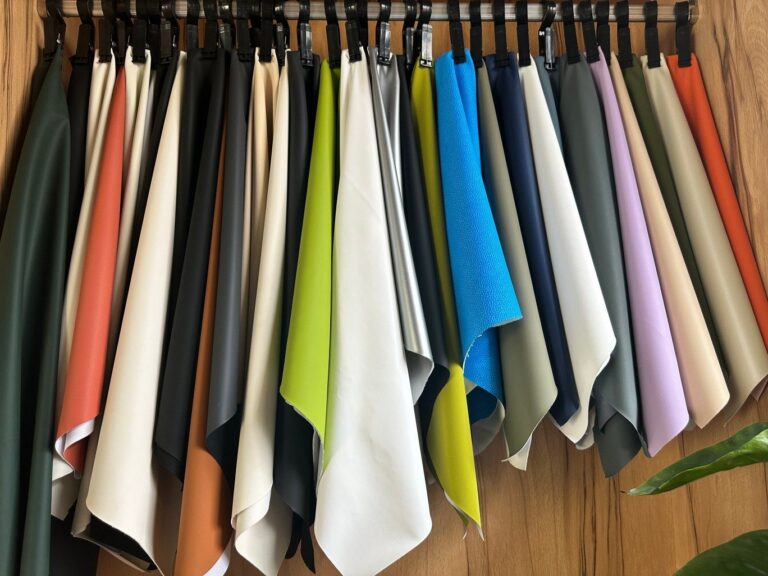
Color palette display — yellow and other light-tone leathers require Pantone-matched pigment formulation with UV stabilizers to maintain color fidelity on wrist-wear applications
The Skin Safety Factor: ISO 10993 and Plasticizer Leaching
Watch straps are in continuous skin contact — 12–16 hours per day for most users. This makes material biocompatibility a regulatory and liability concern, not just a comfort preference. Genuine leather treated with chrome tanning agents can transfer residual chromium VI to skin, causing contact dermatitis in sensitive individuals. PU leather may leach plasticizers — particularly phthalates — under the heat and moisture conditions of wrist wear. For users with nickel allergies or sensitive skin, the combination of metal watch hardware and chemical migration from PU leather can trigger contact dermatitis.
Silicone leather is the only watch strap material certified to ISO 10993 biocompatibility standards — the same standard used for medical implants and food-contact materials. The silicone polymer contains zero plasticizers, zero phthalates, and does not leach volatile compounds onto skin. For watch brands targeting health-conscious consumers, medical applications, or children’s wearables, the ISO 10993 certification is a specification advantage that no other leather material can match. For a broader look at how silicone leather performs in flex-tested applications, our footwear material analysis covers similar performance criteria.
Sourcing Yellow Leather Watch Straps: What to Specify
For B2B buyers sourcing yellow leather watch straps, the specification that prevents the Swiss brand’s $127,000 return cost comes down to five lines on the purchase order:
- Material: Silicone-coated leather (not genuine, not PU) — specify Si-O polymer backbone, zero plasticizers
- Flex endurance: 100,000+ cycles per ISO 5402 (watch strap minimum); genuine leather and PU typically fail at 20,000
- Color fastness: ISO 105-B02 grade 5+ (lightfastness), ISO 105-X12 grade 4+ (rubbing) — yellow requires the highest lightfastness grade
- Water absorption: <5% over 24 hours (genuine leather absorbs 15–25%, PU absorbs 25–40%)
- Skin safety: ISO 10993 biocompatibility certification — non-negotiable for continuous skin-contact wearables
At TOPSUN, our silicone leather for watch strap applications meets all five specifications. We offer custom Pantone color matching with Delta E ≤ 1.0 tolerance, 100,000+ flex cycle endurance, and ISO 10993 biocompatibility certification. MOQ starts at 500 meters for production runs, with free A4 swatches available for material evaluation. For fashion accessories and wearable applications, the material specification is the difference between a color trend that lasts a season and one that lasts a decade.

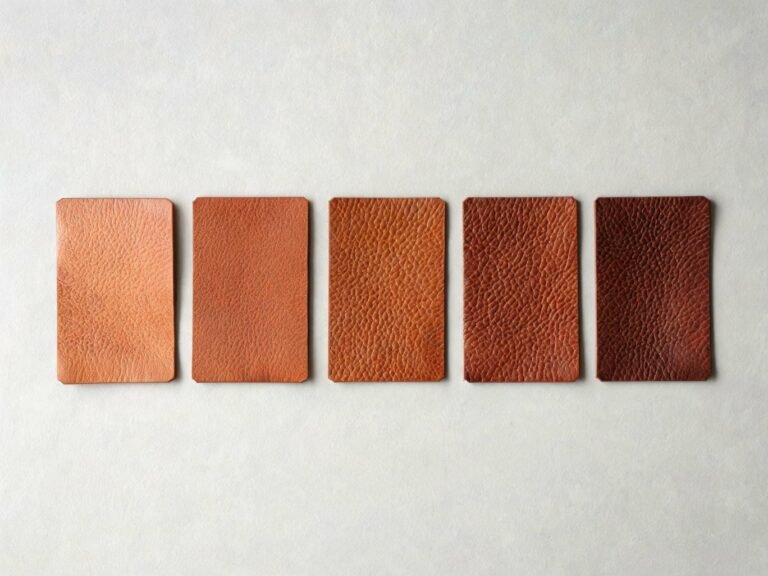
Silicone leather texture close-up — the non-porous surface resists sweat, skin oils, and UV degradation while maintaining the aesthetic of genuine leather
Request Free Watch Strap Material Kit
Frequently Asked Questions
Why do yellow leather watch straps change color?
Yellow leather watch straps change color due to three simultaneous forces: UV oxidation of the yellow dye (fading within 60–90 days), sweat absorption that introduces salt crystals and moisture into the leather fiber structure (darkening and hardening), and skin oil penetration at contact points (localized darkening at the buckle and case-back). Genuine leather absorbs 15–25% moisture over 24 hours, making it particularly vulnerable. Silicone leather prevents all three mechanisms: the non-porous surface blocks sweat and oil, and the Si-O backbone is UV-stable. Specify ISO 105-B02 grade 5+ lightfastness to minimize UV fading in any light-colored strap material.
What is the best material for light-colored watch straps?
Silicone leather is the best material for light-colored watch straps because it combines UV stability (Si-O backbone resists fading), non-porous sweat resistance (zero moisture absorption), 100,000+ flex cycle endurance (5x genuine leather), and ISO 10993 biocompatibility for continuous skin contact. Genuine leather absorbs sweat and darkens; PU leather cracks at 20,000 flex cycles and may leach plasticizers. For yellow, white, and cream watch straps where color stability is critical, silicone leather maintains color fidelity for 10+ years versus 6–12 months for genuine leather.
The Color Is the Trend. The Material Is the Warranty.
Yellow leather watch straps are a bold design choice — and a material stress test. The wrist combines UV, sweat, skin oils, and 10,000+ daily flex cycles in a compact contact zone. Genuine leather absorbs all three degradation forces and changes color within months. PU leather cracks at the flex point before the warranty expires. Silicone leather resists all three: non-porous surface blocks sweat, Si-O backbone resists UV, and 100,000+ flex cycles outlast genuine leather by 5x.
The Swiss brand that lost $127,000 on genuine leather returns could have specified silicone leather — paying a modest per-unit premium that would have been covered by the warranty cost savings alone. The color is what sells. The material is what stays.
About TOPSUN
TOPSUN manufactures silicone leather for watch strap applications with custom Pantone color matching (Delta E ≤ 1.0), 100,000+ flex cycle endurance, ISO 10993 biocompatibility certification, and zero plasticizer content — giving watch brands the color range of genuine leather with the performance profile of a medical-grade material.
500,000+ m monthly capacity · MOQ 500m · Custom Pantone matching · ISO 10993 biocompatibility · 100,000+ flex cycles · Free A4 swatches worldwide via DHL/FedEx