A smartwatch strap is the most intimate piece of technology most people own. It sits against the skin for 16 hours a day, absorbs sweat during workouts, endures shower steam, and still needs to look good enough to wear to dinner. For brands designing wearable devices, choosing the right wearable tech strap material is not a minor sourcing detail — it directly shapes user comfort, sensor accuracy, and product longevity.
The strap material landscape has shifted significantly. Silicone rubber dominated the first generation of fitness trackers, but premium smartwatch buyers now expect something that feels more refined. That is where silicone leather enters the picture — a material that bridges the performance of silicone with the aesthetics of a watch band leather. Let’s look at how the options compare.
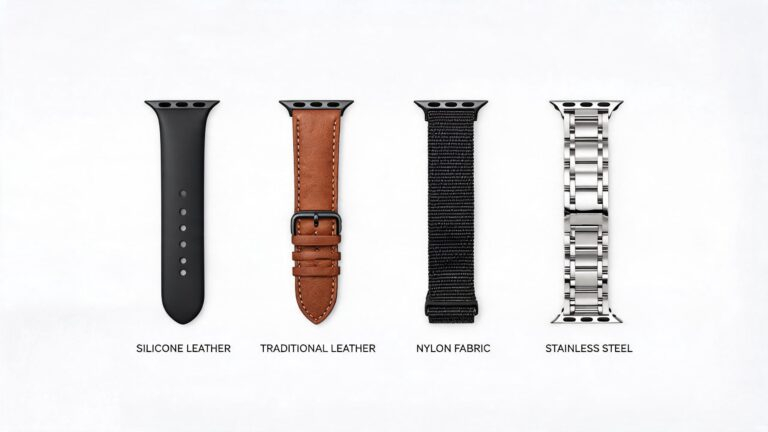
The Strap Material Spectrum: What Brands Are Using
Walk through any electronics trade show and you will see wearables sporting a range of strap materials. Each was chosen for a reason, but none is perfect across every use case. Here is the field:
- Silicone rubber (fluoroelastomer): The default for sport-focused devices. Excellent water and sweat resistance, but can feel sticky in hot weather and tends to attract dust and lint. Limited aesthetic range — mostly solid colors with a rubbery sheen.
- PU leather: Used in fashion-forward smartwatch bands. Looks good out of the box, but cracks and peels within 6–12 months of daily wear, especially with sweat exposure. The plasticizer content also raises skin-safety questions for a device worn constantly.
- Nylon woven (including fluoroelastomer blends): Breathable and lightweight, popular for outdoor watches. However, nylon absorbs sweat and odor, requires frequent washing, and lacks the premium feel of leather.
- Silicone leather: A newer entrant combining a silicone coating with textile backing. Delivers the soft touch of leather, the sweat resistance of silicone rubber, and none of the plasticizers found in PU. Increasingly the sports watch strap material of choice for mid-premium positioning.

Skin Contact and Comfort: The Hidden Differentiator
Here is something most material spec sheets do not mention: a wearable device material spends more time in contact with human skin than any other consumer product. That makes biocompatibility non-negotiable. Silicone rubber is already widely used in medical applications — wound dressings, baby bottle nipples, surgical tubing — because it is inert, non-toxic, and does not trigger allergic reactions.
Silicone leather inherits this safety profile. It is plasticizer-free, phthalate-free, and does not leach volatile compounds onto skin. The FDA recognizes silicone as safe for food-contact applications, which is a useful benchmark for a material worn against skin for hours daily. Compare that to PU leather, which can release residual DMF and plasticizer residues — a real concern for users with sensitive skin or nickel allergies who already experience contact dermatitis from watch hardware.
Comfort is also about breathability and moisture management. A silicone watch band that traps sweat underneath leads to skin maceration — the damp, irritated patches that fitness tracker users frequently complain about. Silicone leather, with its textile backing, allows better air circulation than solid silicone rubber while maintaining the same water-resistant surface. For brands targeting the fashion and sports segment, this balance is a genuine selling point.

Flexibility testing — critical for a strap that bends thousands of times per day
From the lab: In flexing endurance tests simulating daily wrist movement, silicone leather straps maintained structural integrity past 100,000 flex cycles with no surface cracking — a threshold where PU leather bands typically develop visible crease lines.
Durability Face-Off: Which Strap Survives Daily Life
A fitness tracker band takes abuse. Sunscreen, chlorine, saltwater, soap, friction against desk edges — the strap material needs to handle all of it without degrading. The table below compares the four leading strap materials on the durability metrics that determine real-world lifespan:
| Durability Factor | Silicone Leather | Silicone Rubber | PU Leather | Nylon Woven |
|---|---|---|---|---|
| Sweat / saltwater | Resistant | Resistant | Degrades — cracks | Absorbs — retains odor |
| UV / sunlight | Stable, no yellowing | Can fade over time | Fades and embrittles | Color fades |
| Flex cracking | 100,000+ cycles | Excellent | Cracks at ~20,000 | Fraying at edges |
| Cleanability | Wipe clean | Wipe clean | Difficult — stains set in | Requires washing |
| Skin safety | Biocompatible, plasticizer-free | Biocompatible | May leach plasticizers | Generally safe |
The takeaway: silicone rubber still leads on pure sport performance, but silicone leather closes the gap on water and sweat resistance while dramatically outperforming PU on longevity and nylon on maintenance. For a smartwatch strap material that needs to work in both gym and office contexts, it is the most versatile option available.

Designing for Sensor Performance
One consideration that is easy to overlook: strap material can affect the accuracy of heart-rate and blood-oxygen sensors on the back of a smartwatch. A strap that is too rigid or slippery can cause the watch to shift on the wrist, breaking sensor contact with skin. A strap that absorbs sweat can create a moisture barrier that interferes with optical readings.
Silicone leather strikes a useful middle ground. Its textile backing provides enough friction to keep the watch stable without being abrasive, and its moisture-resistant surface prevents the sweat pooling that degrades sensor accuracy. This is the kind of detail that matters more to hardware engineers than to marketing teams — but it shows up in product reviews and return rates. If you are developing wearable devices, our 3C accessories materials page covers additional electronic-grade specifications.
Frequently Asked Questions
Is silicone leather suitable for waterproof smartwatch bands?
Yes. The silicone coating is inherently hydrophobic, meaning water beads off the surface rather than soaking in. This makes it suitable for swim-rated devices. The key is to specify sealed seam construction at the strap-to-watch interface to prevent water ingress at attachment points.
How does silicone leather compare to fluoroelastomer (FKM) straps?
FKM offers excellent chemical resistance and is used in high-end sport watches, but it is expensive and has a rubbery aesthetic that limits fashion appeal. Silicone leather provides comparable sweat and UV resistance at a lower cost point, with a leather-like texture that suits dressier smartwatch designs. For brands offering interchangeable straps, silicone leather covers more use cases per SKU.
Can silicone leather straps be customized with brand textures?
Yes. Custom embossing patterns — from crocodile grain to smooth Nappa — can be developed to match your brand identity. Pantone color matching is also available with excellent UV stability. Learn more from our coverage of faux leather for sports applications and 3C electronics materials.
The Right Strap Material Defines the Wearable Experience
Wearable tech strap material is one of those decisions that seems small until you look at the data: strap discomfort is among the top three reasons users abandon fitness trackers within the first three months. By choosing silicone leather, brands give themselves a material that is skin-safe, sweat-resistant, flexible enough for all-day wear, and premium enough to justify a higher retail price. It will not replace fluoroelastomer for extreme sport applications, but for the vast majority of smartwatch and fitness tracker users, it is the most balanced strap material available today. The best way to evaluate it is to hold a sample in your hand, flex it, expose it to water, and compare it side by side with your current specification.
About TOPSUN
TOPSUN manufactures silicone leather for wearable device brands, smartwatch makers, and 3C accessory manufacturers. Our wearable tech strap material is produced in a solvent-free process and is available in thicknesses from 0.6 to 2.0 mm with custom textures and Pantone-matched colors.
Relevant compliance: REACH · RoHS · PAHs · FDA-grade silicone available · ISO 10993 biocompatibility data on request