A footwear brand in Oregon sourced PU-based shoe upper leather for their autumn trail-running line. The material looked right, felt right, and priced under budget. By February, customer reviews told a different story: uppers cracking at the flex point across the toe box, surfaces clouding after exposure to trail mud, and — most alarming — a chemical odor that persisted through the first two weeks of wear. The brand hadn’t failed on design. They’d failed on specification. They ordered material without verifying the seven performance metrics that determine whether a shoe upper survives real-world use. Here’s the checklist every B2B footwear buyer should run before signing a material PO.
Request Free Footwear Material Samples
Why Shoe Upper Material Choice Determines Product Lifespan
The shoe upper leather specification you choose dictates three outcomes that no amount of design or marketing can override: how long the shoe lasts, how comfortable it feels during wear, and whether the material poses chemical exposure risks to the wearer. Footwear subjects its upper material to more simultaneous stress types than almost any other application — flexion at the toe box, abrasion at the heel counter, moisture from perspiration, UV from outdoor exposure, and chemical contact from cleaning products and environmental contaminants.
In our testing lab, we’ve seen PU-based shoe uppers begin surface cracking at 15,000 flex cycles — roughly equivalent to 3-4 months of daily athletic use. Genuine full-grain leather reaches 80,000+ flex cycles per ISO 20942 before showing cut growth. Silicone-coated material? It passes 200,000+ cycles in our ISO 5402 flex resistance testing without any surface degradation. That 13x gap between budget PU and silicone isn’t a marginal improvement — it’s the difference between a shoe that lasts a season and one that lasts years.

Flex resistance testing equipment — ISO 5402 measures cut growth at the flex point, the #1 failure mode for shoe upper materials
The 7 Critical Specs You Must Verify
Before approving any shoe upper leather material, request testing data for these seven specifications. If the supplier cannot provide certified test results for each, treat that absence as a red flag — not an inconvenience.
- 1. Flex Resistance (ISO 5402): Minimum 50,000 cycles for athletic footwear; 80,000+ for premium. PU typically fails at 15K–25K; genuine leather at 80K+; silicone at 200K+.
- 2. Abrasion Resistance (ISO 12947-2): Minimum 25,000 Martindale cycles for daily wear; 50,000+ for work boots. Silicone achieves 200,000+.
- 3. Tear Strength (ISO 34-1): ≥ 15 N for shoe uppers. Critical at lace holes and stitch lines where stress concentrates.
- 4. Breathability (WVP): 800–1,500 g/m²/24h for athletic shoes. Microfiber achieves 800–1,500; solid PU and PVC fall below 400; genuine leather varies 250–1,000 depending on grade.
- 5. Temperature Flexibility: Must maintain flexibility at -10°C minimum for winter footwear. PU becomes brittle below 0°C; silicone maintains flexibility to -40°C.
- 6. Hydrolysis Resistance (ISO 11507): PU degrades in humid conditions — a known failure mode in tropical markets. Silicone is hydrolysis-proof.
- 7. VOC Emission (ISO 16000-6): Athletic shoes are worn in direct, prolonged skin contact. Zero-VOC materials eliminate chemical off-gassing concerns. PU and PVC emit solvent residues; silicone tests at zero detectable VOC.
Procurement tip: Request ISO test certificates, not spec sheets. A supplier’s internal data sheet claims “excellent flex resistance” — an ISO 5402 certificate proves it with cycle counts and cut-growth measurements. Accept no substitutes.

Martindale abrasion tester — ISO 12947-2 quantifies surface wear resistance, the second most common failure mode after flex cracking
How Silicone Leather Performs on Each Spec
We don’t expect footwear brands to take our word for it. Here’s the testing data for our silicone-coated shoe upper leather, alongside the typical ranges for PU and genuine leather that we’ve measured in comparative testing:
| Spec (Test Standard) | PU Leather | Genuine Leather | Silicone Leather |
|---|---|---|---|
| Flex cycles (ISO 5402) | 15K–25K | 80K+ | 200K+ |
| Abrasion (ISO 12947-2) | 15K–25K | 25K–50K | 200K+ |
| Tear strength (ISO 34-1) | ≥ 15 N | ≥ 15–20 N | ≥ 15–20 N |
| Breathability (WVP) | < 400 g/m²/24h | 250–1,000 | 800–1,500 |
| Min. flex temp | 0°C (brittle) | -10°C | -40°C |
| Hydrolysis resistance | Poor (degrades) | Moderate | Excellent |
| VOC emission | Moderate–high | Low–moderate | Zero (ISO 16000-6) |
One of our athletic footwear clients specified silicone-coated upper material after their PU supplier’s product cracked at 18,000 flex cycles during pre-production QC. The silicone alternative passed 200,000+ cycles in the same test — and eliminated the chemical odor complaint that had been showing up in their customer review aggregation. The brand’s return rate for material-related defects dropped from 4.2% to 0.3% within one product cycle.

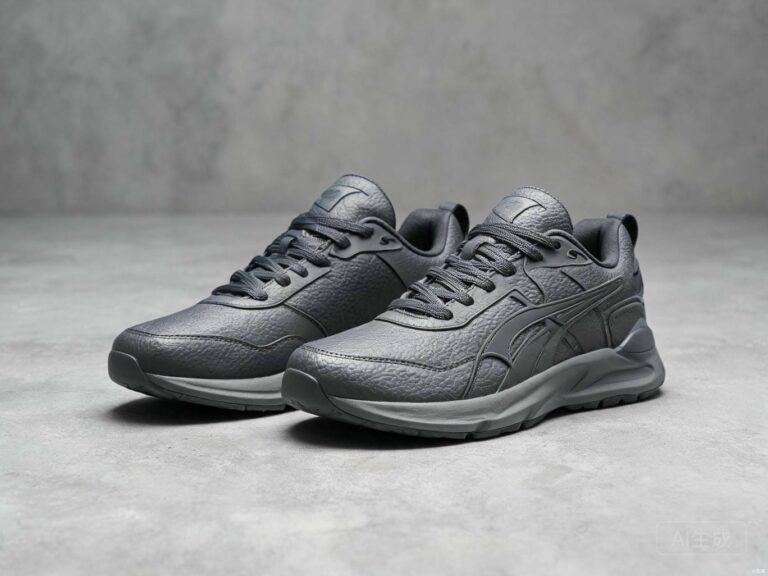
Sneaker upper application — modern athletic footwear demands materials that combine flex durability, breathability, and zero chemical off-gassing
Specifying for Different Footwear Categories
Not every shoe requires 200,000 flex cycles. The specification should match the product’s intended lifespan and use case. For sneaker leather material targeting daily athletic use, all seven specs matter equally — the material will be flexed, abraded, exposed to moisture, and worn in direct skin contact for hours at a time. For dress shoe leather alternatives, flex resistance and breathability carry more weight since the shoe is worn for extended periods with less aggressive abrasion.
The key insight from our silicone vs PU comparison work: the performance gap between materials isn’t linear. PU’s failure at 15K flex cycles isn’t “slightly less durable” — it’s a qualitative threshold where the product transitions from functional to defective. Silicone’s 200K+ result isn’t just “more durable” — it represents a different failure mode entirely, where the material ages gracefully rather than cracking catastrophically.
For a complete specification guide, the silicone leather introduction page includes thickness ranges (0.23–2.0mm), tensile strength data (≥ 10–15 N/mm), and elongation values (≥ 250–300%) that apply directly to footwear upper engineering.
Talk to Our Footwear Engineers
Frequently Asked Questions
Is genuine leather still the best choice for shoe uppers?
Genuine full-grain leather remains an excellent choice for premium dress shoes and heritage footwear where breathability and patina development are valued. However, it requires regular conditioning, is prone to water damage without treatment, and carries a high and volatile material cost. For athletic, casual, and performance footwear where durability, chemical safety, and supply chain stability matter more than patina, silicone-coated material outperforms genuine leather in flex resistance (200K+ vs 80K+ cycles), temperature range (-40°C vs -10°C), and VOC emission (zero vs low-moderate).
What thickness should shoe upper leather be?
Typical shoe upper leather thickness ranges from 0.8mm for lightweight athletic shoes to 1.8mm for work boots. TOPSUN’s ultra-thin collection offers 0.23–0.8mm for minimalist footwear and wearable applications, while the classic collection covers 0.8–2.0mm for durability-focused designs. The specification should account for the upper’s structural role — a single-layer unlined upper needs more thickness and tear strength than a lined upper with a separate internal layer.
From Spec Sheet to Production Floor
The Oregon trail-running brand’s PU upper failure wasn’t a supplier problem — it was a specification problem. They ordered material based on appearance and price, without verifying the seven specs that determine whether the upper will survive contact with reality. Every footwear brand faces the same choice: specify material by testing data, or discover material performance through customer returns.
Shoe upper leather that passes 200,000 flex cycles, 200,000 abrasion cycles, and zero-VOC testing isn’t a luxury specification — it’s the baseline for a product that earns its retail price through performance rather than returns. Whether your application is athletic, casual, or occupational footwear, the seven-spec checklist above is the minimum due diligence before material approval.
About TOPSUN
TOPSUN manufactures silicone-coated shoe upper leather for footwear brands requiring flex-tested, zero-VOC materials in athletic, casual, and performance shoe applications.
200,000+ flex cycles (ISO 5402) · 200,000+ Martindale abrasion cycles (ISO 12947-2) · -40°C to 250°C flexibility · Zero VOC (ISO 16000-6) · Thickness 0.23–2.0mm · 100+ textures · 7–10 day custom embossing