A Scandinavian furniture brand launched a “100% plant-based leather” collection in Q3 2025 — marketing photos featured cactus-green upholstery on display at the Stockholm Furniture Fair. Six months later, a consumer watchdog published lab results showing the material contained 30% petroleum-based polyurethane. The brand’s sustainability claims collapsed overnight. Three retail partners paused orders. The cost of the recall and rebranding exceeded €400,000. The lesson for B2B buyers: plant based leather alternatives is a marketing category, not a material specification. Here’s how to evaluate six plant-based options without becoming the next cautionary tale.
Request Free Sustainability Comparison Kit
The 6 Plant Based Leather Types: What They Actually Contain
Every commercially available plant-based leather is a hybrid — a bio-based component bonded to a polymer backing. The plant content ranges from 40% to 80%, with the remainder consisting of PU, PLA, or petroleum resin. Understanding this composition is the first step in evaluating whether a material meets your sustainability claims or exposes you to greenwashing liability.
Cactus leather (Desserto) uses nopal cactus (Opuntia) harvested from semi-arid ranches in Mexico. The mature cactus leaves are harvested, cleaned, mashed, and combined with a bio-based polyurethane to form a coating applied to a textile carrier. Plant content: 70–80%. Backing: 20–30% bio-based PU. Performance: up to 10 years, 50,000–125,000 Martindale abrasion cycles, cold crack resistance to -10°C. This is the most commercially mature plant-based option, with 800+ brand partnerships.
Pineapple leather (Piñatex) extracts fibers from pineapple leaves — an agricultural waste product from the Philippines’ pineapple harvest. The fibers form a non-woven mesh base, coated with a PLA and petroleum resin finish. Plant content: ~80%. Backing: ~20% PLA + petroleum resin. Lifespan: 2–4 years. Popular in fashion footwear and accessories, but the short lifespan limits furniture and automotive applications.
Apple leather (AppleSkin) uses apple pomace — the skin, core, and seeds left after juice production — blended with polyurethane. Plant content: 40–60%. Backing: 40–60% PU. The material offers better durability than standard PU but retains significant plastic content. Lifespan: 1–3 years under daily use. Growing supplier base in Italy and South Korea.
Grape leather (Vegea) uses grape marc — skins, seeds, and stalks from winemaking — combined with water-based polyurethane. Plant content: 55%. Backing: 45% water-based PU. Tensile strength exceeds 350 N/5cm. Italy-based, with growing adoption in automotive interiors and luxury bags. Lifespan: 5–8 years.
Mushroom leather (Mylo/Reishi) uses mycelium — the root structure of fungi — grown on sawdust substrates in vertical farms. The mycelium is harvested, processed, and pressed to mimic the grain of animal hide. Tensile strengths exceeding 30 MPa approach genuine leather performance. However, commercial supply is limited, lead times extend to 6+ months, and pricing reaches 80–120% of genuine leather cost. For brands seeking eco-friendly leather alternatives, mycelium represents the frontier — but not yet the production-ready solution.
Cork leather uses cork oak bark, a renewable material harvested without felling the tree. Cork is naturally water-resistant, lightweight, and recyclable. But cork leather delaminates under repeated flexing — a problem we analyzed in our cork leather case study, where a Berlin accessories brand faced warranty claims by month eight. Lifespan: 2–5 years depending on application.

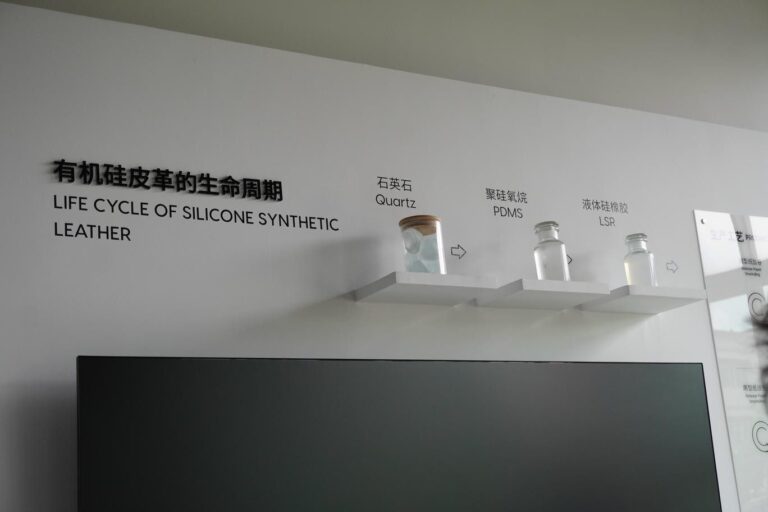
Lifecycle materials wall — verifying raw material origin is the first step in validating plant-based leather sustainability claims
The Biodegradability Myth and the Certification Gap
The Scandinavian brand that lost €400,000 made one critical error: they trusted a supplier’s claim of “100% plant-based” without independent verification. The reality is that no commercial plant-based leather on the market today is fully biodegradable. The polymer backing — whether bio-PU, PLA, or petroleum resin — prevents the material from breaking down in municipal composting facilities. “Partially biodegradable” on a spec sheet means the plant fraction degrades while the plastic fraction persists as microplastic contamination.
The industry lacks a unified certification framework for plant-based leather. There is no equivalent to LWG (Leather Working Group) for bio-based materials. Brands rely on supplier self-declarations, which are exactly as reliable as the supplier’s incentive to tell the truth. The verification protocol for B2B buyers: require third-party bio-content testing per ASTM D6866 (radiocarbon analysis), which measures the fraction of biogenic carbon in the material. A supplier who cannot provide ASTM D6866 results cannot substantiate their plant-content percentage.
Verification rule: Bio-content claim → demand ASTM D6866 radiocarbon test. Biodegradability claim → demand EN 13432 composting certification. Carbon reduction claim → demand ISO 14067 LCA report. If the supplier cannot produce all three, reduce the plant-content percentage on your marketing by 50% to protect your brand.
6-Way Comparison: Durability, Cost, and Bio-Content
| Material | Plant Content | Plastic Content | Lifespan | Biodegradable |
|---|---|---|---|---|
| Cactus (Desserto) | 70–80% | 20–30% bio-PU | Up to 10 yrs | Partial |
| Pineapple (Piñatex) | ~80% | ~20% PLA+resin | 2–4 yrs | No |
| Apple (AppleSkin) | 40–60% | 40–60% PU | 1–3 yrs | No |
| Grape (Vegea) | 55% | 45% water-PU | 5–8 yrs | No |
| Mushroom (Mylo) | Mycelium | Varies | TBD (early) | Claimed |
| Cork | ~100% | 0% (adhesive) | 2–5 yrs | Yes (delaminates) |
| Silicone (TOPSUN) | 0% plant | 0% plastic | 10–15+ yrs | Recyclable |
The data reveals a structural tension: the materials with the highest plant content (cork, Piñatex) have the shortest lifespans, while the material with zero plant content (silicone) offers the longest service life. Plant-based leather alternatives reduce GHG emissions by up to 89% compared to tannery processing — but that carbon savings is negated if the material must be replaced three to five times within the service life of a single silicone equivalent. For an overview of how silicone leather fits into the silicone leather material category, our technical introduction covers the composition and properties.

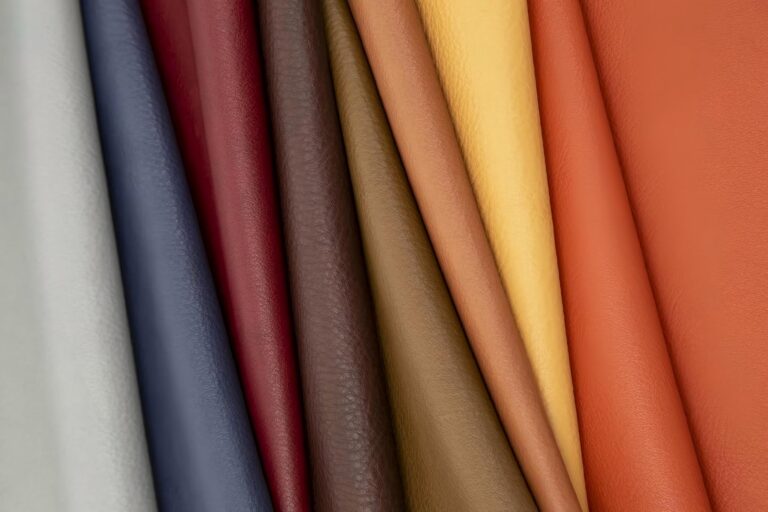
Tensile strength testing — durability data separates marketing claims from material performance; require ISO 3376 test results for any plant-based leather
Cost Structure: Why Plant Leather Costs 2–5x More Than PU
Plant-based leather alternatives cost $8–20 per meter, compared to PU at $3–8 per meter — a 2–5x premium. The cost structure explains why: agricultural feedstock prices for pineapple leaf fiber and cactus pulp fluctuated +8% to +15% during 2024–25. Mid-tier manufacturers reported +22% production cost increases in 2025. The specialized extraction, conditioning, and coating processes required for each plant type create supply chain bottlenecks that conventional PU production — now in its sixth decade of optimization — does not face.
The market is growing despite the premium. Depending on the market definition, plant based leather alternatives represent a $81M–$649M market in 2026, with CAGR projections ranging from 7.2% to 12.0% through 2033–2035 (Persistence Market Research, 2026). Mycelium-derived leather production is projected to surpass 1.5 million square meters by 2028. But the growth trajectory is fragile — it depends on consumer willingness to pay a premium for materials that still contain 20–60% plastic. A comparison of silicone vs PU material economics shows that the zero-VOC, zero-plasticizer profile of silicone delivers sustainability gains without the bio-content compromise.

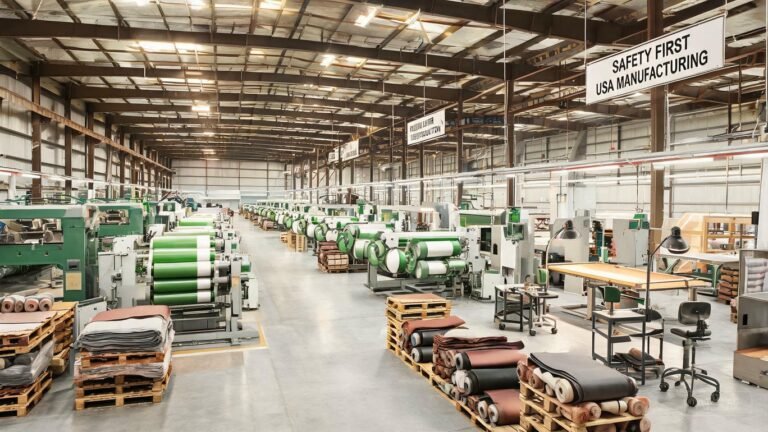
Plant-based leather furniture applications — the 2–5 year lifespan of most plant-based materials limits adoption in high-wear furniture categories
How to Verify Bio-Content Before You Commit
The Scandinavian brand’s €400,000 loss was preventable with a four-point verification protocol written into the purchase order. Every plant-based leather sourcing decision should require:
- Bio-content verification: ASTM D6866 radiocarbon analysis — measures the exact percentage of biogenic carbon. Cost: $300–500 per test. Timeline: 2–3 weeks. Non-negotiable for any “plant-based” marketing claim.
- Durability specification: Martindale abrasion (ISO 12947-2), tensile strength (ISO 3376), flex resistance (ISO 5402). Require the specific cycle count your application demands — fashion: 25,000+; furniture: 50,000+; automotive: 100,000+.
- Biodegradability certification: EN 13432 for industrial composting, or ISO 14855 for laboratory biodegradation. If the supplier cannot produce either, remove “biodegradable” from your marketing.
- Carbon footprint LCA: ISO 14067 cradle-to-grave life cycle assessment. Plant-based materials that must be replaced 3–5x within the service life of a silicone equivalent may have a higher lifetime carbon footprint despite lower per-unit emissions.
Request Free Material Spec Sheet
Frequently Asked Questions
What is the most durable plant-based leather alternative?
Cactus leather (Desserto) is the most durable commercial plant-based leather, achieving up to 10 years of service life with 50,000–125,000 Martindale abrasion cycles. However, this still falls short of genuine leather (15–25 years) and silicone leather (10–15+ years). Mycelium leather shows the most promising durability data — tensile strengths exceeding 30 MPa — but remains in limited production with 6+ month lead times. For B2B applications requiring 10+ year warranties, silicone leather remains the most reliable option with 200,000+ abrasion cycles and zero plasticizer content.
Are plant-based leather alternatives actually biodegradable?
No commercial plant-based leather on the market today is fully biodegradable. The polymer backing — whether bio-PU (cactus, grape), PLA + petroleum resin (pineapple), or conventional PU (apple) — prevents complete biodegradation. “Partially biodegradable” means the plant fraction degrades while the plastic fraction persists as microplastic contamination. Only cork leather approaches true biodegradability, but it delaminates under flexing stress. B2B buyers should require EN 13432 composting certification before making biodegradability claims — and if the supplier cannot produce it, remove the claim from marketing materials to avoid greenwashing liability.
The Bottom Line: Bio-Content Is Not the Only Sustainability Metric
Plant-based leather alternatives reduce per-unit carbon emissions by up to 89% compared to tannery processing — a genuine and significant environmental benefit. But sustainability is a lifecycle metric, not a per-unit metric. A material that must be replaced three times within the service life of a single alternative may carry a higher lifetime carbon cost despite lower per-unit emissions. The most sustainable material is the one that lasts longest, contains no hazardous substances, and can be recycled at end of life — not necessarily the one with the highest plant content.
For B2B buyers evaluating their options across automotive, furniture, and consumer goods applications, the framework is: verify bio-content with ASTM D6866, test durability against your application’s wear profile, and calculate lifetime carbon — not just per-unit carbon. Silicone leather contains zero plant material but also zero plastic, zero VOCs, and carries ISO 10993 biocompatibility certification. In a lifecycle analysis, the most sustainable material may not be the one that grew in a field.
About TOPSUN
TOPSUN manufactures silicone leather using a solvent-free dry coating process that produces zero VOCs, zero plasticizers, and zero DMF — offering B2B brands a material that achieves lifecycle sustainability through 10–15+ year service life and full recyclability, without the bio-content compromise of hybrid plant-plastic materials.
500,000+ m monthly capacity · 7–15 day lead time · MOQ 500m · Free A4 swatches worldwide via DHL/FedEx · 18 ISO technical standards · ISO 10993 biocompatibility certified · ASTM D6866 test data available on request