A Stockholm sustainability-focused accessories brand launched a leather and cork collection combining genuine leather panels with cork fabric accents on wallets, tablet sleeves, and tote bags. The concept was compelling: two natural, renewable materials paired to tell a sustainability story. Eighteen months later, the brand had a different story to tell. The cork fabric delaminated from its woven backing at every flex point. The genuine leather darkened unevenly from body oil absorption. The two materials, bonded at seams, separated at different rates — cork pulled away from leather stitching as the materials expanded and contracted differently under temperature and humidity changes. The brand received 840 warranty claims and quietly discontinued the line.
TOPSUN manufactures silicone leather that delivers the sustainability metrics brands seek from leather and cork pairings — renewable, recyclable, cruelty-free, low environmental impact — without the delamination, differential expansion, and structural failure that plague multi-material natural constructions. With a 10+ year service life, zero VOC production process, and 100% recyclable end-of-life profile, silicone leather eliminates the trade-off between eco-narrative and product durability.
Request Free Sustainability Samples
Why Leather and Cork Fail Together
The cork and leather trade-offs analysis on our site documents why this material pairing creates structural problems that neither material causes alone. The core issue is differential behavior: leather and cork respond differently to every environmental variable — moisture, temperature, flex stress, and UV exposure. When bonded together, these differential responses create internal stresses that eventually tear the bond apart.
Moisture response. Genuine leather absorbs moisture through its collagen fiber matrix — it swells, darkens, and changes dimension. Cork fabric, which is thin cork veneer laminated to a fabric backing with PU adhesive, blocks moisture at the surface but absorbs it at the adhesive layer if the seal breaks. When leather swells and cork doesn’t, the bonded seam experiences shear stress. Over 12-18 months of humidity cycling, the adhesive fails.
Flex response. Leather flexes indefinitely — its collagen fibers slide and recover. Cork is brittle when thin. A cork fabric wallet flexed daily at its fold line develops micro-fractures in the cork veneer within 2,000-5,000 flex cycles. These fractures propagate through the veneer until the cork surface flakes and the adhesive layer is exposed. The vegan belt material guide documents this cork flex failure across belt applications — a similar stress pattern to wallet fold lines.

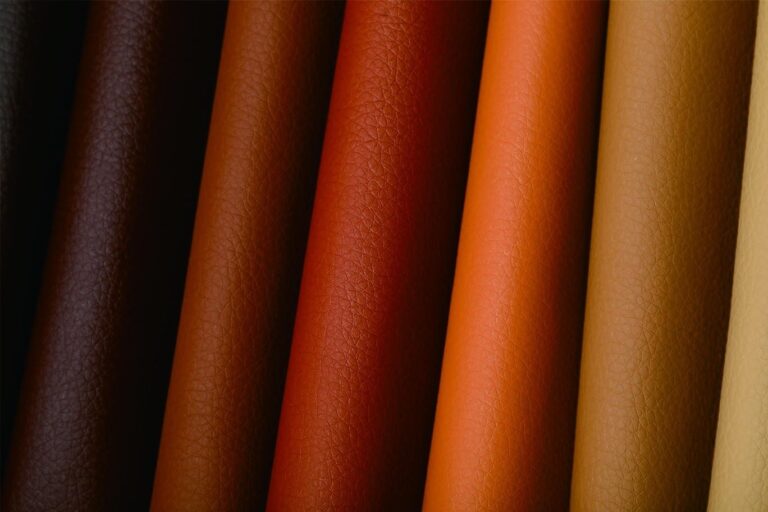
Material sample rack — consistent surface texture and thickness across rolls eliminates the differential expansion that causes multi-material delamination
Thermal expansion. Leather and cork have different coefficients of thermal expansion. A product left in a car at 60°C and then brought into an air-conditioned office at 22°C experiences a 38°C temperature delta. The materials expand and contract at different rates — cork contracts more than leather — and the bonded seam absorbs the differential. After 50-100 thermal cycles, the adhesive fatigues and the bond line separates.
The Lifecycle Problem: Before and After 18 Months
The natural leather sustainability gaps report shows that the environmental benefit of using natural materials only materializes if the product achieves a minimum lifespan. A leather and cork wallet that lasts 18 months before being replaced has a worse lifecycle footprint than a silicone leather wallet that lasts 10+ years — because the replacement cycle multiplies production impact.
| Lifecycle Metric | Leather and Cork | PU Synthetic | Silicone Leather |
|---|---|---|---|
| Service life (daily use) | 12-18 months | 10-18 months | 10+ years |
| Primary failure mode | Cork delamination + bond separation | Hydrolysis + flex cracking | No observed failure mode |
| Replacement cycles (10 years) | 7-10 | 7-12 | 1 |
| Cumulative production energy (10yr, MJ/m²) | ~350 (tanning + cork processing × 8) | ~280 (PU production × 8) | ~45 (solvent-free × 1) |
| Biodegradable | Partially (cork yes, leather processing no) | No | 100% recyclable |
| Vegan / cruelty-free | No (animal hide) | Yes | Yes |
| Chemical additives | Chrome tanning + PU adhesive | DMF, plasticizers, phthalates | None (solvent-free) |
The cumulative production energy metric is the most telling. A leather and cork product replaced 8 times over 10 years consumes 7.8× more production energy than a single silicone leather product that lasts the full decade. The sustainability story that justified the material pairing is negated by the replacement cycle it creates.
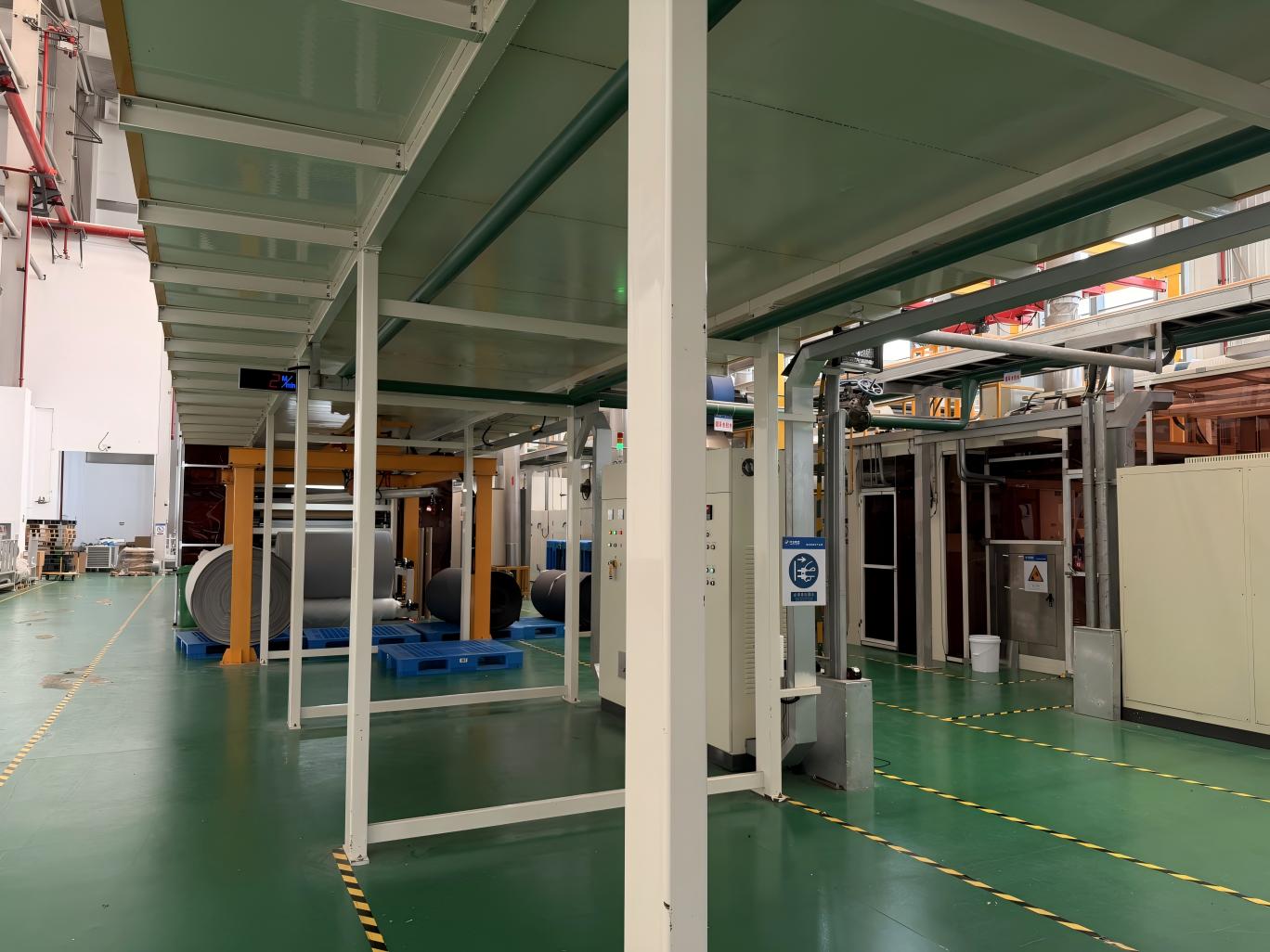
Production facility mezzanine — the solvent-free dry coating process uses closed-loop temperature control with zero chemical discharge, achieving the sustainability metrics that leather and cork pairings cannot sustain
How Silicone Leather Replaces the Leather and Cork Value Proposition
Brands choose leather and cork for two reasons: the sustainability narrative and the natural aesthetic. Silicone leather delivers both — with the addition of engineering-grade durability that eliminates the 18-month failure cycle.
On sustainability: TOPSUN’s solvent-free dry coating process produces zero VOCs, uses no DMF, no plasticizers, no phthalates, and no chrome. The material is 100% recyclable at end of life. The production process is LEED compatible and EU Ecolabel compatible. The vegan leather alternatives guide positions silicone leather as the only material that achieves both zero chemical load and 10+ year durability.
On aesthetics: TOPSUN offers 100+ embossed textures including natural grain patterns (cowhide, sheepskin, pigskin) that replicate the visual warmth of genuine leather without its functional liabilities. The Designer Collection offers metallic and pearlescent finishes for fashion applications, and custom Pantone matching ensures the exact color the brand specifies — with Delta E ≤ 1.0 batch-to-batch consistency that genuine hide and cork cannot achieve.

Quality and safety signage — every production batch undergoes ISO-standardized testing for flex, abrasion, color fastness, and hydrolysis before shipment, backed by SGS and Intertek certifications
Frequently Asked Questions
Is leather and cork a sustainable material combination?
Leather and cork has a compelling sustainability narrative — both are natural, renewable materials. But the sustainability benefit only materializes if the product achieves a long enough lifespan to offset production impact. Leather and cork products typically fail at 12-18 months from cork delamination and differential material expansion, requiring 7-10 replacements over a 10-year period. This replacement cycle multiplies the cumulative production energy, chemical use, and waste generation — making the combination less sustainable over its lifecycle than a single silicone leather product that lasts 10+ years with zero chemical additives.
Why does cork leather delaminate from its backing?
Cork leather is manufactured by slicing thin veneer from cork bark and laminating it to a fabric backing using polyurethane adhesive. The cork veneer is brittle — it develops micro-fractures when flexed, and these fractures propagate through to the adhesive layer. Once the adhesive is exposed to moisture and flex stress, it breaks down and the cork veneer separates from the backing. This typically occurs at 2,000-5,000 flex cycles, which translates to 6-12 months of daily use at flex points like wallet folds, bag handles, and seam edges.
The sustainability story your brand tells should match the product your customer experiences. When the eco-narrative ends in warranty claims at 18 months, neither the brand nor the environment wins. TOPSUN provides free A4 swatch samples, full lifecycle documentation, and ISO test certificates via DHL worldwide. Request your sustainability comparison kit today.