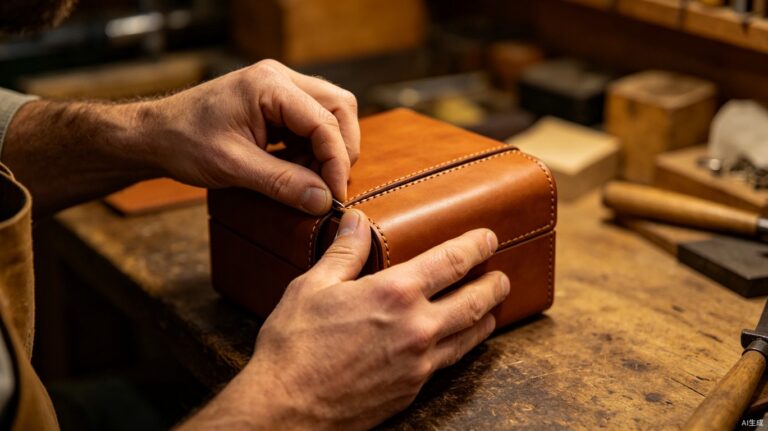
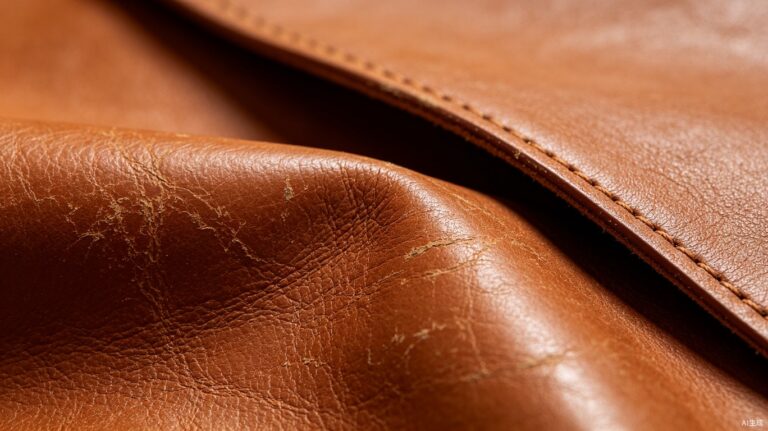
When a furniture buyer runs their fingers across a crocodile-patterned sofa panel, they’re feeling the result of heated engraved rollers pressing a three-dimensional pattern into a leather surface. That texture — the embossing — is only as durable as the base material underneath it. We’ve watched embossed PU leather lose its pattern definition after 30,000 Martindale cycles while embossed silicone leather held its texture past 200,000. The gap matters because reupholstering a hotel lobby or an automotive interior costs far more than the material itself. Here’s what our testing reveals about five embossed leather material types — and which ones actually hold their pattern for the long haul.
What Is Embossed Leather Material?
Embossed leather material is any leather — genuine, synthetic, or silicone-based — that has been passed through heated engraved metal rollers or pressed with plates to imprint a raised or depressed pattern. Common patterns include crocodile, ostrich, lizen, lychee, and custom brand-specific textures. The process is widely used for what embossed leather material is used for: furniture upholstery, automotive interiors, fashion accessories, and decorative panels.
The embossing process itself is straightforward: the leather surface is softened, pressed against an engraved roller under heat and pressure, then cooled to set the pattern. What’s less straightforward is how that process interacts with the base material’s molecular structure.
Here’s the key distinction. Embossing physically compresses and deforms the surface. On genuine leather, this can slightly densify fibers and improve wear resistance in high-use areas. On synthetic leathers — particularly PVC — the heat and pressure can accelerate plasticizer migration, making the surface more brittle over time. On silicone-coated fabrics, the cross-linked silicone polymer chain is thermally stable, so the embossed pattern sets cleanly without degrading the material.
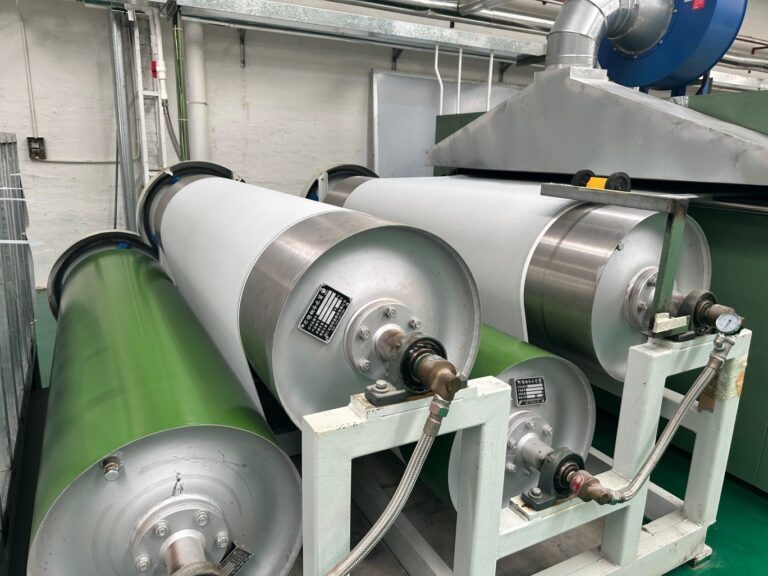
In our factory, we produce embossed silicone leather using a solvent-free dry coating process at controlled temperatures. The silicone layer’s thermal stability means the embossed pattern retains its depth even after repeated thermal cycling from -40°C to 250°C — a range that would cause PU coatings to soften and PVC to release plasticizers.
5 Embossed Leather Material Types: Side-by-Side Comparison
Not all embossed leather materials perform the same. We tested five types that procurement teams commonly encounter when sourcing custom embossed leather patterns. Here’s how they compare on the metrics that matter for B2B procurement:
| Material Type | Martindale Cycles | UV Resistance | Pattern Retention | Service Life |
|---|---|---|---|---|
| Silicone Leather | 200,000+ | 1,000+ hrs | Excellent | 10+ years |
| PU Leather | 30,000-50,000 | 200-500 hrs | Fair | 3-5 years |
| PVC Leather | 20,000-40,000 | 200-400 hrs | Poor | 2-3 years |
| Microfiber Leather | 50,000-80,000 | 500-800 hrs | Good | 5-7 years |
| Bio-based Leather | 15,000-30,000 | 100-300 hrs | Fair | 2-4 years |

Stacked embossed leather samples showing varied textures and colors
The data tells a clear story. Silicone-based embossed leather material outperforms every other type by a wide margin — 4x the Martindale cycles of PU, 5x the UV stability of PVC. For applications where the embossed pattern must remain visible for the product’s entire lifespan, the base material choice is the single most important decision.
Industry reports indicate that 42% of B2B buyers now prioritize eco-friendly alternatives when sourcing embossed croc-pattern leather. But “eco-friendly” marketing rarely translates to durability — and durability is what determines whether that hotel sofa needs reupholstering in 3 years or 10. The silicone vs PU comparison becomes critical at this evaluation stage.
How Embossing Affects Durability: What Testing Reveals
Embossing changes the surface geometry of leather. That’s not just aesthetic — it’s mechanical. A deeper embossing pattern means more surface area exposed to friction, and valleys in the pattern can trap dirt and cleaning chemicals. In our Martindale abrasion testing per ISO 12947-2, we’ve observed three distinct patterns of embossed leather durability testing behavior:

Martindale abrasion tester used for embossed leather durability testing
1. Silicone embossed leather shows minimal pattern loss even at 200,000+ cycles because the silicone polymer’s inherent wear resistance isn’t compromised by surface deformation. The cross-linked molecular structure resists compression set.
2. PU embossed leather begins showing pattern flattening at approximately 30,000-40,000 cycles. The polyurethane coating softens under repeated friction, and the raised embossed areas compress gradually.
3. PVC embossed leather is the worst performer. Plasticizer migration — accelerated by the heat used during embossing — causes the surface to harden and crack, taking the embossed pattern with it.
Flex cracking tests (ISO 5402) tell a similar story. Embossed PVC leather showed visible cracks at the pattern’s peak points after 50,000 flex cycles. Embossed silicone leather showed no cracking at 100,000 cycles. For embossed leather pattern engineering, these results directly inform pattern depth and spacing decisions.
One of our furniture clients switched from embossed PVC to embossed silicone leather for a 200-unit hotel project. After 18 months of daily guest use, the silicone panels showed no measurable pattern depth loss, while the previous PVC material had required full replacement at 14 months.
Where Embossed Leather Materials Perform Best
Different applications demand different embossed leather materials. Here’s where each type finds its sweet spot:

Custom embossed texture samples for automotive and furniture applications
Automotive interiors: Crocodile and lizen patterns on silicone leather excel here because they combine luxury aesthetics with the temperature resistance (-40°C to 250°C) and low-fogging properties (DIN 75201) that OEM specifications require. This makes embossed leather for automotive interiors a growing segment as EV manufacturers seek premium cabin textures without longevity compromises.
Furniture upholstery: Lychee and geometric patterns on silicone or microfiber leather work best for sofas and headboards. The key spec is Martindale cycles — hospitality furniture should target 100,000+ cycles minimum. See our furniture and sofa applications for detailed case studies.
Fashion accessories: Crocodile and ostrich patterns on PU leather remain popular for bags and belts where lifespan expectations are shorter (3-5 years) and cost sensitivity is higher. For premium eco-friendly embossed leather material applications, silicone-based options are gaining ground.
Marine and outdoor: Embossed silicone leather is the clear choice. UV resistance (1,000+ hours per ASTM G154) and salt spray resistance (1,000+ hours per ISO 9227) mean the embossed pattern won’t fade or crack in sun and salt exposure.
Sourcing Embossed Leather: 7 Specs That Matter
When evaluating embossed leather suppliers, procurement teams should verify these specifications before placing a bulk order:
1. Martindale abrasion cycles (ISO 12947-2) — minimum 100,000 for commercial use
2. UV resistance hours (ASTM G154) — minimum 500 hours for outdoor applications
3. Flex resistance (ISO 5402) — minimum 50,000 cycles
4. Color fastness (ISO 105-B06) — Grade 4-5 minimum
5. VOC emissions (ISO 16000-6 or VDA 277) — verify zero or near-zero
6. Pattern retention test — request sample swatches tested after 50,000 Martindale cycles
7. Custom embossing lead time — 7-10 days for new pattern development
A common sourcing mistake: requesting only a visual sample without demanding tested performance data. An embossed swatch that looks beautiful on day one tells you nothing about how it will look after 80,000 abrasion cycles. Always ask for test reports from SGS, Intertek, or equivalent accredited labs. For more on embossed faux leather materials, our procurement guide covers supplier red flags in detail.
Silicone leather texture variety — see how embossed patterns are created and tested
Frequently Asked Questions
Does embossing weaken leather material?
On silicone and genuine leather, embossing does not significantly reduce structural strength because the base polymer or fiber structure remains intact. On PVC leather, however, the heat and pressure used during embossing can accelerate plasticizer migration, which does weaken the surface over time. Always request Martindale and flex test data for the specific embossed product, not just the base material.
Can embossed leather be cleaned without losing its pattern?
Yes — but the cleaning method depends on the base material. Embossed silicone leather is non-porous and can be cleaned with water, alcohol disinfectants, or even diluted bleach without pattern degradation. Embossed PU and PVC leathers require gentler cleaning agents, and harsh chemicals can strip the surface coating, flattening the embossed pattern over time.
Making the Right Call on Pattern Longevity
The embossed leather material you choose today determines whether your product’s texture stays sharp for 3 years or 10+. Our testing consistently shows that silicone-based embossed leather material delivers 4-5x the durability of PU and PVC alternatives, with zero VOC emissions and no pattern degradation after 200,000+ Martindale cycles. For B2B buyers evaluating long-term value — not just initial cost — the data makes the decision clear.
About TOPSUN
TOPSUN manufactures silicone-based embossed leather material for automotive interiors, furniture upholstery, and fashion applications requiring long-term pattern fidelity and surface durability.
100+ custom embossing textures developed in 7-10 days | 200,000+ Martindale abrasion cycles verified (ISO 12947-2) | UV-stable for 1,000+ hours (ASTM G154) | Zero-VOC solvent-free coating process certified to REACH and FDA 21 CFR 177.2600