AL leather is a search term that returns three completely different material categories — and B2B buyers who don’t clarify which one they mean end up with the wrong specification. Type “AL leather” into a B2B marketplace and you’ll see: (1) artificial leather abbreviated as “AL” — covering PU, PVC, and synthetic blends; (2) genuine vegetable-tanned leather from specific tanneries branded as “AL Leather” at $30/sqm and up; and (3) bonded recycled leather made from ground leather fibers fused with synthetic resins. Each has different durability, compliance, and cost profiles. Silicone leather eliminates the ambiguity entirely — it’s neither genuine hide nor synthetic PU/PVC, but a third category with its own certified specification that B2B buyers can verify without naming confusion.

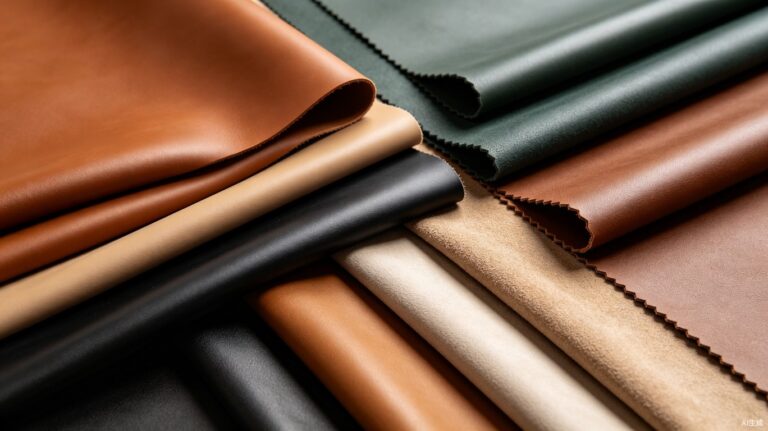
Full-color swatch rack — silicone leather eliminates the AL leather naming confusion with a single, certified material specification.
What “AL Leather” Actually Refers To
When procurement teams search AL leather, the results fall into three material categories with fundamentally different chemistries, performance, and compliance profiles:
- Artificial Leather (abbreviated “AL”) — The most common interpretation. Covers the full synthetic leather category: PU, PVC, microfiber, and bio-based blends. Material cost: $2–10/sqm. Durability: 20,000–80,000 Martindale cycles. Service life: 2–5 years. Compliance: variable by formulation — solvent-based PU often fails REACH; PVC faces phthalate restrictions. The artificial leather types guide breaks down each subcategory.
- Genuine “AL Leather” (brand/tannery) — Vegetable-tanned or chrome-tanned genuine leather sold under the “AL Leather” brand designation, typically sourced from Italian-certified tanneries. Material cost: $20–40/sqm. Durability: excellent abrasion resistance but requires maintenance. Service life: 10–20+ years with proper care. Compliance: LWG-certified tanneries; Prop 65 disclosure may apply for chrome-tanned variants.
- Bonded recycled leather — Ground leather scraps (typically 60–90% leather fiber) bonded with synthetic resins and embossed to mimic full-grain appearance. Material cost: $5–12/sqm. Durability: variable — depends on resin quality and fiber length. Service life: 3–7 years. Compliance: formaldehyde risk from bonding resins; batch inconsistency common. The recycled leather analysis documents the quality variance.
The problem: all three show up under the same “AL leather” search, and suppliers aren’t always transparent about which they’re offering. A procurement manager who specifies “AL leather” without clarifying the category may receive bonded recycled leather when they expected genuine, or artificial PU when they expected bonded. The result: mismatched durability, failed compliance, and warranty disputes. For context on the broader synthetic landscape, the artificial leather name and chemistry guide maps every naming convention in the industry.

The AL leather spectrum — from bonded recycled fiber to genuine vegetable-tanned hide, the naming creates specification ambiguity.
The Specification Gap: Why Naming Matters in B2B
In B2B sourcing, ambiguous material names create real costs. A furniture manufacturer who specifies AL leather in their purchase order without further qualification may experience:
| AL Leather Type | Source | Martindale | Service Life | B2B Application |
|---|---|---|---|---|
| Artificial (PU/PVC) | Petrochemical | 20K–80K | 2–5 years | Budget furniture, fashion |
| Genuine (brand) | Animal hide | 50K–100K+ | 10–20+ years | Luxury goods, heritage |
| Bonded recycled | Scrap + resin | 10K–50K | 3–7 years | Mid-range accessories |
| Silicone leather | Inorganic Si | 200K+ | 10+ years | All B2B sectors |
The cost of getting it wrong: a contract furniture buyer received bonded recycled leather when their specification intended genuine “AL Leather” from a branded tannery. The bonded material achieved 25,000 Martindale cycles — below the 50,000-cycle minimum for contract furniture — and began delaminating within 18 months. The replacement cost, including reupholstery labor and downtime, exceeded the original material savings by 3×. The leather suppliers red flags guide covers the documentation buyers should require to prevent this.
200K+ Martindale cycles across all B2B applications — silicone leather’s single, unambiguous specification eliminates the naming confusion that costs buyers 3× in replacement cycles.

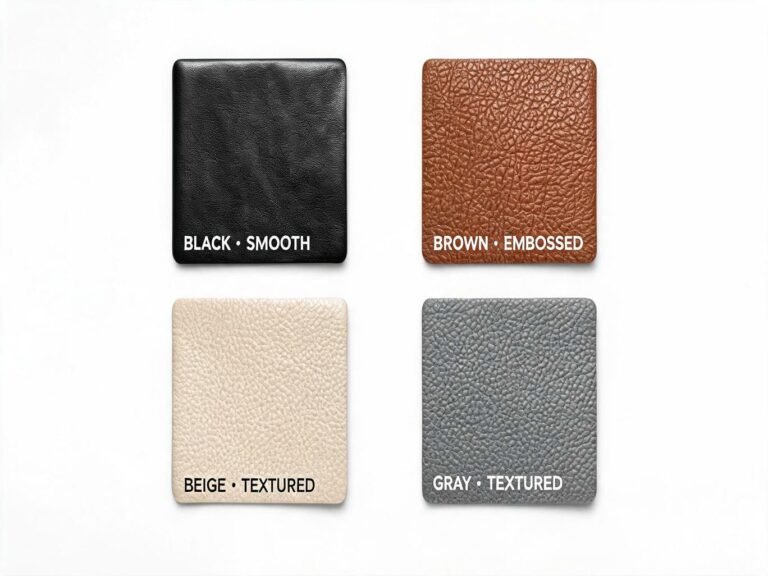
Classic sample rack — the physical reference that should accompany every B2B specification, eliminating naming ambiguity.
How to Specify AL Leather Without Ambiguity
The solution to the AL leather naming problem isn’t finding a better search term — it’s writing a better specification. B2B buyers should include these five elements in every material specification to eliminate ambiguity:
- Material category — Specify “artificial leather,” “genuine leather,” “bonded leather,” or “silicone leather” explicitly. Never use abbreviations or brand names as the sole material identifier.
- Coating chemistry — For artificial leather: specify PU, PVC, silicone, or bio-based. For genuine: specify chrome-tanned or vegetable-tanned. This determines compliance, durability, and end-of-life characteristics.
- Martindale cycle minimum — Never accept “durable” or “high-quality” as specifications. State the Martindale cycle requirement: 50,000 minimum for contract furniture, 100,000 for automotive, 200,000 for high-wear public seating. The durable leather testing guide provides industry-standard thresholds.
- Certification requirements — List specific certifications: REACH, OEKO-TEX 100, ISO 10993 (for medical/baby), EN 13773 (for fire safety). “Certified” without naming the standard is meaningless.
- Physical sample approval — Require a physical swatch sign-off before production. This is the only way to verify hand-feel, color accuracy, and surface quality against the specification. Our samples center provides specification-grade swatches for B2B evaluation.

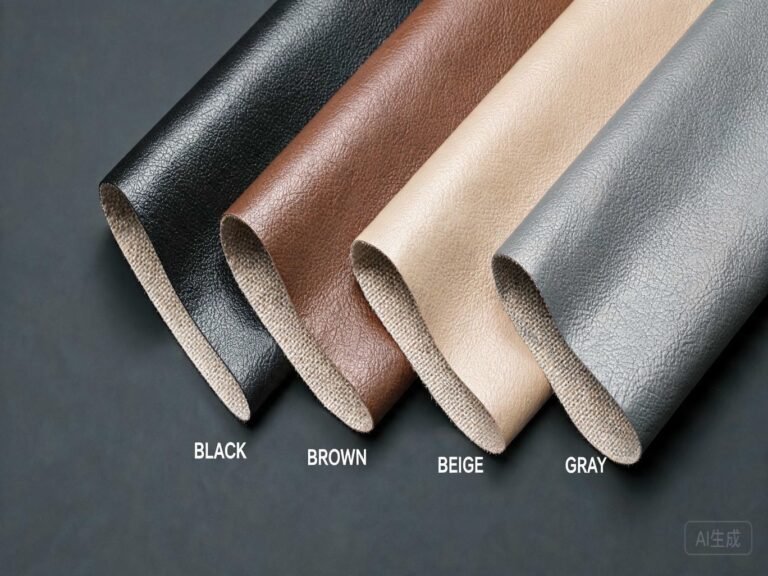
Mixed sample hanger — physical reference samples eliminate the ambiguity that text-based “AL leather” specifications create.
Material comparison — see how silicone leather’s single, certified specification outperforms every AL leather category across durability and compliance.
Silicone Leather: The Specification That Doesn’t Need Disambiguation
The AL leather naming problem exists because traditional material categories — genuine, artificial, bonded — overlap in naming while diverging in performance. Silicone leather sidesteps the entire issue by being a distinct material category with a single, unambiguous specification:
When a buyer writes “silicone leather” on a purchase order, there’s no ambiguity about whether they mean genuine, artificial, or bonded. The material has one chemistry (inorganic silicone polymer), one performance baseline (200,000+ Martindale cycles), one compliance stack (REACH, FDA, ISO 10993, EN 13773), and one service life specification (10+ years). No abbreviation confusion, no brand-name ambiguity, no batch-to-batch variance in compliance status. For B2B buyers who have experienced the cost of mis specification, this clarity is itself a competitive advantage. The technical data sheet provides the complete specification for procurement documentation.
For buyers transitioning from traditional AL leather sourcing to silicone leather, the silicone leather introduction and the manufacturing process guide cover the full material specification and production capabilities.
Frequently Asked Questions
What does “AL leather” mean and how should I specify it correctly?
“AL leather” is an ambiguous term with three common meanings: (1) artificial leather abbreviated as “AL” — covering PU, PVC, and synthetic blends; (2) genuine leather sold under the “AL Leather” brand from specific tanneries, typically Italian-certified vegetable-tanned; and (3) bonded recycled leather made from ground leather fibers and synthetic resins. To specify correctly, never use “AL leather” alone on a purchase order. Instead, state the full material category (artificial/genuine/bonded/silicone), the coating chemistry (PU/PVC/silicone/chrome-tanned/vegetable-tanned), the Martindale cycle minimum, and required certifications (REACH, OEKO-TEX, ISO 10993). If you’re unsure which category a supplier offers, request a physical sample and a technical data sheet before committing to production — the naming difference can mean a 3–5× gap in durability and service life. Silicone leather eliminates this ambiguity entirely with a single, certified material specification that’s identical across all suppliers and batches.
One Term, Three Materials — Specify or Pay the Price
The AL leather naming confusion isn’t a minor inconvenience — it’s a specification failure that costs B2B buyers in replacement cycles, compliance failures, and warranty disputes. Artificial leather, genuine branded leather, and bonded recycled leather share a search term but diverge by 3–5× in durability, 2–4× in cost, and infinitely in compliance status. The fix isn’t finding a better keyword — it’s writing a better specification. Name the material category, the chemistry, the Martindale minimum, and the certifications. Or sidestep the entire problem by specifying silicone leather — a material category with one chemistry, one performance baseline, and one compliance stack that doesn’t require disambiguation. For B2B buyers, clarity is cheaper than ambiguity.
About TOPSUN
TOPSUN manufactures silicone leather with a single, unambiguous material specification — 200,000+ Martindale cycles, REACH/FDA/ISO 10993/EN 13773 certified — eliminating the naming confusion that plagues AL leather sourcing across all B2B sectors.
One material. One specification. Zero ambiguity — the procurement clarity that AL leather can’t provide.