The leather industry generates an estimated 800,000 tons of waste annually from pre-consumer scraps, post-consumer discards, and unsold inventory. For procurement teams under pressure to meet corporate sustainability targets, recycled leather offers a compelling middle ground — it diverts waste from landfills while delivering material performance that approaches virgin leather. But not all recycled leather products are created equal, and the gap between genuine recycling and greenwashing can be significant. This article breaks down what recycled leather actually is, how different processes compare, and what buyers should look for when sourcing recycled leather materials.
What Is Recycled Leather — and What Isn’t?
Recycled leather, sometimes called reclaimed leather, refers to leather material that incorporates pre-consumer or post-consumer leather waste into a usable product. The recycling approaches fall into three distinct categories, each with different performance characteristics:
Fiber-based recycled leather. Leather scraps are shredded into fibers, mixed with binding agents (often polyurethane or natural latex), and reconstituted into sheets. This is the most common form — widely used for notebook covers, wallets, and fashion accessories. The resulting material is uniform and cost-effective, but it loses the grain structure and tensile strength of full-grain leather.
Composite recycled leather. Ground leather fibers are combined with synthetic polymers and bonded to a textile substrate. This hybrid approach improves durability and water resistance while maintaining a leather-like hand-feel. Composite recycled leather is increasingly used for upholstery in furniture and automotive applications.
Recycled-content coated fabrics. A newer approach where the surface coating itself incorporates recycled content — for example, silicone-coated fabrics that use recycled silicone compounds or bio-based additives. This is the direction TOPSUN is exploring as part of our sustainability roadmap.

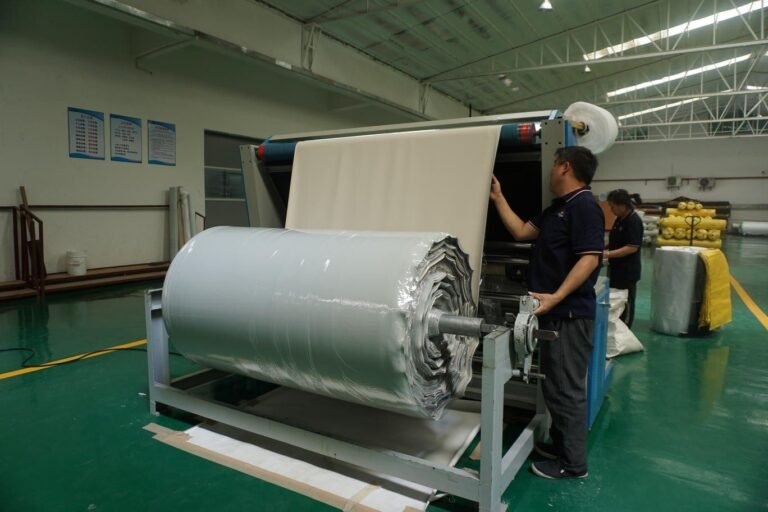
Sustainable material alternatives — recycled leather and bio-based composites are expanding options for environmentally conscious manufacturers.
Performance Reality: How Recycled Leather Materials Compare
Sustainability claims mean little if the material cannot perform in real-world use. Here is an honest comparison based on our experience testing recycled leather products alongside conventional materials:
| Property | Recycled Leather (Fiber-Based) | Silicone Coated Fabric | Genuine Leather |
|---|---|---|---|
| Tensile Strength | Moderate (8-12 N/mm) | ≥ 15 N/mm (ISO 3376) | High (15-25 N/mm) |
| Martindale Abrasion | 20,000-40,000 cycles | ≥ 200,000 cycles | 50,000-100,000 cycles |
| Water Resistance | Requires surface treatment | Inherent (100% waterproof) | Requires treatment |
| UV Resistance | Moderate (200-400 hrs) | 1,000-1,500 hrs (ASTM G154) | Poor (fades, cracks) |
| Recycled Content | 60-80% leather fiber | 100% recyclable (separation) | Not recyclable |
| Service Life | 2-4 years | 10+ years | 5-15 years (varies) |
The reality? Fiber-based recycled leather works well for low-stress applications like fashion accessories and stationary. For furniture and sofa upholstery that must endure years of daily use, the durability gap is significant. This is why many OEM buyers are combining sustainability strategies — using silicone leather for high-traffic surfaces while incorporating recycled leather for low-wear accent panels and accessories.
Insight from Our R&D Team: The biggest misconception we encounter is that “recycled” automatically means “sustainable.” A recycled leather product that requires PU binding agents, ships with excessive packaging, and lasts only two years before replacement may have a higher total environmental footprint than a non-recycled material that lasts ten years. Lifecycle assessment (LCA) is the only reliable way to compare — and most recycled leather suppliers do not publish LCAs.
Where Recycled Leather Products Fit Best
Recycled leather has carved out genuine use cases where its specific properties align with market needs:
- Fashion Accessories. Wallets, cardholders, watch straps, and belts — low mechanical stress, high aesthetic value. Recycled leather grain creates a unique visual texture that appeals to eco-conscious consumers.
- Stationery & Packaging. Notebooks, portfolios, gift boxes, and product packaging. The uniform surface takes printing and embossing well, and the sustainability story resonates with premium brands.
- Accent Panels & Decorative Trim. As a complementary material alongside more durable upholstery, recycled leather works for headboards, decorative wall panels, and furniture accent strips.
- Footwear Components. Insoles, liners, and non-structural shoe components where leather fiber content provides breathability and comfort without load-bearing requirements.

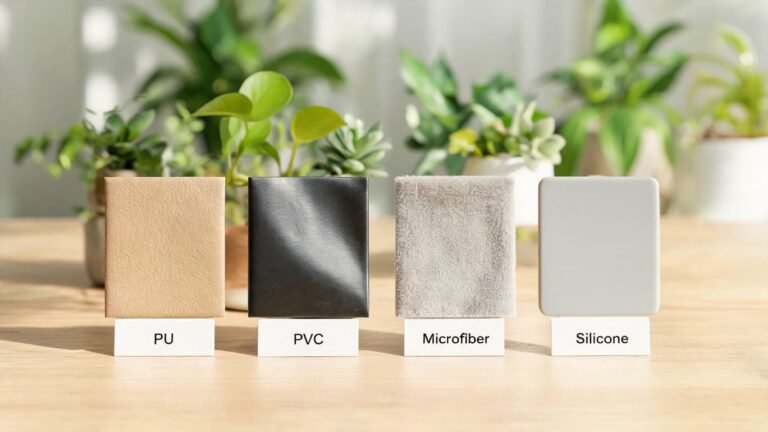
Color swatches showcasing available material options — recycled leather and silicone leather both offer extensive customization.
Understanding the Full Picture: Material Comparison
Before committing to any material, it is worth seeing how recycled leather stacks up against other options in a direct comparison. The video below provides a practical walkthrough of silicone leather versus traditional materials, including recycled leather alternatives:
Compare silicone leather with recycled leather, PU, PVC, and genuine leather across key performance metrics.
Explore Our Eco-Friendly Approach
What to Verify When Sourcing Recycled Leather
Greenwashing is a real risk in the recycled materials space. Here is how to separate genuine recycled leather suppliers from those making inflated claims:
- Recycled Content Percentage. Ask for the exact percentage of recycled leather fiber content — not vague claims like “eco-friendly” or “sustainable.” Reputable suppliers will specify 60%, 70%, or 80% recycled content with third-party verification.
- Binding Agent Transparency. What holds the recycled fibers together? PU-based binders are common but undermine the sustainability story. Natural latex or bio-based binders are preferable.
- GRS or RCS Certification. The Global Recycled Standard (GRS) or Recycled Claim Standard (RCS) provide independent verification of recycled content. These certifications carry real weight in supply chain audits.
- Source of Raw Material. Is the recycled content pre-consumer (factory scraps) or post-consumer (end-of-life products)? Pre-consumer is more consistent in quality; post-consumer has a stronger sustainability narrative but requires more rigorous sorting and processing.
- Physical Performance Data. Demand the same performance specifications you would require for any upholstery material — tensile strength, abrasion resistance, color fastness, and flex endurance. Sustainability should not come at the expense of performance.
Frequently Asked Questions
Is recycled leather genuine leather?
It depends on the definition. Fiber-based recycled leather contains real leather fibers, but it is a reconstituted composite — not a whole hide. It behaves more like an engineered material than traditional leather. For regulatory labeling, many jurisdictions require clear disclosure that the product is “recycled leather” or “reconstituted leather,” not “genuine leather.” For a broader perspective on material types, see our types of leather guide.
Can recycled leather be used for furniture upholstery?
It can, with caveats. Fiber-based recycled leather has lower abrasion resistance and tensile strength compared to full-grain leather or silicone leather. It works for decorative furniture or low-traffic residential pieces, but for contract or hospitality furniture, you will likely need a more durable surface layer. Some manufacturers combine recycled leather with a protective topcoat to extend its usable life.
How does recycled leather compare to silicone leather for sustainability?
They approach sustainability from different angles. Recycled leather addresses waste reduction by reusing existing materials. Silicone leather, produced through a solvent-free process, addresses emissions and chemical safety — and is 100% recyclable at end of life because the silicone layer can be separated from the fabric substrate. For more on silicone’s environmental profile, see our eco-friendly silicone leather guide. The best sustainability strategy often involves using both materials appropriately within a product line.
A Practical Approach to Recycled Materials
Recycled leather is not a silver bullet for sustainability, but it is a legitimate tool in a broader circular economy strategy. The key is matching the right recycled material to the right application — and being honest about its limitations. Fiber-based recycled leather excels in accessories and packaging where mechanical demands are modest. For high-performance upholstery, newer materials like silicone-coated fabrics deliver both durability and end-of-life recyclability.
Whatever direction your sustainability strategy takes, verify claims with certifications and performance data rather than marketing language. The most responsible sourcing decision is the one backed by evidence.
Discuss Your Sustainability Goals
About TOPSUN
TOPSUN is a silicone leather manufacturer committed to sustainable production through solvent-free coating processes. Our silicone leather products are 100% recyclable, zero-VOC, and free of phthalates, heavy metals, and halogens — supporting circular economy initiatives across automotive, furniture, and medical sectors.
Relevant Certifications: REACH (EC 1907/2006) | ISO 16000-6 Zero VOC | RoHS | EU Ecolabel Applicable | GRS Compliant | SGS & Intertek Tested