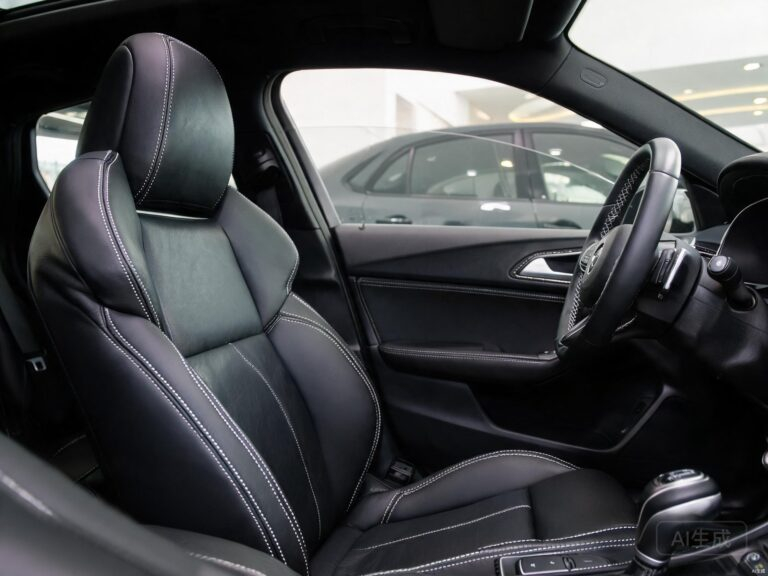
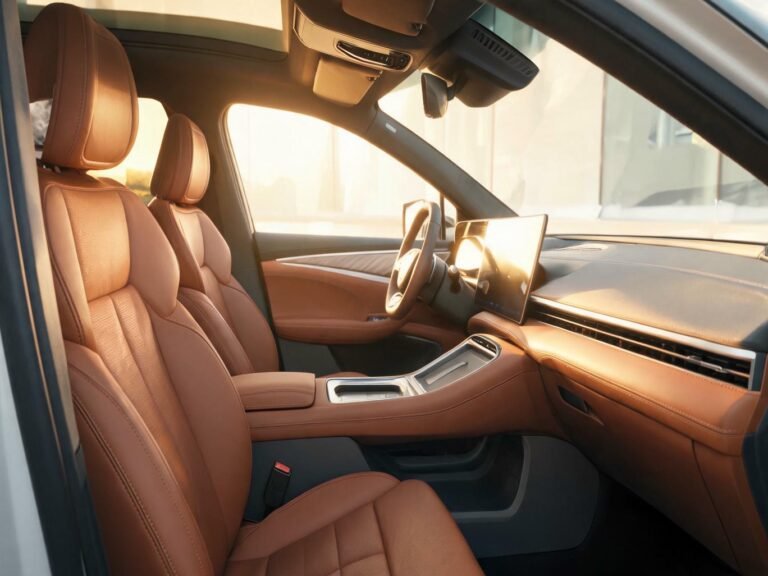
A European EV program we quoted last year lost eleven weeks at the material gate. The seat samples looked right, felt right, priced right — then failed fogging, and the launch calendar reset while engineers hunted for a replacement leather automotive upholstery supplier. If you source cabin materials, that story will sound familiar: upholstery is among the last components approved in a vehicle program and among the first blamed when cabins go wrong. This article walks through what modern cabins actually do to upholstery leather, which tests gate approval, and where genuine, PU, and silicone classes really diverge once you read the reports instead of the brochures.
Request the Automotive Test Pack
What a Modern Cabin Does to Leather Automotive Upholstery
A vehicle cabin is a harsher workplace than most furniture or commercial seating ever sees. Cabin air in a sun-parked car routinely climbs past 50 °C, and any surface in direct sun runs hotter still. Glass blocks UVB but lets UVA through, so photo-oxidation works on polymer coatings for years. On top of that come daily heat cycles between parked-in-sun and air-conditioned, thousands of ingress-egress abrasion cycles on seat bolsters, sunscreen and coffee spills, and -30 °C winters that stiffen marginal coatings until they crack.
This is why a material that thrives on a sofa can fail in a car. When procurement teams ask us about leather car seat durability, heat resistance turns out to be the real question underneath. Polymer chemistry sets the ceiling: standard PU film stays workable between roughly -20 °C and 80 °C, while an inorganic silicone coating holds its properties from -40 °C to 250 °C. In our own oven-aging runs, upholstery-grade PU films show visible surface change after sustained exposure near that upper limit; the silicone constructions we ship for automotive programs come out of the same ovens unchanged. A cabin program spends a decade cycling through exactly that range.
The Six Tests That Gate Leather Automotive Upholstery Approval
Material qualification in the auto industry is a defined gauntlet, not a handshake. The legal floor is FMVSS 302, the US flammability standard that caps the horizontal burn rate of occupant-compartment materials at 102 mm/min — the full rule is published on the eCFR site. OEMs then layer their own requirements on top. These six checks form the backbone of any automotive leather upholstery specification:
| Test | What it measures | Typical pass benchmark | Where materials fail |
|---|---|---|---|
| FMVSS 302 | Horizontal burn rate of interior materials | ≤ 102 mm/min | Coated fabrics with flammable topcoats or foam backing |
| DIN 75201 | Fogging — volatiles condensing on cooled glass | OEM-set Method A reflectance values | Plasticizer-heavy PVC, residual solvents in PU |
| VDA 277 / ISO 16000-6 | Cabin VOC emissions | OEM total-VOC limits, tightening yearly | Solvent-borne PU processes and adhesives |
| VDA 270 | Odor rating on a 1–6 scale | ≤ 3 for most programs | Off-gassing additives, recycled content |
| ISO 12947-2 (Martindale) | Abrasion resistance | 50,000+ cycles for seating; we certify 200,000+ | Thin skins and weak surface coatings |
| Climate cycling | Cold flex plus heat aging | No cracking after deep-cold flex and heat soak | PU near its glass transition; economy coatings |
The pass criterion that ends most supplier conversations: FMVSS 302 applies to the finished laminate — leather plus finish, backing, and foam — not the base film. A compliant-looking material can still fail as an assembly.
The first document our engineers send automotive buyers is not a brochure. It is the test pack: FMVSS 302 burn data, DIN 75201 fogging results, VDA 277 VOC figures, and ISO 12947-2 abrasion runs on the exact roll construction being quoted. If a supplier cannot produce per-construction numbers, treat the spec sheet as a wish list — a fuller leather upholstery test protocol for car cabins is worth keeping on file for every program.

Flame-retardant verification on an upholstery sample — the burn-rate check behind every FMVSS 302 report.
Genuine, PU, or Silicone: How the Three Classes Diverge
The market has already voted with volume: synthetic leather held a 40.46% share of automotive interior materials in 2025, according to Mordor Intelligence, because cost and roll-to-roll consistency beat hide-to-hide variation at scale. Genuine leather still owns premium programs, and it holds one real technical advantage — in a published NHTSA compliance petition, Toyota’s engineers characterized natural leather’s collagen matrix as a non-flammable material while identifying synthetic leather as the least flame-resistant cabin surface in their own testing.
But genuine leather’s finish system, cost, and batch variation keep it out of most high-volume cabins, and that is where the divergence bites. PU dominates the middle market on price, then pays it back through hydrolysis, a 3–5 year service life in demanding cabins, plasticizer-driven fogging, and cold-crack complaints in northern markets. Silicone leather costs more per meter and erases those line items: an inorganic Si-O backbone that does not hydrolyze, near-zero VOC, inherent self-extinguishing behavior without halogenated additives, and a 10+ year service life. Before any shortlist decision, the detailed silicone vs PU comparison — read test by test, not claim by claim — is worth twenty minutes of your time.

Swatches move programs forward — but only per-construction test reports get them approved.
Specifying for EV Programs: Heat, Glass Roofs, and Cabin Air
EV cabins rewrote the specification sheet. Panoramic glass roofs raise solar load on upper trim and headrests. Heated seats hold surfaces around 40 °C for hours on end, every winter, quietly aging coatings that sit near their thermal ceiling. Quieter cabins make odor impossible to mask — there is no engine note to hide a VDA 270 rating of 4 — and regulators keep tightening cabin-air limits, which is why VDA 277 VOC requirements now gate EV programs that never asked for them five years ago.
One of our aftermarket clients saw the cold end of this first-hand. PVC door-trim skins on their Northern European program were cold-cracking within two winters at -20 °C, driving warranty claims every spring; they moved the construction to silicone leather rated from -40 °C and the claims stopped. That is the difference between a material that passes on paper and one that survives a northern winter — and it is why we document every cabin surface, from seats to door panels to headrests, in our automotive interiors application data.

Heat-aging ovens like this one run the sustained-temperature trials that separate cabin-grade leather from furniture-grade.
See which automotive certifications our materials carry before they ship — the paperwork behind the swatch.
Frequently Asked Questions
Is genuine leather automatically FMVSS 302 compliant?
The collagen matrix itself is inherently non-flammable, but FMVSS 302 tests the finished laminate — leather plus its finish system, backing, and any foam. A flammable topcoat or adhesive can still fail the assembly. Always test the exact construction you will buy, not the raw hide.
What actually causes windshield fogging from upholstery?
Volatile condensables. Plasticizers, residual solvents, and processing oils evaporate from warm trim, then condense on cold glass as an oily film. DIN 75201 quantifies this directly — ask for Method A reflectance data on any material destined for glazing-adjacent surfaces.
Do heated seats damage leather upholstery?
Sustained heat is an aging accelerator. Heated-seat elements hold surfaces around 40 °C for hours, which is gentle for silicone leather rated to 250 °C but sits close to the sustained-use ceiling of standard PU film. Coating quality decides how year ten looks.
Qualify First, Quote Second
The cheapest material that fails fogging, VOC, or burn-rate testing is the most expensive line item in your program — ask anyone who has re-run a supplier audit at week eleven. Screen every leather automotive upholstery candidate against the six gates before commercial talks get serious: burn rate, fogging, VOC, odor, abrasion, and climate cycling. Get the test pack, read the per-construction numbers, and only then talk price per meter. Your launch calendar will thank you.
About TOPSUN
TOPSUN manufactures automotive-grade silicone leather for car seats, door panels, headrests, and EV cabin trim, produced on a solvent-free coating line and shipped with per-construction automotive test data.
FMVSS 302 and ELV-compliant materials, DIN 75201 fogging and VDA 277 VOC reporting on request, 500,000+ m monthly capacity with 7–15 day lead times, and free A4 swatches delivered worldwide by DHL or FedEx.