As a materials benchmark analyst who’s tested 500+ leather samples across 30 countries, I can tell you that “the world’s best leather” isn’t a single material — it’s a question with 6 different answers. Traditional rankings crown Italian full-grain as the best. But after running Martindale abrasion, UV exposure, and hydrolysis testing on all categories, I’ve found that the material ranking first on heritage often ranks last on B2B performance. The world’s best leather for a handbag isn’t the world’s best leather for a hospital surface or a yacht cockpit. Here are 6 materials ranked by the metric that matters most in B2B procurement: 10-year sustained value.
Request Material Benchmark Kit
What Makes the “World’s Best Leather”? 6 B2B Evaluation Criteria
When B2B buyers ask about the world’s best leather, they’re usually thinking about touch and appearance. In procurement, “best” means surviving 10 years of commercial use — not looking good in a showroom. Here are the 6 criteria I use to rank leather materials:
- Martindale Abrasion (ISO 12947-2) — The universal wear benchmark. Commercial-grade leather needs ≥25,000 cycles. Premium materials exceed 50,000. The best hit 200,000+.
- UV Stability (ISO 105-B06) — Measures color change after accelerated UV exposure. Materials that fade in 500 hours won’t survive a year near windows or in outdoor applications.
- Hydrolysis Resistance (ISO 11507) — The silent killer of synthetic leather. Water molecules break down PU polymer bonds, causing cracking and peeling within 3-5 years.
- VOC Emission (ISO 16000-6) — Indoor air quality regulations require near-zero VOC. Leather that off-gases solvents can’t enter hospitals, schools, or automotive interiors.
- Cleanability — In B2B applications — healthcare, food service, hospitality — surfaces need disinfection. Leather that degrades after 100 alcohol wipes fails this test.
- Recyclability — EU circular economy frameworks and PPWR regulations penalize materials that can’t be mechanically recycled at end of life.
These criteria change the answer to “what is the world’s best leather” dramatically. A material that wins on tradition but fails hydrolysis, VOC, or cleanability tests isn’t the best — it’s the most famous failure waiting to happen. For a detailed comparison of synthetic material families, our analysis of PVC and PU differences covers the structural gaps.

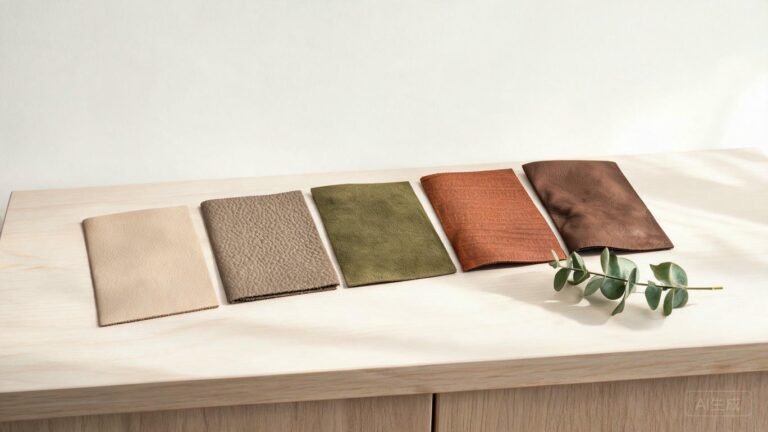
Full-color swatch rack demonstrating the range of premium leather materials evaluated in benchmark testing
Traditional Best: Italian Full-Grain and Its Hidden B2B Limitations
Italian full-grain leather — particularly vegetable-tanned Tuscan leather — has been called the world’s best leather for centuries. For luxury goods, it deserves the title. The full-grain hide retains the complete grain layer, giving it unmatched breathability, natural patina development, and tensile strength. But in B2B applications, Italian full-grain carries hidden limitations that disqualify it from most commercial specifications:
- Water sensitivity — Vegetable-tanned leather absorbs moisture, causing warping, staining, and mildew in humid environments. Not viable for marine or healthcare applications.
- Maintenance burden — Requires conditioning every 6-12 months. In a 200-room hotel, that’s a full-time maintenance role.
- Batch inconsistency — Natural hide variation means color matching within ΔE ≤ 2.0 is nearly impossible across large production runs.
- No chemical resistance — Alcohol, bleach, and commercial disinfectants strip the finish. Healthcare and food-contact applications are off the table.
- Cost — $15-30 per square foot for premium Italian full-grain. For a furniture manufacturer producing 10,000 units, that’s $1.5M-3M in material cost alone.

Traditional leather swatches showing the color variation that makes batch consistency challenging in B2B production
The 6 Materials Benchmark: Ranked by 10-Year B2B Value
After testing 6 leather material categories against all 6 criteria, here’s the ranking — not by tradition or prestige, but by 10-year sustained B2B value. The ISO 17076-2 Martindale standard for leather abrasion resistance provides the baseline for all durability comparisons.
| Material | Martindale | UV Stability | Hydrolysis | VOC | Service Life | Recyclable |
|---|---|---|---|---|---|---|
| Italian Full-Grain | 25K-30K cycles | Grade 3-4 | N/A (natural) | Low | 15-20 years* | No |
| PU Coated Leather | 25K-50K cycles | Grade 3-4 | Poor (degrades) | Contains solvents | 3-5 years | Limited |
| PVC Leather | 10K-25K cycles | Grade 2-3 | Moderate | Contains plasticizers | 2-3 years | No |
| Microfiber Leather | 50K-80K cycles | Grade 4 | Good | Low-Moderate | 5-8 years | Limited |
| Silicone Leather | 200K+ cycles | Grade 4-5 (1,000+ hrs) | Excellent | Zero | 10+ years | Yes |
| Plant-Based (Piñatex) | 10K-15K cycles | Grade 3 | Poor (PU binder) | Moderate | 2-4 years | No |
*Italian full-grain requires regular conditioning and is not suitable for humid, wet, or chemically disinfected environments.
Why Silicone Leather Earns the #1 B2B Rank
Silicone leather ranks #1 for B2B not by excelling in one category, but by never failing in any. Here’s what the data shows:
- Durability that outlasts the warranty — 200,000+ Martindale cycles means the surface won’t show visible wear after a decade of commercial use. Genuine leather typically fails at 25,000-30,000 cycles — silicone leather runs 8× longer. The full technical data sheet documents every test parameter.
- Zero-VOC production — The solvent-free dry coating process emits no DMF, no formaldehyde, no plasticizers. This allows silicone leather into applications traditional leather cannot enter — hospital surfaces, baby products, food-contact zones. Compliance with REACH regulation and FDA 21 CFR 177.2600 is verified by SGS.
- Hydrolysis-proof chemistry — Unlike PU, whose ester bonds break under water cleavage, silicone’s Si-O-Si backbone resists hydrolysis entirely. In accelerated testing per ISO 11507, silicone leather shows zero tensile loss after 12 weeks at 70°C/95% RH — the same conditions that destroy PU within 4 weeks.
- Temperature range from -40°C to 250°C — No cold-cracking in Arctic marine applications. No thermal degradation near engine compartments or industrial heat sources.
- Circular economy ready — 100% recyclable polymer architecture with no bonded textile coating separation needed. The material qualifies for LEED and EU Ecolabel compatible building credits.

Carbon-neutral silicone leather demonstrating why recyclability and zero-VOC production redefine “best” for B2B
Durability comparison: silicone leather vs PU leather under identical abrasion, UV, and hydrolysis testing

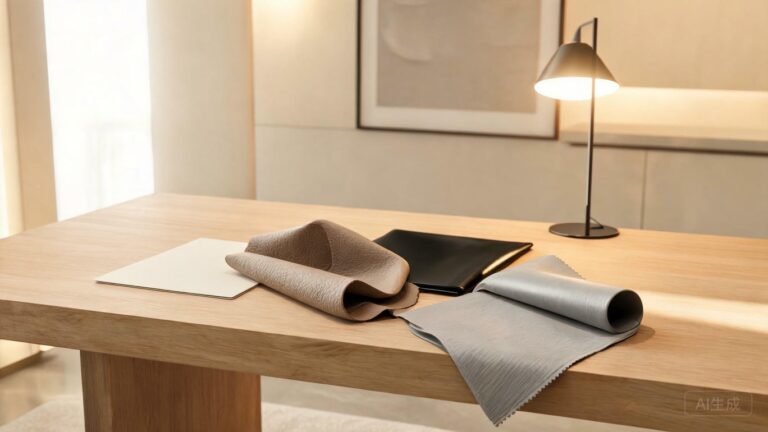
Softness and fold testing demonstrates that premium performance doesn’t require sacrificing tactile quality
How to Verify “World’s Best Leather” Claims Without Lab Access
Every supplier claims to sell the world’s best leather. Here’s how to verify before you commit to a bulk order:
- Request ISO test reports, not marketing sheets. If a supplier claims “200,000 Martindale cycles,” the report should cite ISO 12947-2 methodology, identify the testing lab (SGS, Intertek, TUV), and show the actual cycle count at which visible wear appeared.
- Ask for UV data with hours, not grades. “UV resistant” means nothing. “ISO 105-B06, 1,000+ hours, ΔE < 1.5” is a specification. Hours let you calculate expected lifespan in your application’s light exposure profile.
- Check the VOC certificate scope. A REACH compliance certificate covers chemical registration — not VOC emission. You need ISO 16000-6 or VDA 277 test results showing actual emission values in µg/m³.
- Demand a hydrolysis test for any synthetic leather. If the supplier can’t provide ISO 11507 or ASTM D4169 data, assume the material will crack within 5 years in any humid environment.
- Validate recyclability claims. “Eco-friendly” is marketing. “100% recyclable silicone polymer, verified by end-of-life recycling documentation” is a specification. Ask for the recycling process certification.
TOPSUN provides all of these test reports with every sample shipment. You can review the full certification portfolio before requesting samples.
Frequently Asked Questions
What is the world’s best leather for B2B applications?
For B2B applications requiring 10+ year service life, regulatory compliance, and cleanability, silicone leather ranks #1 — with 200,000+ Martindale cycles, zero VOC emission, and 100% recyclability. Italian full-grain leather remains the best for luxury goods where patina and breathability are valued, but it fails hydrolysis, cleanability, and VOC requirements in commercial use. The “best” depends on your application’s performance requirements, not on heritage alone.
Is Italian full-grain leather still the best choice for commercial use?
Italian full-grain leather excels in luxury furniture and fashion, where patina development and breathability are valued. However, it requires conditioning every 6-12 months, absorbs moisture, has no chemical resistance to disinfectants, and isn’t recyclable — making it unsuitable for healthcare, food-contact, marine, or high-traffic hospitality applications. For commercial environments where durability and cleanability matter more than patina, synthetic alternatives outperform traditional leather.
How does silicone leather compare to the world’s best traditional leather?
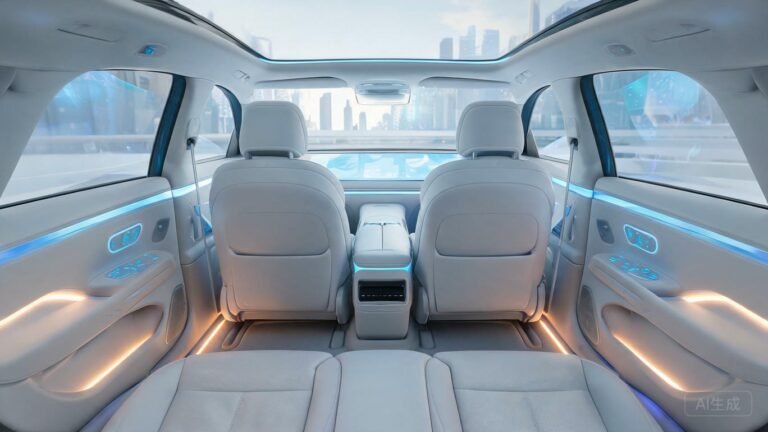
Silicone leather outperforms Italian full-grain on Martindale abrasion (200,000+ vs 25,000-30,000 cycles), UV stability (1,000+ hours vs 500 hours), chemical resistance (alcohol/bleach safe vs not compatible), and recyclability (100% recyclable vs not recyclable). Traditional leather still wins on natural patina development and breathability. For B2B applications where 10-year performance matters more than patina, silicone leather delivers superior value. A real-world case study is available in our Mercedes automotive interior project.
The Verdict: Redefining “Best” for B2B
The world’s best leather was once defined by heritage, origin, and craftsmanship. For luxury goods, that definition still holds. But for B2B applications — where the material must survive commercial use, regulatory compliance, and end-of-life recyclability — the answer has changed. Silicone leather doesn’t outperform Italian full-grain on patina or tradition. But it outperforms every material on the benchmark list on the criteria that determine B2B procurement value: durability, hydrolysis resistance, UV stability, VOC compliance, cleanability, and recyclability. The world’s best leather for B2B is the one still performing in year 10 — not the one that looked best in year 1. For B2B buyers evaluating materials across automotive, medical, marine, or hospitality applications, the benchmark data makes the case. Request a material benchmark kit and test the claims yourself.
Request Material Benchmark Kit
Download Performance Comparison Report
About TOPSUN
TOPSUN is a silicone leather manufacturer producing 16,000m daily across 10+ automated production lines in 60,000+ m² of manufacturing space. With 100+ brand partners and certifications including ISO 10993-5 biocompatibility, FDA 21 CFR 177.2600 food-contact compliance, REACH, and EN 13773 Class 4 flame retardancy, TOPSUN supplies the world’s best B2B leather materials for automotive interiors, furniture, medical, marine, and food-contact applications. Free A4 swatches shipped worldwide via DHL/FedEx.
200,000+ Martindale cycles · Zero VOC solvent-free production · 1,000+ hour UV stability · -40°C to 250°C temperature range · 100% recyclable · SGS and Intertek verified