A procurement manager we worked with ordered 2,000 meters of PU leather for a 120-unit hotel sofa project, attracted by a price that was 30% below genuine leather. Eighteen months later, half the couches showed visible cracking and peeling at stress points. The replacement cost — materials, labor, guest-room downtime — wiped out the entire upfront saving and then some. That experience reshaped how we think about leather fabric couch procurement: the real question isn’t which material is cheapest per meter. It’s which one delivers the lowest total cost over the product’s actual service life.
Request Free Couch Upholstery Samples

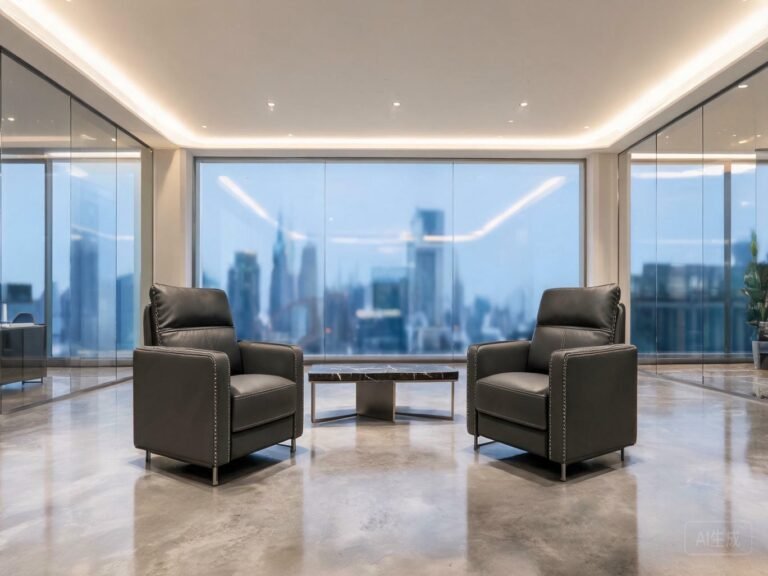
Premium leather fabric couch upholstery in a modern residential setting
Leather Fabric Couch Materials: What Drives the Real Cost?
Most procurement teams we speak with break couch upholstery costs into three tiers: material cost per square meter, manufacturing and conversion costs, and lifecycle replacement costs. The problem is that buyers weight these tiers almost equally when sourcing leather fabric couch materials. In reality, the split looks more like 30% material, 20% manufacturing, and 50% lifecycle — and that 50% is the part nobody quotes you.
Consider the lifespan differences. Genuine leather lasts 15–25 years in residential settings but demands conditioning and careful maintenance. PU leather — the most common leather fabric couch material in the budget-to-mid segment — typically lasts 2–5 years before peeling or cracking begins. PVC is even shorter at 2–3 years. Silicone leather, a newer entry in the synthetic leather category, rated for 10+ years with minimal upkeep.
Key insight: A material that costs 40% less per meter but needs replacement twice in five years isn’t cheaper. It’s 60% more expensive over that period — before you add labor and downtime.
Martindale Abrasion: The Hidden Cost Predictor
If there’s one specification that predicts real-world couch lifespan more accurately than any other, it’s the Martindale abrasion rating. The test, governed by ISO 12947-2, rubs a standard abrasive pad against the material surface in a circular motion until visible wear appears. The number of cycles before failure is your single best proxy for how long that couch will survive daily use.
Industry thresholds are well-established: 20,000 cycles for light residential use, 40,000+ for heavy domestic or light commercial, and 50,000+ for commercial environments like hotel lobbies and cinema seating. When we run Martindale tests on samples from different suppliers in our SGS-verified lab, the spread is striking. Budget PU leather typically lands between 25,000 and 50,000 cycles. Genuine leather varies wildly — 15,000 to 50,000 depending on tanning quality. Silicone leather consistently exceeds 200,000 cycles, a figure that would have seemed impossible two decades ago.

Martindale abrasion tester used to evaluate leather fabric couch durability
This matters because the gap between 25,000 and 200,000 cycles isn’t just a number on a spec sheet. It’s the difference between replacing couch upholstery every 3 years and replacing it once a decade. For a commercial furniture project with 200 couches, that’s a six-figure delta over a 5-year horizon.
PU vs Silicone Leather: A 5-Year TCO Table
Here’s where the math gets uncomfortable for procurement teams that chose purely on upfront price. The table below compares four common leather fabric couch materials across the metrics that actually determine 5-year cost — not the metrics that look good on a quote sheet.
| Material | Initial Cost/m² | Martindale Cycles | Lifespan | 5-Year TCO/m² |
|---|---|---|---|---|
| Genuine Leather | $30–60 | 15K–50K | 15–25 years | $35–70 |
| PU Leather | $8–18 | 25K–50K | 2–5 years | $24–54 |
| PVC Leather | $5–12 | 15K–30K | 2–3 years | $20–36 |
| Silicone Leather | $15–30 | 200K+ | 10+ years | $15–30 |
The PU row looks cheapest at first glance — $8–18 per square meter. But a 3-year lifespan means at least one full replacement within a 5-year window. Add material re-purchase, reupholstery labor, and room downtime, and that “$10/m²” decision becomes $30–54/m² in real terms. Silicone leather’s higher entry price of $15–30/m² looks very different when zero replacements are needed across the same period. This is the TCO gap that catches procurement teams off guard.

Faux leather vs premium upholstery: visible difference in couch fabric quality
See how silicone leather performs in commercial sofa applications — durability, cleanability, and comfort in one material
Sourcing Leather Fabric Couch Materials: A B2B Checklist
If you’re responsible for specifying leather fabric couch materials for a production run, here are seven checkpoints that prevent the most common — and most expensive — procurement mistakes:
- Verify Martindale rating independently. Don’t accept a supplier’s spec sheet at face value. Request a third-party test report from SGS or Intertek, and confirm the exact ISO 12947-2 cycle count.
- Specify thickness tolerance. Standard couch upholstery runs 0.8–1.2mm; heavy-duty or recliner applications need 1.2–1.4mm. Build tolerance into your PO — ±0.1mm is acceptable, anything wider signals inconsistent coating.
- Confirm roll width and consistency. Most upholstery-grade leather fabric comes at 137–145cm width. Narrower rolls increase cutting waste by 8–12%.
- Check hydrolysis resistance. PU and PVC degrade when exposed to humidity. Ask for accelerated aging test data — materials rated for 3–5 years under ISO 11507 are the minimum for hospitality environments.
- Test color fastness to light. Request ISO 105-B06 results. Grade 3 means visible fading within 18 months under UV exposure. Specify Grade 4–5 minimum for couches near windows or in sunlit lobbies.
- Validate cleaning protocols. A material that degrades under standard disinfectants will fail fast in healthcare or hospitality. Ask whether the surface tolerates bleach, alcohol, and repeated cleaning without surface breakdown.
- Order physical A4 swatches before bulk. Never commit to a 500m+ order based on digital images. Touch the material, stretch it, spill coffee on it, then clean it.

Physical swatch rack — the most reliable way to evaluate leather fabric couch materials before bulk ordering
Why Most Leather Fabric Couch Projects Blow Past Budget
After a decade of supplying leather fabric couch materials to furniture manufacturers, we’ve noticed a pattern in projects that exceed budget. It’s almost never the material cost that causes the overrun. It’s the gap between what was specified and what was actually needed.
The most common mistake: specifying a residential-grade material for a commercial application. A hotel lobby couch upholstered in PU rated for 25,000 Martindale cycles will show visible wear within 12–18 months. The replacement cost — rarely budgeted in the original project — can add 30–50% to the total upholstery spend. A close second is ordering based on a sample that doesn’t represent bulk production quality. Sample swatches are often from the best part of the roll; production material varies in texture, color consistency, and coating thickness.
A third mistake involves underestimating cleaning and maintenance costs. PU and PVC require specific cleaners — using the wrong product accelerates surface degradation. Silicone leather, by contrast, tolerates bleach, alcohol disinfectants, and standard detergents without surface breakdown, which simplifies facility management and reduces long-term maintenance overhead.

Finished leather fabric rolls on production floor — ready for couch upholstery manufacturing
Frequently Asked Questions
How many Martindale cycles should leather fabric couch material have for commercial use?
For commercial couch upholstery, specify a minimum of 50,000 Martindale cycles per ISO 12947-2. High-traffic environments like hotel lobbies and cinema seating benefit from 100,000+ cycles. Silicone leather typically exceeds 200,000 cycles, making it suitable for the most demanding commercial applications where replacement downtime is costly.
Is silicone leather more expensive than genuine leather for couch upholstery?
On a per-meter basis, silicone leather typically costs less than full-grain genuine leather but more than PU. However, when calculating total cost of ownership over 5+ years — including replacement labor, material waste, and downtime — silicone leather often delivers 30–40% savings compared to both genuine and PU alternatives. The silicone vs PU comparison comes down to whether your procurement horizon is 1 year or 5.
The Bottom Line on Leather Fabric Couch Procurement
Choosing leather fabric couch materials on upfront price alone is the most expensive decision a procurement team can make. The data is clear: Martindale cycle count predicts real-world lifespan better than any other spec, and the gap between 25,000 cycles (budget PU) and 200,000+ cycles (silicone leather) translates directly into replacement frequency, labor cost, and operational downtime. A material that costs twice as much per meter but lasts three times as long isn’t more expensive — it’s the cheaper option, and the furniture quality specs you write today will determine whether your next project stays on budget or becomes a case study in hidden costs.
About TOPSUN
TOPSUN manufactures silicone leather fabric for couch upholstery in residential, commercial, and hospitality seating applications, with production facilities across Dongguan, Yichang, and Xiangyang.
200K+ Martindale cycles verified by SGS · Free A4 swatches shipped worldwide via DHL/FedEx · MOQ 500m with 7–15 day lead time · Unlimited Pantone-matched colors with Delta E ≤ 1.0 accuracy