When furniture brands send us their faux leather furniture fabric spec sheets for review, the same gap appears in roughly 80% of cases: the document lists thickness, color, and embossing pattern — but omits the three test parameters that actually predict whether the upholstery will peel, crack, or delaminate within three years. Hydrolysis, UV degradation, and flex endurance are the failure modes that separate a couch that lasts a decade from one that winds up in a landfill before its amortization schedule closes. Here’s what those spec sheets are missing, and how to fix them.
Request Furniture Fabric Samples
Why Faux Leather Furniture Fabric Peels Within 3 Years
Most peeling isn’t caused by physical wear — it’s driven by hydrolysis. Polyurethane coatings react with atmospheric moisture at the molecular level, breaking the bond between the surface layer and the fabric backing. This happens even in climate-controlled interiors. In our materials lab, we’ve simulated three years of standard indoor humidity (50-65% RH at 22°C) on PU faux leather samples and observed surface micro-cracking and tactile stiffening well before the 36-month mark.
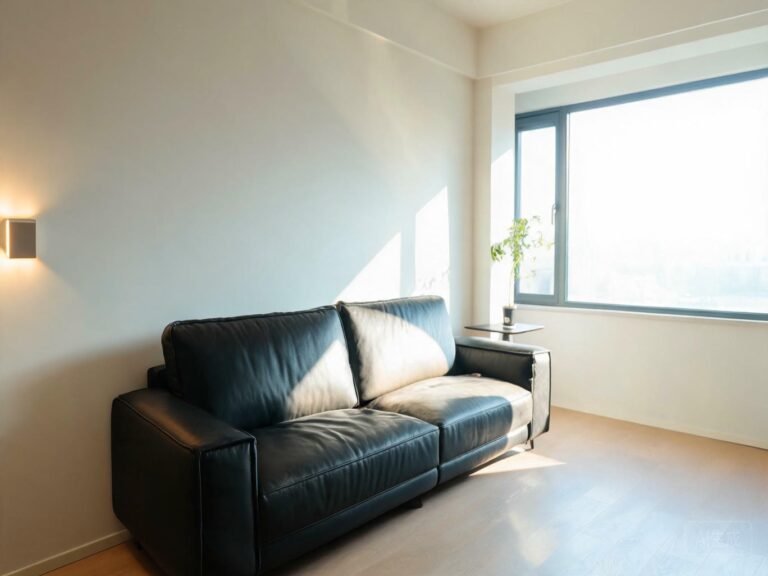
The peeling mechanism is well-documented: moisture penetrates the PU coating, hydrolyzes the ester bonds in the polyurethane polymer, and the resulting chain scission reduces the coating’s molecular weight until it loses adhesion to the substrate. At that point, any mechanical stress — sitting down, cleaning, even temperature cycling — causes the degraded surface to flake off. UV exposure accelerates this dramatically; PU faux leather furniture fabric placed near windows can crack in 6-12 months as UV radiation evaporates plasticizers and embrittles the coating simultaneously.

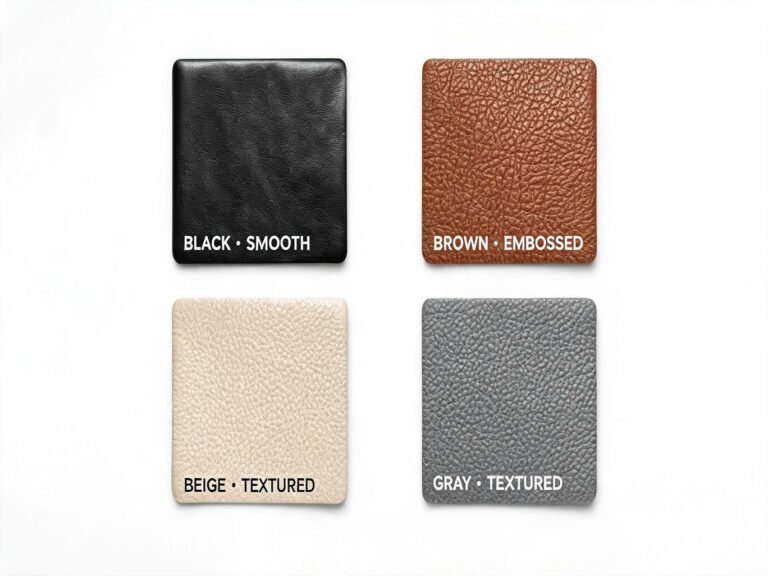
Lychee-texture silicone leather surface — the kind of detail spec sheets should describe alongside performance data.
Hydrolysis-driven peeling accounts for approximately 80% of premature faux leather furniture fabric failures we’ve diagnosed — and it’s entirely absent from most procurement spec sheets.
The 3 Tests That Predict Faux Leather Upholstery Failure
If your RFQ for faux leather furniture fabric doesn’t include these three test results, you’re flying blind. Standard PU leather achieves 30,000-80,000 Martindale abrasion cycles depending on grade — but that number alone tells you nothing about hydrolysis or UV stability. Here’s what to specify:
| Test Parameter | PU Leather | PVC Leather | Silicone Leather |
|---|---|---|---|
| Martindale abrasion (cycles) | 30K-80K | 50K-100K | 200K+ |
| Hydrolysis resistance | Poor — ester bonds degrade | Moderate — plasticizer migration | Excellent — Si-O bond inert |
| UV resistance (ASTM G154) | Cracks in 200-500 hrs | Yellows in 300-600 hrs | No change at 1,000+ hrs |
| Flex endurance (ISO 5402) | 50K cycles, then cracks | 30K-50K cycles | 100K+ cycles, no cracking |
The gap between PU and silicone is structural, not incremental. Silicone’s Si-O backbone is inherently resistant to hydrolysis — the bond energy is higher than what atmospheric moisture can overcome at room temperature. That’s why our silicone leather introduction page emphasizes chemistry over marketing claims. For furniture applications specifically, the furniture sofa application specs we provide include all three test results by default.

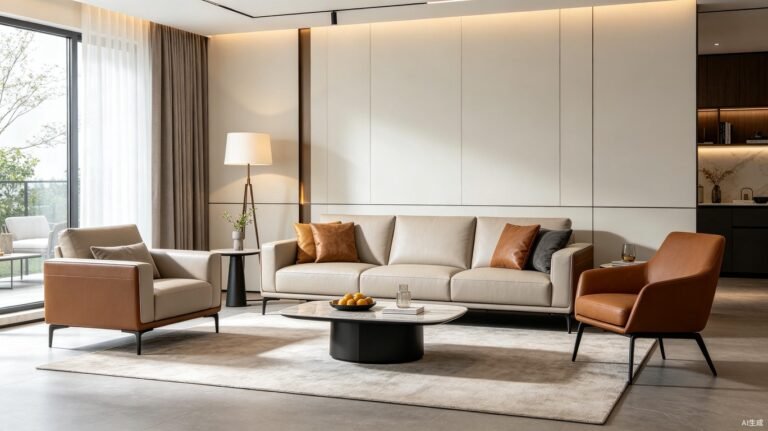
Faux leather furniture fabric in a commercial furniture setting — where spec gaps become visible within 24 months.
PU vs PVC vs Silicone: Faux Leather Furniture Fabric Durability
PVC leather outperforms PU in pure abrasion resistance at equivalent price points, but it carries its own failure mode: plasticizer migration. Over time, the phthalates that make PVC flexible leach out, leaving the surface brittle and prone to cracking. PVC also releases hydrogen chloride when burned — a critical issue for furniture in public spaces where fire safety regulations mandate specific flame spread ratings.
In our experience advising furniture manufacturers on material selection, the PVC vs PU debate often misses the point. Both materials share a fundamental limitation: they’re organic polymers that degrade through environmental exposure. Silicone leather’s inorganic backbone sidesteps this entirely. Our solvent-free dry coating process produces material with zero VOC emissions — a specification increasingly required in commercial furniture contracts. For a detailed chemistry comparison, see our silicone vs PU analysis and the broader faux leather furniture buyer’s guide we published earlier.

Dark gray silicone leather fold showing crack-free flexibility — the flex endurance spec that PU can’t match.
Fire Safety and VOC Specs Most Buyers Overlook
Commercial furniture contracts increasingly require fire safety certification that PU and PVC faux leather struggle to meet without chemical flame retardant additives. Silicone leather is inherently flame retardant — it self-extinguishes and produces non-toxic smoke, meeting EN 13773 Class 4 and FMVSS 302 without additives. For hospitality and public venue projects, this eliminates a separate certification step.
VOC emissions are the other blind spot. Most faux leather furniture fabric spec sheets don’t mention VOC testing at all, yet indoor air quality regulations in commercial buildings increasingly require ISO 16000-6 compliance. PU leather manufacturing uses DMF (dimethylformamide) solvents that can off-gas for months after installation. Our silicone leather process is solvent-free, producing zero detectable VOCs — verified to EU E1 formaldehyde limits and VDA 277 automotive VOC standards. The EPA’s VOC technical overview documents why this matters for furniture in occupied spaces.
Stain resistance test on silicone leather furniture upholstery — the cleanability spec that reduces lifecycle maintenance costs.
Silicone leather passes Martindale 200K+, UV 1,000+ hrs, hydrolysis-proof, EN 13773 Class 4, and zero-VOC — five specs that PU and PVC cannot achieve simultaneously at any price point.
Frequently Asked Questions
What Martindale cycle rating should faux leather furniture fabric meet for commercial use?
Commercial furniture applications require minimum 40,000 Martindale cycles for standard use and 100,000+ cycles for high-traffic venues like hotel lobbies and restaurant booths. Silicone leather exceeds 200,000 cycles, providing a 2-4x safety margin over the commercial minimum. Always request the actual test report, not just a data sheet claim — we’ve seen suppliers list theoretical values rather than measured results.
Can faux leather furniture fabric be treated to resist hydrolysis?
PU leather can be formulated with polycarbonate-based polyurethones that offer improved hydrolysis resistance compared to standard polyester-based PU. However, even polycarbonate PU eventually degrades — it delays failure rather than preventing it. Silicone leather’s Si-O backbone is chemically inert to hydrolysis, making it the only faux leather furniture fabric that eliminates peeling as a failure mode entirely. For more on material chemistry, see our eco-friendly silicone leather overview.
Closing the Spec Gap
The difference between a faux leather furniture fabric that lasts 3 years and one that lasts 10+ years isn’t price — it’s specification. When your RFQ includes Martindale abrasion cycles, hydrolysis resistance ratings, UV stability hours, flex endurance data, fire safety certifications, and VOC emission test results, you’ve closed the gap that causes 80% of premature failures. The material that passes all six tests without chemical additives is silicone leather. The question isn’t whether you can afford it — it’s whether you can afford the warranty claims, reupholstery costs, and brand damage that come with specifying materials that fail their own spec sheets.
About TOPSUN
TOPSUN produces solvent-free silicone faux leather furniture fabric for residential, hospitality, and commercial furniture manufacturers who require verified abrasion, hydrolysis, UV, and fire safety performance backed by SGS and Intertek test reports.
200K+ Martindale cycles, ISO 10993-5 biocompatibility, EN 13773 Class 4 flame retardant, zero-VOC certified, 500,000m monthly capacity with 7-15 day lead times.