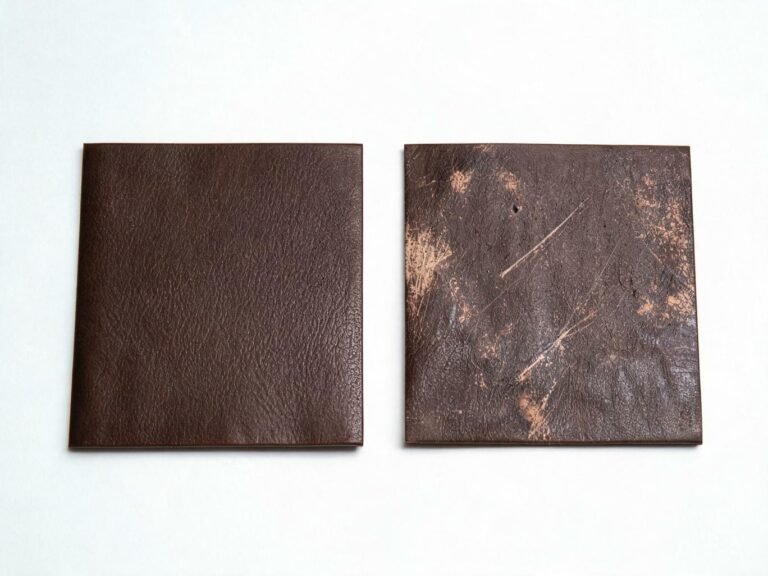
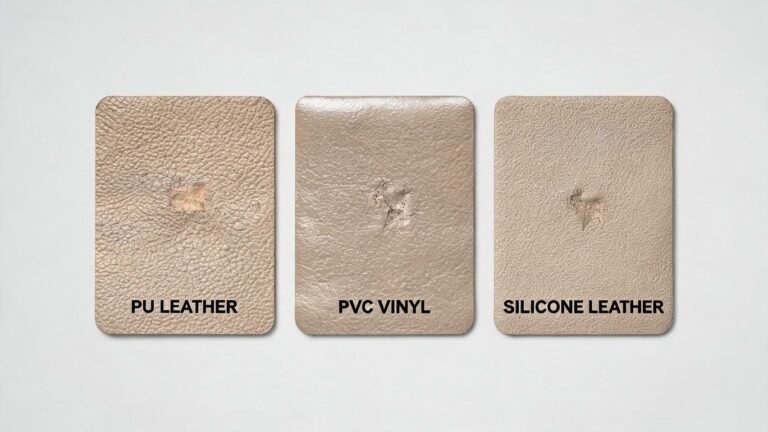
Fake leather upholstery is the default specification for commercial furniture — hotels, restaurants, offices, healthcare, and hospitality — where genuine leather’s cost and maintenance requirements are prohibitive. But “fake leather” is not one material. It’s a category spanning PVC, PU, microfiber, and silicone leather, each with dramatically different performance profiles. A hotel chain specifying “faux leather upholstery” without defining the material type, abrasion grade, or cleaning protocol is essentially rolling dice on their furniture’s service life. The difference between PVC upholstery that cracks in 18 months and silicone upholstery that lasts 10+ years isn’t a premium — it’s the difference between furniture that generates ROI and furniture that generates warranty claims. Here’s the commercial specifier’s framework for choosing fake leather upholstery that performs.

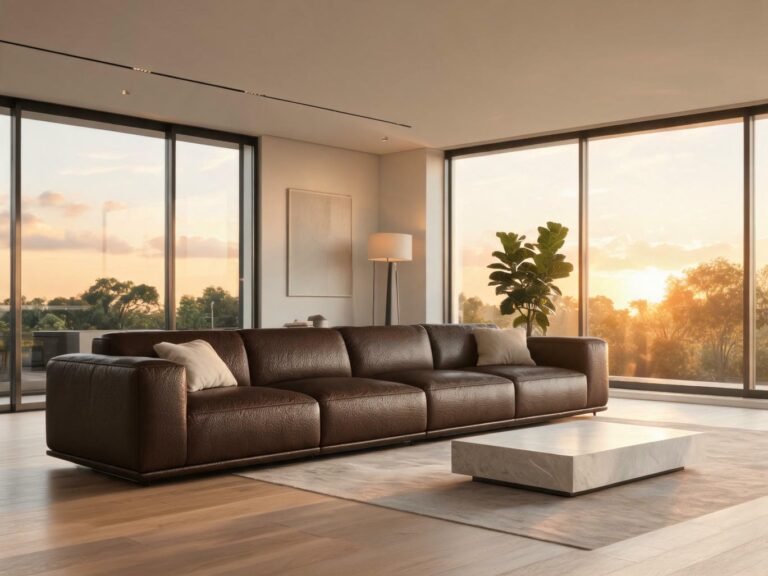
Commercial furniture with fake leather upholstery — the material type determines whether this sofa lasts 2 years or 10
Fake Leather Upholstery: Material Performance Matrix
The four fake leather materials used in commercial upholstery differ across six critical performance dimensions. This matrix is the starting point for any specification decision:
| Property | PVC | PU | Microfiber | Silicone |
|---|---|---|---|---|
| Martindale Abrasion | 25,000 cycles | 50,000 cycles | 100,000 cycles | 200,000+ cycles |
| Wyzenbeek Double Rubs | 15,000 | 30,000–100,000 | 100,000 | 200,000+ |
| Service Life (Commercial) | 2–3 years | 3–5 years | 5–7 years | 10+ years |
| Stain Resistance | Good (surface sealed) | Moderate | Moderate (porous surface) | Excellent (non-porous) |
| Cleaning Compatibility | Mild soap only | Mild soap, no solvents | Specialized cleaner | Bleach, alcohol, all-purpose |
| Temperature Feel | Cold, traps heat | Neutral, can get sticky | Warm, fabric-like | Neutral, thermally stable |
| UV Resistance | Poor — cracks in 1–2 years | Poor — fades and cracks | Moderate | Excellent — 1,000+ hours no fading |
| VOC Emission | Plasticizer off-gassing | Solvent residue | Low | Zero VOC |
| Flame Retardancy | Flammable, toxic smoke | Flammable | Varies | Self-extinguishing (EN 13773 Class 4) |
For commercial furniture specifiers, the Martindale abrasion rating and cleaning compatibility are the two most decision-critical metrics. Martindale determines how long the upholstery survives daily use; cleaning compatibility determines whether it survives daily maintenance. A hotel sofa cleaned daily with commercial disinfectant wipes needs material that won’t degrade from the cleaning process itself — and that eliminates PU and PVC, which develop surface tackiness or cracking after repeated chemical exposure.

Commercial lobby sofa — where fake leather upholstery faces 24/7 use, daily cleaning, and zero tolerance for visible wear
Fake Leather Upholstery: Application-Based Selection
Different commercial environments demand different fake leather upholstery specifications. Here’s the selection framework based on use intensity, cleaning protocol, and regulatory requirements:
Hospitality (Hotels, Restaurants)
Daily commercial cleaning, high guest turnover, food and beverage spill exposure. Require: Martindale ≥100,000 cycles, bleach-safe cleaning compatibility, stain resistance to food/beverage, flame retardant (EN 13773). Silicone leather meets all requirements with 200,000+ cycles and bleach-safe surface. PU leather at 50,000 cycles requires replacement every 2–3 years in hospitality — the cost of one reupholstery cycle exceeds the price premium of silicone.
Healthcare (Hospitals, Clinics)
Hospital-grade disinfection between patients, ISO 10993 biocompatibility for skin contact, antimicrobial surface, zero VOC emission. Require: alcohol disinfectant compatibility (1,000+ wipe cycles), inherent antimicrobial properties, ISO 10993-5 certification, zero VOC. Only silicone leather meets all four requirements. PVC and PU fail on biocompatibility and antimicrobial performance; microfiber fails on disinfectant compatibility.
Corporate Offices
Moderate use intensity, weekly cleaning, aesthetic prioritization. PU leather at 50,000 Martindale cycles is often acceptable for executive offices with low traffic. For collaborative spaces and reception areas, silicone leather’s 200,000+ cycles and stain resistance justify the premium for high-visibility furniture.
Outdoor/Marine
UV exposure, salt spray, temperature extremes, moisture. Require: 1,000+ hours UV resistance, 1,000+ hours salt spray resistance, -40°C to 250°C temperature range, hydrolysis-proof. Only silicone leather meets all outdoor/marine requirements. PVC and PU fail within 1–2 years of UV exposure.
Commercial-grade silicone leather sofa — engineered for 200,000+ abrasion cycles and daily commercial cleaning
Fake Leather Upholstery: Maintenance Protocol Impact on Lifespan
The cleaning protocol isn’t just a maintenance task — it’s a material specification input. If your cleaning team uses commercial disinfectant wipes (containing quaternary ammonium compounds or alcohol), your fake leather upholstery must be compatible with that chemistry. If it isn’t, the cleaning itself becomes the primary cause of material degradation:
| Cleaning Agent | PVC | PU | Silicone |
|---|---|---|---|
| Mild soap + water | Safe | Safe | Safe |
| 70% isopropyl alcohol | Surface degrades after 200 wipes | Surface becomes tacky after 300 wipes | No degradation after 1,000+ wipes |
| Bleach solution (1:10) | Discoloration, embrittlement | Coating breakdown | Bleach-safe — no degradation |
| Quaternary ammonium wipes | Moderate degradation | Moderate degradation | Safe — no degradation |
| Abrasive cleaner | Scratches surface | Scratches surface | Not recommended but tolerates mild abrasion |
The implication is direct: if your facility uses hospital-grade disinfectant wipes daily (as healthcare, hospitality, and food service must), PVC and PU upholstery will degrade from the cleaning process within 6–12 months — regardless of the Martindale rating. The surface coating fails before the underlying material wears out. Silicone leather is the only fake leather upholstery that survives aggressive daily disinfection for years.
About TOPSUN: Fake Leather Upholstery Supply
TOPSUN’s Classic Collection and High Performance Collection provide commercial-grade fake leather upholstery for hospitality, healthcare, corporate, and marine applications. Our silicone leather achieves 200,000+ Martindale abrasion cycles, is bleach-safe and alcohol-disinfectant compatible, carries ISO 10993-5 biocompatibility certification and EN 13773 Class 4 flame retardant certification — all in one material. With 100+ textures, unlimited Pantone-matched colors (Delta E ≤ 1.0), and custom embossing in 7–10 days, we support both standard specification and bespoke design programs. Explore furniture applications or browse the Classic Collection.
Fake Leather Upholstery: Frequently Asked Questions
What is the most durable fake leather for upholstery?
Silicone leather is the most durable fake leather for commercial upholstery, achieving 200,000+ Martindale abrasion cycles and a 10+ year service life. Microfiber leather (100,000 cycles) is the second most durable, followed by PU (50,000 cycles) and PVC (25,000 cycles).
Can fake leather upholstery be cleaned with bleach?
Only silicone leather is bleach-safe. PVC discolors and embrittles; PU coating breaks down; microfiber absorbs and may stain. For facilities requiring bleach-based disinfection (healthcare, food service), silicone leather is the only fake leather upholstery option that maintains surface integrity.
How long does fake leather upholstery last in commercial use?
PVC lasts 2–3 years, PU lasts 3–5 years, microfiber lasts 5–7 years, and silicone leather lasts 10+ years in commercial settings. The actual lifespan depends on use intensity, cleaning protocol, and UV exposure — but the material ranking is consistent across all conditions.
What Martindale rating should commercial fake leather upholstery have?
For general commercial use (offices, restaurants): ≥50,000 cycles. For heavy commercial use (hotels, hospitals, public spaces): ≥100,000 cycles. For premium commercial specification with long-life expectation: ≥200,000 cycles. Silicone leather meets the premium threshold; PU meets general commercial; PVC falls below heavy commercial.
The Bottom Line
Fake leather upholstery is a category, not a specification. The brand that writes “faux leather upholstery” on a furniture spec sheet without defining material type, Martindale rating, and cleaning compatibility is buying a lottery ticket on their furniture’s lifespan. The data is clear: PVC fails in 2–3 years of commercial use, PU in 3–5, microfiber in 5–7, and silicone in 10+. The cleaning protocol is equally clear: if your facility disinfects daily, only silicone leather survives the maintenance process itself. For commercial specifiers, the calculation is simple: specify the material by its abrasion rating and cleaning compatibility, not by its category name. A “faux leather sofa” could last 2 years or 10 — and the difference is entirely in the specification document you write today.
Specifying fake leather upholstery for commercial use?
TOPSUN provides commercial-grade silicone leather upholstery — 200K+ Martindale, bleach-safe, ISO 10993-5 certified. Free A4 swatch sets shipped worldwide via DHL/FedEx. Contact info@topsunsiliconeleather.com or WhatsApp +44 744 461 7933.
Related: Fake Leather Upholstery Fabric | Faux Leather Furniture Buyer’s Guide | Silicone Upholstery Fabric | Classic Collection