When you search for the leather company online, the top results are B2C retailers selling jackets and handbags. But if you’re a B2B buyer sourcing leather material for manufacturing, you need something entirely different — a company that actually makes the material, not one that buys it from someone else and marks it up 30%. Research shows 73% of supplier listings on B2B marketplaces are trading companies, not manufacturers. Here’s how to tell the difference — and why it matters for your project timeline, quality consistency, and compliance audit.
The Leather Company Problem: 73% Aren’t Manufacturers
The distinction between a leather company vs leather manufacturer is the first filter every B2B buyer should apply. A leather company can be anything — a distributor, a trading firm, a brand, or a factory. A leather manufacturer owns the production equipment, employs the operators, and controls the quality. When you source from a trading company, you’re paying for an extra layer of margin, slower communication, and zero control over production.
In our experience, buyers who switch from trading companies to direct manufacturer relationships typically see 15–25% cost reduction, faster sample turnaround, and consistent batch quality — because they’re talking to the people who actually make the material. The global leather goods market reached $39.19 billion in 2025 and is projected to hit $76.87 billion by 2035 at 6.97% CAGR. That growth attracts intermediaries who add no value but capture margin.

Real manufacturing — operator on the calendering line, not a stock photo from a trading company
7 Audit Points Every Leather Company Must Pass
Before signing any contract, knowing how to choose a leather company means running these seven verification checks. Each one exposes a different layer of supplier transparency — and each one is where trading companies typically fail.
| Audit Point | Trading Company Red Flag | Real Manufacturer Evidence |
|---|---|---|
| Business license scope | “Trading” or “wholesale” only | “Manufacturing” listed explicitly |
| Video factory tour | Refuses or shows stock footage | Live walk-through of production lines |
| Utility bills | Cannot provide for factory address | Recent electricity/water bills matching address |
| Equipment photos | Generic or watermarked images | Equipment with date stamp and factory background |
| QC lab access | No in-house testing capability | Martindale, tensile, color fastness equipment on-site |
| Export documentation | BL copies show third-party shipper | BL copies match company name as shipper |
| Client references | Vague “many satisfied clients” | 2–3 verifiable contacts in your industry |
One B2B marketplace analysis found that 73% of leather company listings are trading companies. If your supplier fails three or more audit points above, you’re almost certainly dealing with an intermediary — not a manufacturer.
Certification Verification: Beyond the Certificate Scan
Every leather company has a “certifications” page with scanned certificates. The question is whether those certificates are real, current, and scoped to the products you’re buying. The leather company vs trading company gap is widest here — trading companies display certificates that belong to the actual manufacturer, not themselves.
Three certification checks that expose intermediaries: ISO 9001 quality management (verify scope includes “coated fabric manufacturing” — not just “trading”), Leather Working Group (LWG) audit rating (check the rating is for the specific facility, not a parent company), and REACH SVHC compliance (request the full test report, not just a declaration). For a comprehensive overview of what to verify, our leather certification standards guide breaks down each requirement.

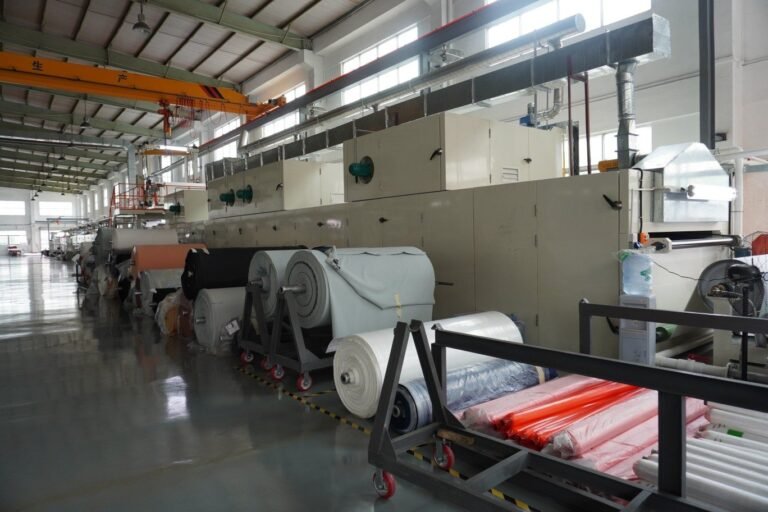
In-house fabric inspection area — a real manufacturer shows you where quality is verified, not just the showroom
What a Real Leather Company Factory Tour Reveals
If you’re how to find a reliable Chinese leather manufacturer, the factory tour is your strongest filter. A trading company will deflect, delay, or offer to “visit their partner’s facility.” A real leather company welcomes the visit and shows you everything — raw material storage, coating lines, calendering equipment, QC labs, and warehouse. Our factory production process is transparent at every stage.
Our QC operates at four inspection stages — material incoming, in-process coating, final roll inspection, and pre-shipment. Each stage has documented pass/fail criteria and SGS-verified test reports attached to the shipment. If a supplier can’t describe their QC stages in detail, they don’t have a QC process.

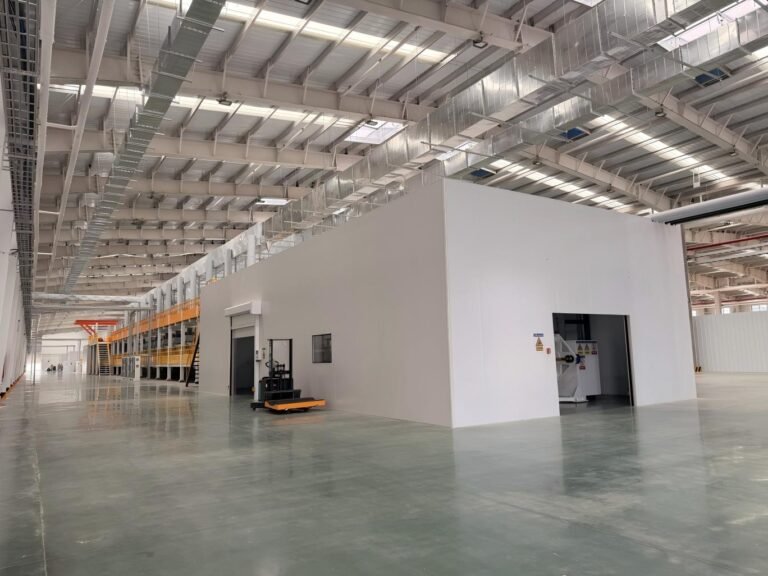
Modern production workshop — cleanroom standards, forklift logistics, real manufacturing infrastructure
Silicone Leather: The Modern B2B Alternative
The best leather company for B2B sourcing in 2026 isn’t a traditional tannery — it’s a vertically integrated silicone leather manufacturer. TOPSUN represents this shift: we control the entire process from raw silicone polymer to finished coated fabric, across three owned production bases. Unlike traditional leather companies that depend on animal hides and chrome tanning, we use a solvent-free platinum-cured silicone coating process that eliminates VOC emissions entirely.
For buyers seeking the silicone leather introduction, the key difference is chemistry: silicone is inherently hydrolysis-proof, UV-stable, and flame-retardant without additives. Learn more about TOPSUN and our manufacturing capabilities — or compare synthetic vs genuine leather to understand why the industry is shifting.

Quality inspection at a verified manufacturer — the standard a real leather company should meet
TOPSUN company profile — see our production bases, QC process, and manufacturing capabilities
Verify Our Factory Credentials
Frequently Asked Questions
What’s the difference between a leather company and a leather manufacturer?
A leather company is any entity that sells leather — a distributor, trading firm, or brand. A leather manufacturer owns the production equipment, employs the operators, and controls quality at the source. The key test: can they show you their factory on a live video call? If they redirect to a “partner facility” or only show stock photos, they’re a trading company, not a manufacturer.
How can I verify a leather company’s factory ownership before placing an order?
Request three documents: (1) business license showing “manufacturing” in the scope, (2) recent utility bills matching the factory address, and (3) SGS or BV factory audit reports. Cross-check the factory address on all three documents. Then request a live video tour where the operator walks through the production area, shows equipment nameplates, and points to current production batches.
Don’t Let a Middleman Decide Your Quality
The leather company you choose determines whether your project ships on time, passes compliance audits, and maintains quality across reorders. A trading company adds margin without adding value — they can’t control production, can’t guarantee batch consistency, and can’t provide first-hand test data. A real manufacturer owns the process from raw material to finished roll. That’s the difference between a supplier and a partner.
About TOPSUN
TOPSUN operates as a vertically integrated leather company — not a trading intermediary — manufacturing silicone leather from raw silicone polymer to finished coated fabric across three owned production bases in Dongguan, Yichang, and Xiangyang.
Business license with manufacturing scope verified · In-house QC lab (Martindale, tensile, color fastness) · SGS/BV factory audit reports available · 4-stage inspection process · OEM/ODM with 7-day PPS turnaround · SA8000 social compliance audit passed