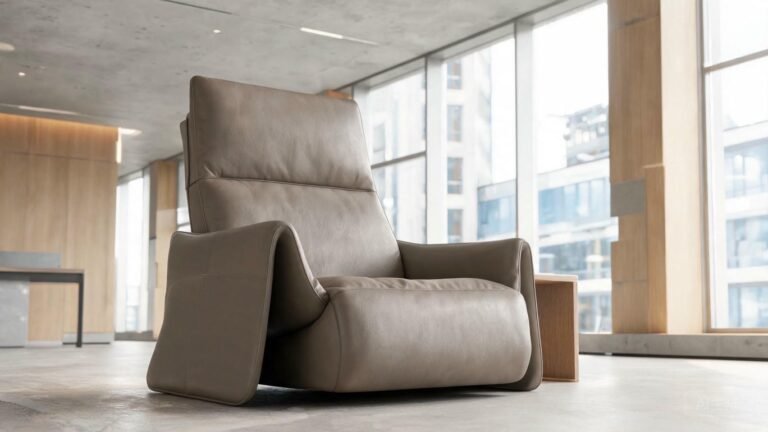
A furniture brand designs a signature diamond-quilted texture for their premium sofa line and orders 3,000 meters of embossed PU leather. The first shipment looks perfect — crisp edges, deep channels, exactly the visual effect they wanted. Eighteen months later, the showroom samples still look good, but the floor models in high-traffic stores are going flat. The embossed texture is wearing smooth where people sit, and the brand’s signature look is disappearing. This is the dirty secret of synthetic leather embossing: the texture is only as durable as the material it’s pressed into. Silicone leather texture embossing solves this because the pattern isn’t just on the surface — it’s in the material, and it stays sharp for the product’s entire service life.
How Silicone Leather Texture Embossing Works
Embossing creates a raised or recessed texture on the leather surface by pressing a patterned mold into the material. The process sounds simple — and it is, in concept — but the quality and durability of the result depend entirely on the material’s ability to hold the imprinted pattern over time. Silicone leather handles embossing differently from PU or PVC because of its molecular structure, and that difference is why the texture lasts.
TOPSUN uses a continuous in-line embossing process during silicone coating production. Here’s how it works at a production scale:
- Coating application: Liquid silicone is applied to the substrate (polyester microfiber, knit fabric, or rigid backing) at the target thickness — typically 0.4-1.5mm.
- Embossing roller contact: Before the silicone fully cures, it passes through a patterned embossing cylinder — a precision-engraved metal roller with the texture pattern machined into its surface.
- Pressure and temperature: Controlled pressure (3-8 bar) and temperature ensure the silicone flows into every detail of the engraving, capturing the full pattern depth.
- Curing: The embossed silicone passes through a high-temperature curing oven where the material cross-links and sets permanently — the texture is locked into the material structure, not just pressed onto the surface.
- Quality inspection: The finished material is checked for pattern consistency, depth uniformity, and defect rate before being wound into rolls.
The key difference from PU leather embossing is that silicone’s pattern is set during the curing process, not stamped into a pre-cured film. PU embossing relies on thermoplastic deformation — you heat the PU, press a pattern into it, and cool it. Over time and with heat exposure (sunlight, body heat, hot car interiors), the PU can relax and the pattern can flatten. Silicone, once cured, is thermoset — it doesn’t soften or re-melt with heat, so the embossed texture stays sharp indefinitely. This is why custom texture designs in silicone leather hold their definition far longer than equivalent patterns in PU.
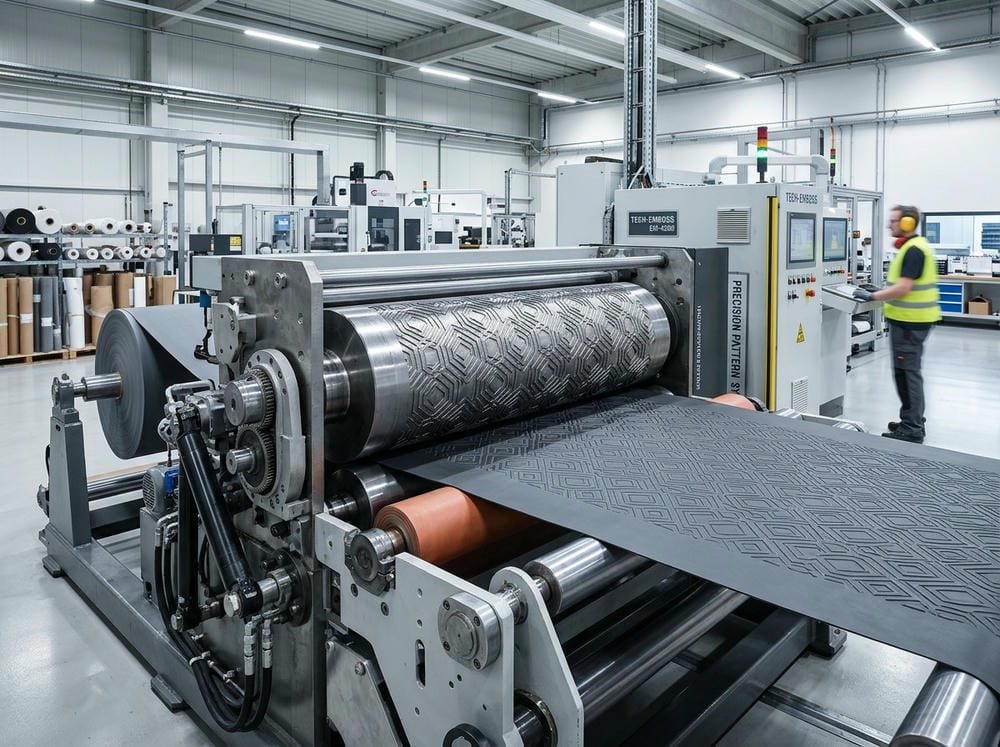
Embossing roller closeup — precision-engraved metal rollers transfer texture patterns into silicone leather during the continuous coating process.
Silicone Leather Texture Embossing: Resolution and Durability
When designers first learn about silicone leather embossing, they usually ask two questions: How fine a detail can you hold? And how long does the texture last? The answers are better than most people expect — and dramatically better than PU or PVC alternatives:
| Parameter | Silicone Leather | PU Leather | PVC Leather |
|---|---|---|---|
| Min. feature size | 0.05 mm | 0.15–0.20 mm | 0.10–0.15 mm |
| Max. pattern depth | 0.5 mm (on 1.0mm coat) | 0.3 mm (on 0.8mm coat) | 0.4 mm (on 1.0mm coat) |
| Texture retention (100k flex) | 98–100% | 60–75% (flattens) | 70–85% |
| Heat resistance of texture | 250°C+ (stable) | 80–100°C (softens) | 60–80°C (softens) |
| Standard textures | 100+ catalog patterns | 20–50 patterns | 30–60 patterns |
The 0.05mm minimum feature size for silicone leather is significant. It means you can emboss fine details like micro-textures, brand logos with thin strokes, and intricate geometric patterns that PU can’t physically hold because its higher surface tension and lower flow characteristics prevent it from filling very small mold cavities. In one consumer electronics case, a client needed a carbon-fiber weave pattern on 0.6mm material. Previous attempts with PU showed broken filaments at the weave intersections — the PU simply couldn’t flow into the tight corners. The silicone version held every crossing point cleanly and maintained full pattern definition through 100,000 flex cycles, verified by our quality inspection protocols.
Design tip: When designing a custom texture for silicone leather, the maximum pattern depth should be no more than 50% of the coating thickness. A 1.0mm silicone coating can hold a 0.5mm deep pattern; a 0.4mm coating tops out at about 0.2mm. Exceeding this ratio causes uneven coating thickness at the pattern base, which can affect tear strength and consistency.

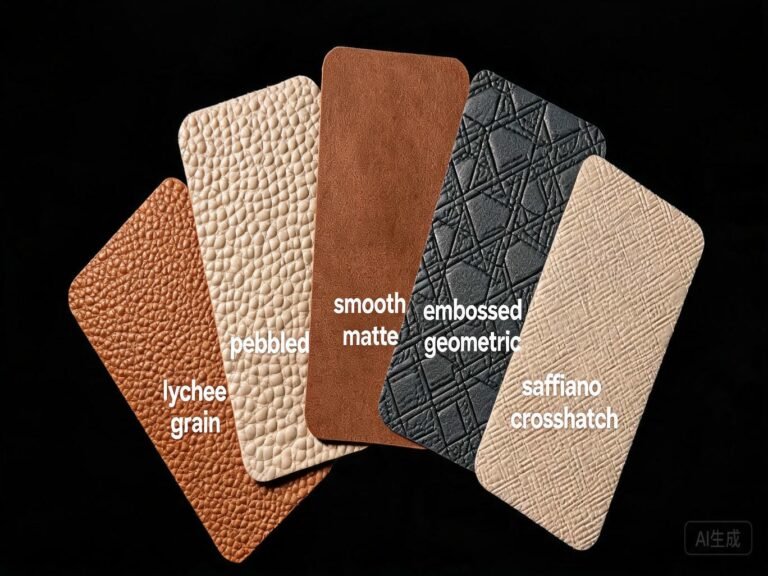
Sample textures from the catalog — 100+ standard patterns including litchi, nappa, cowhide, sheepskin, carbon fiber, and geometric designs.
Custom Silicone Leather Texture Embossing: Cost and Lead Time
For many B2B buyers, the decision comes down to whether to use a standard texture from the catalog or develop a custom embossing pattern. The answer depends on your volume, brand strategy, and timeline. Here’s how the two options compare:
Standard textures (no tooling fee): TOPSUN maintains 100+ standard embossing patterns in our texture vault — classic litchi grain, nappa, cowhide, sheepskin, suede, carbon fiber, and various geometric and abstract designs. Standard textures have zero tooling cost and the standard 7-15 day production lead time. This is the right choice for most projects where the goal is a high-quality leather look without needing a brand-unique surface.
Custom textures (tooling fee applies): If you need a brand-signature texture — a unique pattern, your logo embossed into the surface, or a design matched to a specific reference sample — custom embossing is the way to go. The process involves:
- Design review (2-3 days): We review your design file (AI, PDF, or physical sample) and confirm feasibility — minimum feature size, maximum depth, and pattern repeat alignment.
- Roller engraving (7-10 days): The embossing roller is CNC-machined or laser-engraved with your custom pattern. Nickel plating ensures consistent release and long roller life.
- Trial run (2-3 days): We run a 50-100 meter trial batch and send you A4 samples for approval before committing to full production.
- Full production (7-15 days): After your approval, we run the full order volume on the same embossing roller.
Custom embossing tooling costs range from $1,500-5,000 depending on pattern complexity and roller size, with lead times of 10-15 days from design approval to first samples. The roller is then yours to keep — stored in our toolroom for future reorders at no additional cost. For brands ordering 5,000+ meters per year, the tooling cost amortizes to pennies per meter, and the custom texture becomes a genuine brand differentiator that competitors can’t easily copy.

TOPSUN’s swatch rack — every standard texture is available in any Pantone-matched color, with samples available for free delivery.
Custom texture overview — see how embossed patterns are designed, produced, and quality-checked at TOPSUN.
Design Considerations for Embossed Silicone Leather
Not every texture works equally well on every product. The ideal embossing pattern depends on the application, the material thickness, and the expected wear pattern. Here are guidelines for common use cases:
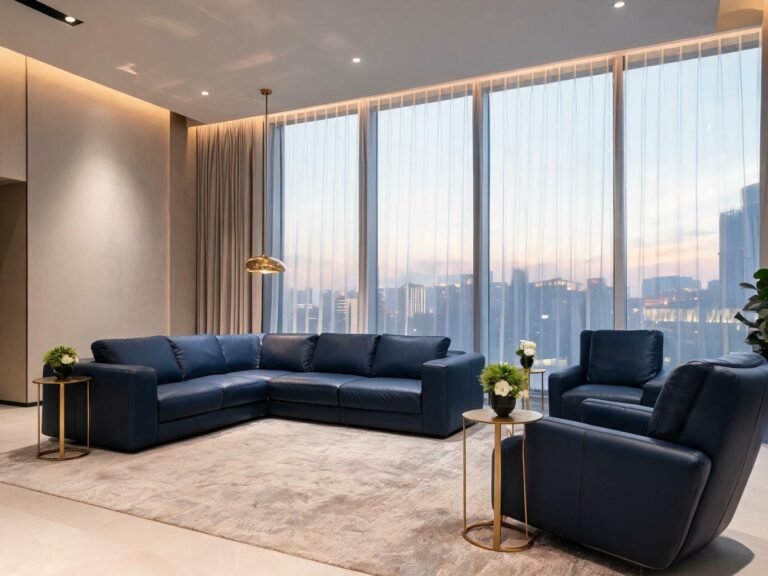
- Furniture upholstery: Medium-depth patterns (0.2-0.3mm) work best — enough texture to hide minor wear and provide grip, but not so deep that crumbs and dust collect in the valleys. Litchi grain and nappa are the most popular standard patterns for furniture applications.
- Automotive interiors: Fine, uniform textures (0.05-0.15mm) are preferred for tactile consistency and glare reduction. Embossed patterns must also withstand temperature cycling from -40°C to 100°C+ without texture loss — a test silicone passes easily.
- Consumer electronics: Micro-textures and geometric patterns are popular for grip and visual differentiation. The 0.05mm minimum feature size allows for subtle brand patterns and textures that are felt more than seen.
- Fashion and accessories: Deeper, more dramatic patterns (0.3-0.5mm) work well for bags, wallets, and wearable accessories where the texture is a key design element. Keep in mind that deeper patterns show wear more obviously on high-contact surfaces.
Frequently Asked Questions
Can you emboss a custom logo or brand pattern into silicone leather?
Yes. Custom logos and brand patterns are a common embossing request, and silicone leather’s 0.05mm minimum feature size allows for very fine detail — thin-stroke logos, small text, and intricate graphic patterns all reproduce cleanly. The process requires a custom embossing roller (tooling fee $1,500-5,000, 7-10 day lead time) and a 500m MOQ for the production run. For brands that want a subtle signature texture across their entire product line, custom embossing creates a tactile brand identifier that’s harder to copy than a printed logo or color match.
How long does the embossed texture last on silicone leather?
Essentially the life of the material. Unlike PU leather, where the embossed pattern can flatten with heat, wear, and flexing, silicone leather’s embossed texture is cured into the material structure during production. Testing shows 98-100% texture retention after 100,000 flex cycles (ISO 5402) and no measurable texture loss after 1,000 hours of UV exposure (ASTM G154). In real-world terms, the texture will still be sharp and well-defined when the product reaches end-of-life for other reasons — the pattern doesn’t wear out before the material does.
Embossing That Outlasts the Product
Texture is more than decoration. It’s a tactile brand signal, a grip feature, and a visual marker of quality. When an embossed pattern flattens after 18 months of use, it doesn’t just look worn — it makes the entire product feel cheap, even if the underlying structure is still fine. Silicone leather texture embossing solves this by putting the pattern inside the material, not just on top of it. The 0.05mm resolution lets designers create finer, more detailed textures than PU can hold. The 98%+ texture retention after 100,000 flex cycles means the pattern looks the same in year five as it did on day one. And with 100+ standard patterns plus custom tooling available in 7-10 days, you don’t have to choose between premium texture and reasonable lead time.
About TOPSUN
TOPSUN produces embossed silicone leather with 100+ standard textures and custom embossing capability — 0.05mm minimum feature size, 98%+ texture retention after 100,000 flex cycles, and custom roller tooling in 7-10 days.
0.05mm min. feature size · 98%+ texture retention · 100+ standard patterns · Custom tooling in 7-10 days · $1,500–5,000 roller cost