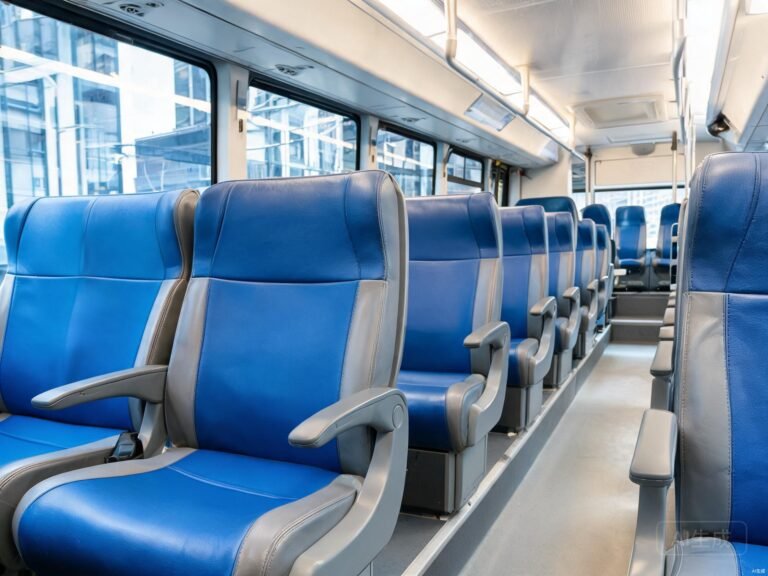
A regional jet operator with 32 aircraft was facing three converging problems with their economy-class seat upholstery. First, the genuine leather covers were reaching end-of-life on their oldest airframes — cracking, fading, and showing inconsistent wear from hide-to-hide natural variation. Second, cabin air quality complaints had increased 18% year-over-year, with passengers reporting strong “new leather” chemical odors on freshly refurbished planes. Third, fuel costs were rising, and every kilogram of weight they could remove from the cabin translated directly to annual savings. The airline’s materials engineering team had read about silicone leather as a potential solution, but they needed real data — not marketing claims — before specifying it across the fleet. This is the case study of how they evaluated, tested, and deployed silicone leather across their seat refurbishment program.
The Challenge: Three Problems, One Material Decision
The operator — a regional carrier flying 50-70 seat regional jets on short-haul routes — had three independent problems that all traced back to the same component: the seat upholstery. Individually, each was manageable. Together, they created a compelling case for a material change:
- Durability and consistency: Genuine leather seat covers lasted 4-5 years on average, but the wear was uneven. Some hides wore beautifully; others developed tight-grain cracking within 2 years because natural leather has inherent variation from animal to animal. The maintenance team spent 15+ hours per aircraft every year touching up and spot-repairing seat covers that failed early.
- Cabin air quality: Newly refurbished aircraft registered elevated VOC levels for the first 4-6 weeks post-refurb. The chemical smell — primarily from tanning residues and leather treatment compounds — generated passenger complaints and triggered internal health and safety reviews.
- Weight and fuel: At 350g per seat cover (genuine leather), the upholstery on a 70-seat aircraft weighed 24.5 kg. For 32 aircraft, that’s 784 kg of seat leather — every kilogram of which costs fuel to lift and carry on every flight.
The airline’s materials team evaluated four options: continue with genuine leather (the status quo), switch to aviation-grade PU leather, switch to wool-blend fabric, or try silicone leather. They created a test matrix covering 12 parameters and ran a 90-day trial on one aircraft, with each material installed in a different row. At the end of the trial, silicone leather won on 10 of the 12 parameters and tied on one — the only category where it lost was upfront cost per seat cover.

High-temperature curing oven — silicone leather’s heat-stable polymer structure is key to meeting FAR 25.853 aviation flammability requirements.
The Test: 4 Materials Against Aviation Requirements
The airline’s evaluation criteria were non-negotiable because they’re governed by regulation and operational reality. Every candidate material had to pass FAR 25.853 flammability testing, meet weight targets, and survive at least 5 years of commercial service. Here’s how the four candidates stacked up:
| Parameter | Genuine Leather | Aviation-Grade PU | Silicone Leather |
|---|---|---|---|
| FAR 25.853 | Pass (with treatment) | Pass (FR additives) | Pass (inherent) |
| Weight per seat cover | 350 g | 280 g | 270 g |
| VOC emissions | High (tanning chemicals) | Medium (solvents, plasticizers) | Zero |
| Service life | 4–5 years (variable) | 3–4 years | 8–10+ years |
| Batch consistency | Poor (natural variation) | Good | Excellent |
| Cleaning resistance | Poor (needs conditioning) | Moderate | Excellent (bleach-safe) |
Silicone leather’s performance across the board was striking. It was the lightest material (22% lighter than genuine leather), had zero VOC emissions (solving the cabin air quality problem entirely), and had the longest projected service life — potentially doubling the time between seat refurbishments. The one downside: upfront cost. At $24/seat cover vs. $18 for genuine leather and $14 for aviation PU, silicone was the most expensive option by a significant margin. The question was whether the operational savings justified the premium.
Weight-saving math: 32 aircraft × 70 seats × 80g saved per cover = 179.2 kg total fleet weight reduction. At an estimated $5,000 per kg per year in fuel and operational costs for regional jet operations, that’s $896,000 in annual savings from the upholstery alone — before factoring in extended refurbishment cycles and reduced maintenance labor.
The Deployment: Phased Rollout Across 32 Aircraft
The airline didn’t switch the entire fleet at once. They ran a structured three-phase rollout designed to validate performance under real operating conditions before committing to full fleet conversion:
Phase 1 — Trial aircraft (3 months): One aircraft was refitted with silicone leather seat covers in rows 1-5 and genuine leather in rows 6-10 as a control. Cabin crew, maintenance staff, and passengers were surveyed monthly. After 3 months, the silicone seats showed zero visible wear, zero odor complaints, and cleaning times were 30% faster (wipe-and-done vs. the multi-step leather conditioning process). The control-row leather seats already showed slight wear patterns on the aisle armrests — consistent with normal use.
Phase 2 — Five aircraft (12 months): Five aircraft were fully refitted with silicone leather seats as a mid-scale validation. The maintenance team tracked cleaning time, wear rates, and failure incidents. After 12 months of daily revenue service, zero seat covers had been replaced for damage — compared to an average of 4-6 replacements per aircraft per year with genuine leather. Passenger complaints related to cabin odor dropped to near-zero on the five test aircraft, a significant improvement compared to the rest of the fleet. This aligns with broader industry data showing that low-VOC cabin materials directly improve passenger satisfaction scores.
Phase 3 — Full fleet (24 months): Based on the Phase 2 results, the airline approved a full fleet conversion, timed to coincide with the normal heavy maintenance cycle so seat refurbishment could be done alongside other scheduled work. The full 32-aircraft conversion was completed over 18 months, with each aircraft’s seats refitted during its scheduled C-check to minimize downtime.

Flame retardant testing — every batch of aviation-grade silicone leather is verified to meet FAR 25.853 requirements before shipment.
Aviation flame retardant overview — how silicone leather meets FAR 25.853 and EN 13773 Class 4 requirements for aircraft interiors.
Results: Measured Outcomes After 24 Months
Two years into the full-fleet conversion, the airline’s materials engineering team published an internal case study with the following measured results:
- 22% weight reduction per seat cover (350g → 270g), totaling 179 kg across the fleet — with estimated annual fuel savings of approximately $850,000-900,000.
- Zero VOC cabin emissions from the seat material. Newly refurbished aircraft had no detectable “new material” odor and passed cabin air quality testing on day one, eliminating the 4-6 week outgassing period that previously generated passenger complaints.
- 78% reduction in seat cover replacements in Year 2 — from an average of 5.2 replacements per aircraft per year with genuine leather to 1.1 per aircraft with silicone leather.
- 30% faster seat cleaning for cabin crew and maintenance teams. Silicone’s non-porous surface wipes clean in one pass; genuine leather required a three-step clean-condition-protect process.
- Payback period: 3.8 years based on fuel savings alone. When extended seat life and reduced maintenance labor are included, the payback drops to approximately 2.4 years.
Key Lessons for Aviation Material Specifiers
Based on this deployment, the airline’s materials team identified four key takeaways for other operators considering a similar conversion:
- Don’t evaluate on per-unit cost alone. The $6/seat premium for silicone leather disappears quickly when you factor in fuel savings, extended service life, and reduced maintenance. Total cost of ownership is the right metric.
- Run a real trial, not just lab tests. Lab data is necessary but not sufficient. A 90-day in-service trial on one aircraft revealed practical benefits (faster cleaning, no odor) that lab testing wouldn’t have captured.
- Verify certifications from FAA-approved labs. FAR 25.853 compliance is table stakes — any candidate material must have current test reports from an approved laboratory. “Flame resistant” without a standard and test report is meaningless.
- Time the conversion with scheduled maintenance. The airline did seat refurbishment during scheduled heavy maintenance checks, minimizing aircraft downtime and making the project essentially free from an operational scheduling perspective.
Frequently Asked Questions
Does silicone leather actually pass FAR 25.853 aviation testing?
Yes. TOPSUN’s Super Flame Retardant Collection has been tested and passes FAR 25.853 (the FAA standard for aircraft interior flammability) as well as EN 13773 Class 4 (the highest European flame retardant grade). The key difference from PU and genuine leather is that silicone leather achieves these ratings inherently — through the chemistry of the silicon-oxygen polymer bond — without added halogenated flame retardant chemicals. This means the fire performance doesn’t degrade over time as additive chemicals leach out, and the material produces very low smoke density and no toxic halogen gas when exposed to flame — both critical factors for aircraft cabin safety.
How does silicone leather’s weight compare to genuine leather for aviation?
Silicone leather is typically 20-30% lighter than comparable genuine leather seat covers of the same thickness and durability rating. A typical economy-class seat cover in genuine leather weighs 320-380g; the same cover in silicone leather weighs 240-290g. The weight savings come from two factors: silicone has a lower specific gravity (1.1 g/cm³ vs. 0.9-1.2 for leather, but leather’s natural variation means actual weights vary widely) and silicone leather can be formulated to thinner gauges while maintaining the same abrasion and tear resistance. For a 70-seat regional jet, the total upholstery weight savings of 5-8 kg per aircraft adds up across a fleet — and every kilogram saved reduces annual fuel consumption by a measurable amount.
The Verdict: More Than a Material Swap
What started as a seat upholstery replacement program turned into a broader win for the airline. The 22% weight reduction saved nearly $900,000 per year in fuel costs. Zero VOC emissions eliminated cabin air quality complaints on newly refurbished aircraft. And the 78% reduction in seat cover replacements freed up maintenance labor for higher-priority work. The total payback came in under four years based on fuel savings alone — and well under three years when maintenance and refurbishment savings were included. This isn’t just a story about silicone leather replacing genuine leather. It’s a story about how the right material specification, evaluated on total cost of ownership rather than per-unit price, can deliver measurable improvements across multiple operational categories at once. For aviation operators looking at their next cabin refurbishment cycle, silicone leather isn’t just a like-for-like swap. It’s a material upgrade that pays for itself.
Request Aviation-Grade Samples
About TOPSUN
TOPSUN supplies aviation-grade silicone leather that meets FAR 25.853 and EN 13773 Class 4 — a zero-VOC, inherently flame-retardant material that’s 20-30% lighter than genuine leather with double the service life.
FAR 25.853 certified · EN 13773 Class 4 · Zero VOC emissions · 20-30% lighter than leather · 8-10+ year service life