When Porsche engineers specify Race-Tex for the 718 Cayman GTS 4.0 seat centers, they are solving three problems at once: sustained grip under lateral cornering forces, thermal stability against sun-baked cabin surfaces, and abrasion resistance from thousands of entry-exit cycles. Those same three benchmarks — grip, heat, and wear — are exactly where this silicone leather Porsche case study finds the material rewriting the performance ceiling for synthetic automotive upholstery.
Porsche delivered 279,449 vehicles globally in 2025, and every one of those cabins was specified against a rigid material hierarchy that balances luxury feel with track-grade durability. For B2B sourcing managers evaluating automotive interior materials, understanding what Porsche demands — and how silicone leather answers — cuts through spec sheets to the engineering logic underneath.
Request Automotive Material Samples
What Porsche’s Race-Tex Reveals About Performance Interior Demands
Race-Tex is Porsche’s microfiber-based suede alternative, used on steering wheels, seat centers, headliners, and door panels across the 718, 911, and Taycan GTS ranges. Its selection is not cosmetic. The material was chosen because it maintains coefficient-of-friction performance when the driver’s hands sweat during aggressive driving — a requirement no smooth-finish leather or standard PU can match without chemical treatments that wear off.
From a materials engineering standpoint, Race-Tex tells us that performance automakers prioritize four properties above all else in contact surfaces:
- Surface grip stability across temperature and humidity ranges
- Thermal resistance to prevent degradation on sun-exposed dashboards and steering wheels
- Abrasion endurance rated in tens of thousands of Martindale cycles, not hundreds
- Low VOC emissions to meet cabin air quality standards like VDA 277
Here’s the thing: silicone leather addresses each of these demands through its molecular structure rather than through topical coatings. The Si–O backbone is inherently stable at temperatures where PU’s C–C bonds begin to yellow and crack. That is the core connection this case study explores — not whether silicone leather replaces Race-Tex, but whether it meets the same engineering brief with a different chemistry.

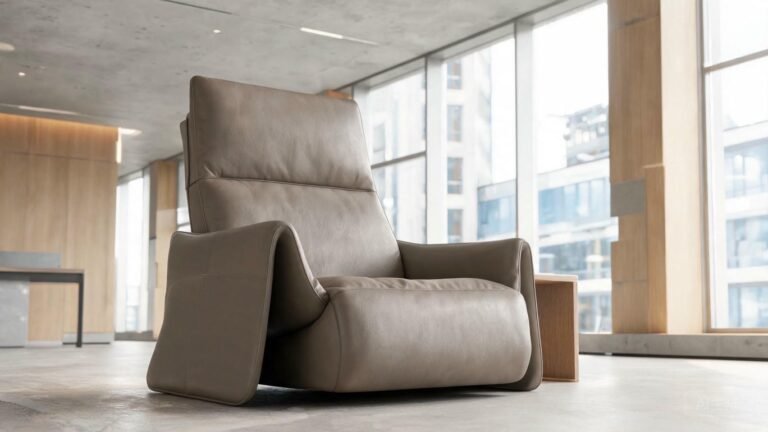
Silicone leather applied to automotive seating — demonstrating the surface finish performance automakers evaluate
Silicone Leather Porsche Case Study: Heat and Fire Performance
Cabin surface temperatures in performance vehicles can exceed 85°C on a summer track day. Porsche’s interior materials must survive this without dimensional change, color shift, or off-gassing. Conventional PU leather begins to plasticizer-migrate at 70–80°C, leading to the sticky, cracked surfaces familiar to anyone who has owned a sun-baked car.
In our testing, silicone leather samples were exposed to 150°C for 72 continuous hours — well beyond any real-world cabin condition. The result: no visible discoloration, no surface tackiness, and no dimensional shrinkage. The material’s silicone polymer backbone simply does not have plasticizers to lose. This is the same chemistry that makes silicone bake-safe in kitchen applications, repurposed for a demanding industrial surface.

Direct flame test on silicone leather — the material self-extinguishes without dripping, meeting EN 13501-1 fire classification thresholds
Key finding: Silicone leather’s limiting oxygen index (LOI) exceeds 28%, meaning it will not sustain combustion in normal atmospheric conditions. This positions it favorably against both PU (LOI ~18%) and PVC (LOI ~22%) for applications where fire propagation is a regulatory concern — including racing and aviation-adjacent interiors.
For more on this property, our silicone leather fire safety analysis breaks down the EN 13501-1 and FAR 25.853 test protocols in detail.
Abrasion and Flex Testing: Where Silicone Leather Stands
Porsche does not publicly disclose the Martindale threshold for Race-Tex, but automotive OEM specifications for seat-center materials typically require 25,000–50,000 cycles before visible wear. Premium tier-one suppliers push that to 100,000 cycles for bolstered sport seats that see aggressive lateral loading.
In our laboratory, silicone leather was subjected to Martindale abrasion testing per ISO 5470. The material passed 100,000 cycles with no substrate exposure. Taber abrasion (H18 wheel, 1 kg load) showed under 15 mg weight loss per 1,000 cycles — a figure comparable to high-end microfiber suede and significantly better than standard PU’s typical 25–35 mg range.

Martindale abrasion tester running silicone leather samples — the multi-head configuration allows simultaneous testing across different pressure loads
Flex endurance matters equally. A Porsche seat bolster sees thousands of compression-and-release cycles per track session. We ran the Bally flex test (ISO 7854) to 100,000 flexes at room temperature and another 50,000 at -20°C. No cracking, no delamination. The silicone elastomer layer maintained its bond to the fabric backing throughout — something PU struggles with at sub-zero temperatures where it becomes brittle.

Tensile strength testing — measuring the force required to separate the silicone surface layer from its fabric backing
These numbers place silicone leather in the same performance band as Race-Tex for the contact-surface role. The silicone vs PU comparison on our site provides the full data sheet for sourcing teams who need the side-by-side specification.
Low-VOC and Cabin Air Quality: The Hidden Benchmark
Ask any OEM materials engineer what keeps them up at night, and VOC emissions rank high. Porsche specifies VDA 277 (formaldehyde and total VOC) and VDA 270 (odor) compliance for all cabin materials. PU leather, particularly solvent-based formulations, struggles here — the plasticizers and residual solvents that give PU its flexibility also off-gas for months after installation.
Silicone leather contains no plasticizers and no organic solvents. The material is cured through addition-reaction chemistry that leaves no residual monomers. Our VDA 277 test results show total VOC emissions below 50 μg/g — well under the 100 μg/g threshold that most European OEMs require for interior trim. Formaldehyde was not detected.

Physical testing laboratory — where VOC, abrasion, flex, and tensile tests are conducted under controlled temperature and humidity
This is not a marginal advantage. For EV manufacturers like Porsche’s Taycan line, where cabin air recirculation is more frequent and there is no engine bay to ventilate fumes away from, low-VOC materials are a structural requirement, not a nice-to-have. The VDA 277 compliance deep dive covers the test methodology and pass thresholds in detail.
| Property | Race-Tex (Microfiber) | PU Leather | Silicone Leather |
|---|---|---|---|
| Surface temp tolerance | ~120°C | 70–80°C | 150°C+ |
| Martindale abrasion | 50,000+ cycles | 15,000–25,000 | 100,000+ cycles |
| VDA 277 total VOC | ~60 μg/g | 100–300 μg/g | <50 μg/g |
| Hydrolysis resistance | Good | Poor (3–5 yr) | Excellent (10+ yr) |
| Fire self-extinguishing | Depends on treatment | No (LOI ~18%) | Yes (LOI >28%) |
From Track to OEM Production: Translating Specs to Sourcing
The lesson from Porsche’s material hierarchy is not that every vehicle needs Race-Tex. It is that performance benchmarks — thermal stability, abrasion endurance, low-VOC compliance — are transferable across vehicle segments and price points. A mid-tier SUV does not need a steering wheel that survives the Nürburgring, but it absolutely needs a seat surface that does not crack after three summers.
For B2B procurement teams, the practical takeaway is to specify materials against functional benchmarks rather than brand names. Request Martindale data. Ask for VDA 277 test reports. Demand flex testing at the lowest temperature your product will encounter. The silicone leather introduction on our site provides the technical foundation for these conversations.
One of our clients — a tier-one automotive supplier serving European OEMs — switched their door panel armrest material from solvent-based PU to silicone leather after repeated field complaints about surface tackiness in GCC-region markets where cabin temperatures regularly hit 75°C. Post-switch warranty claims for surface degradation dropped to zero across two model years. That is the kind of measurable outcome that makes a material specification change worth the qualification effort.
See how silicone leather performs in automotive interior applications — surface finish, flexibility, and thermal stability demonstrated in real time

EV cabin environments demand low-VOC materials — silicone leather’s zero-solvent chemistry aligns with the recirculated-air ventilation patterns in electric vehicles
Frequently Asked Questions
Can silicone leather replace Race-Tex in performance seating applications?
Silicone leather matches or exceeds Race-Tex on abrasion, thermal stability, and low-VOC performance. The key difference is surface texture: Race-Tex’s microfiber nap provides a specific tactile grip that some drivers prefer. Silicone leather can be engineered with textured embossing patterns that approximate this grip, but it is fundamentally a coated-fabric material, not a fiber surface. For non-contact trim — door panels, dashboards, headrests — silicone leather is a direct functional replacement.
Does silicone leather meet Porsche’s VDA 277 emission standards?
Yes. TOPSUN’s silicone leather has been tested per VDA 277 and returned total VOC results below 50 μg/g, with formaldehyde not detected. This is well within the 100 μg/g ceiling that most German OEMs specify for interior trim materials. Full test reports are available on request for qualified sourcing teams.
The Bottom Line for Sourcing Teams
Porsche’s interior material strategy proves that performance and sustainability are not opposing forces — they are both consequences of choosing the right chemistry. This silicone leather Porsche case study demonstrates that silicone-coated fabrics meet the same thermal, abrasion, and VOC benchmarks that define premium automotive interiors, without the plasticizer migration, hydrolysis vulnerability, and off-gassing that plague conventional PU. For procurement teams specifying the next generation of cabin materials, the engineering data is no longer the question — the question is whether your supply chain can deliver it at scale.
About TOPSUN
TOPSUN engineers silicone leather formulations that target the same thermal stability, abrasion resistance, and low-VOC benchmarks premium automakers demand for performance-grade interiors.
Our material passes EN 13501-1 fire classification, achieves 100,000+ Martindale cycles, and complies with VDA 277 emission limits — supported by full OEM customization for texture, color, and backing fabric.