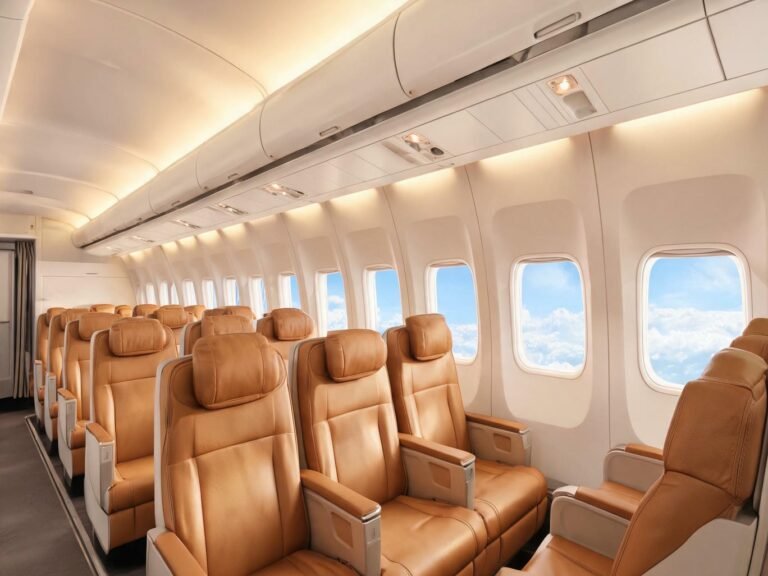
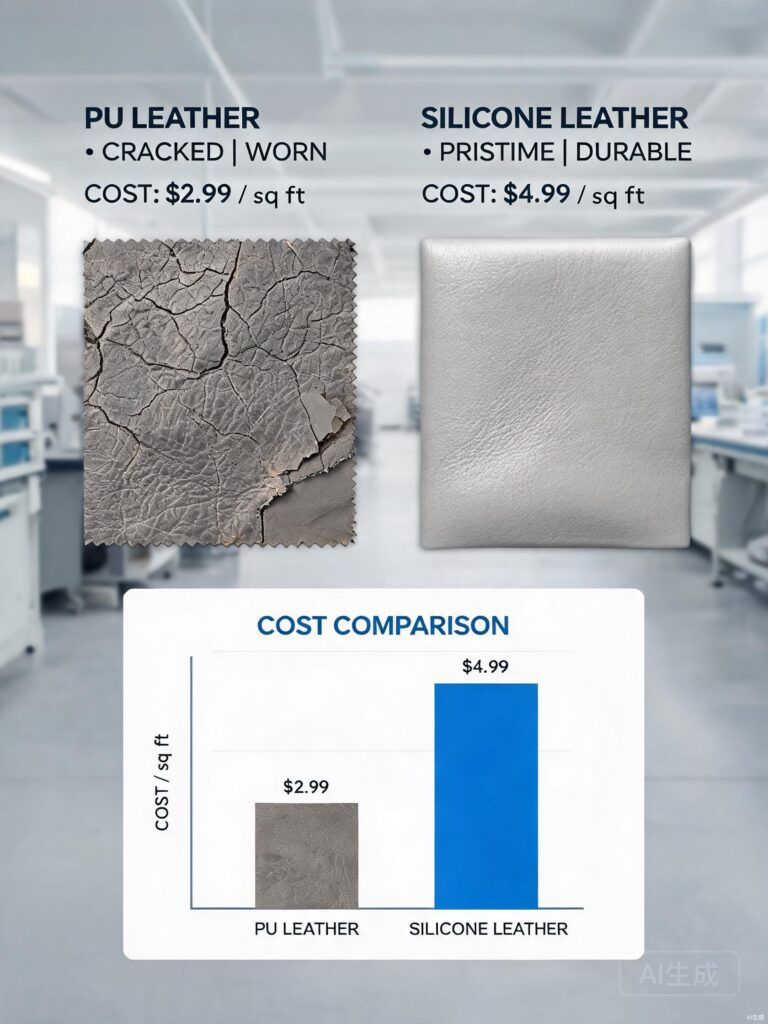
Selecting the right leather for aviation seating is one of the most demanding material decisions in the transportation industry. Unlike automotive or hospitality interiors, aircraft seat coverings must pass stringent fire safety tests, endure years of high-frequency use, and contribute to weight reduction — all at the same time. For sourcing teams evaluating leather for aviation seating, understanding the regulatory framework and material trade-offs is the first step toward a successful qualification.
Request Aviation-Grade Samples
Fire Safety Standards That Govern Aircraft Seat Upholstery
Fire safety is non-negotiable in aviation. In the United States, FAR 25.853 (Federal Aviation Regulation) sets the baseline for all cabin interior materials, including seat coverings. Part I of Appendix F to Part 25 defines the vertical and horizontal flammability tests that every decorative surface must pass.
Seat cushions go further. Part II of Appendix F subjects them to the oil burner test — a far more severe evaluation that simulates exposure to intense open flame. The material must self-extinguish within a specified time and meet strict burn length limits.
But flammability alone isn’t enough. Boeing’s internal standards BSS 7238 and BSS 7239 govern smoke density and gas toxicity respectively. Airbus relies on ABD 0031 for toxicity requirements. In Europe, EASA CS-25.853 mirrors the FAA framework, while China’s CCAR 25.853 applies to domestic carriers.
Key takeaway: Aviation seat materials must be self-extinguishing, produce minimal smoke (typically ≤75 Ds per ASTM E662), and generate combustion gases below strict toxicity thresholds (NES 713 index ≤5).

Weight Reduction: Why Every Gram Matters at Altitude
Fuel remains an airline’s single largest operating cost. Industry estimates suggest that every kilogram of excess weight on a narrow-body aircraft costs between $1,000 and $3,000 per year in additional fuel, depending on flight hours and fuel prices. Multiply that across a 200-aircraft fleet over a 15-year service life, and the financial impact becomes significant.
This is why seat manufacturers like Safran Seats, Recaro, and Collins Aerospace obsess over weight at the component level. The frame, foam, and mechanisms get most of the attention, but the upholstery material plays a real role too. Genuine leather is dense — a full-grain hide adds considerably more weight per square meter than engineered alternatives. High-performance PU and silicone-coated fabrics can match the visual appeal at a fraction of the weight.
Material Comparison for Aviation Seat Coverings
Here’s how the three most common upholstery options compare against the requirements that matter most to aviation buyers:
| Property | Genuine Leather | Aviation-Grade PU | Silicone Leather |
|---|---|---|---|
| Fire Resistance | Requires chemical treatment; may degrade over time | Flame-retardant grades available | Inherently flame-resistant; FAR 25.853 achievable |
| Smoke Emission | Moderate to high when burning | Varies by formulation | Very low; ≤75 Ds (ASTM E662) |
| Weight (per m²) | Heavy (0.8–1.2 kg) | Light (0.3–0.6 kg) | Light (0.3–0.7 kg); thin gauges available |
| Chemical Resistance | Susceptible to cleaning agents | Moderate; may hydrolyze | Excellent; resists disinfectants and solvents |
| UV/Fading Resistance | Requires treatment; fades over time | Moderate UV stability | Excellent UV resistance |
| Batch Consistency | Natural variation between hides | Good consistency | Excellent; controlled manufacturing |
Durability Under High-Turnover Conditions
A commercial aircraft seat on a high-demand route might see 8 to 12 passenger rotations per day. Over a typical 5 to 7-year refurbishment cycle, that translates to tens of thousands of sitting events. The upholstery material must resist:
- Abrasion from clothing, belt buckles, and carry-on items
- Staining from food, beverages, and personal care products
- UV fading from sustained cabin sunlight at altitude
- Repeated cleaning with strong disinfectant solutions
In our experience supplying transportation clients, materials that perform well in automotive or residential settings often fail prematurely in aviation. The cleaning frequency and chemical exposure are simply more aggressive. Silicone-based materials show a distinct advantage here — their chemical inertness means they withstand repeated disinfectant cleaning without surface degradation or cracking. You can explore our durability testing guide for a deeper look at the evaluation methods involved.

See how TOPSUN’s flame-retardant silicone leather performs under fire safety testing
Silicone Leather as an Emerging Aviation Material
Silicone leather is relatively new to the aviation supply chain, but its properties align well with the industry’s core demands. The material is inherently flame-resistant — our Super Flame Retardant Collection achieves FAR 25.853 and EN 13773 Class 4 without relying on heavy chemical flame-retardant treatments. It produces very low smoke and contains no halogens or toxic additives.
From a weight perspective, silicone leather can be engineered to thin gauges while maintaining structural integrity. The material also resists hydrolysis, UV degradation, and chemical cleaning — all critical factors at 35,000 feet.
That said, adoption is still early compared to established aviation-grade PU. Sourcing teams should request specific test reports and conduct their own evaluation. To understand the fundamental differences, read our introduction to silicone leather technology.

Frequently Asked Questions
Does silicone leather meet FAR 25.853 requirements?
Yes. TOPSUN’s Super Flame Retardant Collection has achieved FAR 25.853 certification through third-party testing by SGS and Intertek. You can review the full certification portfolio on our website.
How much weight can silicone leather save compared to genuine leather?
The exact figure varies by gauge and backing, but silicone leather typically weighs 40-60% less than full-grain leather per square meter. For a narrow-body aircraft with 150+ seats, this can translate to meaningful fuel savings over the seat’s service life.
What is the typical refurbishment cycle for aircraft seat upholstery?
Most airlines plan for a 5 to 7-year cycle between interior refurbishments. The actual lifespan depends on route intensity, cleaning protocols, and material quality. Silicone leather’s chemical resistance often extends usable life in high-frequency cleaning environments.
Making the Right Material Choice for Your Fleet
There is no one-size-fits-all answer for leather for aviation seating. The right choice depends on your airline’s priorities — whether that’s maximum weight savings, the longest possible refurbishment interval, or achieving the most premium passenger experience. What we recommend is this: request physical samples, run your own lab tests against your specific cleaning and usage protocols, and compare the total cost of ownership rather than just the per-meter price.
Get a Custom Aviation Material Quote
About TOPSUN
TOPSUN is a specialized manufacturer of silicone leather materials for demanding applications including aviation, automotive, medical, and public transportation. We offer OEM/ODM customization with full testing and certification support.
Relevant certifications: FAR 25.853, EN 13773 Class 4, REACH, FDA, ISO 10993, PAHs-free. All certificates issued by SGS and Intertek.