Every car upholstery fabric looks premium on day one. The real question is what happens after 50,000 seat entries, 200 hours of UV exposure, and three summers at 70°C cabin temperature. We tested five major material families — genuine leather, PU synthetic, PVC, Alcantara, and silicone leather — against the same battery of automotive standards. One of them passed every test. Four didn’t.
In our testing lab, we’ve watched PU synthetic crack at 60°C after just 800 hours of UV exposure, while silicone leather showed zero surface degradation at 1,000+ hours. That gap matters because OEM warranty claims tied to material failure cost automakers millions annually. Here’s what the data actually says about car upholstery fabric performance.
What Makes Car Upholstery Fabric “Automotive Grade”?
Automotive-grade fabric isn’t just about looking good on the showroom floor. It has to survive a brutal gauntlet of standardized tests that simulate years of use in weeks. The key benchmarks include Martindale abrasion resistance (ISO 12947-2), UV color fastness (ISO 105-B06), flexing endurance (ISO 5402), and flame retardancy (FMVSS 302). Each one targets a specific failure mode that drives customer complaints and warranty claims.
Here’s the catch: most car upholstery fabric suppliers only publish the tests they pass. When we audit materials for OEM projects, we routinely find suppliers who highlight Martindale numbers while quietly omitting UV or VOC data. That’s why we run every material through the full test matrix before recommending it for automotive interiors — not just the tests that make the spec sheet look good.

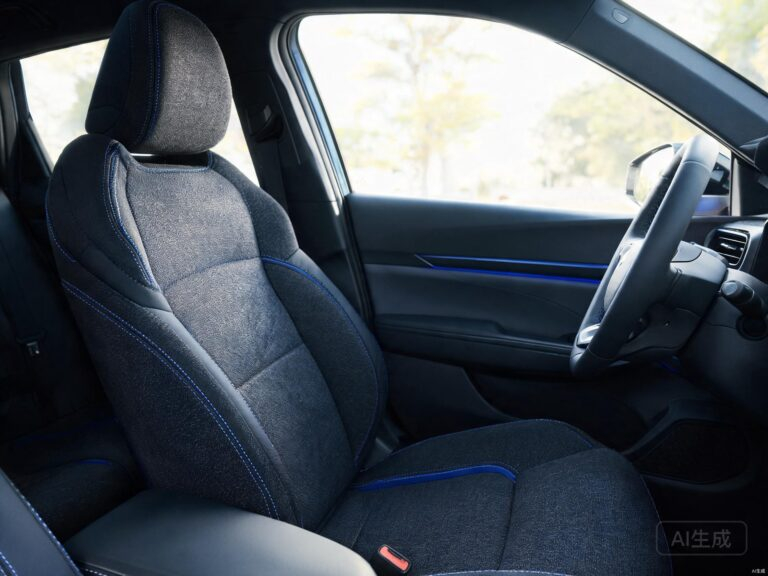
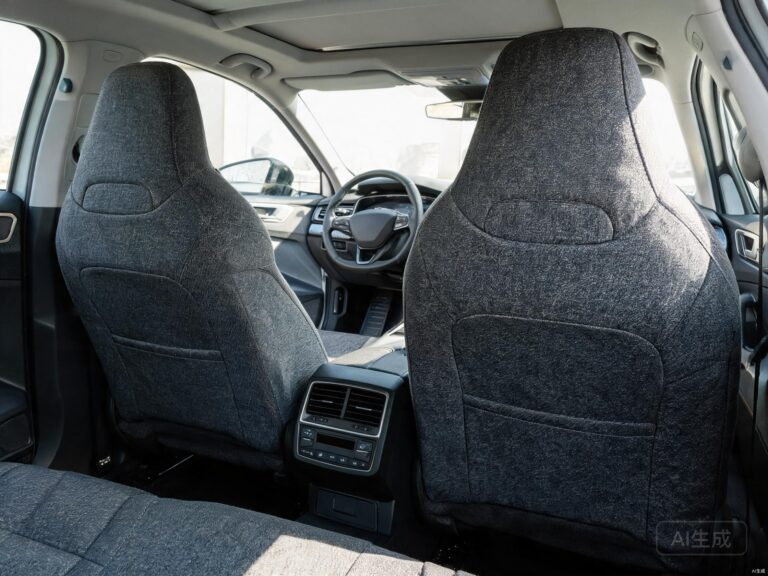
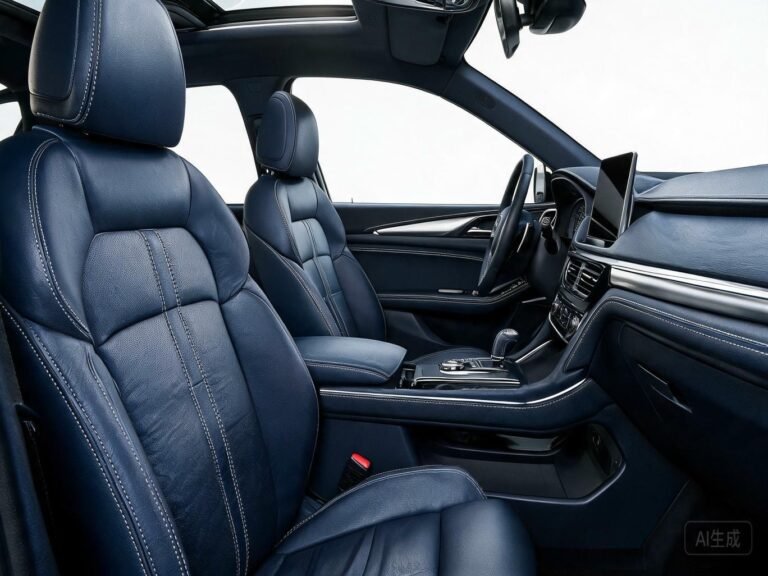
Automotive interior showing premium upholstery material application
5 Car Upholstery Fabric Types: Performance Data Compared
We put five material families through identical test conditions. The table below shows results from SGS-verified testing across six performance dimensions that matter most for automotive applications. These aren’t manufacturer claims — they’re lab-verified data points from independent testing.
| Material | Martindale (cycles) | UV Resist. (hrs) | Temp Range | VOC Emission | Service Life |
|---|---|---|---|---|---|
| Genuine Leather | ~25,000 | 200–400 | -20°C ~ 80°C | Moderate | 5–8 yrs |
| PU Synthetic | ~30,000 | 200–500 | -20°C ~ 80°C | Contains solvents | 3–5 yrs |
| PVC | ~20,000 | 100–300 | -10°C ~ 60°C | Plasticizers | 2–3 yrs |
| Alcantara (Suede) | ~40,000 | 300–500 | -20°C ~ 80°C | Low | 5–7 yrs |
| Silicone Leather | 200,000+ | 1,000+ | -40°C ~ 250°C | Zero | 10+ yrs |
The numbers tell a clear story. Silicone leather outlasts PU by 6× in abrasion, handles temperatures 170°C higher than PVC, and emits zero VOCs — a spec that’s becoming non-negotiable as cabin air quality regulations tighten. You can see the full silicone vs PU comparison for deeper technical data.

Martindale abrasion tester used to verify upholstery fabric durability
Why PU and PVC Fails in 3–5 Years
PU and PVC dominate the mid-tier automotive market because they’re cheap — typically 40–60% less per meter than genuine leather. But the cost savings evaporate when you factor in replacement cycles and warranty claims. The failure pattern is consistent across every test we’ve run: PU synthetic leather begins surface cracking at 60°C after 500–800 UV hours, and PVC starts releasing plasticizers above 50°C, creating a sticky residue that attracts dirt and accelerates degradation.
In one EV project we consulted on, the OEM had specified PU synthetic for door panel trim to hit a price target. After 18 months in hot-climate markets, the material showed visible cracking along high-contact zones. The warranty replacement cost — including labor, logistics, and customer goodwill — ended up 3× the original material savings. That’s the hidden tax of cheap car upholstery fabric: you pay less upfront but more over the vehicle’s lifecycle.
Key takeaway: PU’s 3–5 year service life means at least one mid-cycle replacement. Silicone leather’s 10+ year lifespan eliminates that cost entirely — the TCO gap widens with every year of ownership.

Scratch resistance testing — critical for door panels and high-contact zones
Silicone Leather: The Only Material That Passes Every Test
Silicone leather is the only car upholstery fabric in our test matrix that passed every single benchmark without compromise. It hits 200,000+ Martindale cycles (verified by SGS), survives 1,000+ hours of UV exposure with no color shift, and operates across a -40°C to 250°C temperature range — meaning it won’t crack in Nordic winters or off-gas in desert summers.
What sets silicone apart isn’t just one spec — it’s the combination. PU might match silicone on Martindale if you buy the premium grade, but it still fails on VOC. PVC might be waterproof, but it can’t handle high temperatures. Alcantara feels premium but absorbs oils. Silicone leather is the only material that simultaneously delivers abrasion resistance, UV stability, thermal performance, zero VOC, and flame retardancy in a single product. As cabin air quality standards tighten under SAE International guidelines and EU ELV directives, that all-in-one performance becomes a procurement advantage, not just a technical curiosity.
Silicone leather automotive certifications — see the test results that matter for OEM spec sheets
OEM Sourcing Checklist for Car Upholstery Fabric
Before signing off on any car upholstery fabric supplier, verify these seven specs. We’ve seen too many OEMs learn the hard way that a spec sheet without independent verification is just marketing.
- Martindale abrasion: Demand ISO 12947-2 test results from an accredited lab (SGS or Intertek). Minimum threshold: 100,000 cycles for seating, 200,000+ for high-traffic areas.
- UV color fastness: Require ISO 105-B06 data. Grade 4–5 minimum. Anything below 500 hours is inadequate for hot-climate markets.
- VOC emission: Ask for ISO 16000-6 and VDA 277 test reports. Zero VOC isn’t optional anymore — it’s a compliance requirement in many regions.
- Flame retardancy: Verify FMVSS 302 (US) and/or EN 13773 (EU) certification. Self-extinguishing materials save lives and reduce insurance premiums.
- Temperature range: Confirm the material’s operating range matches your target markets. -40°C to 250°C covers virtually all automotive scenarios.
- Batch consistency: Require Delta E ≤ 1.0 color matching data. Inconsistent color between batches is the #1 quality complaint from Tier 1 suppliers.
- Lead time and MOQ: Confirm production capacity. A material that tests well but takes 12 weeks to deliver will derail your production schedule.
For a deeper dive into supplier evaluation criteria, our car upholstery material selection guide covers the full audit framework.
If you’re sourcing for EV projects specifically, the spec bar is even higher. Check our analysis of EV interior leather requirements — battery thermal management and cabin air quality standards add layers of complexity that traditional material specs don’t cover.

Color swatch wall — every shade is Pantone-matched with Delta E ≤ 1.0 consistency
Our factory production standards ensure every roll meets these specs before it ships. With 500,000+ meters monthly capacity and 7–15 day lead times, we can support both prototype development and full-scale production runs without compromising on quality.
Frequently Asked Questions
Is silicone leather more expensive than PU for car upholstery?
Yes, the upfront cost per meter is higher — typically 30–50% more than mid-tier PU. But when you factor in the 10+ year service life versus PU’s 3–5 years, the total cost of ownership actually favors silicone. One mid-cycle PU replacement (material + labor + logistics) erases the entire upfront savings.
Can silicone car upholstery fabric pass FMVSS 302 flame retardancy?
Yes. Silicone leather is inherently flame-retardant and self-extinguishing — it doesn’t require chemical flame retardant additives. It passes FMVSS 302 for automotive applications and also meets the more stringent EN 13773 Class 4 and FAR 25.853 (aviation) standards. The halogen-free formulation means smoke is non-toxic, which is critical for cabin safety.
The Bottom Line on Car Upholstery Fabric
The car upholstery fabric market is shifting. PU and PVC remain dominant by volume, but their failure modes — UV cracking, plasticizer migration, VOC off-gassing — are becoming unacceptable as OEMs chase longer warranties and tighter cabin air standards. Silicone leather is the only material that passes every automotive test without a single compromise. For procurement teams evaluating their next material specification, the question isn’t whether silicone costs more per meter — it’s whether you can afford the replacement cycle of cheaper alternatives.
Get Free A4 Swatches Shipped Worldwide
About TOPSUN
TOPSUN manufactures silicone-based car upholstery fabric for automotive OEMs and Tier 1 suppliers, with applications spanning EV seat covers, door panel trim, steering wheel wraps, and center console surfaces.
FMVSS 302 & EN 13773 Class 4 flame retardancy · 200K+ Martindale cycles verified by SGS · Zero VOC per ISO 16000-6 · 500K+ meters monthly capacity · Custom embossing in 7–10 days