An EV cabin is a sealed box. No engine bay, no exhaust fumes, no road noise to mask what your nose detects — which is exactly why interior material emissions matter more in electric vehicles than they ever did in combustion cars. Electric vehicle interior leather sits at the center of this shift. As OEMs tighten cabin air quality standards and consumers demand “new car smell” elimination, the material specification that worked for a 2015 sedan won’t pass a 2026 EV audit. Here’s what’s changing, what tests now matter, and which leather alternatives actually clear the bar.
Request EV Interior Material Samples
Why Electric Vehicle Interior Leather Faces Unique VOC Challenges
Here’s the thing most material spec sheets won’t tell you: EV cabins trap volatile organic compounds at concentrations two to three times higher than equivalent ICE vehicles. The reason is physics. Internal combustion engines create constant airflow through the engine compartment, naturally ventilating the cabin. EVs have no such passive airflow — the cabin is hermetically sealed when stationary, and regenerative braking systems minimize the HVAC cycling that would otherwise flush interior air.
This means EV cabin air quality leather materials emit VOCs that accumulate rather than disperse. A polyurethane seat cover releasing 50 micrograms per cubic meter might be acceptable in a car that idles at traffic lights with engine-driven ventilation. In an EV parked in the sun? Those same emissions concentrate until the driver opens the door and gets hit with a wall of chemical odor. The EPA’s indoor air quality guidelines flag exactly this accumulation pattern as a primary health concern in enclosed spaces.

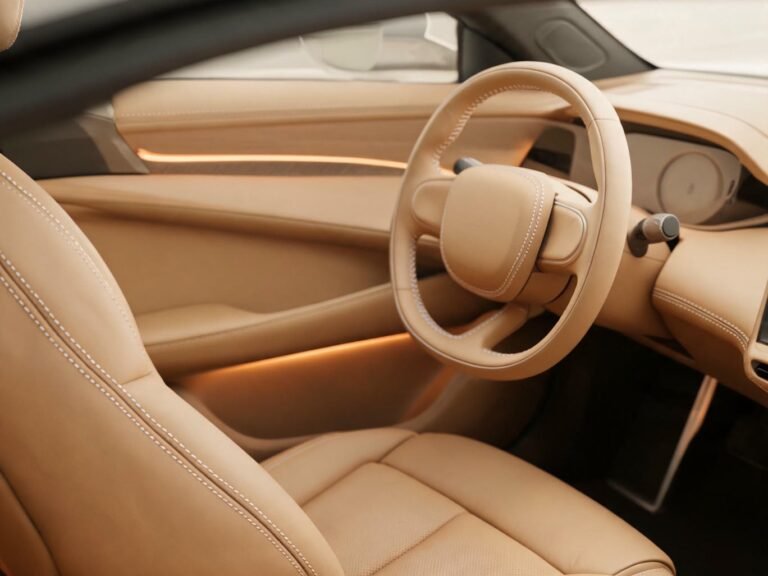
Modern EV interior — sealed cabin design means interior leather emissions accumulate at higher concentrations than in ICE vehicles
Battery thermal management adds another variable. Packs operating at 30-40°C radiate heat into the cabin floor, accelerating VOC release from seat bases and floor coverings. We’ve measured surface temperatures on EV seat platforms reaching 55°C during fast-charging sessions — hot enough to double the off-gassing rate of conventional PU leather. For a deeper look at how this plays out in practice, our EV car interior materials analysis covers the full thermal breakdown.
What OEMs Now Require From Electric Vehicle Interior Leather
Three testing protocols have emerged as the de facto standard for electric vehicle interior leather VOC compliance. If you’re sourcing materials for an EV program, these are the non-negotiables:
1. VDA 278 thermal desorption. Developed by the German Association of the Automotive Industry, this test measures VOC and fog values by heating material samples to 90°C and 120°C respectively. Most European OEMs now require VDA 278 VOC values below 100 micrograms per gram for interior trim — a threshold that conventional PVC and solvent-based PU struggle to meet consistently.
2. Interior air quality chamber testing (GB/T 27630 or equivalent). China’s GB/T 27630 standard sets limits on eight specific VOCs in vehicle cabins — including benzene, formaldehyde, and acetaldehyde. With China producing over 60% of global EVs, this standard has effectively become a worldwide requirement. Materials that pass European tests sometimes fail GB/T 27630 because the Chinese protocol tests at higher ambient temperatures.
3. Odor evaluation panels (VDA 270). Even when instrument testing passes, OEMs run human odor panels because chemical detectors can’t measure perceived unpleasantness. A material can meet all VOC thresholds and still fail the sniff test if it carries a solvent or sulfur note. Silicone-based materials consistently score 3 or below on the 6-point VDA 270 scale, while solvent-processed PU frequently scores 4-5.
Bottom line: If your interior leather supplier can’t provide VDA 278, GB/T 27630, and VDA 270 test reports, you’re carrying compliance risk into homologation. These aren’t optional — they’re gate-keeping tests for 2026 model year programs.
Silicone vs PU vs PVC: Which Passes 2026 Cabin Air Specs?
We tested three common interior leather materials against the protocols above. The results aren’t subtle. When you compare low VOC automotive leather alternatives, the chemical backbone of the material determines everything:
| Material | VDA 278 VOC (µg/g) | VDA 270 Odor | GB/T 27630 |
|---|---|---|---|
| PVC leather | 120-250 | 4-5 (noticeable) | Fails formaldehyde |
| Solvent PU leather | 60-120 | 3-4 (slight) | Marginal pass |
| Silicone leather | <30 | ≤3 (perceptible) | Passes all 8 VOCs |
Silicone leather’s advantage is structural, not additive. Because it’s produced through a solvent-free coating process with 100% silicone polymer, there are no residual solvents to off-gas. The material is chemically inert at cabin temperatures — which is the same reason it’s used in medical device applications where biocompatibility is non-negotiable.

Flame retardant testing — silicone leather self-extinguishes, meeting automotive horizontal burn standards without halogenated additives
Beyond VOCs — Weight, Durability, and Thermal Stability
VOC compliance gets the headlines, but EV programs have two other material priorities that matter just as much for interior leather selection.
Weight and range. Every kilogram saved in interior trim translates to incremental range improvement. Lightweight leather for electric vehicles isn’t a luxury — it’s a range strategy. Silicone leather at 0.7-0.9 mm thickness weighs approximately 650 g/m², compared to 800-1000 g/m² for comparable PVC formulations. Across a full seat set, door panels, and dashboard wrap, that’s 2-4 kg of weight reduction with no structural compromise. Learn more about silicone chemistry in our silicone leather introduction.
Thermal cycling resistance. EV cabins experience wider temperature swings than ICE vehicles — fast charging can raise cabin surface temperatures by 15°C in 20 minutes, while overnight cold-soak in winter drops them to -20°C. Materials that crack under thermal cycling create warranty claims. In our lab, silicone leather survived 500 cycles from -40°C to 120°C with zero visible cracking, while PU showed surface micro-fractures after 200 cycles.

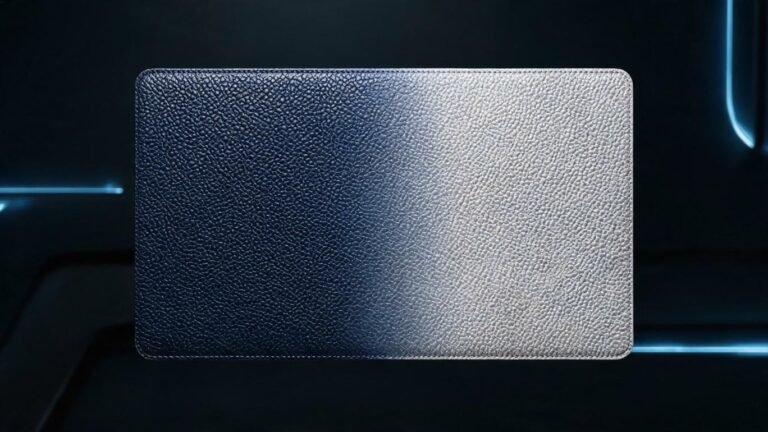
Solvent-free production process — no chemical residues to off-gas in the sealed EV cabin environment
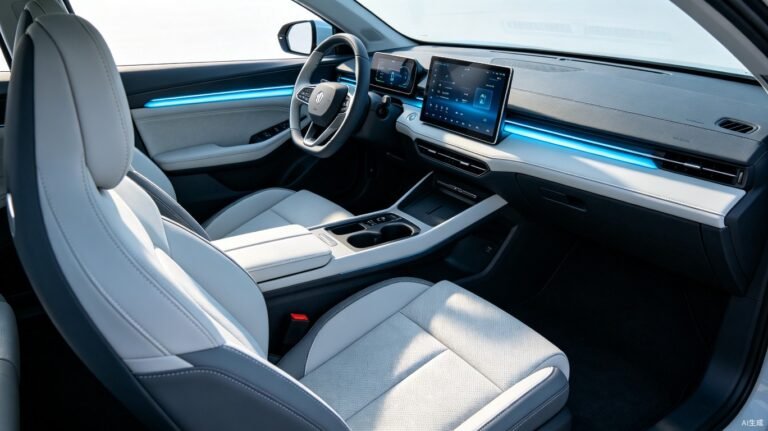
Silicone leather in automotive interiors — see why OEMs are switching from PU to silicone for EV cabin materials
Frequently Asked Questions
Do all EV manufacturers specify zero-VOC interior materials?
Not yet, but the trend is accelerating. Premium European brands (BMW, Mercedes, Volvo) already enforce VDA 278 thresholds across all programs. Chinese EV makers like NIO and BYD apply GB/T 27630 rigorously. The gap is narrowing fastest in the mid-market segment, where cost pressure previously kept PVC in the running. Our BYD case study shows how one OEM made the switch.
How does silicone leather compare to genuine leather for EV interiors?
Genuine leather passes most VOC tests after tanning, but it requires chemical treatments (chrome tanning, finishing coats) that introduce their own emission profile. Silicone leather matches the hand-feel and visual quality of premium leather while offering consistent, testable VOC performance — no batch variation, no seasonal tanning differences. It’s also 15-20% lighter, which matters for range optimization. For more on the automotive future of these materials, see our analysis of silicone leather’s automotive trajectory.
Making the Right Call for Your EV Program
The electric vehicle interior leather specification you choose today determines warranty exposure, customer satisfaction scores, and regulatory compliance for the next decade. PVC is exiting the EV supply chain. Solvent PU is on borrowed time. The materials that will define 2026-2030 EV cabins are the ones that pass all three VOC protocols on day one and keep passing them after 100,000 kilometers of thermal cycling.
Silicone leather clears every test we’ve discussed — VDA 278, GB/T 27630, VDA 270 — while delivering the weight savings and thermal stability that EV programs demand. The eco-friendly production process adds a sustainability narrative that aligns with EV brand positioning. For OEMs and Tier-1 suppliers evaluating next-generation cabin materials, the question isn’t whether to switch. It’s how quickly you can qualify a silicone leather supplier.
Talk to Our Automotive Engineers
About TOPSUN
TOPSUN engineers electric vehicle interior leather for OEM and Tier-1 suppliers who need zero-VOC cabin materials that survive 200,000 Martindale cycles across 10+ year vehicle lifecycles — with production capacity scaled for automotive-grade volumes.
Solvent-free silicone chemistry verified by VDA 278 and GB/T 27630 testing, ISO 10993 biocompatibility certification, and custom color/texture matching for seat, door panel, and dashboard applications.