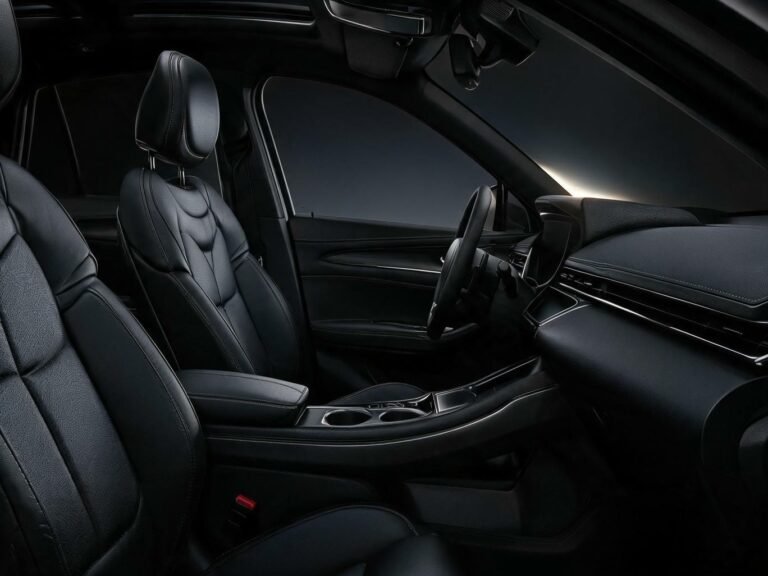
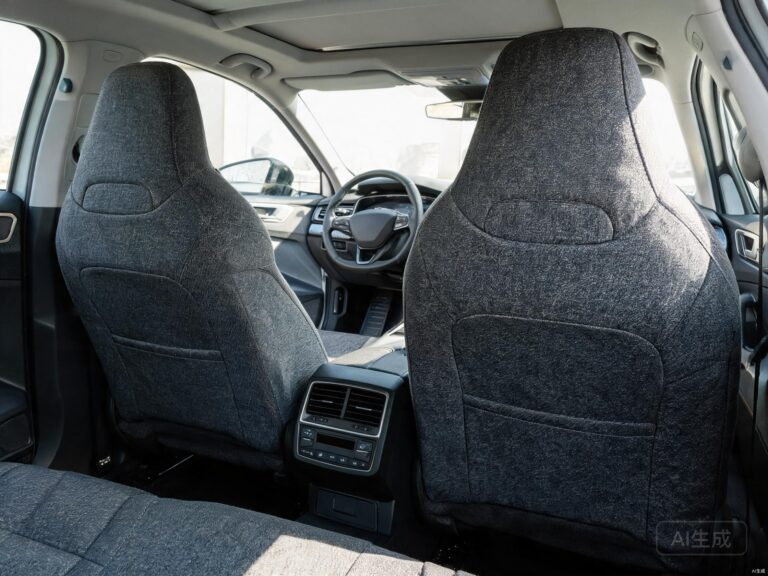
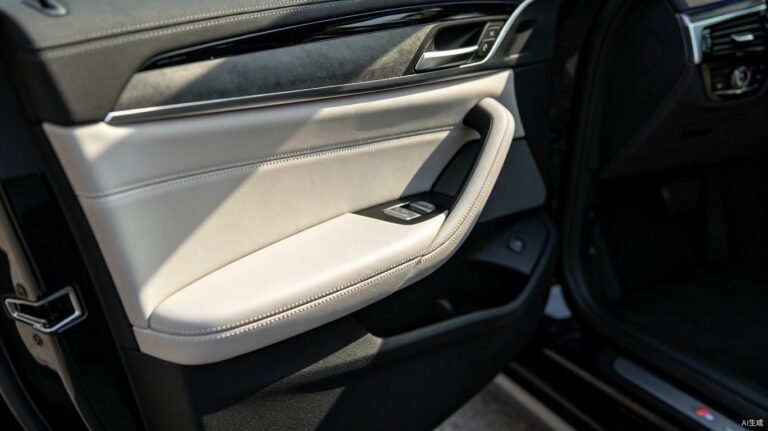
An interior materials engineer at a Tier 1 supplier receives a brief: reduce seat weight by 12%, pass VDA 270 odor testing at grade 3 or below, maintain 50,000 Martindale cycles, and hit a target cost of $4.80 per square meter. The car upholstery material they select will determine whether the vehicle program launches on time or stalls at validation. This is the reality of modern automotive interior sourcing — every material decision sits at the intersection of weight budgets, regulatory thresholds, durability mandates, and cost ceilings. Getting it right requires treating material selection as a systems engineering problem, not a catalog lookup.
Request Automotive Material Samples
The Weight-Performance-Cost Triangle in Car Upholstery
Every gram matters in modern vehicle engineering, and nowhere is the tension between weight, performance, and cost sharper than in interior trim. A typical mid-size sedan contains 8-12 square meters of upholstered surface across seats, door panels, headrests, and console wraps. Reducing material weight by 200 g/m² saves approximately 2 kg per vehicle — meaningful when OEMs target 50 kg total reductions to extend EV range by 3-5%. The car upholstery material weight specification has become a first-tier engineering parameter, not an afterthought.
The problem is that weight reduction and performance often move in opposite directions. Thinner coatings reduce weight but may fail abrasion thresholds. Lighter backing fabrics cut grams but can compromise tear strength at stitched seams. The car upholstery products standards that govern these trade-offs define minimum performance floors — but they don’t tell you which material chemistry gets you closest to the weight target without crossing those floors.

Tensile strength testing verifies that lightweight upholstery materials maintain structural integrity under the stresses of automotive seating applications.
Material Categories: From Woven Fabric to Silicone Coatings
The car upholstery material types comparison landscape has expanded well beyond the traditional fabric-versus-leather binary. Today’s automotive interiors use five primary material families, each occupying a distinct position on the weight-performance-cost triangle. Understanding these categories — and their specific strengths — is the foundation of any informed sourcing decision.
| Material Type | Weight (g/m²) | VOC Profile | Typical Vehicle Segment |
|---|---|---|---|
| Woven fabric (polyester) | 250–350 | Low | Entry-level, fleet |
| PVC leather | 500–700 | High (plasticizers) | Budget, commercial |
| PU leather | 400–600 | Moderate (DMF residue) | Mid-market, CUV |
| Genuine leather | 700–1,000 | Moderate (tanning agents) | Luxury, premium |
| Silicone leather | 450–650 | Near-zero | EV, premium, autonomous |
The data reveals why silicone leather has gained traction in EV programs specifically. At 450-650 g/m², it weighs 20-30% less than genuine leather while delivering a near-zero VOC profile — critical for sealed EV cabins where air recirculation concentrates emissions. For programs targeting silicone leather in EV applications, the weight-to-VOC ratio is the decisive metric.
VOC and Cabin Air Quality: The Silent Specification
Cabin air quality has moved from a comfort metric to a regulated specification. China’s GB/T 27630 standard limits formaldehyde to 0.10 mg/m³ and acetaldehyde to 0.05 mg/m³ inside vehicle cabins. The EU’s REACH regulation increasingly scrutinizes volatile organic compounds in interior trim. South Korea’s Air Quality Standards for New Cars mandate total VOC levels below 0.3 mg/m³. These thresholds put car upholstery material selection under direct regulatory pressure — the wrong material chemistry can fail entire vehicle certifications.
The VDA 270 standard — developed by the German Association of the Automotive Industry — grades interior material odor from 1 (imperceptible) to 6 (unbearable). Most European OEMs require grade 3 or below for all interior trim materials. PVC leather typically scores grade 4-5 due to plasticizer off-gassing. PU leather lands at grade 3-4 depending on residual DMF content. Silicone leather consistently achieves grade 2-3 because its curing process produces no volatile byproducts — the Si-O polymer backbone is inherently non-volatile at automotive cabin temperatures.
Engineering note: EV cabins seal more tightly than ICE vehicles because there’s no engine bay ventilation path. VOCs that would dissipate in a conventional vehicle accumulate in an EV. This makes material chemistry selection 2-3x more critical for electric programs — a specification gap that many first-time EV manufacturers discover during late-stage testing.

EV interiors demand materials with near-zero VOC profiles because tightly sealed cabins concentrate emissions from conventional synthetic leathers.
Durability Testing for Automotive-Grade Materials
Automotive interior materials face a more aggressive service environment than any other upholstery application. Temperature cycling from -40°C to 85°C, UV exposure through glazed windows, repeated flexing at seat bolsters, and chemical exposure from sunscreens, hand sanitizers, and food spills — all over a 10-15 year expected service life. The automotive grade leather standard defines the test protocols that validate material survival under these conditions.
- Thermal cycling (ISO 188): 200 cycles between -40°C and 85°C with no visible cracking or delamination. Silicone leather’s flexible Si-O backbone maintains elasticity across this range; PU stiffens below -20°C.
- UV weathering (SAE J2412): 1,248 kJ/m² total radiant exposure. Conventional PU shows visible fading and surface embrittlement; silicone-coated materials retain color and flexibility.
- Flex fatigue (Bally flex, ISO 7854): 100,000 cycles minimum for seating surfaces. Materials that crack at bolster edges fail this test within 30,000-50,000 cycles in real-world conditions.
- Chemical resistance (DIN 68861): Exposure to 12 reference chemicals including sunscreen, cola, and hand sanitizer. PU coatings dissolve on contact with alcohol-based sanitizers; silicone surfaces resist all 12.

Physical testing laboratories run automotive upholstery materials through thermal cycling, flex fatigue, and chemical resistance protocols before approving them for production.
In our testing program, we’ve observed a pattern: materials that pass individual tests in isolation can still fail in combined stress scenarios. A PU leather that survives 50,000 Martindale cycles at room temperature may delaminate after 20,000 cycles following UV preconditioning. Silicone leather’s inorganic polymer chemistry avoids this interaction effect because UV exposure doesn’t degrade the Si-O backbone the way it breaks C-C bonds in polyurethane.
See how breathable silicone leather performs in automotive seating applications, including thermal comfort and moisture management demonstrations.
Matching Car Upholstery Material to Vehicle Segment
Material selection isn’t universal — it’s segment-specific. What works for a $14,000 compact won’t serve a $80,000 luxury sedan, and vice versa. The automotive seat leather selection matrix should map directly to the vehicle’s price point, target market, and lifecycle expectations.
- Entry-level and fleet vehicles: Woven polyester fabric remains dominant. At $1.50-2.50/m², it delivers adequate durability for 5-7 year service cycles. The trade-off is limited cleanability and no premium perception.
- Mid-market CUVs and sedans: PU leather dominates this segment, offering leather-like aesthetics at $3-5/m². The risk is hydrolysis failure in humid markets — Southeast Asian and Gulf Coast vehicles show PU delamination within 3-4 years.
- Premium and luxury vehicles: Genuine leather retains its position, but silicone leather is gaining share as OEMs seek to combine luxury tactile quality with regulatory compliance and sustainability narratives.
- Electric and autonomous vehicles: Silicone leather is emerging as the preferred choice. Its near-zero VOC profile suits sealed EV cabins, and its inherent flame retardancy (LOI > 28) addresses autonomous vehicle safety requirements where occupants face away from traditional exit paths. Learn more about autonomous vehicle leather and VOC considerations.

Surface texture patterns like lychee grain influence both tactile comfort and visual perception of quality across different vehicle segments.
Sourcing Car Upholstery Material for EV Programs
Electric vehicle programs introduce sourcing constraints that conventional programs don’t face. The combination of weight sensitivity (every 10 kg removed extends range by approximately 0.5-1%), sealed-cabin VOC accumulation, and sustainability reporting requirements narrows the material field significantly. Here’s what procurement teams should verify when sourcing car upholstery material for EV applications:
- Request full VDA 270 test data with odor grade certification — not just a pass/fail declaration
- Verify material weight per square meter with tolerance bands (±30 g/m² is typical for silicone leather; ±80 g/m² for PU)
- Confirm thermal cycling test results across the full -40°C to 85°C range, not just room-temperature performance
- Ask for chemical resistance data specifically against ethanol-based hand sanitizers (60-70% concentration) — increasingly relevant post-2020
- Check whether the supplier can provide fabric upholstery in cars guidance for multi-material interior programs where leather and fabric coexist
The VDA standards catalog maintained by the German Association of the Automotive Industry provides the most comprehensive reference framework for automotive interior material testing. Procurement teams should cross-reference supplier test data against these standards rather than accepting proprietary or in-house testing protocols.

Seat cover material selection directly impacts occupant comfort, cabin air quality, and vehicle weight — three parameters that EV programs optimize simultaneously.
Frequently Asked Questions
What is the lightest car upholstery material that still passes automotive durability standards?
Woven polyester fabric at 250-350 g/m² is the lightest option that meets standard automotive durability requirements. However, for programs requiring leather-like aesthetics, silicone leather at 450-500 g/m² offers the best weight-to-performance ratio — roughly 30% lighter than genuine leather (700-1,000 g/m²) while exceeding automotive-grade abrasion, UV, and thermal cycling thresholds.
Why do EV manufacturers prefer silicone leather over PU for interior trim?
Three reasons converge. First, EV cabins seal more tightly than ICE cabins, concentrating VOC emissions — silicone leather’s near-zero VOC profile eliminates this risk. Second, weight savings of 150-250 g/m² versus genuine leather contribute meaningfully to range optimization. Third, silicone’s inherent UV stability and chemical resistance reduce warranty exposure over the 8-10 year ownership cycles typical of premium EVs, where replacement costs are significantly higher than for conventional vehicles.
Engineering the Interior Material Decision
Selecting car upholstery material is a multi-variable optimization problem where weight, VOC compliance, durability, segment expectations, and cost constraints all pull in different directions. The material that wins isn’t the one that excels in any single dimension — it’s the one that meets every threshold simultaneously without catastrophic trade-offs. Silicone leather’s position on this matrix — lightweight, near-zero VOC, automotive-grade durability, competitive cost at scale — explains its accelerating adoption in EV and premium vehicle programs. For procurement teams, the path forward is clear: specify testable parameters, demand accredited lab data, and evaluate materials against the full operating envelope, not just individual test results.
Discuss Your Vehicle Program Requirements
About TOPSUN
TOPSUN supplies automotive-grade silicone leather for EV, premium, and autonomous vehicle programs, with full VDA 270 odor certification and material specifications engineered to meet OEM weight, VOC, and durability targets across global vehicle platforms.
VDA 270 grade 2-3 odor certification · 450-650 g/m² weight range · SAE J2412 UV stability verified · GB/T 27630 VOC compliant · OEM/ODM custom development from 1,000m MOQ