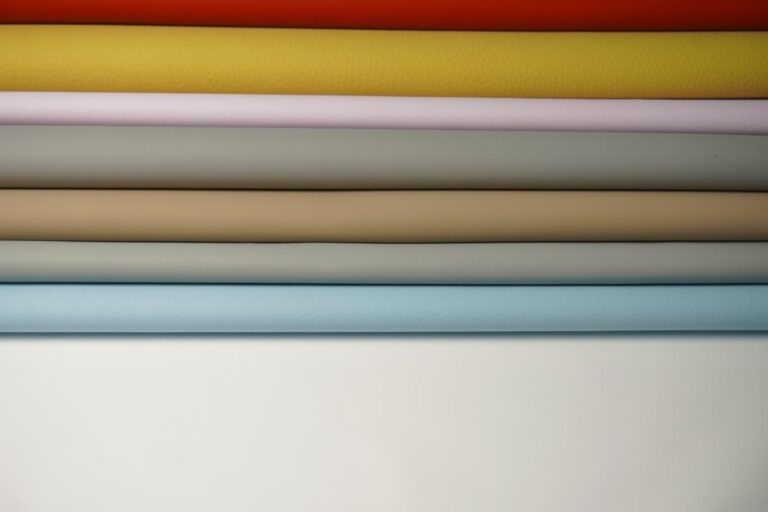
Buying leather pieces for upholstery starts with a number most buyers get wrong. A yard of 54-inch fabric covers 13.5 square feet on paper. The upholstery trade still plans 18 square feet of hide per yard, because a hide is not a rectangle. It has a neck, legs, and a stretchy belly. Only 40 to 45 of its 50 to 55 total square feet are usable.
Plan with the paper number and the job comes up short. This guide runs the yield math for the most common furniture projects. Then it matches piece size, grade, and batch to the work.
The Numbers First: What Each Project Actually Consumes
Convert fabric yardage to hide area, add cutting waste, then divide by usable square feet per hide. Round up every time.
| Project | Fabric yardage (54″) | Hide area at 18 sq ft/yard | Hides to order (40 usable sq ft) |
|---|---|---|---|
| Pair of dining chairs | 4 yd | 72 sq ft | 2 |
| Single accent chair | 2.5 yd | 45 sq ft | 2 (check layout) |
| Restaurant booth run | 6 yd | 108 sq ft | 3 |
| 3-cushion sofa | 120 sq ft base + 20% waste | 144 sq ft | 4 |
Why 18 Square Feet Per Yard Is the Only Safe Planning Number
Fabric comes off a roll at a fixed width, so its area is honest. Hide waste averages 15 to 25% once you cut around irregular edges, brands, and blemishes. The quality inside one hide is not uniform either.
The center back, called the bend, is tight and consistent. It belongs on visible panels. The belly is looser and stretchier, so it belongs under the frame. That is why a 50 to 55 square foot hide delivers only about 40 usable ones. The extra planning area is not padding. It is the real shape of the animal.

Every piece was cut from a hide, so every quote should state where in the hide your panels come from.
Match the Piece Size to the Job
Small jobs do not need full hides. Retailers sell remnants and half hides by the square foot. A small repair rarely justifies a whole skin. The trap is scaling up with scraps.
On a full reupholstery job, visible seams must run between pieces from the same hide. Otherwise the grain and temper will not match across the joint. Dye lots also shift between production runs. Order everything at once and keep the offcuts. Leftover leather from the original order is the best repair stock you will ever have.

For production and contract work, pieces cut from one roll beat remnants stitched together from five.
Grade Still Decides Whether a Cheap Piece Is Cheap
A low price per square foot means nothing if the piece fails in a year. Check the same specs on a remnant that you would demand on a full hide. The list is short: abrasion rating, coating type, and cleaning tolerance. For seating that gets wiped down daily, check the cleaning and maintenance guide before you buy. Some coatings fail on alcohol wipes.
One warning on repairs: matching new material to a sun-faded sofa is nearly impossible. Plan to re-cover the whole panel instead. A fresh piece will read brighter from across the room. That rule holds for furniture and sofa applications and for a single recovered seat alike.

A full sofa re-cover consumes 144 square feet with waste, so piece-by-piece buying only pays on small jobs.
A Decision Tree for Your Next Pieces Order
| If your job is… | Buy this | And expect… |
|---|---|---|
| Patch under 2 sq ft | Remnant from the same batch | Close match on unworn areas only |
| Single seat or panel | Half hide or cut piece, bend area | One dye lot, one temper |
| Full sofa or booth run | Full hides from one dye lot | Same-hide pieces at every visible joint |
| Repair on a faded sofa | Full panel replacement instead | No patch will match the faded original |
Buy the piece size the job dictates. Demand the grade a full hide would carry, starting with what silicone leather is. Then the yield math works in your favor.
FAQ
How many square feet of leather do I need to reupholster a 3-cushion sofa?
Start from roughly 120 square feet of pattern area. Add 20% cutting waste for about 144 square feet. Then divide by 40 usable square feet per hide. That gives 3.6. Order 4 full hides from a single dye lot, and keep the offcuts for future repairs.
Can I mix leather pieces from different batches on one sofa?
Avoid it on visible surfaces. Dye lots shift between production runs, and grain temper differs across hides. Keep pieces from the same hide adjacent at every visible seam. Put mixed-batch pieces only where the frame or cushions hide them.
References
1. https://carolynfabrics.com/blogs/news/how-much-… — Upholstery trade rule of 18 sq ft of hide per yard of 54-inch fabric; dye lot consistency and repair stock guidance (2026)
2. https://stitchdesk.com/leather-upholstery-yarda… — Hide waste 15-25%; usable area 40-45 of 50-55 sq ft; bend vs belly zones; 3-cushion sofa 120 sq ft base plus 20% waste (2026)