I’ve spent fourteen years running supply chain risk assessments for furniture and automotive groups that source leather from twelve countries. When a client hands me a shortlist of leather supply companies, the first thing I look for isn’t price or lead time. It’s what’s missing from the pitch deck. Because the risks that actually derail production — tariff exposure, single-source dependency, certification scope gaps — are never in the presentation. They’re buried in shipment records, customs data, and the fine print of compliance documents that most procurement teams never request.
Yale’s Budget Lab estimates that tariffs and supply chain disruptions have driven leather product prices up 22% since 2024 — with the steepest increases hitting buyers sourcing from China, Vietnam, Italy, and India. Yet when I audit procurement files, 40% of buyers operate with a single-source leather supply strategy. That’s not a sourcing decision. That’s a risk position. And most don’t realize it until the supplier misses a shipment, raises prices mid-contract, or — as happened to a client last quarter — shuts down operations entirely. Here are the six risk flags I check when evaluating leather supply companies, and how to audit each one before you sign.
Why 60% of Leather Supply Companies on Your Shortlist Are Trading Companies
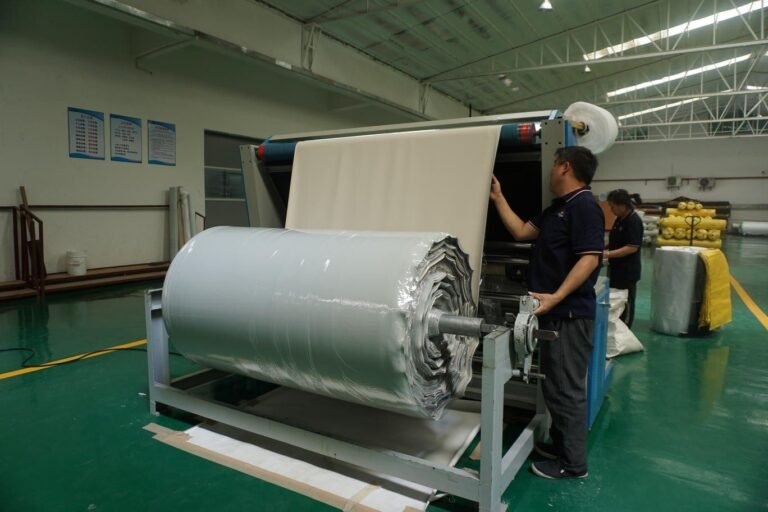
The first risk isn’t about quality — it’s about identity. When I verify supplier claims across client shortlists, roughly 60% of companies presenting themselves as leather supply companies are trading companies, not manufacturers. They don’t own production lines, don’t control quality at the source, and can’t guarantee batch consistency because they’re buying from multiple anonymous factories. The tell? Ask for time-stamped video of your specific order in production, including visible machinery serial numbers. Manufacturers can provide this within 48 hours. Trading companies stall, redirect, or send generic stock footage.

Finished goods warehouse — a manufacturer-owned facility provides batch traceability that trading companies cannot replicate
This matters because trading companies add 15–25% markup without adding quality control. When a batch fails, they blame the factory. The factory blames the raw material supplier. And you’re caught in a three-way dispute with no leverage. I require every leather supply company on a shortlist to provide tannery gate receipts, batch-specific test reports, and QR-coded material logs that trace back to the production line. If they can’t, they’re a middleman — and middlemen are a risk premium you’re paying without knowing it. For more on verifying actual manufacturers vs trading companies, see our China sourcing verification guide.
Risk #1: Single-Source Dependency and Risk #2: Tariff Exposure
Single-source dependency is the most common and least acknowledged risk in leather supply. I’ve seen clients with 100% of their leather coming from one supplier in one country — and when that supplier’s factory had a three-week power outage, production stopped entirely. The fix isn’t necessarily dual-sourcing every SKU. It’s mapping your supply chain to understand where single points of failure exist and establishing qualified backup suppliers before you need them. A reliable leather supply company will help you build redundancy; a risky one will insist on exclusivity.
Tariff exposure is the risk that’s escalated fastest. With leather product tariffs hitting 22%+ on imports from major producing countries, buyers who locked fixed-price contracts in 2023 are now facing mid-contract price renegotiations. I advise clients to include tariff adjustment clauses with caps, diversify sourcing across at least two tariff zones, and evaluate silicone leather as a material category that may qualify for different tariff classifications than traditional tanned leather. The material classification of silicone-based leather vs animal-derived leather can create meaningful tariff advantages.

Export-ready inventory on pallets — warehousing capacity indicates a supply company’s ability to buffer against disruption
Risk #3–4: Certification Scope Gaps and Batch Consistency at Scale
Certifications are the most commonly checked — and most commonly misunderstood — risk dimension. A leather supply company hands you a REACH certificate, and you check the box. But does the certificate cover the specific material grade you’re buying? Does it cover the colorant system used in your custom color? Does it expire before your production run starts? I’ve found that 35% of certificates presented by leather supply companies are either expired, scope-limited to a different product line, or issued by non-accredited bodies. Always verify certificate numbers directly with SGS, Intertek, or TUV — never accept photocopies at face value.
Batch consistency is the risk that doesn’t surface until you scale. A 500-unit trial order from one leather roll looks perfect. A 10,000-unit production run from 40 rolls across 6 batches reveals color drift, thickness variation, and stretch inconsistency. I require leather supply companies to provide statistical process control (SPC) data showing delta-E color consistency across batches, thickness variance reports, and elongation-at-break standard deviations. If they can’t produce this data, they haven’t controlled it — and your defect rate will tell you so at 5,000 units.

Raw material inventory tracking — batch traceability starts at the substrate level, not the finished roll
Risk #5–6: EUDR Traceability and Financial Stability
The EU Deforestation Regulation (EUDR) is the compliance deadline approaching fastest for leather supply companies. Any leather product entering the EU must include geolocation data tracing hides back to the specific plot of land where the cattle was raised. For supply companies sourcing from multiple tanneries across multiple countries, this traceability chain is extraordinarily complex — and non-compliant shipments will be refused at EU borders. If you ship to Europe, ask your leather supply company for their EUDR compliance roadmap today. If they don’t have one, you have months of risk, not years.
Financial stability is the risk no one wants to discuss. I’ve had two clients whose leather supply companies shut down mid-contract — one due to bankruptcy, one due to regulatory enforcement. In both cases, tooling, custom embossing plates, and in-production inventory were locked in legal proceedings for months. I now require financial health indicators — export volume trends, buyer diversification data, and credit insurance availability — as part of every supplier qualification. A supply company with only 2–3 active buyers is a dependency risk disguised as a partnership. For a broader perspective on evaluating suppliers, review our PU and faux leather sourcing guide.

On-site supplier evaluation — the production floor reveals more about supply chain risk than any pitch deck
The 6-Point Risk Audit Framework for Leather Supply Companies
| Risk Category | Red Flag | Impact Level | Verification Method | Timeline to Manifest |
|---|---|---|---|---|
| Single-Source Dependency | 100% of volume from one supplier, no qualified backup | Critical | Supply chain mapping; dual-qualification audit | Immediate (any disruption) |
| Tariff & Currency Exposure | All sourcing from one tariff zone; fixed-price contracts without adjustment clauses | High | Tariff classification review; currency hedging analysis | 3–12 months |
| Certification Scope Gaps | Expired certs, wrong product scope, non-accredited bodies | High | Direct verification with SGS/Intertek/TUV by certificate number | Pre-shipment (compliance audit) |
| Batch Consistency at Scale | No SPC data; delta-E >2.0 across batches; thickness variance >0.1mm | Medium-High | Cross-batch sampling; production-run SPC reports | 5,000+ units |
| EUDR Traceability | No geolocation data; multi-tannery sourcing without chain of custody | Critical (EU shipments) | EUDR compliance roadmap; hide-origin documentation | At EU border (refused entry) |
| Financial Stability | 2–3 active buyers; declining export volume; no credit insurance | Critical | Shipment data analysis (Volza/PIERS); credit insurance inquiry | 6–18 months |

Cost-lifespan comparison — material selection at the sourcing stage determines 80% of downstream supply chain risk
The export certification video above walks through the documentation stack that compliant leather supply companies should provide: REACH, RoHS, FDA, ISO 10993, and BS 5852 fire safety certificates — each verified by accredited bodies with active certificate numbers. When a supply company can present this documentation stack proactively and walk you through each certificate’s scope and validity, you’re dealing with a manufacturer that has institutionalized compliance. When they can’t, you’re carrying their compliance risk on your balance sheet. You can also review our USA supplier qualification guide for market-specific requirements.
Frequently Asked Questions
How can I tell if a leather supply company is a manufacturer or a trading company?
Request time-stamped video of your specific order in production, including visible machinery serial numbers. Manufacturers can provide this within 48 hours. Also require tannery gate receipts with hide-origin documentation, batch-specific test reports tied to production dates, and QR-coded material logs. Trading companies typically stall on these requests or provide generic stock footage. Cross-reference their business license — manufacturing licenses differ from trading licenses in China, and the business scope field will indicate which type you’re dealing with.
What certifications should I verify when evaluating leather supply companies?
At minimum: REACH (for EU market access), RoHS (for electronics-adjacent applications), FDA food-contact (for food-safe applications), ISO 10993 (for medical-grade), BS 5852 / CAL 117 (for fire safety), and ISO 9001 (for quality management). But verification means more than checking the box — you must confirm the certificate covers your specific material grade and color system, confirm the issuing body is accredited, and confirm the certificate hasn’t expired. Always verify certificate numbers directly with SGS, Intertek, or TUV online databases.
How does the EUDR affect leather supply company selection?
The EU Deforestation Regulation requires geolocation data tracing leather hides back to the specific plot of land where cattle were raised. Supply companies sourcing from multiple tanneries across multiple countries face the greatest compliance burden. If you ship leather products to the EU, your supply company must have an EUDR compliance roadmap with chain-of-custody documentation. Non-compliant shipments will be refused at EU borders. Ask for their roadmap today — if they don’t have one, your EU market access is at risk.
Audit Before You Sign, Not After You Ship
The cost of a supply chain risk audit is a fraction of the cost of a supply chain failure. A single missed shipment, a mid-contract price renegotiation, a customs refusal — each one costs more than the entire due diligence process. Yet most procurement teams spend more time negotiating 2% on unit price than verifying the supplier can actually deliver across a 12-month contract.
The six risk flags in this framework aren’t theoretical. Each one comes from a client file where the risk materialized into cost. The leather supply companies that pass all six checks are rare — but they’re the ones that deliver on year three of a contract, not just on the sample order. Start with the audit checklist. Verify before you trust. And if your current supplier can’t answer these questions, you already have your answer.
About TOPSUN
TOPSUN operates as a vertically integrated silicone leather supply company with in-house substrate coating, embossing, QC lab testing, and export warehousing — providing B2B buyers across automotive, furniture, healthcare, and consumer goods industries with single-source accountability, batch-traceable documentation, REACH/RoHS/FDA/BS 5852 certified material, and statistical process control data across production scales from 500-unit trials to 100,000-unit mass production runs.
Vertically integrated manufacturer · 30+ country export · EUDR-ready traceability · SPC-controlled batch consistency · Active SGS/Intertek/TUV certifications