For decades, the leather mart was where designers and procurement teams went to feel leather — running thumbs across swatches, comparing grain patterns under showroom lighting, and building relationships with tannery reps face to face. That experience is disappearing. Physical leather markets from Baiyun Leather City to Northampton showrooms are consolidating or closing, and B2B buyers now navigate a digital-first sourcing landscape. The global leather goods market, valued at $478.8 billion in 2025, is projected to reach $916.3 billion by 2035 — but the way buyers access that market has fundamentally changed.
The Leather Mart Experience: What Made Physical Showrooms Valuable
Walking into a physical leather mart gave buyers three things that digital catalogs can’t easily replicate: tactile comparison across dozens of materials in minutes, instant visual feedback on how colors read under different lighting conditions, and serendipitous discovery — finding an unexpected texture or finish that sparks a new design direction.

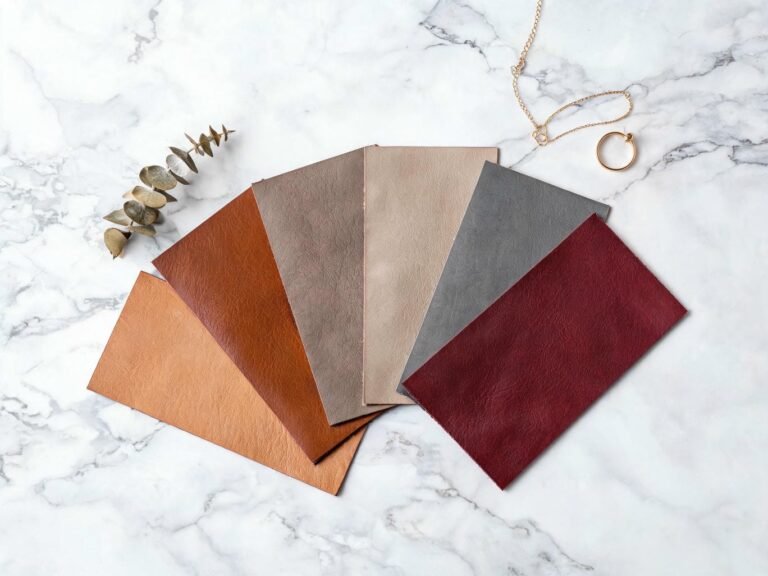
Physical sample hangers: the tactile reference point that digital sourcing struggles to replace
In our experience working with furniture specifiers, the leather mart visit often condensed three weeks of back-and-forth sampling into a single afternoon. Designers could evaluate 30–40 materials, narrow to 5–6 finalists, and leave with physical swatches — all before the week ended. That speed advantage is hard to give up.
3 Digital Shifts Reshaping How B2B Buyers Source Leather
The shift from physical to digital isn’t just about moving catalogs online. Three structural changes are redefining how B2B leather sourcing works:
- Virtual sampling platforms now ship physical swatch books within 72 hours, letting designers evaluate materials without travel — see how our virtual leather sampling process works
- Digital color-matching tools use Pantone-precision algorithms to match custom colors remotely, replacing the in-person color-confirmation meeting that traditionally added 2–3 weeks to project timelines
- Direct factory access through video factory tours and live QC feeds replaces the handshake relationship — buyers verify production capacity and quality controls without booking a flight to the factory

Direct factory access: digital tools now let buyers verify production capacity in real time
According to Research and Markets, the leather industry is increasingly shaped by traceability expectations and performance-led specialization — trends that favor digital platforms with verifiable compliance documentation over physical showrooms relying on verbal assurances.
What You Lose When The Leather Mart Goes Online
The trade-offs aren’t trivial. When buyers move entirely online, three things get harder:
| Evaluation Factor | Physical Leather Mart | Digital Sourcing Platform |
|---|---|---|
| Sensory Evaluation | Instant tactile feedback | Delayed (72hr swatch delivery) |
| Sample Turnaround | Same-day | 3–7 days (but no travel needed) |
| Price Transparency | Negotiated face-to-face | Structured tiered pricing |
| Batch Consistency | Visually compared on-site | Verified via test reports + samples |
The biggest risk isn’t speed — it’s specification drift. When designers can’t feel material before ordering, they’re more likely to specify based on photos that don’t capture texture, weight, or drape accurately. We’ve seen furniture programs lose 4–6 weeks when the delivered material didn’t match the digital expectation. For a detailed silicone leather introduction, understanding how engineered materials eliminate batch variability is the key to preventing these mismatches.

Digital color matching: Pantone-precision tools bridge the gap between screen and physical material
How Virtual Sampling Bridges the Tactile Gap
The solution isn’t to abandon digital sourcing — it’s to use platforms that combine digital efficiency with physical verification. The best virtual sampling programs work in two stages:
Stage 1 — Digital narrowing: Use online catalogs, video demonstrations, and test data reports to narrow from 50+ materials to 5–8 candidates. This replaces the first hour of a leather mart visit — browsing racks to eliminate obvious mismatches. Our applications overview lets buyers filter by use case, performance requirement, and certification standard.
Stage 2 — Physical confirmation: Request a curated swatch book of your 5–8 finalists. This replaces the last 30 minutes of the mart visit — the tactile evaluation that leads to final selection. The difference? You’re not limited to what a single showroom stocks. You can compare materials from multiple manufacturers in one set of samples.
How TOPSUN’s sample delivery service replaces the physical leather mart visit — 72-hour swatch books shipped worldwide
For buyers navigating the shift from factory-direct supplier relationships to digital platforms, the key is finding a supplier who treats physical sampling as a core service, not an afterthought.
Our cleaning and maintenance resources also help buyers evaluate long-term care requirements before committing.
Frequently Asked Questions
Can virtual leather sampling really replace visiting a physical leather mart?
For initial screening and narrowing, yes — digital catalogs with video demonstrations and test data replace 60–70% of what a physical visit accomplishes. For final selection, you still need physical samples. The difference is that virtual platforms ship curated swatch books within 72 hours, so you’re not limited to what one showroom stocks. You can compare materials from multiple manufacturers in a single set of samples.
What should I look for in a digital leather sourcing platform?
Three essentials: (1) physical sample delivery within 5 business days, (2) test data available for every material listed (Martindale, UV, color fastness), and (3) custom color matching capabilities with Pantone precision. If a platform can’t deliver all three, you’ll end up visiting a physical leather mart anyway — just after wasting two weeks on digital dead ends.
The Hybrid Future of Leather Sourcing
The leather mart isn’t dead — it’s evolving. Physical showrooms still matter for final-touch evaluation and relationship building. But the days of spending three days traveling to browse racks are ending. The buyers who win in 2026 and beyond will be the ones who use digital tools to narrow efficiently and physical sampling to confirm decisively. The leather mart of the future is a hybrid: digital breadth, physical depth.
About TOPSUN
TOPSUN operates a digital-first leather sourcing platform that replaces traditional leather mart visits with virtual sampling, color-matching tools, and direct factory access for B2B buyers worldwide.
Our platform ships physical swatch books within 72 hours, offers custom color matching with Pantone-precision accuracy, and provides full compliance documentation — letting designers evaluate materials without leaving their studio.