When furniture manufacturers calculate the true cost of a leather material for sofa production, the price per meter is only the down payment. Replacement cycles, warranty claims, and customer complaints eat the rest. We’ve tracked four common sofa leather materials over a five-year horizon — genuine leather, PU, PVC, and silicone — and the total cost of ownership tells a very different story from the initial quote. If you’re sourcing sofa leather in bulk, the material that costs the least upfront is rarely the one that costs the least over five years.
What Makes a Good Leather Material for Sofa Upholstery?
A sofa sits at the intersection of daily wear, spill exposure, and visual centerpiece. The leather material for sofa must handle all three — and do it for years, not months. Three performance factors separate materials that look good on the showroom floor from those that survive a family room:
- Abrasion resistance: Sofas experience 50,000+ rub cycles per year of normal use. A material that fails Martindale at 20,000 cycles won’t see Year 2.
- Cleanability: Coffee, ink, body oils, and pet stains are inevitable. The surface must release stains without chemical strippers that damage the coating.
- Color stability: UV from windows causes fading and yellowing. A material that looks great on Day 1 but turns patchy by Year 2 undermines the entire piece.
The best leather type for sofa furniture isn’t necessarily the most expensive one — it’s the one whose coating chemistry matches your warranty period. For more on application-specific material selection, see our furniture and sofa leather applications page.

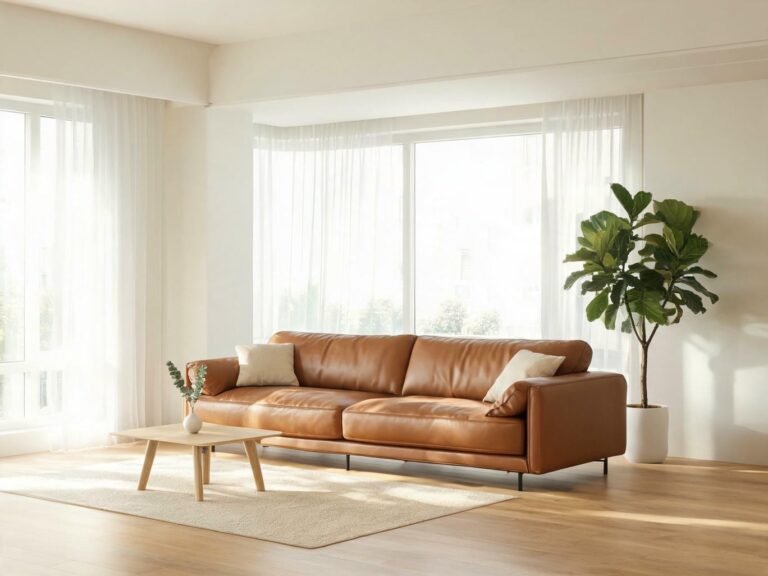
Sofa upholstered in synthetic leather — appearance on delivery is only the first chapter of the cost story
4 Sofa Leather Materials Compared: Cost vs Lifespan
We analyzed four common sofa leather materials using a 5-year total cost of ownership model. The leather vs fabric sofa material comparison reveals that initial cost per meter is misleading — what matters is cost per year of serviceable life.

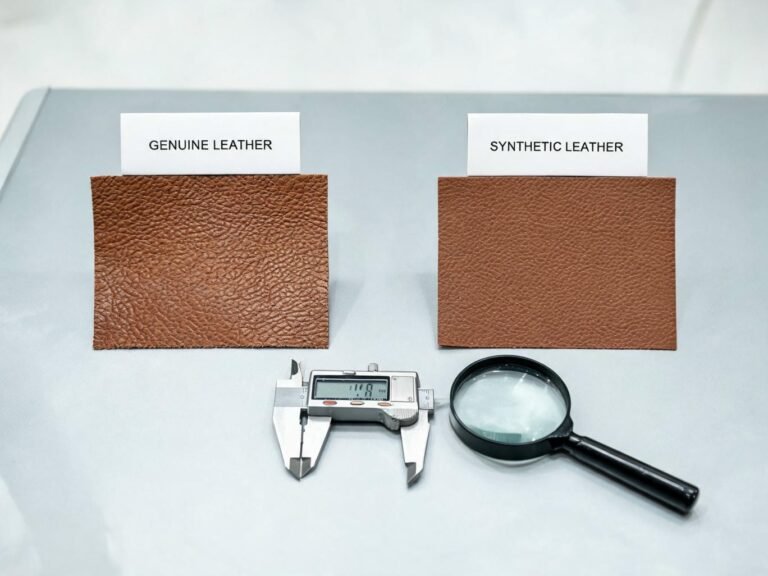
Warm-tone sofa leather swatches in lychee grain — color and texture options for B2B furniture procurement
| Material | Initial Cost/m | Lifespan | Cost/Year | Best For |
|---|---|---|---|---|
| Genuine Leather | $18–35 | 10–15 yrs | $2.00–3.50 | Premium residential |
| PU Leather | $3–8 | 3–5 yrs | $1.00–2.67 | Mid-range commercial |
| PVC Leather | $1.50–4 | 4–6 yrs | $0.38–1.00 | Budget hospitality |
| Silicone Leather | $8–15 | 10+ yrs | $0.80–1.50 | Long-life commercial |
The numbers expose a procurement trap. PU leather looks cheap at $3–8 per meter, but when you replace it every 3–5 years, the cost-per-year edges past genuine leather. PVC is even cheaper upfront, but its 4–6 year lifespan comes with severe tactile degradation — the surface hardens, loses flexibility, and starts cracking at stress points.
Silicone leather’s higher upfront cost ($8–15/meter) is offset by a 10+ year lifespan with minimal maintenance. The cost-per-year lands between PVC and PU, but the material stays serviceable — no cracking, no peeling, no color shift. For hospitality and commercial furniture where replacement means downtime and lost revenue, this calculation is decisive. One of our hospitality clients ran a 200-room hotel with PU leather lobby seating; after 3.5 years, 40% of cushions needed reupholstering due to cracking. They switched to silicone leather for the replacement, and at the 5-year mark, zero cushions have needed replacement.
See why silicone leather outperforms PU and PVC in comprehensive sofa feature testing
Why PU Sofas Fail at Year 3–5
PU leather is the most common sofa material in the mid-range market, and it’s also the material that generates the most warranty claims. The synthetic leather material for sofa cost looks attractive on the PO, but the failure mechanism is chemistry, not quality control.
PU coatings contain ester bonds in the polymer backbone. In normal indoor humidity (40–60% RH), these bonds slowly hydrolyze. The coating loses flexibility, develops micro-cracks at stress points — seat edges, armrest corners, backrest hinges — and eventually peels from the substrate. The timeline is consistent across suppliers:
- Year 1: Looks new, no issues
- Year 2: Minor surface hardening, still functional
- Year 3: First cracks at stress points, visible wear on seat bolsters
- Year 4–5: Extensive cracking, peeling, coating delamination

Softness and flexibility test — materials that stay supple after years of use resist cracking at stress points
Even premium PU formulations with anti-hydrolysis additives extend the timeline by 1–2 years, not decades. If your warranty period exceeds 3 years, PU is a liability. For proper care protocols that extend sofa leather life, see our cleaning and maintenance guide.

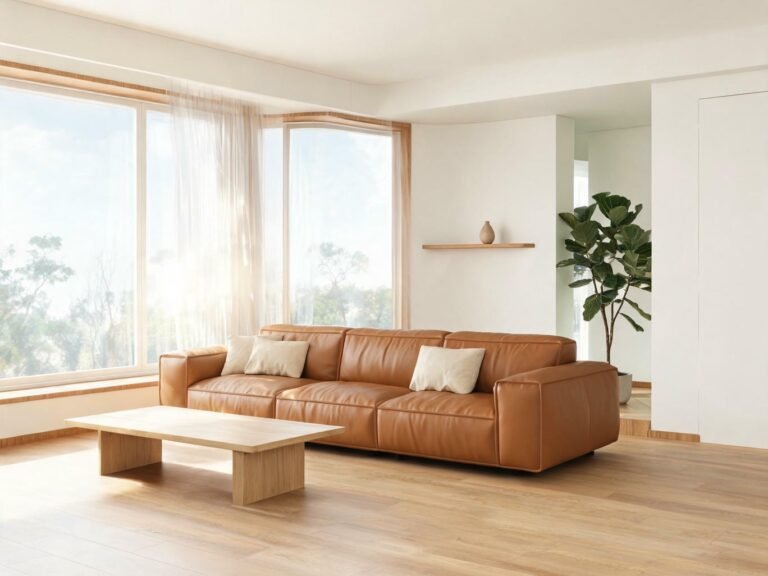
Commercial sofa application where replacement downtime directly impacts revenue — material longevity is a financial decision
How to Source Leather Material for Sofa in Bulk
Sourcing leather material for sofa production at B2B scale requires a different evaluation process than buying a single sofa. The sofa material and fabric selection process should include these non-negotiable data requests:
- 5-year accelerated aging test report (hydrolysis per ASTM D3980-02). If the supplier hasn’t tested, they’re guessing.
- Martindale abrasion data at 1,000g load. The 12,000g “heavy duty” test is not comparable — demand the upholstery-standard protocol.
- Flame retardancy compliance for your market: BS 5852 (UK), CA TB 117-2013 (US), or EN 1021 (EU). The AHFA joint industries standards for upholstery leather provide a useful reference framework.
- Color fastness data for rubbing (ISO 105-X12), perspiration (ISO 11641), and light (ISO 105-B06).
- REACH SVHC compliance and VOC emission data — especially for enclosed furniture in residential markets.

Waterproof test on brown sofa leather — spill resistance is critical for furniture in residential and hospitality settings
For leather material for sofa B2B wholesale sourcing, the supplier’s willingness to produce these documents is itself a quality signal. Factories that test thoroughly and share results openly are the ones whose materials survive in the field. Our leather for sofa upholstery sourcing guide covers the audit checklist in more detail.
The 5-Year Test That Reshuffles Your Shortlist
The cheapest leather material for sofa isn’t the one with the lowest price per meter. It’s the one with the lowest cost per year of actual service. Genuine leather wins on longevity but loses on price. PU wins on price but fails on longevity. Silicone leather is the only material that stays competitive on both axes — affordable enough for commercial scale, durable enough for 10+ year warranties. When you run the 5-year TCO, the ranking changes. When you run the 10-year TCO, it changes again — and silicone moves to the top.
Get a Custom Sofa Leather Quote
About TOPSUN
TOPSUN supplies leather material for sofa manufacturing across residential, hospitality, and commercial furniture segments.
BS 5852 crib 5 flame retardancy, Martindale 150K+ cycle verification, and REACH SVHC 181 compliance — with custom color matching and substrate engineering for sofa production lines.