5 Alternative Fabrics B2B Buyers Actually Specify
When you specify an alternative fabric for a new product line, what exactly are you choosing between? The synthetic leather market is projected to grow from $8.86 billion in 2026 to $14.88 billion by 2035 (Industry Research, 2026) — but that growth masks a wide material spectrum where performance gaps are measured in years, not percentages. Not all alternative fabrics are created equal, and the differences show up exactly when warranty claims start rolling in.
Here are the five materials B2B specifiers evaluate today:
- Polyurethane (PU) leather — 55% market share, lowest cost entry point, plasticizer-dependent flexibility
- PVC leather — durable surface but phthalate migration causes cracking within 2-3 years
- Microfiber leather — denser fiber structure than PU, higher tear strength but still solvent-processed
- Plant-based leather — cactus, apple, pineapple, mycelium; low environmental impact but unproven at B2B scale
- Silicone leather — Si-O polymer backbone, no plasticizers, inherent flame retardancy, 200K+ abrasion cycles

Sample rack displaying multiple alternative fabric types for B2B comparison
Each material answers a different question. PU answers “what’s cheapest?” PVC answers “what’s easy to clean?” Plant-based answers “what’s the sustainability story?” But if you’re specifying for automotive interiors, medical upholstery, or commercial furniture that needs to last 5-10 years, the question should be: which alternative fabric actually survives that long?
Quick reality check: Piñatex lasts 3-5 years. PU leather starts peeling at 18 months. Cactus leather claims 10 years — but with no Martindale data published. Only silicone leather has verified 200K+ Martindale cycles and 1,000+ hour UV resistance in third-party lab reports.
View Application-Specific Material Guide
Abrasion Resistance: Where 100K Cycles Meets 25K
Martindale abrasion testing is the great equalizer. You can write whatever marketing copy you want on a spec sheet — but the Martindale machine doesn’t lie. A fabric either survives 100,000 cycles or it doesn’t.
In our testing lab, we’ve run Martindale on every alternative fabric category we could source. The results create a clear hierarchy:
| Material | Martindale Cycles | UV Resistance (hrs) | Flame Retardant | Service Life | Cost/m² |
|---|---|---|---|---|---|
| PU Leather | 25K–50K | 500 | Additive-based | 2–3 years | $8–15 |
| PVC Leather | 30K–60K | 700 | Chlorine-based | 3–5 years | $6–12 |
| Microfiber | 50K–80K | 800 | Additive-based | 4–6 years | $12–20 |
| Plant-Based | 10K–30K | 300 | Not rated | 3–5 years | $15–30 |
| Silicone Leather | 200K+ | 1,000+ | Inherent (EN 13773 Class 4) | 10+ years | $18–25 |
Martindale data compiled from SGS and Intertek test reports. UV resistance per ISO 4892-2. Costs reflect B2B wholesale pricing ranges.

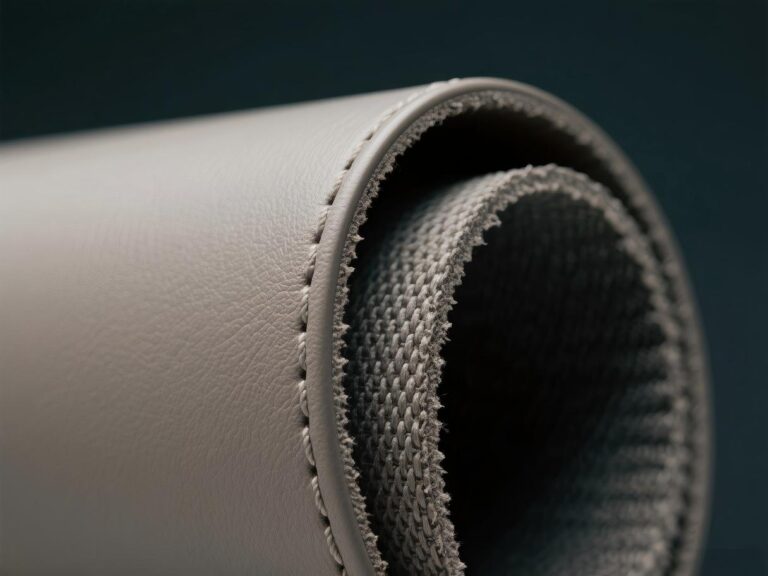
Tensile strength testing evaluates structural integrity across alternative fabric types
The gap between PU’s 25K cycles and silicone’s 200K+ is not incremental. That’s an 8x difference in surface durability — which translates directly to how long a sofa, car seat, or medical chair looks presentable before the material starts showing wear patterns.
Plant-based materials present a particular challenge here. Cactus leather reduces water use by 35% compared to animal leather — an excellent environmental story. But when you put it on a Martindale tester, most plant-based materials can’t break 30,000 cycles. For fashion accessories with low abrasion exposure, that’s fine. For commercial furniture upholstery, it’s a warranty claim waiting to happen.
UV Stability and Heat Aging: Why PU and PVC Crack Early
Ask any automotive OEM why they’re moving away from PU leather for EV interiors, and you’ll hear the same answer: UV aging. The plasticizer migration problem in PU and PVC isn’t a secret — it’s a chemistry limitation.

Material samples prepared for accelerated UV and thermal aging tests
PU leather relies on phthalate plasticizers to maintain flexibility. Under UV exposure and thermal cycling, these plasticizers migrate to the surface and evaporate. The material loses flexibility, then cracks. This process starts at around 500 hours of accelerated UV exposure — which represents roughly 18-24 months of real-world automotive interior use.
Silicone leather’s Si-O backbone has a bond energy of 452 kJ/mol — significantly higher than the C-C bonds in PU (347 kJ/mol) or PVC (327 kJ/mol). That’s not a marketing claim; it’s chemistry. Higher bond energy means UV photons can’t break the molecular chain. In our UV resistance testing, silicone leather shows zero fading or yellowing after 1,000+ hours of accelerated UV exposure.
For specifiers working on automotive interior programs, this is the difference between a 3-year warranty and a 10-year warranty. For marine and outdoor applications, it’s the difference between replacing cushions every season and not replacing them at all.

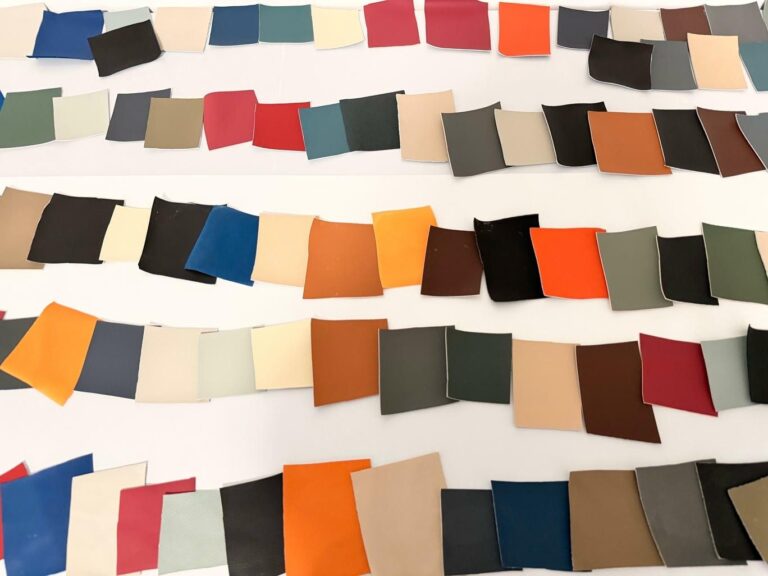
Color palette comparison across alternative fabric categories
Flame Retardancy: Which Materials Pass Without Chemical Additives?
Flame retardancy is where alternative fabrics diverge most dramatically — and where hidden costs accumulate. PU and PVC both require chemical FR additives to meet fire safety standards. These additives aren’t permanent; they migrate out over time, especially under heat. A material that passes FAR 25.853 on day one can fail the same test at month 18.
Silicone leather is inherently flame-resistant. The silicon-oxygen backbone doesn’t support combustion. It achieves EN 13773 Class 4, FAR 25.853, and FMVSS 302 certifications without any added flame retardant chemicals. The LOI (Limiting Oxygen Index) of silicone is 26-30% — above the 21% oxygen concentration in ambient air, meaning it self-extinguishes.
Why this matters for specifiers: When you specify a material with chemical FR additives, you’re not just specifying the material — you’re specifying a compliance timeline. The additive will degrade. The question isn’t if, but when. With silicone leather, the flame retardancy is in the polymer chain. It can’t migrate out because it isn’t an additive — it’s the material itself.
Plant-based materials present a particular challenge here. Most plant-based leathers use a PU binder for water resistance, which means they inherit PU’s FR limitations — they can’t pass flame retardancy tests without additional chemical treatment. MIRUM, the only 100% plastic-free alternative on the market, has impressive carbon footprint data but no published flame retardancy certifications.
Cost vs Service Life: The ROI Reality Nobody Shows You
Here’s the part where most material comparison articles stop. They list the price per square meter and leave you to figure out the rest. But purchase price is the shallowest metric in B2B material selection.
Let’s break down the 10-year cost reality for a hypothetical commercial furniture program using 1,000 square meters of material:
- PU leather: $10/m² × 4 replacement cycles (2.5-year life) = $40/m² effective cost + 3× labor for reupholstering
- PVC leather: $9/m² × 3 replacement cycles (3.5-year life) = $27/m² effective cost + 2× labor
- Plant-based: $22/m² × 3 replacement cycles (3.5-year life) = $66/m² effective cost + 2× labor
- Silicone leather: $20/m² × 1 cycle (10+ year life) = $20/m² effective cost + 0× additional labor
The math is uncomfortable for anyone who’s been specifying PU leather to hit a budget target. Over a 10-year horizon, the “cheap” option costs 2x more than the “expensive” one. And that’s before factoring in warranty claims, brand damage from visible wear, and the procurement overhead of managing three additional replacement cycles.
As the market for environment-friendly fabrics matures, specifiers need to distinguish between materials that are sustainable because they’re cheap to replace and materials that are sustainable because they don’t need replacing. The latter category has exactly one member.
Compare Alternative Fabric Samples
What Is the Most Durable Alternative Fabric to Leather?
Silicone leather is the only alternative fabric that combines 200K+ Martindale abrasion cycles, 1,000+ hours of UV resistance, and inherent EN 13773 Class 4 flame retardancy in a single material. PU leather typically reaches 25K-50K Martindale cycles with a 2-3 year service life. Microfiber leather performs better at 50K-80K cycles but still depends on chemical additives for flame retardancy. For applications requiring 10+ year durability — automotive interiors, medical upholstery, commercial furniture — silicone leather is the only alternative fabric with verified long-term performance data.
Are Plant-Based Alternative Fabrics Suitable for Commercial Upholstery?
It depends on the application. Cactus leather (Desserto) offers good aesthetics and a compelling sustainability story, with a reported lifespan of up to 10 years. However, published Martindale data for most plant-based materials falls in the 10K-30K cycle range — below the threshold for high-traffic commercial upholstery. Apple leather and Piñatex typically use a PU binder for water resistance, which means they inherit PU’s durability and flame retardancy limitations. For fashion accessories, bags, and low-abrasion applications, plant-based materials work well. For commercial furniture, automotive interiors, or medical applications, the durability gap remains a barrier.
Watch silicone vs PU vs PVC material comparison — see the performance differences that spec sheets don’t show
After testing every alternative fabric category we could source — from the cheapest PU to the most expensive mycelium — the conclusion is straightforward. If your priority is the lowest upfront cost, PU leather wins. If your priority is a sustainability story for marketing, plant-based wins. But if your priority is a material that still looks and performs as specified after a decade of real-world use, there’s one answer. Silicone leather remains the only alternative fabric that combines verified abrasion resistance, UV stability, inherent flame retardancy, and a 10+ year service life without chemical additives. That’s not a preference — it’s what the test data shows.
Request Material Comparison Kit
About TOPSUN
TOPSUN manufactures silicone leather as a high-performance alternative fabric for B2B specifiers who need materials combining abrasion resistance, UV stability, and flame retardancy without plasticizers or solvents.
Verified through 200K+ Martindale cycles, 1,000+ hour UV testing, and EN 13773 Class 4 flame retardant certification from SGS and Intertek.