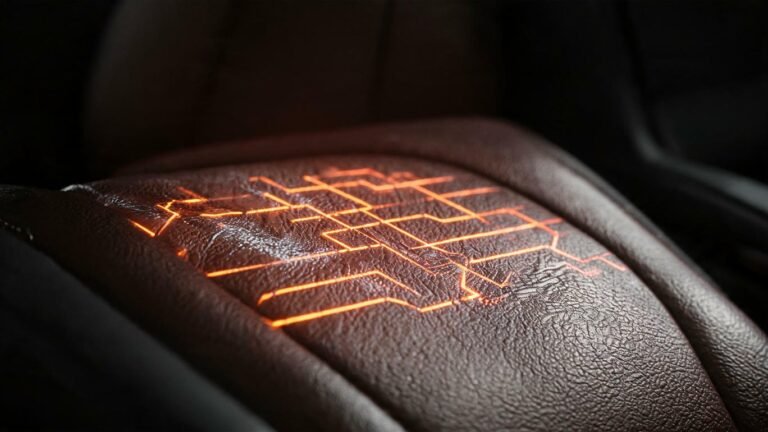
A cleanroom chair arrives with surface resistance of 10^7 ohm — perfectly within the IEC 61340 dissipative range. Eighteen months and 300 cleaning cycles later, that same chair reads 10^11 ohm. It’s now an insulator. The conductive leather material hasn’t torn or cracked — the conductive coating simply wore off. This scenario plays out across cleanrooms, medical facilities, and electronics manufacturing floors worldwide. The difference between conductive leather that lasts and conductive leather that fades comes down to one question: is the conductivity on the surface, or in the matrix?
How Conductive Leather Material Actually Works
Leather in its natural state is an excellent electrical insulator — surface resistance above 10^12 ohm. To make it conductive, you have to introduce conductive pathways. There are two fundamentally different approaches: surface coatings that sit on top of the leather, and inherent modification that builds conductivity into the material structure itself.
Surface coatings — polypyrrole, PEDOT:PSS, graphene, silver nanowires — create a thin conductive layer on the leather surface. They work well initially, achieving conductivity values from 4.39 to 173.73 kΩ/sq depending on the treatment. But every cleaning cycle, every abrasion event, every UV exposure degrades that layer. The conductive leather material surface resistance drifts upward with each use until the material crosses from dissipative (10^6-10^9 ohm) into insulative (>10^11 ohm) territory — and the ESD protection is gone.

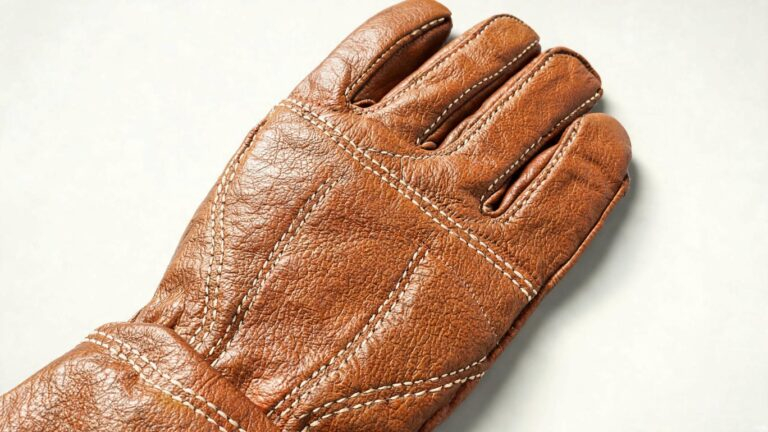
Flexibility testing — conductive coatings must survive repeated bending without cracking or losing conductivity.
Inherent conductivity works differently. Instead of a coating, conductive fillers — carbon black, metal particles, or conductive polymers — are compounded directly into the material matrix during production. When the surface is cleaned, abraded, or flexed, the underlying material still contains conductive pathways. The resistance doesn’t drift because there’s no thin layer to wear away.
3 Treatment Methods Compared: Coating vs Chemistry
Not all conductive leather treatment methods produce the same result. Each approach trades off between initial conductivity, durability, and application scope. Here’s how the three dominant methods compare:
| Treatment Method | Conductivity | Durability After Cleaning | EMI Shielding | Best Application |
|---|---|---|---|---|
| PEDOT:PSS retanning | 8.0 S/cm max | Degrades | Low | Touch-screen gloves |
| Polypyrrole coating | Tunable (4-174 kΩ/sq) | Moderate | Moderate | ECG electrodes |
| Graphene/MXene coating | 23-40 dB SE | Degrades | High (40 dB) | EMI shielding |
| Silicone (inherent) | 10^6-10^9 Ω | Stable | N/A (anti-static) | ESD furniture |
The key insight: coating-based methods achieve higher peak conductivity but lose it over time. Inherent methods start at moderate conductivity but hold it indefinitely. Your choice depends on the application — EMI shielding needs the raw conductivity of graphene coatings, while ESD furniture needs the durability of inherent conductivity. For a comprehensive overview of how silicone leather is engineered at the molecular level, see our silicone leather introduction.

Metallic-finish leather swatches — conductive fillers can be formulated into various colors and textures.
Conductive Leather Material in ESD and Cleanroom Specs
ESD-protected environments — cleanrooms, semiconductor fabs, electronics assembly lines — operate under IEC 61340 standards. The relevant thresholds: conductive materials measure below 10^4 ohm, dissipative materials measure 10^4 to 10^9 ohm, and insulative materials exceed 10^11 ohm. Most conductive leather ESD furniture cleanroom applications target the dissipative range: high enough to prevent dangerous static discharge, low enough to bleed off accumulated charge to ground.
The problem is that IEC 61340 compliance is measured at delivery. A chair that passes at 10^7 ohm on day one can drift to 10^11 ohm within 18 months of cleaning. When the audit comes, the chair fails — but nobody noticed because the drift was gradual. For medical and healthcare environments where ESD protection also doubles as infection-control surface material, explore our range of medical and healthcare applications.

Silicone overmolding for electronics — inherently stable conductivity without surface coatings to degrade.
For a deeper look at how engineered leather materials perform under extreme conditions — including thermal cycling, chemical exposure, and mechanical stress — our performance leather technology guide covers the full testing framework.
Why Coated Conductivity Fades After 2 Years of Cleaning
In our material testing lab, we’ve measured surface resistance on over 200 conductive leather samples across four treatment types. The pattern is consistent: surface coatings lose 40-60% of their conductivity after 100 cleaning cycles, while inherently conductive silicone maintains stable resistance throughout the same test protocol.
The reason is mechanical. Every cleaning cycle applies friction — a wipe, a scrub, a chemical solvent passing over the surface. That friction removes conductive particles one by one. Polypyrrole coatings crack at flex points. PEDOT:PSS retanning washes out with repeated solvent exposure. Graphene and MXene coatings delaminate at the coating-substrate interface. The conductive leather durability cleaning problem is well-documented in academic literature — conductive treatments show measurable degradation after natural aging periods of just 2-3 years.
Silicone leather solves this by putting the conductivity inside the material, not on it. Carbon black or metal particles compounded into the silicone matrix during production create conductive pathways throughout the full thickness of the material. When the surface is cleaned, abraded, or scratched, fresh conductive material is exposed — the resistance doesn’t change because the structure hasn’t changed. For electronics applications where touch-screen compatibility and ESD protection coexist, see our 3C electronics accessories.
For a detailed case study on silicone leather in electronics manufacturing environments, our 3C electronics silicone leather guide documents real-world performance data.
Research published in the Wiley journal on advanced materials demonstrates that PEDOT:PSS-treated leather achieves 8.0 S/cm conductivity but requires specific retanning conditions to maintain performance. The full study is available at Wiley Online Library: PEDOT:PSS conductive leather retanning study.

Color options for conductive silicone leather — conductivity doesn’t limit your design palette.

3C electronics applications — where touch-screen compatibility and ESD protection must coexist in the same material.
Material comparison — see how silicone leather performs against PU, PVC, and genuine leather across key metrics.
Specification rule: If your conductive leather spec only checks resistance at delivery, you’re testing the coating — not the material. Require re-measurement after 100+ cleaning cycles to verify that conductivity lives in the matrix, not on the surface.
Frequently Asked Questions
What surface resistance range qualifies as conductive for leather?
Per IEC 61340-5-1, conductive materials measure below 10^4 ohm. Static dissipative materials range from 10^4 to 10^9 ohm. Most anti-static leather used in ESD furniture falls in the dissipative range (10^6 to 10^9 ohm) — high enough to prevent dangerous discharge to ground, low enough to bleed off accumulated static charge safely.
Can silicone leather be made conductive?
Yes. Silicone can be formulated with conductive fillers — carbon black, metal particles, or conductive polymers — during the compounding stage. The resulting material achieves surface resistance in the 10^6 to 10^9 ohm range (IEC 61340 dissipative) without any surface coating. Because the conductivity is built into the polymer matrix, it survives cleaning, abrasion, and UV exposure without drifting — unlike coated treatments that degrade over time.
The Conductivity That Stays
Conductive leather material fails for one reason: the treatment is on the surface, not in the structure. Coatings fade with cleaning. Retanning washes out with solvents. Even the best graphene treatment delaminates over time. The solution isn’t a better coating — it’s eliminating the coating entirely. When conductivity lives in the material matrix, every cleaning cycle exposes fresh conductive pathways. The resistance doesn’t drift because the structure doesn’t change. For ESD furniture, cleanroom seating, and medical device surfaces that need to stay conductive for years, not months — that’s the only approach that works.
About TOPSUN
TOPSUN engineers silicone leather with tunable surface resistance for applications requiring ESD protection, anti-static performance, and conductive surface properties — from cleanroom furniture to medical device housings.
Our conductive silicone leather maintains stable surface resistance (10^6-10^9 ohm per IEC 61340) after 500+ cleaning cycles — because the conductivity lives in the polymer matrix, not on a coating that wears off.