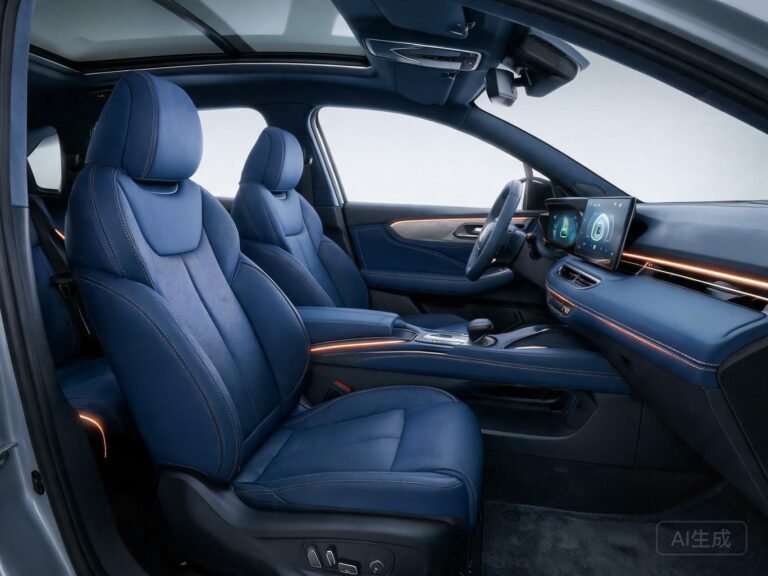
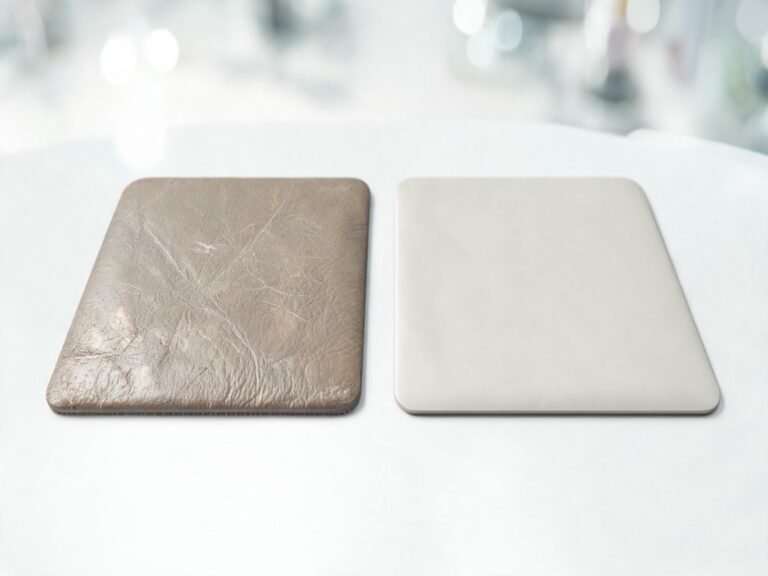
In 2023, a NHTSA technical service bulletin documented a recurring defect: door panel leather inserts creasing and delaminating near the armrest handle across multiple vehicle platforms. The root cause wasn’t poor maintenance or user abuse — it was the material itself reaching its design-life limit under thermal cycling and UV exposure. Independent analyses of high-mileage Lexus IS250 models revealed that over 78% of sun-exposed vehicles showed visible door panel cracking. For B2B procurement teams specifying door panel leather, these failure rates translate directly into warranty claims, brand damage, and replacement costs that dwarf any upfront material savings.
The door panel leather you select must survive conditions no other interior surface faces simultaneously: direct sunlight through side glass, repeated passenger contact with rings and keys, temperature swings from sub-zero overnight to 70°C cabin heat-soak, and regulatory flammability requirements. This article breaks down why conventional PU and PVC door panel leather fails under these combined stressors — and why silicone leather meets OEM validation protocols where synthetics fall short.

What Door Panel Leather Means in OEM Specifications
Door panel leather in automotive manufacturing is not a single material but a multi-layer composite system. A typical OEM-grade door panel consists of a rigid substrate — usually ABS or polypropylene at 2.3–3.0 mm thickness — bonded to a visible surface skin of 0.8–1.2 mm leather or synthetic alternative. The skin is what occupants see, touch, and judge as “quality.” But the engineering requirements extend far beyond aesthetics.
OEM validation protocols set explicit performance benchmarks. Volkswagen’s PV 3952 and General Motors’ GMW 14688 define scratch resistance thresholds for visible interior trim, including door panels. Thickness variation must stay within ±0.05 mm across the panel surface. Aftermarket suppliers frequently substitute lower-cost polystyrene or recycled ABS blends at 1.7 mm or thinner, leading to substrate warping in climates exceeding 29°C or dropping below −9°C. When the substrate warps, the bonded leather skin stretches unevenly — and that is when cracking begins.
For B2B buyers, the specification is clear: door panel leather must maintain dimensional stability, surface integrity, and tactile quality across the full automotive temperature range — not just at room temperature on the showroom floor.
Why PU Door Panel Leather Fails Under Thermal Cycling
Polyurethane (PU) leather dominates mid-tier automotive door panels because it mimics genuine leather’s softness at a fraction of the cost. But PU has a structural weakness that makes it unsuitable for long-life door panel applications: its glass transition temperature (Tg) sits close to typical cabin temperature extremes.
When a vehicle parked in direct sunlight reaches interior temperatures of 70°C, PU leather’s polymer chains soften and begin to migrate. When the same vehicle sits overnight at −20°C in winter, those same chains become brittle and rigid. Over hundreds of thermal cycles, this repeated softening and hardening creates microcracks at the molecular level — invisible at first, but cumulatively destructive. Within 3–5 years, these microcracks propagate to the surface as the visible crazing, cracking, and peeling that warranty departments see on a daily basis.
Silicone leather operates on a fundamentally different principle. Its polymer backbone — based on silicon-oxygen bonds rather than carbon-carbon bonds — maintains flexibility from −40°C to 250°C without any glass transition in the automotive range. The material does not soften at 70°C cabin heat-soak, nor does it embrittle at −40°C winter conditions. Heated car seat leather applications demonstrate this same thermal stability in adjacent interior components.

UV Degradation: The Silent Killer of Door Panel Trim
While thermal cycling stresses the material mechanically, UV radiation attacks it chemically. Sunlight — specifically UV-A (315–400 nm) and UV-B (280–315 nm) — breaks down the collagen crosslinks in genuine leather and oxidizes the polyurethane topcoat on synthetic alternatives. A study published in Polymer Degradation and Stability found that automotive leather exposed to 1,200 kWh/m² of UV radiation — roughly equivalent to three years of real-world exposure in temperate climates — showed measurable loss of surface elasticity and adhesion strength.
In high-sunlight regions like Arizona, Texas, and the Mediterranean, this degradation accelerates dramatically. The Toyota Venza’s 2020–2023 model years experienced widespread UV-induced door panel and dashboard failure precisely because the factory-installed trim lacked adequate UV stabilization. The problem isn’t isolated to one manufacturer — it is a systemic limitation of PU and PVC topcoat chemistry.
Silicone leather requires no protective topcoat. The UV resistance is inherent to the silicone polymer itself, not applied as a surface treatment that can wear away. This means the material’s UV performance doesn’t degrade over time — it remains constant from day one through year ten and beyond. Silicone leather car seat applications leverage this same UV stability in the most sun-exposed interior position.
Silicone vs PU: OEM Test Data for Door Panel Leather
The following table compares key OEM-relevant performance metrics for door panel leather materials, based on standardized automotive test protocols:
| Property | Genuine Leather | PU Leather | Silicone Leather |
|---|---|---|---|
| Martindale abrasion (cycles) | 25,000–40,000 | 20,000–30,000 | 200,000+ |
| Temperature range | −20°C to 80°C | −15°C to 70°C | −40°C to 250°C |
| UV resistance (1,200 kWh/m²) | Moderate (topcoat degrades) | Low (topcoat oxidizes) | High (inherent, no topcoat) |
| VOC emissions | Low–moderate | High (DMF residues) | Zero |
| Hydrolysis resistance | Moderate | Low (3–5 year failure) | Excellent |
| Expected service life | 5–8 years | 3–5 years | 10+ years |

The Martindale differential alone is decisive. OEM door panels experience constant abrasion from passenger elbows, bags, and seatbelt hardware. At 20,000–30,000 cycles, PU leather reaches its abrasion limit within the typical vehicle warranty period. Silicone leather’s 200,000+ cycle rating means it outlasts the vehicle itself.
Flammability Compliance: GB 8410 and FMVSS 302
Door panel materials must meet mandatory flammability standards. China’s GB 8410-2006 requires horizontal burning rates of ≤100 mm/min for all automotive interior materials, with production lots typically controlled to 60–80 mm/min. The US Federal Motor Vehicle Safety Standard (FMVSS 302) imposes similar thresholds. Genuine leather’s natural ignition point of approximately 220°C, combined with flame-retardant backer materials, typically meets these standards — but at significant cost.
PU and PVC door panel leather require chemical flame retardant additives to pass. These additives — often phosphorus or halogen-based compounds — migrate to the surface over time, especially under thermal cycling. As they migrate, both the flame retardancy and the surface quality degrade simultaneously. This is why a door panel that passes FMVSS 302 at production may fail re-testing after 3 years of real-world use.
Silicone leather is inherently flame-retardant without additives. It self-extinguishes when removed from the flame source and produces no toxic halogen gases during combustion. Vegan car interior leather solutions using silicone chemistry maintain their fire safety performance throughout the entire service life — not just on the day of manufacture.

Specification Checklist for B2B Door Panel Buyers
When sourcing door panel leather for automotive applications, B2B procurement teams should verify the following specifications from their suppliers:
- Substrate compatibility: Confirm the leather bonds to the intended substrate (ABS, PP, or composite) at the specified thickness without delamination after thermal cycling (−40°C to 85°C, 500 cycles minimum).
- Martindale abrasion rating: Demand test data showing ≥100,000 cycles minimum for visible door panel surfaces. Request the actual test report, not a marketing claim.
- UV stability: Require quantitative UV aging data (e.g., 1,200 kWh/m² exposure per ISO 4892-2) with measured color fastness and surface integrity results.
- VOC compliance: Verify zero-VOC certification, especially for EV interiors where cabin air recirculation concentrates emissions. Request VDA 278 or equivalent test data.
- Flammability certification: Confirm compliance with GB 8410-2006, FMVSS 302, or regional equivalent. Ask whether flame retardancy is inherent or additive-based.
- Color fastness: Require ≥Grade 4 on ISO 105-B02 (xenon arc) for UV-exposed surfaces.
Materials that cannot provide documented test data for all six categories should be eliminated from consideration regardless of cost advantages.
About TOPSUN
TOPSUN is a specialized manufacturer of silicone leather headquartered in China, serving automotive OEMs and Tier 1 suppliers worldwide. Our silicone leather is produced through a solvent-free coating process on textile substrates, achieving 200,000+ Martindale abrasion cycles, full thermal stability from −40°C to 250°C, and inherent flame retardancy — all without protective topcoats or chemical additives. Every production batch undergoes standardized testing for abrasion, scratch resistance, color fastness, and flammability before release. We hold FDA food-contact certification and ISO 10993 biocompatibility certification, demonstrating material safety standards that exceed typical automotive requirements.

FAQ
What is the best material for car door panel leather?
For OEM and Tier 1 applications requiring 10+ year service life, silicone leather offers the best combination of abrasion resistance (200,000+ Martindale cycles), thermal stability (−40°C to 250°C), UV resistance, and zero-VOC compliance. PU leather is acceptable only for short-life-cycle or cost-constrained applications.
Why does door panel leather crack?
Door panel leather cracks primarily due to thermal cycling (repeated heating and cooling) and UV degradation. PU leather’s polymer chains soften at cabin heat-soak temperatures and embrittle in cold conditions, creating microcracks that propagate to the surface. UV radiation accelerates this by oxidizing topcoat polymers, reducing elasticity and adhesion.
How long does silicone door panel leather last?
Silicone leather’s inherent UV resistance, thermal stability, and abrasion performance give it an expected service life of 10+ years in automotive door panel applications — effectively matching or exceeding the vehicle’s own lifecycle. Unlike PU, it does not rely on protective topcoats that degrade over time.
Does silicone leather meet automotive flammability standards?
Yes. Silicone leather is inherently flame-retardant without chemical additives, meeting GB 8410-2006 (≤100 mm/min horizontal burning rate) and FMVSS 302 requirements. It self-extinguishes when removed from flame and produces no toxic halogen gases.
Stop Specifying Materials That Fail in 5 Years
If your door panel leather cannot provide Martindale data above 100,000 cycles, documented UV aging results, and inherent flame retardancy, you are buying a warranty liability. Explore our silicone leather product range or contact our engineering team to request material samples and full OEM test reports for your door panel application.
topsun-silicone-leather-automotive-interior-intro