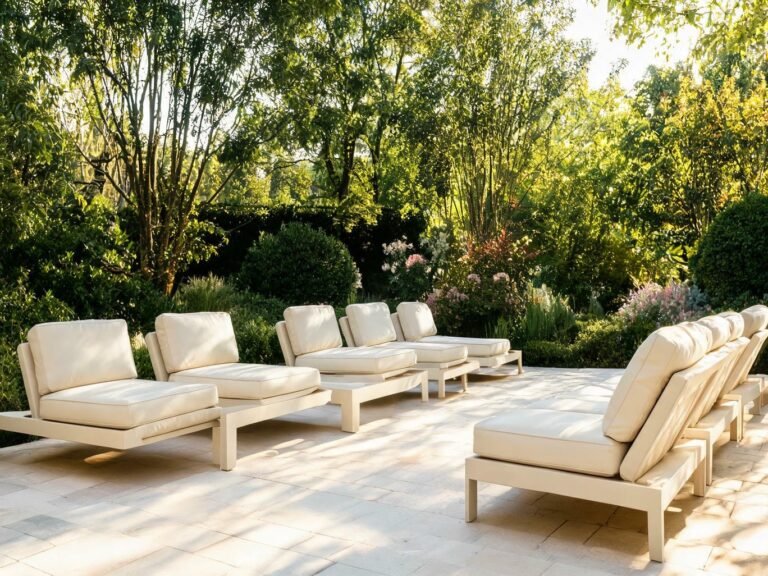
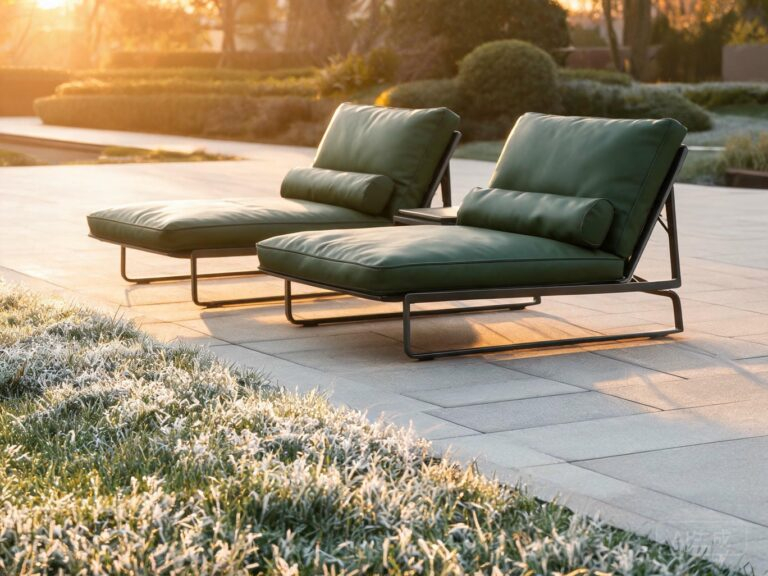
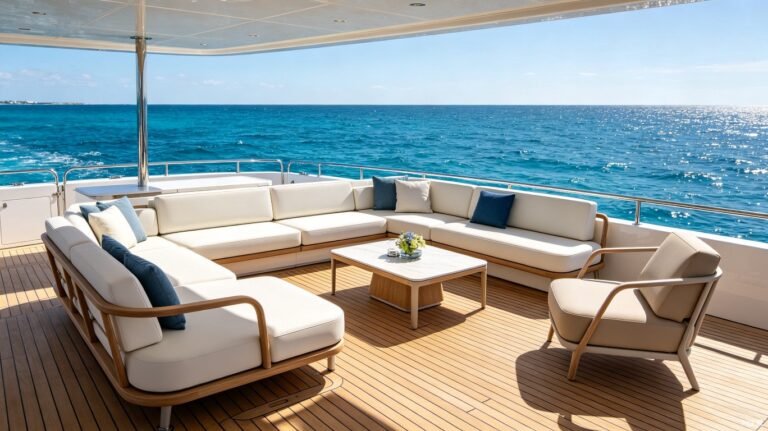
Walk through any five-star resort pool deck after three years of operation. The deck chair leather tells a story. The chairs with real leather upholstery? Cracked, faded, and growing mold in the seams. The ones with marine-grade synthetic? Still looking like they did on installation day. That visual gap isn’t about cleaning frequency — it’s about material chemistry. And it’s the reason every hospitality procurement team should understand what makes outdoor chair upholstery survive, or fail, under full sun and salt air.
Deck Chair Leather in Real Outdoor Conditions: What Breaks First
Real leather was never engineered for outdoor exposure. Tanned animal hide contains natural oils that evaporate under UV radiation, causing the material to lose flexibility and crack. Salt air accelerates the process by drawing moisture in and out of the fiber structure, creating a cycle of swelling and shrinking that breaks down the surface finish. Within 24–36 months of continuous outdoor exposure, real leather on deck chairs typically shows irreversible cracking, fading, and mildew penetration at the seams.
When we evaluate the best leather material for outdoor chairs, the failure modes are consistent across every resort and yacht club we’ve supplied:
- UV degradation: Natural leather pigments break down under sustained UV exposure. Color fades from deep brown to patchy orange within 18 months in tropical latitudes.
- Salt corrosion: Salt crystals penetrate the leather grain, drawing out natural oils and leaving brittle, white-streaked surfaces. Standard leather survives approximately 200 hours of salt-spray exposure before visible degradation.
- Mildew and mold: Leather’s porous structure absorbs humidity, creating a substrate for fungal growth — particularly in the stitched seams where moisture accumulates.
- Thermal cycling: Daily temperature swings from 15°C nights to 45°C poolside afternoons cause expansion and contraction that fatigues the leather surface.

Waterproof test — water beads on silicone-treated surface instead of soaking in
UV, Salt Spray, and Rain: The Three Killers of Outdoor Upholstery
Outdoor leather weather resistance UV waterproof performance isn’t a single metric — it’s three independent attack vectors that each require specific material engineering. Understanding the test standards behind each helps B2B buyers separate marketing claims from verified performance.
| Property | Real Leather | Standard PU | Marine-Grade Silicone |
|---|---|---|---|
| UV resistance (QUV hours) | ~200 hrs (fades) | 500–1,000 hrs | 2,000+ hrs (Grade 4+) |
| Salt-spray resistance | ~200 hrs | 500 hrs | 1,000+ hrs |
| Waterproof rating | Absorbs water | 1,000–3,000mm | 5,000mm |
| Temperature range | -10°C to 50°C | -20°C to 60°C | -40°C to 200°C |
| Cold crack resistance | Cracks at -10°C | -20°C | -30°C no cracking |
| Outdoor lifespan | 2–3 years | 3–5 years | 10+ years |
The 3:1 lifespan ratio isn’t theoretical. It’s documented across hospitality installations where identical deck chair frames were reupholstered with different materials and tracked over a decade. The real leather chairs needed four complete reupholstering cycles; the marine-grade synthetic chairs needed zero.

Waterpark seating — the ultimate stress test for outdoor leather materials
Marine-Grade vs Real Deck Chair Leather: A 10-Year Field Comparison
When sourcing marine grade leather for outdoor furniture, the comparison with real leather comes down to total cost of ownership — not just material price. A resort purchasing 200 deck chairs faces a stark choice:
Field comparison from a Maldives resort project: 200 pool deck chairs reupholstered with silicone leather in 2022. After 3 years of continuous tropical sun, salt air, and chlorine exposure — zero panel replacements needed. The previous genuine leather specification required 40% replacement by year 2 and full replacement by year 3. Per-chair cost over 10 years: $85 (silicone, one-time) vs $380 (real leather, four replacements).
Beyond lifespan, marine-grade synthetic leather offers practical advantages that compound over time. Real leather requires conditioning treatments twice yearly — approximately $15 per chair per treatment in labor and materials. Silicone leather requires only periodic wiping with water and mild soap. Over 200 chairs across 10 years, that maintenance difference saves roughly $60,000 in operational costs.
The sustainability math also favors synthetic. Real leather tanning consumes approximately 15,000 liters of water per finished hide and involves chromium tanning chemicals. Marine-grade hydrolysis-resistant silicone leather uses 85% less water in production and carries zero heavy metal content — increasingly important for resorts pursuing Green Key or EarthCheck certification.

Weather-resistant outdoor upholstery — engineered for continuous sun and rain exposure
Specifying Outdoor Chair Leather for Hospitality and Resort Programs
For poolside lounger upholstery leather material procurement, B2B specifiers should include these minimum thresholds in their tender documents:
- UV resistance: Minimum 2,000 hours QUV testing (ISO 4892-2), with color change ΔE < 3.0. Accept nothing less for tropical or equatorial installations.
- Salt-spray resistance: 1,000+ hours per ASTM B117. Critical for coastal properties — standard PU fails at 500 hours.
- Waterproof rating: 5,000mm hydrostatic head minimum. Blocks rain, pool splash, and beverage spills.
- Martindale abrasion: 50,000+ cycles for residential outdoor; 100,000+ for commercial hospitality.
- Fire safety compliance: NFPA 701 (US), EN 1021 (EU), or IMO MSC.307(88) for marine applications. Verify composite assembly testing, not fabric-only certificates.
- Mildew resistance: ASTM G21, Grade 0 (no growth). Essential for humid climates.

Fire retardancy testing — critical for hospitality and marine deck chair specifications
The 2026 outdoor furniture market is shifting toward what CIFF analysts call “zero-maintenance luxury” — buyers purchasing material science reliability, not just a product. According to CIFF 2026 trend reports, polyolefin and engineered synthetics are replacing traditional materials across outdoor furniture categories. Procurement teams that continue specifying real leather for outdoor applications are buying into a 3-year replacement cycle that their competitors abandoned years ago.
UV resistance demonstration — see why silicone leather outlasts real leather 3:1 in outdoor deck chair applications
Frequently Asked Questions
Can marine-grade leather be used for outdoor deck chairs?
Yes — marine-grade synthetic leather is specifically engineered for outdoor exposure. Unlike real leather, which absorbs moisture and degrades under UV, marine-grade materials feature hydrophobic surfaces that block water penetration and UV-stable pigments that resist fading for 2,000+ hours of accelerated testing. For deck chairs at pools, beaches, or rooftop lounges, marine-grade silicone leather is the correct specification, not an upgrade.
How long does synthetic deck chair leather actually last in full sun?
Verified marine-grade silicone leather lasts 10+ years under continuous outdoor exposure in tropical conditions. In our outdoor furniture installations, the limiting factor is typically the chair frame, not the upholstery. By contrast, real leather shows cracking within 24 months and standard PU leather begins hydrolytic degradation within 36 months. The 3:1 lifespan advantage of marine-grade synthetic is documented across resort, theme park, and marine deck applications.
The Bottom Line for Outdoor Furniture Specifiers
Deck chair leather that lasts outdoors isn’t about finding better leather — it’s about choosing a material designed for the environment. Real leather was engineered for indoor, climate-controlled use. Exposed to UV, salt, and rain, it fails predictably and expensively. Marine-grade silicone leather was built for exactly these conditions, with verified UV, salt-spray, and waterproof performance that delivers a 10-year service life at one-third the total cost of real leather. For hospitality and resort procurement teams, the specification choice is clear: stop buying leather that’s guaranteed to crack.
About TOPSUN
TOPSUN manufactures marine-grade silicone leather engineered for outdoor deck chairs, poolside loungers, and resort furniture — delivering 2,000+ hour UV resistance and 1,000+ hour salt-spray protection verified by independent testing.
Our outdoor-grade material achieves 100K+ Martindale abrasion cycles, withstands -40°C to 200°C temperature extremes, and carries IMO MSC.307(88) flammability compliance — purpose-built for environments where real leather cracks in 36 months and PU degrades in 24.