A boutique hotel installed 40 sofas in warm terracotta color leather sofa upholstery across their lobby and suite floors. Within six months, the sun-facing pieces had shifted three shades lighter. The reception-area pieces, under LED lighting only, looked brand new. Same material, same supplier, same batch — different environmental exposure produced visibly different results. The problem wasn’t the leather. It was the pigment specification.
Color performance in leather upholstery is not uniform. Some pigments are chemically stable under UV exposure; others break down quickly. Some colors hide stains; others telegraph every spill. And the difference between a sofa that looks new after three years and one that looks aged after six months is not about the base material — it’s about which pigments were used and how they were tested. Here’s what procurement teams need to know before specifying color.
View Sofa Upholstery Applications
Why Color Leather Sofa Pigments Perform Differently Under Light
All leather color comes from pigments — either dyes absorbed into the fiber structure or surface coatings applied during finishing. The chemistry of those pigments determines how they respond to ultraviolet light, and not all pigment families are created equal. Azo-based red pigments, common in cost-conscious leather production, break down under UV exposure because the nitrogen double bonds in their molecular structure absorb UV energy and cleave. Iron oxide pigments — earth tones, browns, blacks — are mineral-based and inherently UV-stable.
This is why warm reds and bright oranges fade fastest, while browns and blacks hold their color for years under identical conditions. The leather sofa color trends 2026 palettes trending in interior design — terracotta, rust, coral — happen to be in the highest-risk pigment family for UV degradation. Beautiful in a showroom, risky in a sun-filled lobby.

Multi-color leather swatch rack — each color’s pigment chemistry determines its UV and stain performance
Silicone leather offers an advantage here that PU and genuine leather cannot match: the silicone polymer itself provides UV resistance at the molecular level. PDMS (polydimethylsiloxane) is inherently stable under UV exposure, which means the base material protects the pigments embedded in it. TOPSUN silicone leather achieves ISO 105-B06 light fastness Class 4.5 — meaning the color holds for over 1,500 hours of QUV testing. For comparison, many PU leathers achieve only Class 3, which corresponds to visible fading within 200–400 hours.
Color Fastness Data by Pigment Family
When specifying color leather sofa stain resistance and light fastness, the data matters more than the color name. A “caramel brown” from one supplier and a “caramel brown” from another may have completely different pigment chemistries — and completely different performance profiles. Here’s what the test data shows across common color families:
| Color Family | Light Fastness (ISO 105-B06) | Stain Visibility | Best Use |
|---|---|---|---|
| Black / Dark brown | Class 5 (excellent) | Hides most stains | High-traffic commercial |
| Warm earth tones (tan, taupe) | Class 4.5 (very good) | Hides moderate stains | Residential, hotel suites |
| Warm reds (terracotta, rust) | Class 3.5 (fair) | Shows dark stains | Low-sunlight interiors |
| Light tones (beige, cream) | Class 4 (good) | Shows all stains | Decorative, low-use |
The pattern is clear: darker, mineral-based pigments perform better under both UV and stain exposure. This is why black and dark brown dominate commercial sofa specifications — not just because they look professional, but because they are the most forgiving colors under real-world conditions. For a deeper look at how silicone leather is engineered for durability, see our silicone leather introduction.

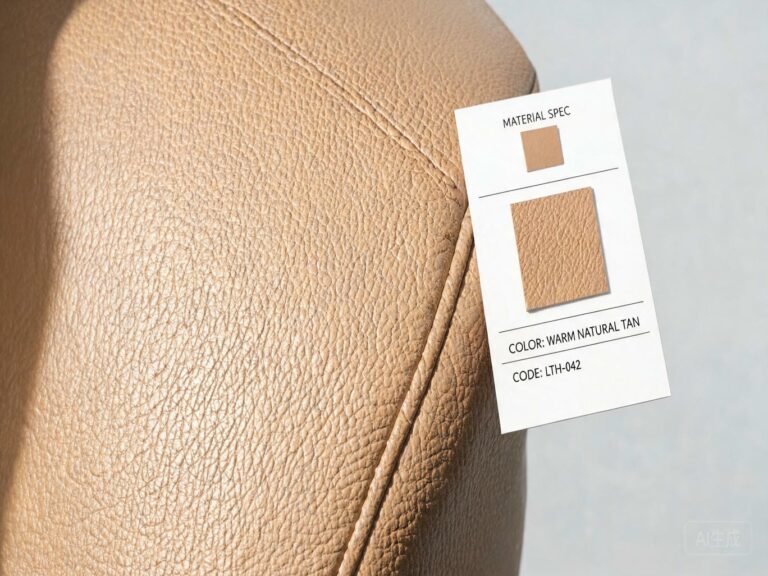
Warm-tone lychee-texture leather swatches — earth pigments offer superior UV stability over azo-based reds
Stain Resistance Varies by Color, Not Just Material
Here’s something most material guides miss: stain visibility is a color property, not just a material property. A black silicone leather sofa and a cream silicone leather sofa made from the same batch will have identical stain resistance — the surface chemistry is the same. But the cream sofa will show coffee spills, ink marks, and body oils that the black sofa hides completely.
This matters for commercial specifications. A hotel lobby sofa in beige leather will require daily cleaning to maintain appearance, while the same design in dark brown needs weekly cleaning for the same visual standard. Over a five-year service life, the cleaning labor difference — and the perceived “aged” appearance of the light-colored sofa — makes dark colors the better TCO choice for commercial use.
Practical insight: In our testing, silicone leather achieves the highest stain resistance rating against 20+ common household stains — including oil pen marks, lipstick, coffee, ketchup, and chocolate. But this performance is invisible on light colors because the stain contrast is high. The same stain on dark leather is barely perceptible. Per AATCC testing protocols, stain resistance is measured against specific challenge substances — but color contrast is the real-world variable that drives perceived cleanliness.
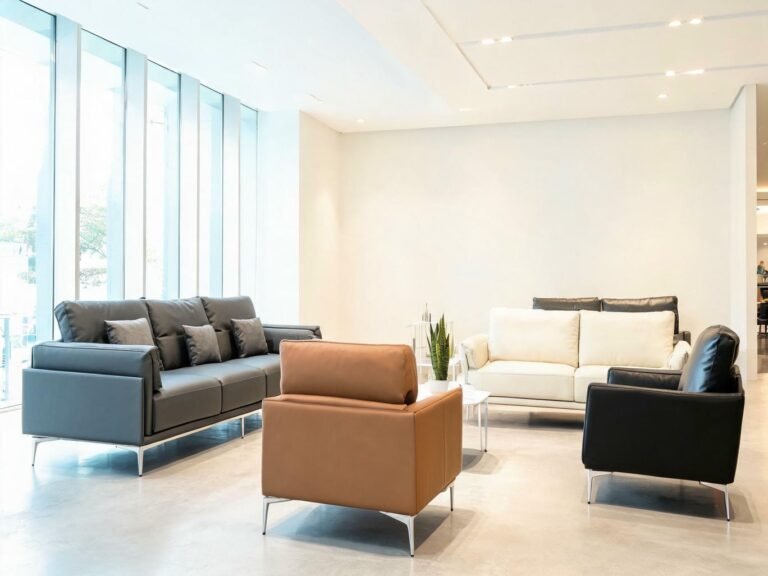
Commercial-grade silicone leather for sofas — see how color, texture, and performance combine for furniture upholstery
Specifying Color Leather Sofa Upholstery for Commercial vs Residential
The specification approach for a color leather sofa should differ based on where it will live. A residential sofa in a climate-controlled home with minimal direct sunlight can specify any color with confidence. A commercial lobby sofa under floor-to-ceiling windows needs a pigment strategy, not just a color choice.

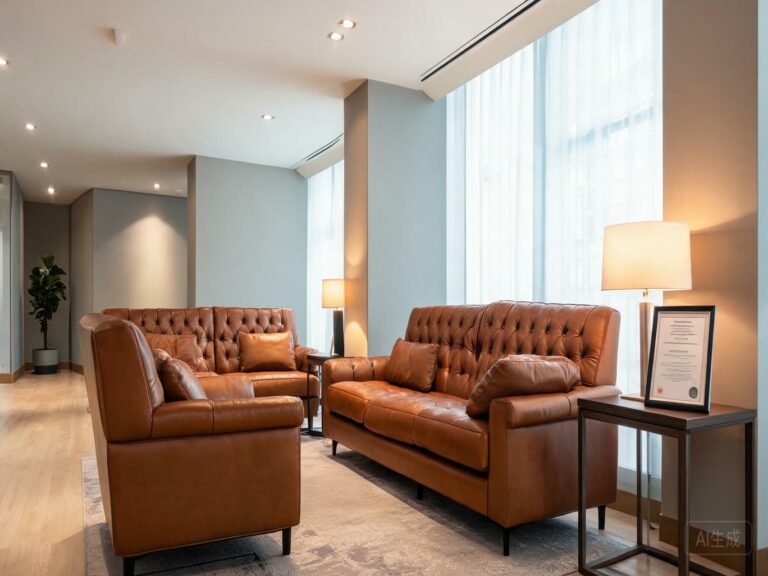
Commercial leather sofa — color selection must account for UV exposure, stain frequency, and cleaning cycles
For colored leather sofa commercial durability, we recommend three specification rules:
- Commercial (hotel, office, retail): Specify dark earth tones (black, dark brown, charcoal) with ISO 105-B06 Class 4.5+ light fastness. Avoid warm reds and bright colors in sun-exposed areas. Include Martindale abrasion 100,000+ cycles in the spec.
- Residential (high-use): Medium earth tones (taupe, caramel, grey) are acceptable if UV exposure is moderate. Specify Class 4+ light fastness. Include stain resistance verification against common household substances.
- Decorative (low-use): Any color is viable, including light tones and warm reds. Still specify minimum Class 3.5 light fastness to prevent premature aging. For color matching options, our custom color customization service offers Pantone matching across 200+ standard colors.
For more on material selection for sofa applications, the leather sofa upholstery materials guide covers substrate options, thickness, and performance ratings. And our article on leather color customization details the Pantone matching process and batch consistency controls.
Frequently Asked Questions
Which leather sofa colors fade fastest under sunlight?
Warm reds, oranges, and terracotta tones fade fastest because their azo-based pigments are UV-sensitive. Black, dark brown, and charcoal hold color longest due to stable mineral-based pigments. Silicone leather’s PDMS polymer provides inherent UV protection that extends pigment life beyond what PU or genuine leather can achieve — TOPSUN silicone leather reaches ISO 105-B06 Class 4.5 (1,500+ hours QUV) compared to Class 3 for most PU (200-400 hours).
Can silicone leather match custom Pantone colors for sofa upholstery?
Yes. TOPSUN offers custom Pantone color matching for sofa leather across 200+ standard colors, with batch-to-batch consistency verified through spectrophotometer measurement. The silicone coating accepts pigments uniformly, allowing precise color reproduction without the batch variation common in PU leather. Custom colors typically require a 500-yard minimum order and a 4–6 week lead time for color development and approval.
Choose Color Like an Engineer, Not Just a Designer
A beautiful color leather sofa specified without understanding pigment chemistry is a liability disguised as an asset. The terracotta that looked perfect in the showroom will fade. The cream that photographed beautifully will stain. The rust tone that matched the interior perfectly will shift under UV. These outcomes are predictable — and preventable — when color selection is driven by fastness data rather than aesthetics alone.
Silicone leather changes the color equation because its UV-stable polymer protects pigments from within. But even with silicone leather, darker pigments still outperform lighter ones under real-world conditions. The specification that protects your project: “ISO 105-B06 Class 4.5+ light fastness, ISO 105-X12 Class 5 rubbing fastness, Martindale 100,000+ cycles.” Write those numbers into your purchase order — and choose colors that survive the environment they’ll live in.
Request Sofa Leather Color Samples
About TOPSUN
TOPSUN manufactures color-matched silicone leather for residential and commercial sofa upholstery, offering custom Pantone matching across 200+ standard colors for furniture OEMs worldwide.
ISO 105-X12 color fastness Class 5 (rubbing) · ISO 105-B06 light fastness Class 4.5 · Martindale abrasion 150,000+ cycles · stain resistance verified against 20+ common stains · BS 5852 fire safety compliant